Winter’s New Rhythm: Navigating the Intersection of Tech, Taste, and Travel in a Shifting World

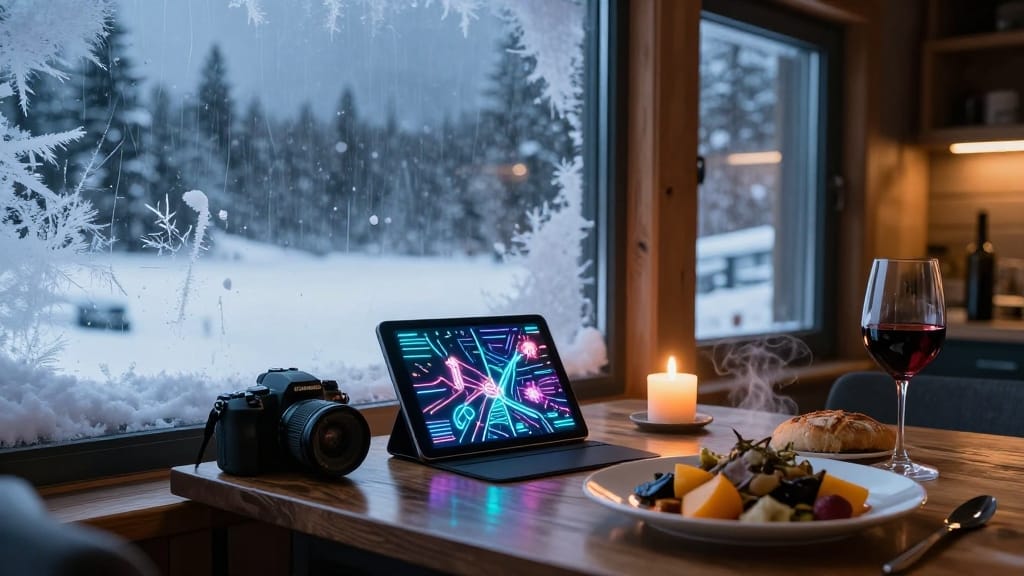
Life feels like it’s moving at two different speeds right now, and honestly, it’s giving me a bit of whiplash. One minute I’m scrolling through high-energy TikToks of shiny new theme parks where everything looks like a neon-lit dream, and the next, I’m seeing photos of lake-effect snow in New York buried under such a thick layer of "nope" that the city of Oswego is literally telling people to stay home. It’s a weird time to be alive, especially when you're trying to balance a love for the outdoors with the reality of a world that feels increasingly unpredictable. Whether it is the literal frost grounding our flights or the metaphorical chill of shifting global economies, the way we experience travel and lifestyle is undergoing a massive transformation. We aren't just consumers of "content" or "vacations" anymore; we are navigating a world where Denmark treats dinner as a fine art and Amazon is fundamentally changing how we buy our almond milk.
As someone who spends more time in hiking boots or strapped into a snowboard than sitting behind a desk, I’ve noticed that "adventure" has become a buzzword for a much more complex reality. We are dealing with everything from pet-friendly logistics that require a PhD to navigate, to the rising cost of European energy, all while trying to capture that "perfect" shot for the gram without looking like we’re trying too hard. In this deep dive, I’m looking at how we move through this world—from the snow-clogged roads of North Carolina to the high-stakes diplomacy of a Europe finally finding its collective backbone. It’s a wild ride, and as a Pole watching our slice of the EU evolve and stand firm amidst regional tensions, I’ve got some strong thoughts. This isn't just a newsletter; it's a survival guide for the modern, mobile, and slightly sarcastic traveler.
The Snow Apocalypse and the Logistics of Modern Movement
First off, if you’re planning a road trip this season, you better check the radar twice and pack an extra battery pack—or three. Winter isn't playing around this year, and it’s making my photography plans a total nightmare. According to LocalSYR, a travel advisory was recently issued in Oswego as lake-effect snow hit so hard that everything from schools to local businesses just shut down. When the local government tells you travel is "unnecessary," they mean it. It’s that kind of weather where even my most rugged weather-sealed gear stays in the bag because, let’s be real, no "aesthetic" snow shot is worth sliding into a ditch. But it’s not just the usual suspects getting hit. The southern charm is getting a frosty, chaotic makeover too; as reported by ABC11 Raleigh-Durham, some areas in North Carolina could see up to 10 inches of snow, affecting everything from the southern Appalachians to Virginia.
This isn't just about "pretty snow pictures" for your story; it's a massive logistical failure for regions that aren't geared up for a deep freeze. When a city like Raleigh gets hit with ice, the infrastructure just groans. We take for granted how much our mobility depends on predictable patterns. For a traveler, this means the "just wing it" mentality is officially dead. You need backups for your backups. And speaking of logistics, the hassle doesn’t stop at the weather. More of us are refusing to leave our "fur babies" behind, but the travel industry is barely keeping up. As noted by The New York Times, traveling with pets now requires a level of bureaucratic planning—think health certificates, blood tests, and airline-specific carrier dimensions—that can turn a "relaxing" trip into a second full-time job. It’s enough to make you want to stay in a cabin in the Tatra Mountains where the only paperwork is the check-in form.
But wait, it gets weirder. If you aren't stuck in a blizzard, you might be stuck in a theme park queue—or wondering why the park feels half-empty. In a strange twist for the travel industry, People reports that Universal’s Epic Universe in Orlando hasn’t been operating at full capacity since its May 2025 opening. This has left fans and investors scratching their heads. Is it a staffing issue? A technical glitch in the "epic" part of the universe? Or are people finally hitting a "peak theme park" ceiling where the cost of a ticket outweighs the joy of a four-hour wait for a roller coaster? It shows that even with billions in investment, you can't always manufacture a perfect travel experience. Whether it's the climate or the commerce, the rhythm of how we move is becoming staccato, interrupted, and increasingly expensive. For me, it means I’m leaning more into "slow travel"—staying in one place longer, taking the train (when the EU rails aren't delayed), and making sure I have a very, very good book for when the snow inevitably hits.
Culinary Culture: From Fine Art to Frozen Aisles
When I’m not freezing my toes off on a mountain or waiting for a delayed flight, I’m usually thinking about food. I’m Polish; it’s basically in my DNA to worry about the next meal. But even the way we eat is becoming this weird debate between "high art" and "survival." In Denmark, they are taking the "chef as artist" thing to a level that feels almost comical. According to The New York Times, high-level chefs may soon be eligible for state arts funding. The culinary world is completely split: is a plate of carefully fermented ants or a foam made of sea buckthorn a masterpiece worthy of a museum, or is it just a really expensive lunch? As much as I appreciate a beautiful plate—and I’ve definitely taken my share of food photography shots that took longer than the actual eating—there’s something a bit "Let them eat brioche" about subsidizing fine dining while average grocery prices are screaming.
While the Danes argue about aesthetics, the rest of us are playing Tetris with our budgets. It’s not just about what tastes good anymore; it’s about what survives the supply chain. AOL suggests there are seven foods you should always buy frozen instead of fresh, proving that the freezer aisle isn't just for lazy Sundays or sad bachelors—it's often better for nutrition because the stuff is picked and frozen at peak ripeness. It’s also a hell of a lot better for your wallet. In a world where a fresh avocado has a shelf life of approximately thirty seconds, the frozen section is becoming the smart traveler’s best friend. I’ve started doing this at home in Krakow; buying frozen berries for my morning porridge isn't just cheaper, it actually lets me spend more on my actual hobbies, like film for my cameras or a new snowboard wax.
However, the business of getting that food to you is getting messy and, frankly, a bit confusing. Perishable News reports that Amazon is doubling down on Whole Foods while closing its Amazon Go and Fresh physical stores. Apparently, the "grab and go" future where you just walk out and magic happens via sensors wasn't as profitable as the "we’ll just drop it at your porch" present. It’s a shift toward convenience over experience, which I find a bit depressing. I like smelling the bread, you know? This shift is happening as the social safety net is also feeling the strain. As detailed by The New York Times, confusing new SNAP benefit rules in the US are leaving grocery stores and low-income consumers in a daze. It’s a stark reminder that while some of us are debating the "art" of food, others are just trying to figure out if their card will work at the register. Even the legends of the food world are rebranding. Guy Fieri, the king of "Diners, Drive-Ins and Dives" and a man who is basically a walking meme, is pivoting. According to the Daily Mail, Fieri has announced a new Food Network series following a dramatic physical transformation. If the mayor of Flavortown can change his entire vibe, maybe there’s hope for the rest of us to adapt to this weird new economy.
The Photographer’s Eye: Capturing a Continent in Flux
As a total camera nerd, I’ve always believed that photography tells the stories that words just can't quite catch. It’s about that one frame where the lighting hits the cobblestones just right, or the look in someone’s eyes that says more than a three-page essay. Sometimes that story is about the incredible endurance of a career—like John Biever, who, as reported by TMJ4, is retiring after photographing every single Super Bowl since the very first one in 1967. Think about that: sixty years of history through one lens. He’s seen the game change from a niche sport to a global juggernaut. That kind of consistency is rare in a world that craves "newness" every fifteen seconds. It’s a reminder to keep shooting, even when you feel like you’ve seen it all.
Then there’s the raw, emotional side of the craft that hits you right in the gut. The Guardian recently featured Sibylle Fendt’s heart-wrenching, intimate photos of terminally ill patients. It’s heavy, yeah, but it’s a vital reminder that photography’s most powerful role isn't making things look pretty for a travel brochure; it’s witnessing our most vulnerable human moments. It makes me think twice about the "perfectly curated" life we try to show online. Authenticity is a buzzword, but seeing photos like Fendt’s makes you realize what real, unvarnished life looks like. It’s not always pretty, but it’s real.
On a lighter note—because I need to breathe too—BBC News showcased stunning reader photos of Scotland, and oh boy, the FOMO is real. The rugged beauty of those highlands makes me want to pack my bags and head north immediately. For those who prefer the wilder side of things, Bored Panda highlights an interview with Anette Mossbacher, explaining why patience is the only thing that matters in wildlife photography. You might have to watch a lion do absolutely nothing for six hours to get that one "real" shot that doesn't look like a postcard. And if you need a dose of global perspective, The Atlantic’s Photos of the Week covers everything from snowy dunes to heavy snow in Russia. It’s a visual tapestry that reminds us how small and connected our world really is. Whether it’s a massive storm or a quiet moment in a hospital room, these images are the heartbeat of our collective experience. They remind me that even when things feel chaotic, there is still something worth capturing.
Europe’s Identity: Energy, Defense, and the EU Future
We can’t talk about lifestyle and travel without talking about the "vibe" of where we actually live, and currently, Europe is feeling more self-aware—and more anxious—than ever. Seventy years after the legendary Henri Cartier-Bresson captured a continent trying to find its feet after the war, The New York Times revisits his "The Europeans" project. It shows how the idea of a united Europe was born out of shared struggle and a hope for something better. Today, that unity is being tested in ways we haven't seen in decades. It’s not just about culture anymore; it’s about heat and light. According to Reuters, the US supplied 60% of the EU’s liquefied natural gas (LNG) this month. While it’s great to have friends, that’s a massive share that has some EU officials worried about swapping one dependency for another. We want to be partners, not just customers.
Geopolitically, the tension is high, and let me tell you, living in Poland, you feel it in your bones. We aren't just "watching" news about Ukraine; we are the frontline. The support for our neighbors is a reality of daily life, from the families we’ve welcomed into our cities to the constant awareness of defense needs. This is why the political friction within the EU feels so personal. As The Guardian reports, Hungary’s Viktor Orbán is still playing the spoiler, doubling down against Ukraine’s EU accession—something President Zelenskyy is aiming for by 2027. It’s a high-stakes game of diplomatic chess that affects everything from our regional security to the value of the Euro in our pockets.
There’s a growing call for a "Europeanized" NATO, a push for us to take more responsibility for our own backyard. German Chancellor Friedrich Merz echoed this sentiment, as reported by Reuters, calling for "the joy of self-respect" through a stronger European defense pillar. It’s a bold move that some see as necessary given the volatility of US politics. Despite the political friction and the literal war on our doorstep, the economy is trying its best to stay upright; CNBC noted that European stock markets like the DAX and FTSE 100 pointed to a positive open as corporate earnings from the likes of Adidas took center stage. It’s such a bizarre contrast: talking about sneaker sales and quarterly dividends while tanks are rolling a few hundred kilometers away. But that’s the modern European experience—resilience mixed with a bit of "business as usual" because, well, what else are we going to do? We have to keep moving forward.
Forward-Looking Insights: The New Adventure
Looking ahead, it’s clear that our "lifestyle" is no longer just about where we go on holiday or what we post on Instagram—it’s about how we adapt to a more volatile and demanding world. Travel isn't just booking a flight anymore; it's a complex calculation of weather patterns, pet logistics, and energy costs. We are becoming more intentional, partly because we have to be and partly because the old "disposable" way of living is starting to feel a bit gross. Food isn't just a meal; it's a balance between artisanal ambition (looking at you, Denmark) and the practical realization that frozen spinach is a lifesaver. Whether it’s the Finger Lakes being named the best wine region in the U.S. by Travel + Leisure—proving that hidden gems are often better than the crowded tourist traps—or a photographer retiring after 60 years of Super Bowls, the message is the same: the world is changing fast, and we have to be ready to pivot.
The resilience of the European spirit, particularly this new "joy of self-respect" mentioned by Merz, suggests that while we face energy dependencies and political stalemates, the drive toward a unified, secure home remains strong. We are finding our voice, even if that voice is currently arguing about gas prices. For me, navigating this means more hiking in the mountains where the air is clear, more photos that tell the truth rather than the "filter," and definitely more "wary" glances at the weather forecast before I even think about heading out for my next snowboarding trip. We are moving into an era where being prepared is the ultimate luxury. So, pack your bags, but maybe pack an extra thermal layer and some patience while you're at it. The world is a lot, but it's also pretty incredible if you know where to look. Stay safe out there, guys, and don't forget to look up from your screens once in a while—even if it's just to check if it's snowing!
Ultimately, whether we are talking about the future of the EU, the next big thing in food, or the way we capture our memories, it all comes back to how we handle the unexpected. This winter season is proof that nature, politics, and technology are all interconnected. We can't just ignore one and focus on the other. But hey, as long as there is good coffee, a functional train system (mostly), and a decent enough camera in my hand, I’m ready for whatever comes next. Let’s see what the rest of 2026 has in store for us. It’s probably going to be weird, but definitely not boring.