Winter Survival Guide: Navigating Storm Delays, Cozy Kitchen Comforts, and Global Shifts

If you’re anything like me, your winter plans usually involve chasing fresh powder on a snowboard or finding that perfect low-light shot of a frost-covered forest. But lately, Mother Nature and global headlines have been throwing us some serious curveballs. We are currently staring down a massive shift in how we move, eat, and even view the world. From "Winter Storm Fern" wreaking havoc on flight schedules to a tense geopolitical atmosphere in Europe, the "chill" of January 2026 is hitting differently. Whether you are stuck in a terminal or hunkering down at home, staying ahead of these changes requires more than just a heavy coat—it takes a bit of planning and a lot of resilience. As a Pole, I’ve seen my share of harsh winters, but the combination of unpredictable climate events and a shifting political landscape makes this season feel like we are playing a high-stakes survival game where the rules change every morning.
In this deep dive, I’m breaking down how to handle the current travel chaos, what to cook when the snow piles up, and how the lens of photography captures our changing landscape. We’re also looking at the bigger picture in Europe, because as much as I’d rather be talking about my next hiking trip in the Tatras, the reality of EU defense and trade is shaping our future adventures. Between the canceled flights and the heavy conversations happening at global summits, there is a lot to process. This isn't just about surviving the cold; it's about thriving in a world that feels increasingly volatile. We’ll explore everything from the technicalities of airline cancellations to the emotional weight of wildlife photography, all while keeping an eye on the "Strong Europe" movement that might just redefine our continent. Here is everything you need to know to navigate this season like a pro.
The Winter Travel Apocalypse: How to Survive Flight Chaos
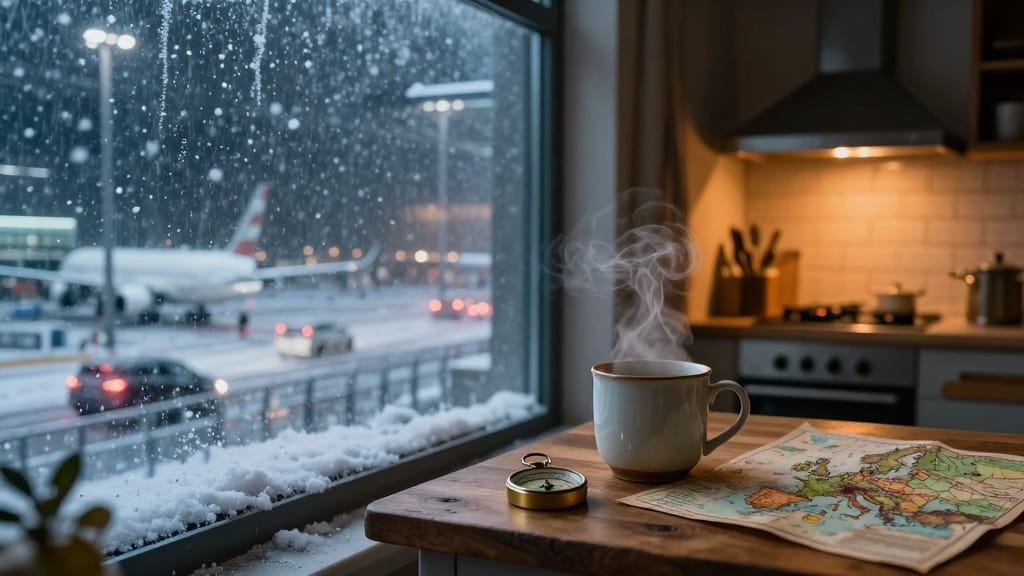
Honestly, trying to travel right now feels like playing a video game on "Hard Mode." Heavy icing and historic snow levels are slamming major hubs, turning weekend getaways into logistical nightmares. As reported by Fox Weather, American Airlines had to cancel 16% of its Saturday schedule, with Delta following suit across five states. We aren't just talking about a few delays; we're seeing thousands of cancellations that could stretch well into next week. This is exactly why I always tell my friends to pack an "emergency kit" in their carry-on. If you’re in North Texas, KERA News notes that Winter Storm Fern is the main culprit, though there is a small silver lining: airlines like Southwest are at least waiving change fees so you don't lose your mind (or your money) trying to rebook. Having navigated the Chopin Airport in Warsaw during a blizzard, I know the frustration of seeing the "Delayed" board turn into a sea of red "Cancelled" notifications.
The technical side of this is even more brutal. When an airline pulls 16% of its fleet, the ripple effect is massive. It’s not just about that one plane; it’s about the flight crews who get timed out, the de-icing fluid shortages, and the sheer volume of passengers trying to fit onto the remaining flights. This represents a systemic vulnerability in our travel infrastructure that climate change is only making worse. We can expect these "historic" events to become the new seasonal baseline. For those of us who live for the mountains, it means calculating a "storm day" into every trip. If you don't have travel insurance that covers "Acts of God," you’re essentially gambling with your vacation budget. I’ve learned the hard way that a cheap ticket usually comes with the most headaches when the weather turns south.
It’s not just the air—the roads are a mess too. In Kansas, the Kansas Department of Transportation is pleading with people to just stay home, as blowing snow makes visibility a joke. According to KSNT, these severe conditions are making "essential travel only" the mantra of the weekend. Even in NYC, NY1 reports that Mayor Zohran Mamdani is urging everyone to stock up on the essentials now. From a photography perspective, "whiteout" conditions are a nightmare to shoot but a fascinating study in environmental power. My advice? Check your flight status every hour, pack an extra power bank, and remember that sometimes the best adventure is the one where you actually make it home safely. Don't be that person caught on the highway with half a tank of gas and no blankets. This winter is proving that preparation is the difference between a funny story and a dangerous situation.
Hunkering Down: The Snow Day Menu and Heart-Healthy Living
When the travel gods say "no," the kitchen says "yes." If you’re stuck inside, it’s time to level up your food game. We aren't just talking about basic noodles here—I’m talking about "main character" meals that make the blizzard outside feel like a background aesthetic. The Washington Post suggests leaning into "cooking projects" like braised beef or high-end hot chocolate—stuff that takes time and makes the house smell incredible. There is something fundamentally healing about tending to a slow-cooker while the wind howls against the window. For those of us trying to keep it a bit lighter after the holiday pierogi binge, Delish has a list of 77 healthy dinner ideas that hit that sweet spot between "comfort food" and "not a total carb-bomb."
Speaking of health, it's a great time to audit your pantry. According to SELF, women should be focusing on specific heart-healthy staples to keep their "tickers" in shape, which is basically the ultimate lifestyle buff for your real-life character sheet. Think avocados, walnuts, and leafy greens—foods that fight the inflammation that often comes with winter stress. If you're a fan of Taco Tuesday but want more protein—and let’s be real, who doesn't need a protein boost when they’re shoveling snow?—Real Good Foods Co. just launched a high-protein flour tortilla that’s actually a game-changer. These are perfect for making quick wraps when you’re too busy gaming or editing photos to commit to a three-hour braise.
You can even use them for some of the new globally-inspired recipes from Food & Wine, like their spiced lentil or tortilla soups. There's something so satisfying about making a meal that feels "global" while you're literally snowed in. It’s like traveling with your taste buds. This shift toward "functional comfort food" represents a broader trend of people wanting their meals to work harder for them. We want the cozy vibes, but we also want the nutrients to boost our immune systems against winter bugs. As someone who appreciates a good aesthetic, I also love the "food photography" aspect of a well-plated soup. The contrast of a vibrant orange carrot ginger soup against a dark, minimalist bowl? That's the kind of content that makes a snow day feel productive. It's about taking control of your immediate environment when the external world feels chaotic.
The World Through a Lens: From Wildlife to Weird Stock Photos
As a photography nerd, I’m always looking at how images tell stories that words can't catch. This week has been a goldmine for visual inspiration, ranging from the majestic to the utterly bizarre. The Guardian's "Week in Wildlife" gallery features everything from proud eagles to goofy seals, reminding us why we need to protect these habitats. When you see an eagle looking directly into the lens, it’s not just a cool photo; it’s a moment of connection that cuts through our digital noise. It’s that same passion for the natural world that Brooklyn Beckham explored in his early photography work, focusing on the bond between family and the environment. While he gets some flak for his celebrity status, the core idea—using a camera to document what you love—is universal.
But photography isn't always galleries and awards. Sometimes it’s just bizarre, and meme culture feeds on this stuff. Bored Panda recently highlighted the hilarious and "weird" ways stock photos get used—think childhood photos ending up on adoption posters without the model knowing or becoming the face of a "failed Tinder date" meme. It’s a reminder that once an image is out there, it takes on a life of its own. On the more professional side, the UK Landscape Photography Awards showcased how professionals capture the moody, atmospheric beauty of the British Isles. These shots are a masterclass in composition and patience, often requiring hours of waiting in freezing rain for that one perfect second of light. This level of dedication is what separates a snapshot from a piece of art.
These beautiful landscapes stand in stark contrast to the hard-hitting news photos in The Guardian’s global 20-picture wrap-up, which reminds us of the harsher realities—like the ongoing Russian airstrikes in Kyiv. As a Pole, seeing these images of our neighbors in Ukraine is a constant reminder that peace and travel are privileges we can't take for granted. Photography acts as both a window and a mirror here; it shows us the beauty we could lose and the reality of what others are losing right now. Every time I pick up my camera to take a landscape shot in the mountains, I’m struck by how lucky I am to be on the "calm" side of the border. This awareness adds a layer of depth to my work that I didn't have a few years ago. It’s not just about the "likes"—it’s about documenting a world that is changing faster than we can keep up with.
Europe at a Crossroads: Unity, Trade, and the "Trump Effect"
Living in the EU, you can feel the tension in the air lately. It’s not just the weather; it’s the politics. European leaders are currently scrambling to figure out their "what's next" moment in a world that feels increasingly fragmented. According to The New York Times, a major rift has opened between the U.S. and Europe, leaving Brussels to decide how to stand on its own two feet. This isn't just a minor disagreement; it’s a fundamental shift in the post-WWII order. Even the usually MAGA-friendly populist leaders in Europe are drawing lines in the sand; for instance, The Washington Post reports a significant split over threats regarding Greenland, showing that national pride often outweighs ideological alliances. It’s like everyone is finally realizing that being "friends" with a superpower doesn't mean you won't get caught in the crossfire.
The pressure is coming from all sides, and the rhetoric is getting sharper. At the World Economic Forum in Davos, CNBC reported that Volodymyr Zelenskyy delivered a blistering critique, calling Europe "weak" for trying to placate interests rather than facing global threats head-on. As The New York Times put it, Zelenskyy basically told the continent to step up or be left behind. For Poland, this isn't just a political debate; it's a matter of existential defense. We are the gateway to the EU, and seeing our leaders grapple with the need for a unified European defense force is both encouraging and terrifying. Zelenskyy’s message was clear: the time for "business as usual" ended a long time ago. The future of the Schengen Area—and our ability to travel freely as we do—depends on this unity.
This isn't just about war; it's about economic survival and the "bonds" that hold us together—literally and figuratively. Interestingly, The New York Times also notes that Europe still holds significant leverage over the U.S. economy, especially in terms of trade and bonds. If Europe decides to move away from the dollar or strengthen its own internal markets, the global economy will feel the tremors. For those of us living here, this shift toward a more self-reliant, "Strong Europe" could change everything from the price of our gadgets to the strength of our passports. We are witnessing the birth of a more muscular EU, one that doesn't just ask for a seat at the table but builds its own table entirely. Whether we’re talking about defense or trade, the message from Davos is that Europe needs to grow up, and fast.
The Evolution of Adventure: Why Preparation is the New Flex
If there’s one thing this season is teaching us, it’s that "winging it" is officially dead. Whether you’re a photographer chasing the northern lights or just a traveler trying to get home for the weekend, the margin for error has vanished. We are seeing a shift where the "flex" isn't just the destination, but the gear and the plan you used to get there safely. This reflects a broader cultural change toward "prepper-lite" lifestyle choices. People are investing in better batteries, more reliable AWD vehicles, and high-quality outdoor gear because they realize the infrastructure we take for granted can fail at any moment. As someone who spends half my time in hiking boots, I’ve noticed that "adventure" now includes knowing how to read a weather radar as much as it does knowing how to frame a shot.
This focus on resilience also extends to our digital lives. As we see in the Bored Panda stories about stock photos, our digital footprints are messy and unpredictable. In the same way we prepare for a storm by stocking the pantry, we need to be more conscious of how we share our lives online. The "wildlife" we see in The Guardian is a reminder that there is a world outside of our screens that is worth protecting, but that world is increasingly being mediated by tech. If you’re traveling this winter, you’re likely using five different apps just to manage your flight and hotel—which is great until your phone dies in a terminal with no outlets. The "modern adventurer" is someone who can navigate both the digital and the physical world with equal competence. It’s about being "pro-tech" but not "tech-dependent."
Looking at the macro level, this "preparation" mindset is what Zelenskyy is demanding from Europe. He isn't just talking about tanks and drones; he’s talking about a mental shift toward readiness. When we see the New York Times coverage of Davos, it’s clear that the "chill" in the air isn't just the Swiss winter—it’s the realization that stability is a choice we have to make every day. For a traveler, this might mean choosing destinations that are politically stable or supporting local economies that are resilient. For a photographer, it means documenting the "now" because the "tomorrow" is no longer guaranteed. We are all becoming a bit more tactical in how we live, and honestly, maybe that’s not a bad thing. It forces us to be more present and more intentional with our choices.
Conclusion: Finding Balance in a Chaotic Season
If there is one thing this week has taught us, it’s that flexibility is the ultimate survival skill. Whether you’re navigating the flight cancellations at American Airlines or reconsidering your views on European sovereignty, the world is moving fast. We’re seeing a shift where the personal—like what healthy foods we eat or how we photograph a seal—intersects with the massive, like the geopolitical tension in Davos. This winter is a reminder that we are all connected, whether by a shared weather system slamming the Atlantic or a trade bond that links Brussels to Washington. As a Pole who loves nothing more than a quiet hike in the mountains, I’m learning to appreciate the chaos as much as the calm—it’s all part of the story we’re living through.
Looking forward, I think we’re going to see a much more "localized" approach to lifestyle and travel. As global travel becomes more unpredictable due to climate events and political shifts, more people will invest in their immediate surroundings. We’ll see a surge in "micro-adventures"—mastering that Food & Wine soup recipe or exploring local landscape photography. But we also can't look away from the horizon. Europe's ability to project strength and unity will determine if our future remains as open and adventurous as we hope. For now, stay warm, stay safe, and maybe keep those high-protein tortillas handy—it’s going to be a long, fascinating winter. Let's make sure that when the snow finally melts, we’re more resilient than when it started. Peace out, and see you on the slopes (hopefully)!