Winter Storms and Trade Wars: Why Your 2026 Travel and Lifestyle Plans Just Got Complicated

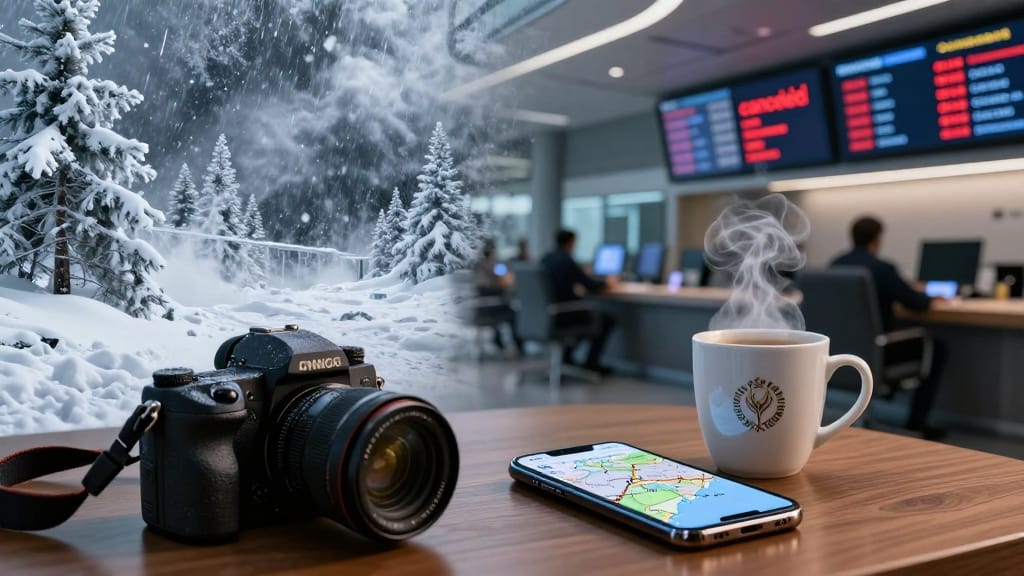
If you thought 2026 was going to be the year of carefree hopping across the Atlantic or peaceful winter road trips, I’ve got some news that might make you want to grab an extra-large coffee and sit down. Between freak snowstorms turning the Southern U.S. into a scene out of any survival game and a massive diplomatic standoff over Greenland that has my fellow Europeans reaching for the "trade bazooka," the landscape of travel and lifestyle is shifting faster than my camera’s autofocus. Honestly, as someone from Poland who thrives on planning the next big mountain trek or a weekend city break in the EU, seeing these disruptions settle in is both fascinating and a total headache. It feels like every time I check my feed, there's a new "once-in-a-generation" event happening. We’re seeing a weird mix of nature’s unpredictability and very human-made drama that’s keeping everyone from FBI agents to elite chefs on their toes. These aren't just headlines; they are the new friction points for anyone who wants to see the world or even just enjoy a decent meal without a side of geopolitical stress.
In this deep dive, we’re going to look at the "Triple Threat" currently hitting the travel industry: extreme weather, a deepening diplomatic rift between the U.S. and the EU, and a total shake-up in how we think about the food on our plates. I've always believed that traveling is about more than just the destination—it's about how you adapt when the flight is canceled or the local currency fluctuates. But the scale of what we're seeing now, from the 10% tariff threats to the redefinition of "healthy" food, is something else entirely. Whether you’re trying to navigate a snowy highway in Florida or wondering why your favorite German camera gear might soon cost a fortune, here is everything you need to know about the current state of global movement and lifestyle. Grab your gear, because it’s going to be a bumpy ride through the rest of the year.
Nature Strikes Back: The Winter Travel Chaos and the Logistics of Cold
I’ve hiked through some pretty gnarly conditions in the Tatra Mountains back home, but even I was surprised to see the headlines coming out of the States this week. We’re talking about weather that doesn’t just make you want to stay inside—it practically forces you to. According to NBC News, rare southern snow and a massive Northeast storm have completely disrupted holiday travel plans, with snow blanketing areas as far south as the Florida Panhandle. If you've ever seen a Floridian deal with a snowflake, you know it's basically the apocalypse for them. This isn't just a minor delay; it's a systemic failure for anyone trying to enjoy a long weekend. In places like New York, ABC7 New York reports that a fast-moving storm left Central Park and the surrounding Tri-State area with messy, slushy conditions that make even a quick walk to a café feel like a high-level boss mission.
The impact isn't just local; it's a domino effect that hits the entire global aviation grid. When major hubs like New York or Chicago get hit, the "snowball" effect (pun absolutely intended) hits every connecting flight, even those heading to Europe or South America. As reported by WGRZ, Erie County had to issue strict travel advisories as a long-duration storm moved in, highlighting how local infrastructure is being pushed to its limits. For those of us who love photography, these storms offer incredible "broken pattern" shots in nature—the contrast of white snow against dark urban iron is a vibe—but for the average traveler, it’s just a nightmare of canceled vouchers and airport floor naps. This volatility means travelers are increasingly forced to invest in "cancel for any reason" insurance, which adds another layer of cost to an already expensive hobby.
Beyond the immediate flight cancellations, we have to talk about the long-term implications for the travel industry. When weather patterns become this erratic, the traditional "seasonal" travel maps are essentially junk. We’re seeing a shift where travelers might start avoiding traditional winter hubs altogether, choosing more stable, albeit warmer, climates. However, even those destinations are no longer a "safe bet" as we see freezing temperatures reaching the Gulf Coast. This unpredictability is a massive challenge for the logistics of travel. Rental car agencies in the South aren't equipped with winter tires, and airports don't have the de-icing capacity of O'Hare or Heathrow. If you’re planning a trip in 2026, you basically have to pack like you’re going on an expedition rather than a vacation. The "new normal" is that there is no normal, and the infrastructure of the U.S. East Coast is struggling to keep up with a climate that refuses to stay in its lane.
The Greenland Standoff: Why Europe is Reaching for the 'Trade Bazooka'
Switching gears from the weather to something even colder: the current diplomatic relations between the U.S. and Europe. As a Pole, I’m always keeping an eye on how the EU stands up for itself. We've spent decades building a single market that allows us to travel and trade freely, so when that’s threatened, people get defensive. Right now, things are getting incredibly spicy. According to CNN Business, President Trump’s threat of a 10% tariff on several European countries over the Greenland dispute is threatening to unravel months of trade progress. It’s a bold move that has European leaders more than a little annoyed. It feels less like diplomacy and more like a high-stakes game of Monopoly where someone is trying to buy the board. As ABC News reports, the heads of all 27 EU nations are heading for an extraordinary meeting to discuss how to respond to this demand for "total control" of Greenland. This isn't just a minor tiff; it's a fundamental clash of sovereignty and economic interests.
This isn't just about politics; it’s about your wallet and mine. If you’re a fan of European exports—think luxury goods, cars, or even specialized photography gear like Leica or Zeiss—these tariffs are bad news. CNBC notes that Germany, France, and the U.K. are the most exposed to these tariffs. The EU isn't just sitting back, though; according to The Washington Post, ambassadors are already weighing retaliatory measures. CNBC also highlights that Europe is considering using its "trade bazooka"—a set of economic counter-measures—which could make traveling to or doing business with the U.S. even more complicated. For us Europeans, this feels like we’re being squeezed between traditional alliances and a new, more aggressive transactional foreign policy. It’s no wonder that, as Business Insider reports, foreign travelers have been avoiding the U.S. for eight straight months. Between the politics and the rising prices, many are choosing to keep their Euros closer to home, opting for trips to the Mediterranean or the Alps instead of NYC or LA.
The deeper analysis here reveals a fracturing of Western unity that could have massive implications for EU defense and security. While the primary argument is about an island in the North Atlantic, the subtext is about who calls the shots in the Arctic—a region that is becoming a high-stakes territory for resource extraction and new shipping lanes. If the U.S. and EU can't see eye-to-eye on Greenland, how will they coordinate on larger issues? From a lifestyle perspective, this trade war means your favorite French wine or Italian shoes could see a price hike of 20-30% once you factor in the tariffs and the supply chain disruptions they cause. It’s a lose-lose scenario for the consumer who just wants quality goods without the political surcharge. The "trade bazooka" isn't a weapon any of us want to see fired, but the EU seems ready to pull the trigger if it means protecting its economic sovereignty. For someone like me who loves to travel across these borders, it feels like the walls are slowly starting to close in again, which is the last thing we need in a post-pandemic world.
The Evolution of the Plate: From Ultra-Processed to 'Trump's Rules'
While the world argues over islands and trade, what we’re putting in our bodies is undergoing its own revolution. I love a good burger after a long day of snowboarding, but the shift in nutritional standards is wild to witness. Fox News reported on the Trump administration's new nutrition rules, which bring back red meat, butter, and full-fat dairy into federal guidelines. It’s a massive pivot from the "low fat" obsession of previous decades. It's like we've gone from "butter is poison" to "butter is a food group" overnight. For many, this is seen as a win for "real food" advocates who argue that natural fats are better than the synthetic alternatives that replaced them. However, it also signifies a massive win for agricultural lobbies, potentially shifting the balance of what ends up in school lunches and hospital meals across the U.S.
On the flip side, there is a growing grassroots movement away from the industrial food system altogether. A writer for The Guardian recently documented a week-long struggle to avoid ultra-processed foods (UPFs), highlighting just how hard it is to eat "clean" in a western society designed for convenience. As someone who tries to stay fit for hiking, I find this struggle incredibly relatable. It’s almost impossible to find something in a grocery store that hasn’t been tampered with. This creates a weird cultural split: on one hand, the government is encouraging a return to traditional, fatty staples, while on the other, health-conscious individuals are panicking about the emulsifiers and stabilizers found in almost everything. It’s a confusing time to be a consumer, and even more so if you're trying to maintain a specific lifestyle while traveling.
Food isn't just fuel; it's also a lifestyle and a bit of a social flex. We see this in the celebrity world too. Whether it's Bobby Flay and Brooke Williamson making headlines for diamond-studded gifts or the simple, elegant joy of a Washington Post roasted cauliflower with white bean puree, the culinary world remains a place of total contrast. While elite chefs are giving each other diamonds, the average person is just trying to figure out if their yogurt is going to give them a metabolic disorder. And we have to stay grounded—while we argue about whether butter is back or if cauliflower is the new steak, Al Jazeera reminds us that Yemen is facing its worst food crisis since 2022. It’s a sobering perspective on how our western "lifestyle" choices and dietary debates are, in many ways, a luxury that millions don't have. In the grand scheme of 2026, the global food supply chain is more fragile than it looks, and our domestic policy shifts can have ripple effects that reach much further than we think.
Capturing the Moment: Next-Gen Photography and Perspectives
As a total photography nerd, the gear news is what really keeps me going when the world feels like it's falling apart. If you've ever tried to get that perfect "tilt-shift" shot of a skyscraper or a mountain range to make it look like a miniature model, you’ll be glad to hear that technology is making this easier and more insane. The Drone Tilt Photography Market is booming and expected to be a $45+ million industry by 2032. We’re moving beyond simple snapshots into "actionable visual data." This means drones aren't just for hobbyists anymore; they’re becoming essential tools for everything from search and rescue to high-end architectural photography. The ability to tilt a sensor while 400 feet in the air is a game-changer for perspective correction, and I am here for it—even if it means I have to save up for another few years to afford the next Mavic.
But Honestly, you don't need a $5,000 drone to take photos that don't suck. Tom's Guide is sharing essential camera phone tips that can make even a basic smartphone shot look professional. They focus on things like the rule of thirds, using "night mode" properly, and—my personal favorite—cleaning your lens because, let’s be real, your phone is covered in fingerprints. These tips are perfect for those of us who travel light and don't want to carry a full DSLR kit through a snowy airport. It’s about the eye, not the gear. I’ve seen better photos taken on an iPhone 13 than on some high-end mirrorless setups because the photographer understood lighting and framing better. In 2026, the democratization of high-quality visuals is one of the few things that actually feels like progress.
The art side of photography is also pushing boundaries and giving me some much-needed inspiration. I was totally floored by the Digital Camera World report on an award-winning black-and-white image that focuses on "breaking patterns" in nature. It reminds me a bit of the enchanting macro photos by Magdalena, whose work reveals the delicate, "poetic" beauty of flowers and soft bokeh. Whether you’re learning about Variable ND filters at Photofocus or just trying to capture the soul of a landscape during a winter storm, the tools and the inspiration are more accessible than ever. For me, photography is the way I make sense of all the chaos mentioned in this article. If I can frame a shot of a blizzard or a protest, I feel like I have some small amount of control over the narrative. In a year defined by uncertainty, having a creative outlet isn't just a hobby; it’s a survival mechanism.
Conclusion: Navigating a Year of Total 'Re-Negotiation'
From the snowy streets of New York and the slushy sidewalks of London to the high-stakes meeting rooms in Brussels, it’s clear that our way of life is under constant "re-negotiation" in 2026. This isn't just a "challenging time"; it's a fundamental shift in how we move, eat, and see. The travel industry is feeling the pinch of both climate volatility and geopolitical ego—a combo that makes planning a simple vacation feel like solving a Rubik's cube while blindfolded. Meanwhile, our personal lifestyles—what we put on our plates and how we document our world—are becoming more tech-driven, health-obsessed, and strangely political. Even the domestic landscape in the U.S. is shifting in ways that suggest a state of permanent "alert," with Bloomberg reporting that the FBI is asking for volunteers to head to Minneapolis for temporary duty. It’s a year of mobilization on all fronts—some of it for defense, some of it for trade, and some of it just for survival against the elements.
Looking forward, the implication for all of us is clear: flexibility is the new currency. If you're a traveler, you need to be okay with Plan B (and probably Plan C). If you're a photographer, you need to find beauty in the "broken patterns" of a world that doesn't always make sense. And if you're just someone trying to eat a bit healthier, you've got to navigate a landscape where the rules of the game are changing every week. As someone who’s used to changing snowboarding lines on the fly when the weather turns in the hills, I’d say we all need to get a bit more comfortable with the unexpected. The world isn't going back to "normal"—not the 2019 version, anyway. But that doesn't mean we can't find adventure in the chaos. Stay curious, stay empathetic toward those who have it way worse (like the ongoing crises in Yemen or the frontlines of EU defense), and maybe keep your passport and your camera battery charged—you’re definitely going to need them for whatever comes next. 2026 isn't the year we thought it would be, but it's the year we've got, and I'm going to make sure I get some great shots along the way.
Anya is a photographer and traveler based in Poland. When she isn't hunting for the perfect macro shot or boarding in the Tatras, she's probably arguing about EU trade policy or searching for the best pierogi in Krakow. Follow her adventures as she navigates the complexities of 2026 one frame at a time.