Travel Trouble, Comfort Food Revolutions, and the Fight for European Sovereignty: A Global Pulse Check

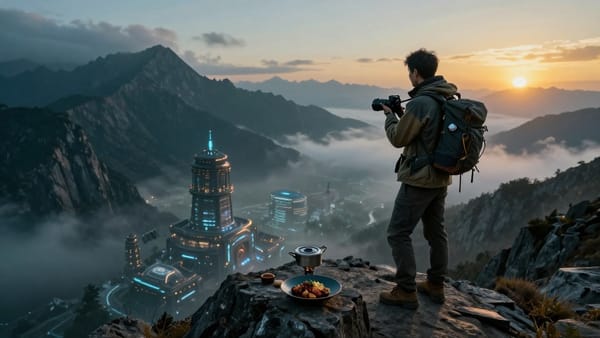
If there is one thing I’ve learned from years of hiking through the technical trails of the Tatra Mountains and trying to snap the perfect golden-hour shot without dropping my gear into a ravine, it’s that the world doesn’t care about your itinerary. We are currently witnessing a massive, high-speed collision between unpredictable nature and high-stakes human drama. From "historic" winter storms shutting down major U.S. travel hubs like Dallas—making my last layover there look like a picnic—to a sudden, head-spinning reversal in dietary wisdom that has steak and butter back on the menu, the lifestyle landscape is shifting beneath our feet. As a Pole who remembers when the shelves weren't always overflowing, seeing we now have the "luxury" of debating which fat is best feels like a weirdly peak-modern problem.
Meanwhile, as someone who values the freedom of the EU and our collective security, it’s wild to see how European leaders are playing a high-stakes game of "sovereignty chicken" regarding the Arctic. This isn't just about maps; it's about who we are as a continent. In this deep dive, I’m looking at how we adapt when our plans go sideways—whether that’s dodging a blizzard with a bowl of comfort food, rethinking our health through controversial food pyramids, or watching the EU flex its muscles on the world stage. It’s a moment of high tension, but as any photographer knows, the most dramatic light often comes right after the storm. We’ll explore the ripples of these changes across travel, dining, and the very concept of national borders, because honestly, being "stuck" is just an opportunity for a better story.
The Travel Chaos: When Nature Swipes Left on Your Vacation
There is nothing more frustrating than being hyped for a trip, bags packed with your best lenses and hiking boots, only to have a "historic" weather system decide otherwise. Right now, a monster storm born over California is stretching its icy fingers across the United States. According to Yahoo News, this system is expanding into a juggernaut that could potentially cripple travel for millions of people. For us in Europe, we’re used to snowy winters—we practically live in parkas five months a year—but the sheer scale of "Winter Storm Fern" is next-level. As reported by Fox News, airlines have begun issuing urgent advisories, allowing travelers to rebook without the usual soul-crushing fees.
The logistics of this are a total nightmare, and as a frequent flyer, I can practically smell the recycled air and desperation of the terminal. CBS News reports that over 12,000 flights have already been axed, with major hubs like Dallas/Fort Worth (DFW) urging people to stalk their X accounts for live updates. It isn’t just the big international gateways, either; the storm is hitting the American heartland hard. As The Sentinel notes, regions like Mifflin and Juniata counties are bracing for dangerous conditions that could last well into Monday. When a local paper is warning you to stay off the roads, you listen, especially when the "danger" involves whiteout conditions that make a DSLR sensor cry.
But why does this matter beyond the obvious "I'm stuck at the gate" misery? It impacts the global economy and our collective psyche. When a storm of this magnitude hits, the "just-in-time" supply chain that brings us everything from new camera lenses to fresh avocados takes a hit. From a photography perspective, these storms offer a grim beauty—the contrast of blue hour against fresh white powder—but they also highlight how fragile our high-tech world is. If you're stuck in the terminal, it's a mood—and not a good one. However, it's not all bad news on the travel front. In a surprising move that feels like a glitch in the simulation, Travel + Leisure reports that the U.S. has actually downgraded the travel risk for Jamaica to Level 2. While the North freezes, some tropical escapes are becoming more accessible, reminding us that while one part of the world shuts down, another opens up its beaches. It's a classic case of travel FOMO: do you brave the frost or flee to the Caribbean?
The Great Food Pivot: Butter is Back and Casseroles are King
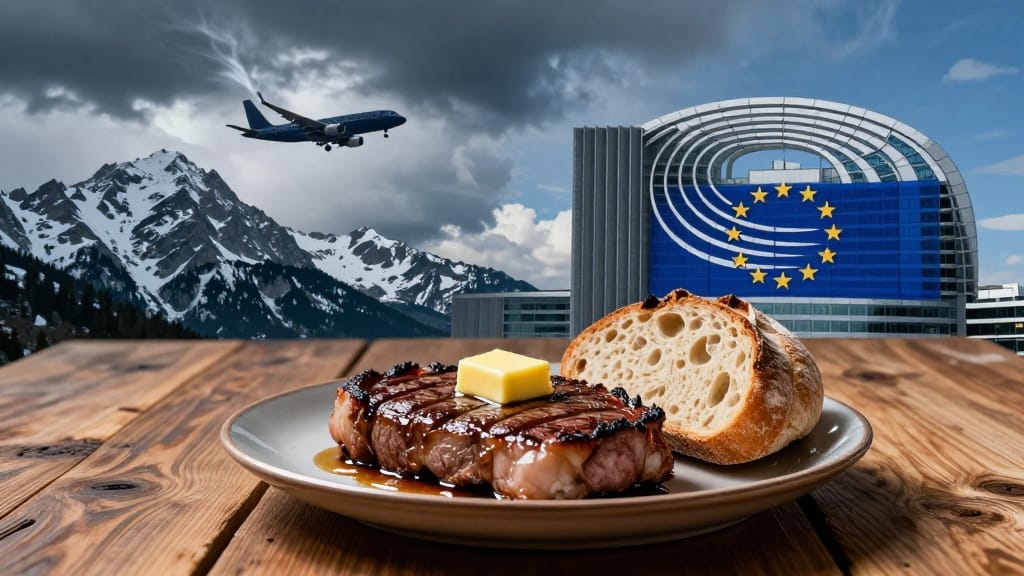
As someone who loves a good pierogi with plenty of melted butter and fried onions, the latest news from the nutrition world feels like a long-overdue personal victory. We’ve spent years—decades, really—being told to fear animal fats like they were the final boss in a video game. But the script is flipping. According to the New York Times, new dietary guidelines are now championing steak, whole milk, and butter—a massive departure from the old low-fat food pyramid. This "paradigm shift" is making people rethink their entire grocery list. For us in Poland, where dairy and meat are cultural cornerstones, this feels less like "new science" and more like "Grandma was right all along."
The implications here are huge. We are seeing a move away from ultra-processed "diet" foods toward whole, ancestral ingredients. If you're looking to embrace this while staying relatively healthy for your next hike, Delish has compiled a list of better-for-you dinner ideas that don't sacrifice flavor. It’s about balance—eating like an adult rather than just grazing on "light" snacks that leave you hungry ten minutes later. When you're snowed in during a storm like Fern, though, "healthy" often takes a backseat to "hearty." The Takeout suggests beginner-friendly dishes like "Cowboy Casserole" to get through the freeze. There is something deeply psychological about comfort food; it’s a defense mechanism against the chaos outside.
But there’s a serious side to being stuck at home without power, which happens all too often during these "historic" events. Cleveland.com reminds us to keep food safety in mind during power outages. It's all fun and games until your steak goes bad because the fridge died. Beyond the safety tips, there is a broader socioeconomic story at play. While some of us are debating the merits of organic butter, others are struggling to find a meal at all. In California, News Channel 3-12 highlights a nonprofit's race to rescue surplus produce to fight an exploding hunger crisis. It’s a harsh reality check: food waste is a massive issue in the West while food insecurity is rising. Whether it's high-end dietary trends or basic survival, our relationship with what we eat is becoming increasingly politicized and localized.
Photography: Capturing the World from New Perspectives
When I travel, my camera is basically an extension of my arm. There’s a certain magic in seeing how others view the world, especially when it’s through a lens that captures what the naked eye misses. This week, The Guardian showcased incredible wildlife photography, featuring everything from proud eagles to goofy seals. It captures that raw, unscripted beauty of nature that hits differently than a staged Instagram selfie. It’s about being in the right place at the right time—usually with a very expensive telephoto lens and a lot of patience.
Speaking of selfies, ever wonder why we hate looking at them? ABC7 Los Angeles explored the science behind "selfie self-criticism," which honestly makes me feel better about my own "delete" folder. It turns out our brains are wired to find the mirror image of ourselves more "correct," so when we see a standard photo, it feels... off. But the most inspiring stories come from those using simple tools to tell complex stories. The Guardian recently featured a stunning mobile phone photo by Aung Chan Thar that proves you don't need a high-end DSLR to capture the soul of a place like Myanmar. It’s the eye, not the gear, that matters most.
On the more technical and extreme end of the spectrum, the Exposure One Awards, as featured on Bored Panda, highlighted aerial and underwater shots that reveal angles of the world most of us will never see firsthand. These black-and-white images strip away the distraction of color to focus on texture and form. Even closer to home for many Europeans, BBC Scotland shared a beautiful community-sourced gallery of Scotland’s rugged landscapes. These images remind me why I love being a hobbyist photographer—there is always a new angle to discover, whether it's a Highland glen or a muddy street in Łódź. Photography is our way of freezing time in a world that’s moving way too fast, and these galleries serve as a vital reminder to slow down and actually *look* at things.
EU Sovereignty and the Greenland Standoff
Now, let's talk about the drama in our own backyard. As a Pole, I’m always watching how the EU stands up to global pressure. We aren't just a collection of states; we are a project of peace and shared power. The recent Greenland saga has been a masterclass in regional tension and a wake-up call for European leaders. According to the Washington Post, Europe is learning that standing firm against "hardball tactics" actually pays off. The "Greenland Crisis" has become a symbol of European territorial integrity in an era where certain global powers seem to think geography is a real estate market.
The New York Times notes that Brussels is increasingly protective of its borders against both Eastern and Western interests. This is about more than just a large, icy island; it's about the Arctic's future resources and strategic shipping lanes. The situation reached a fever pitch at Davos, where the U.S. sparked a diplomatic firestorm by suggesting a change in Greenland’s status. As reported by NBC News, while a full-scale acquisition was avoided, the trust between the U.S. and its European allies has been severely shaken. This is a big deal for us in Poland—we rely on NATO and American security, but we also don't want to be anyone's subsidiary.
There’s a financial edge to this standoff that feels like a thriller. Fortune points out that the U.S. holds "escalation dominance" in any potential debt war, given that Europe holds about 10% of the overall Treasury market. Using financial levers as weapons is the new normal. However, a temporary peace was brokered. According to Yahoo Finance, NATO Chief Mark Rutte helped secure a deal regarding Arctic security, leading to the removal of tariff threats. But make no mistake, as Denmark’s leadership insists, sovereignty isn't up for negotiation. This entire episode highlights the fragility of our alliances and the need for a stronger, more united EU defense posture, especially as the war in Ukraine continues to exert pressure on our eastern borders and forces us to rethink our military and energy independence from Russia.
Conclusion: Navigating a Changing Map
Whether we are trying to navigate a blizzard in Texas, a new diet in our kitchen, or a geopolitical standoff in the Arctic, the theme of 2026 seems to be "resilience through adaptation." We are moving away from old certainties—like the low-fat craze or the idea that international alliances are unbreakable—and moving toward a more defensive, localized, and perhaps more authentic way of living. For the traveler and the photographer, this means being more resilient and looking closer at what’s right in front of us instead of always chasing the next "untouched" destination. The world is getting smaller and more volatile, but that just makes the quiet moments more valuable.
As I think about my next trip—maybe back to the Tatras or perhaps a rainy weekend in Edinburgh—I’m realizing that the "perfect" trip doesn't exist. There will be flight delays, the weather will turn, and the political climate might shift. But that's the point. We don't travel to find perfection; we travel to find contrast. The future belongs to those who can pivot as fast as a weather forecast changes, and I’ll be here for it, camera in hand and some "Cowboy Casserole" in the oven. Staying informed is the only way to keep from getting lost in the storm, and as long as we keep looking through the lens with a critical eye, we'll find our way through the fog. See you out there, hopefully with a fully charged battery and a clear sky.