Travel, Tension, and TikToked Tastes: Navigating the 2026 Shift in Lifestyle and Geopolitics

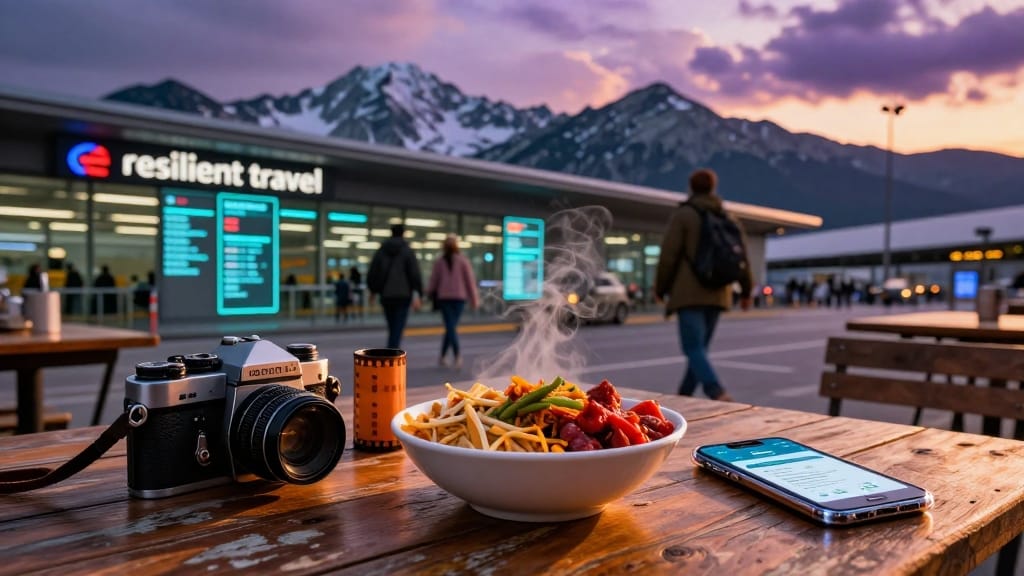
If you’ve been doomscrolling lately or trying to plan what used to be a simple weekend getaway, you know the vibe is definitely... complicated. As a Pole who practically lives for cheap Ryanair flights, mountain hikes in the Tatras, and capturing the perfect golden hour shot through a 35mm lens, I’m seeing a weird mix of "let’s go explore" and "wait, is it actually safe?" hanging in the air. We are heading into 2026 with a massive surge in global travel demand, but it’s paired with a thick, uncomfortable layer of international apprehension. It’s like the "revenge travel" era has mutated into "resilient travel." People are swapping month-long treks for "microvacations" and dealing with more biometrics at airport security than a sci-fi movie, according to the New York Times. It’s the ultimate paradox: we want the adventure more than ever, but we’re also keeping one nervous eye on our news alerts and local Telegram channels.
In this article, I’m diving deep into why the way we travel, eat, and capture memories is undergoing a massive shift. From the high-stakes political drama between the US and Europe to the quirky ways TikTok is changing the literal songs we hear in commercials, 2026 is shaping up to be a year of radical adaptation. As someone who views the world through a viewfinder, I notice the lighting is changing—geopolitically and culturally. Whether you're a photographer like me looking for a shot that doesn't include a security fence or just someone trying to figure out if your next tropical trip is still a go, there’s a lot to unpack. We’re moving toward a decentralized world where the old "norms" of the West are being challenged, and the "new normal" looks a lot like a mix of high-tech surveillance and grassroots community hustle. Let's break down the chaos.
Geopolitical Friction: Why European Travel is Getting Complicated
For those of us living in the EU, the news cycle lately feels like a fever dream directed by a chaotic AI. While we’re busy trying to protect our borders and keep the peace, the rhetoric coming from across the Atlantic has hit a boiling point. At the World Economic Forum in Davos, President Donald Trump made waves by claiming European nations are "not recognizable" anymore, specifically targeting our migration policies and spending, as reported by Fox News. Honestly, it’s a bit rich coming from him, but it’s causing real-world stress for travelers and diplomats alike. In Poland, we've always felt like the bridge between East and West, and right now, that bridge feels like it's being rattled by a category-five political storm. The EU is no longer just a trade bloc; it’s becoming a defensive necessity, especially as we continue to support our neighbors in Ukraine while facing external pressure to "pay up" for our own security.
The tension isn't just talk; it's about territory and trade in a way that feels very 19th-century, but with 21st-century consequences. The Washington Post highlights how Trump’s renewed "crusade" for Greenland—essentially an ultimatum for Denmark to give it up or face a full-blown trade war—is pushing European allies to a breaking point. This isn't just some weird real estate flex; it's a direct challenge to European sovereignty. It’s pushing us toward retaliation rather than the usual diplomatic conciliation. If you're planning to travel between the US and Europe in 2026, be prepared for more "random" checks and a bit of "side-eye" depending on which passport you're carrying. As The New York Times notes, while leaders try to talk about the future of Ukraine and the stability of the Arctic, they are being mocked by populist figures as weak or obsolete. For those of us living here, seeing the Guardian’s analysis, the choice is clear: Europe has to fight back or cease to matter as a unified cultural and economic power.
This "America First" vs. "European Sovereignty" clash has massive implications for the average tourist. We might see the end of the visa-waiver honeymoon or at least a significant increase in the price of the ETIAS (European Travel Information and Authorisation System). As BBC News points out, the "softly-softly" approach to transatlantic relations is officially dead. This isn't just about politicians in suits; it's about whether your flight to Copenhagen gets slapped with a "tariff" or if American brands in Warsaw start feeling the pinch of retaliatory taxes. As a proud European, I’m seeing my friends become more protective of our "European project." We value our open borders within the Schengen zone, but we’re starting to realize that the outside world is getting a lot more transactional. If you're traveling here, don't be surprised if the local vibe is a bit more pointed—we're tired of being told our countries are "unrecognizable" when we're the ones building the future of renewable energy and social safety nets.
The New Reality of Hazardous Travel and Safety Alerts
Even if you try to ignore the politics and just focus on your "out of office" reply, Mother Nature and local instability are making "spontaneous" travel a lot harder than it used to be. The concept of "wandering without a plan" is becoming a luxury of the past. If you were planning a tropical escape to Guatemala to see some ruins and drink amazing coffee, you might want to check your email first; the US Embassy in Guatemala recently issued a security alert following major gang attacks on police. It’s a huge bummer for adventure seekers, but safety is the ultimate "no-cap" priority. When public institutions like the police are under siege, it changes the entire geometry of a city. As a photographer, I know it means "stay in the hotel" instead of "hitting the streets for street photography," which is a heartbreak for anyone trying to capture the soul of a place.
Closer to my friends in the States, the weather is behaving like a literal movie villain. Climate change isn't just a "future problem" anymore; it's a "your flight is canceled tomorrow" problem. In Chicago, the National Weather Service has warned of hazardous travel thanks to a "burst of snow" and high winds that sound like a nightmare for anyone on the road. We're talking whiteout conditions where you can't even see your own hood ornament, let alone the road. Similarly, WGRZ reports that Erie County remains under a heavy travel advisory. These aren't just "be careful" warnings; they are "stay home or risk getting stranded" alerts. It’s making people rethink the winter vacation entirely. Why risk the airport stress when you could just stay in and play video games?
Even the elites aren't immune to the travel struggle. Apparently, Trump is ditching international travel in favor of domestic US tours after what was described as a "hellish" flight. If a guy with a private jet and a gold-plated bathroom on board is over the hassle of international commuting, what hope do the rest of us have sitting in 32B? This shift highlights a broader trend: travel is becoming more "local" or "regional." People are looking for high-quality experiences within a 5-hour drive or train ride rather than a 10-hour flight. In Europe, this is actually a win for sustainability—taking the train from Berlin to Prague is way better for my carbon footprint (and my soul) than constant flying. But it also means that the "exotic" is becoming more distant, literally and figuratively. We are entering the age of the "calculated adventure," where every mile traveled is balanced against a risk assessment.
Food Security and the "Artery Health" Reality Check
Being a foodie is basically a personality trait now—my Instagram feed is 50% mountains and 50% pierogi and ramen—but the global food industry is facing some serious growing pains that aren't very "aesthetic." On one hand, we’ve got absolute chaos in the supply chain that makes "farm to table" look like a dream. Have you seen the news about recalled tuna being distributed across 9 states? People reports it could be contaminated with botulism, which is a massive "nope" from me. When you're traveling, you usually trust that what you're eating won't send you to the ER, but the decentralization of food production means these oversights are happening more often. Meanwhile, on a global scale, Nigeria is working hard to review its National Policy on Food and Nutrition to tackle systemic malnutrition. It’s a stark reminder that while we’re complaining about "tuna recalls," millions are just struggling for basic calories. Food isn't just about Instagram aesthetics anymore; it’s about survival and policy.
But when we *are* eating for fun, we might be slowly hurting ourselves. A cardiologist recently gave a reality check in Parade about the worst foods for artery health. Spoiler alert: it’s almost everything that tastes good in a late-night airport terminal. Processed meats, ultra-refined carbs, and "convenience" snacks are the true villains of 2026. As travelers, we often rely on these "grab and go" options, but the long-term cost is real. This has led to a counter-movement: the rise of "slow food" travel. I’m seeing more people travel specifically to engage with traditional cooking methods, where the ingredients are recognizable and the process is the point. It’s about being mindful of what we put in our bodies when the world outside feels so chaotic.
On a brighter note, I absolutely love seeing community spirit IRL. While the global politics feel broken, the local level is where the hope is. The Cavalier Food Pantry hosted a "SouperBowl of Caring" to help students who are struggling with food insecurity. This is the 2026 energy we need—people looking out for each other when the systems fail. And then you have the weird, wonderful world of viral marketing. We have the ultimate "started from the bottom" story with a TikToker whose Dr Pepper jingle went so viral it was used in a national 2026 commercial. It shows that even in a world of high-stakes geopolitics, a girl with a phone and a catchy tune can still change her life. That’s the "main character energy" we’re all trying to manifest this year, honestly.
Photography’s New Era: From Tech Innovation to Scandal
As someone who never leaves the house without my camera (and usually a backup SD card because I'm paranoid), the photography world right now is a wild mix of high-tech and high-drama. It’s not just about "taking a picture" anymore; it’s about how that picture is processed, stored, and shared. On the professional and school side, things are getting a massive upgrade. CADY has partnered with Sony Electronics to bring better imaging tech to school photos. I wish my high school photos looked like they were shot on a Sony Alpha! Maybe I wouldn't have looked like a startled deer in most of them. This shift toward high-end mirrorless tech in everyday situations is changing our visual standards—we expect everything to look "cinematic" now.
Then there’s the gadget side of things, which is getting increasingly experimental. Gadget nerds and Gen Z photographers are obsessing over the Fujifilm Instax Mini LiPlay Plus. This little beast literally lets you print a photo with a QR code that plays a sound recording. Imagine a photo of a mountain stream in the Tatras that actually sounds like the water rushing over the rocks. It’s like a living memory you can hold in your hand. This is the "lo-fi" response to the "high-tech" world; we want something physical, but we want it to be smart. It’s perfect for travel journaling, where you want to remember more than just the view—you want the atmosphere.
However, the photography community isn't all "vibes and sunset shots." There is some real darkness. The community is still buzzing about the Troubleshooter investigation into Holly Christina Photography, where dozens of brides were allegedly left with no photos of their big day. As a photographer, that is heart-breaking and honestly, a bit of a stain on the profession. It reminds us that "influence" doesn't equal "professionalism." On the weirder side of the spectrum, Brooklyn Beckham's much-mocked photography book has seen a massive surge in price—up to £300!—not because people suddenly think he's the next Henri Cartier-Bresson, but because of some juicy family drama. It’s photography as a status symbol or a gossip artifact rather than art. For a real masterclass, though, everyone should look at Sam Abell’s career. He just received a Lifetime Achievement Award, reminding us that real photography is about patience, "the life of a photograph," and waiting for the right moment—not just some viral drama. It's a goal I'm constantly chasing with my own work.
Conclusion: The Forward-Looking View
So, where does this leave us as we navigate the rest of 2026? We’re entering an era where lifestyle and travel are no longer just about the destination—they’re about navigating a world that feels increasingly fragmented and unpredictable. Whether it's the EU standing up to trade threats over Greenland or a TikToker becoming the face of a corporate soda brand, the power is shifting toward those who can adapt quickly. We’re moving away from the "all-inclusive" mindset toward something more tactical, community-driven, and tech-integrated. We are travelers in a world that is redefining its borders, and that means we have to be smarter, more empathetic, and more prepared than ever before.
Expect to see more "friction" in travel—more biometrics, more security alerts, and higher costs—but also a deeper appreciation for the trips we do take. The rise of "microvacations" isn't just about saving money; it's about finding peace in small moments when the big picture feels overwhelming. We’ll also see a return to community-focused living as food insecurity and health concerns rise. If you're traveling, stay flexible, keep your eyes on the weather alerts, and maybe invest in a camera that records sound—2026 is going to be a year we’ll want to remember in full high-definition, both the good and the chaotic. Stay safe out there, keep your sensors clean, and don't forget to keep exploring, even if it's just a hike in the hills behind your own backyard. After all, the best shots aren't always in the guidebooks—they're the ones you find when you're just paying attention. Do widzenia and see you on the road!