The New Travel Reality: Economic Shifts, Nature-Based Escapes, and the European Arctic Standoff

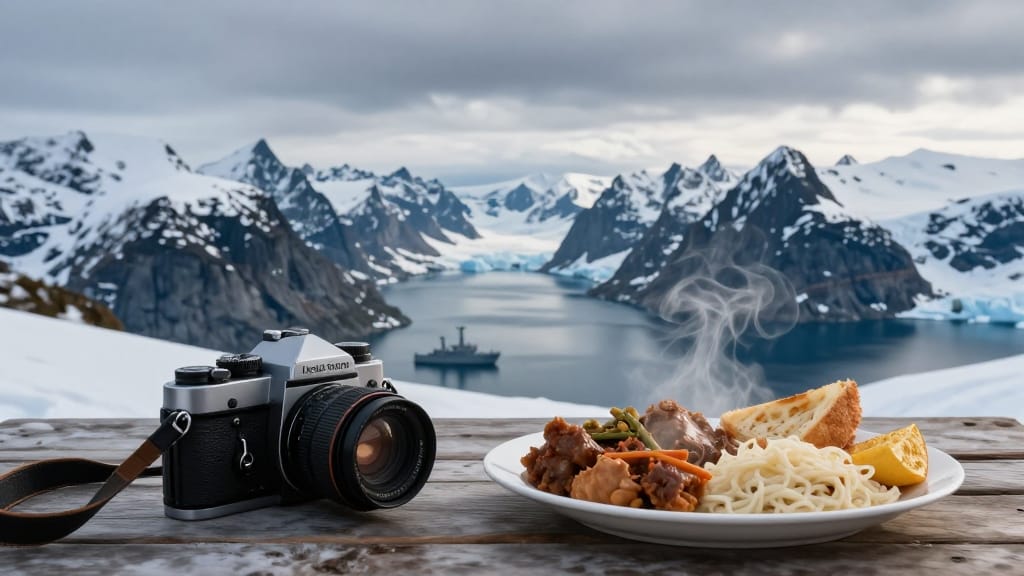
If you’ve been scrolling through your feed lately, you’ve probably noticed that the "vibe" of global travel is shifting—and honestly, it’s getting a bit intense. As a Pole who loves nothing more than packing a camera and heading for the mountains, I’ve been watching how the world is changing for us travelers. We are currently witnessing a massive collision between economic reality and a deep-seated desire for authentic experiences. From a cooling "tourism freefall" in major U.S. cities to a sudden military-backed focus on the Arctic, the map is being redrawn in real-time. Whether it's the rising cost of a schnitzel or the literal defense of European borders in Greenland, the luxury of "business as usual" is gone. Being from a country that knows a thing or two about shifting borders and economic pivots, I feel this in my bones. It’s not just about finding the best flight deal anymore; it’s about navigating a world where travel is increasingly shaped by geopolitical chess moves and a "K-shaped" economy that seems determined to make our lattes cost as much as a budget hostel bed used to. In this deep dive, we’re going to look at why the classic American road trip is losing its luster for international visitors, how inflation is changing what we eat, and why photography is becoming more of an obsessive lifeline than a hobby. We’re also looking at the North—because as reported by NBC News, European troops are arriving in Greenland to signal unity amidst fresh talk of American annexation. It’s a lot to process, but as we say in Poland, nie mój cyrk, nie moje małpy (not my circus, not my monkeys)—except this time, it kind of is our circus. The world is getting weirder, but we're still going to explore it.
The Great American Tourism Cool-Down: Why the "Magic" is Fading
For decades, the U.S. was the ultimate playground for Europeans and our neighbors across the pond in Canada. We grew up watching movies set in New York or the neon-soaked streets of Vegas, but that fascination is hitting a massive, expensive wall. According to Travel And Tour World, Canada’s economic downturn is teaming up with broader financial shifts to "tear apart" U.S. travel, specifically hitting heavy-hitting destinations like Florida, California, and Las Vegas. It’s wild to think of Vegas as a ghost town, or at least a quiet one, but when you look at the exchange rates and the sheer "sticker shock" of a weekend on the Strip, it makes sense. If you're a Canadian traveler, your dollar just isn't doing the heavy lifting it used to, and that’s leading to a "catastrophic decline" in foot traffic for the classic American itinerary.
This isn't just a Canadian problem; it's a global sentiment. As noted by Travel And Tour World, a tourism "freefall" is expected to plague major hubs like New York City, Orlando, and Chicago through late 2025. Why? It’s a cocktail of high interest rates, rising airfares, and a general sense of "is this actually worth it?" For a Pole traveling to the states, the cost of a flight combined with the mandatory 20% tipping culture (which, let's be honest, is a bit of a shock to us Europeans) makes a trip to the Tatras or the Alps look way more attractive. Even paradise has its problems; for instance, TheStreet reports that the U.S. government has upped travel advisories for popular Caribbean destinations due to rising crime. When you combine safety concerns in places like Jamaica or the Bahamas with a wallet that feels lighter every week, that "big city" or "tropical resort" vacation starts to lose its glow. We are seeing a shift where the middle-class traveler is being priced out of the traditional "luxury" hubs, forcing a massive recalibration of where we spend our hard-earned vacation days.
The implications here are huge for local economies. If the "freefall" continues into 2025, we’re going to see a shift in how these cities market themselves. They can’t just rely on the brand name of "New York" or "Orlando" anymore. They need to address the value proposition. For us travelers, this might actually be a good thing in the long run—it forces competition. But in the short term, it means our favorite U.S. spots might feel a little more desperate and a lot more expensive. This economic pressure is the first domino in a series of changes that are pushing travelers away from the concrete jungle and toward something more... grounded.
The Shift to Nature and the Gamification of Loyalty
So, if people aren't lining up for a $20 cocktail in Miami, where are they? They’re heading outside. There’s a massive movement toward what we call "slow travel" or nature-based exploration. According to kdhnews.com, the shift toward nature-based travel is being driven by a desire to escape the "constant pings" of digital life. We are over-stimulated, over-connected, and frankly, just tired. As a hiker and someone who occasionally gets lost in the Polish forests just to feel something other than a notification vibration, I totally get this. People are trading pings for dirt trails and open skies because nature doesn't have a subscription fee (yet).
This "outdoorsy" pivots isn't just about peace of mind; it's about control. In a nature-based setting, you control your pace, your environment, and often your budget. Camping or van-life in Europe or North America has exploded because it offers an escape from the hyper-inflated hotel market. However, the travel industry isn’t just letting us walk away into the woods without a fight. They are trying to gamify our loyalty to keep us in the system. Access Development recently partnered with GlidePathCX to expand airport loyalty programs, trying to turn the airport experience into something more rewarding. The "Amazon-ification" of travel rewards is an attempt to keep travelers engaged even when the economy is acting up. It’s a fascinatng paradox: we want to escape the digital world by going into nature, but we’re being lured back by high-tech loyalty apps that promise us a free coffee after our tenth flight through a crowded terminal.
From my perspective, this shift toward nature is a necessary correction. We’ve spent too long treating travel like a commodity to be consumed rather than an experience to be lived. Seeing the Arctic wilderness or the rugged coastlines of the North isn't just a "vacation"—it’s a reminder of what the world looks like without a filter. But as more people head to the trails, we have to talk about the "Instagram effect." Popular spots are getting trashed, and "nature-based" is becoming a buzzword that risks ruining the very silence people are searching for. It’s a delicate balance, and as travelers, we have to be more responsible. The move toward nature is also a move toward the "unplugged" life, which, interestingly, makes the food we eat and the way we document these moments even more precious.
The "K-Shaped" Plate: Inflation and the New Food Culture
If you've walked into a grocery store lately and felt a physical pang of pain at the price of butter, you’re not alone. In Poland, we’ve been dealing with some wild price hikes, but the U.S. situation is a whole other level of "oof." As reported by CBS News, U.S. food prices have surged 19% since 2022, with December recording the biggest jump in over three years. This isn't just "inflation"; it's a fundamental shift in how people survive. This economic pressure is creating what NBC News describes as a "K-shaped" economy. Essentially, the wealthy are doing fine and still ordering the $100 wagyu, while the rest of us are reconsidering if we really need eggs this week. The gap is widening, and it's visible on our plates.
The politics of the plate are also getting messy. According to The New York Times, a mix of extreme weather, complex labor issues, and the threat of new tariffs is keeping prices sky-high, even while political leaders claim everything is under control. This creates a weird tension for travelers. When I travel, half the fun is the food. But how do you enjoy a culinary tour when a simple lunch costs as much as a museum ticket? This has led to a fascinating trend: the rise of "elevated" comfort food and a return to basics. People are ditching the pre-packaged, ultra-processed junk—partly because of health concerns, as noted by Good Morning America, but also because if we're going to pay a premium, we want it to be real food. We’re seeing a shift where "authentic" and "local" aren't just marketing terms; they're the only things worth spending money on.
Take, for example, the "Bull’s Horn" in Minneapolis. As featured in The Star Tribune, it’s a place where a fine-dining chef has traded white tablecloths for bar food that is "quietly extraordinary." This is the future of dining in a K-shaped economy. We want quality, but we want it without the pretension—and the bill—of traditional high-end dining. It’s about the "third place"—that spot between work and home where you can actually afford to sit and exist. For us travelers, this means the "hidden gems" are becoming the main event. We’re looking for the holes-in-the-wall that serve a mean pierogi or a perfect burger without the "luxury" markup. This economic squeeze is making us better, more discerning eaters, even if it’s making our bank accounts cry.
The Art of Obsession: Why Photography Matters More Than Ever
As someone who literally cannot walk ten feet without spotting a "perfect shot," the current state of photography feels like a personal victory. In a world that feels increasingly chaotic and expensive, photography is how we reclaim some sense of control and beauty. It’s an "art of obsession," as Fstoppers calls it. Whether you're obsessing over the perfect lighting for a landscape or chasing the high-speed drama of a sporting event, photography is the lens through which we process this new reality. It’s not just about "taking photos" anymore; it’s about slow, methodical storytelling in an age of 5-second TikTok clips.
This dedication was celebrated recently at the World Sports Photography Awards 2026. The winners showed us why this craft matters. The top prize went to a mind-bendingly cool shot of Carlos Alcaraz’s shadow on a tennis court. As PetaPixel noted, the image captures a "moment of impact" that the naked eye would miss. This is what we’re all looking for when we travel—that one moment that justifies the delayed flights and the overpriced airport sandwiches. We are also seeing a renewed respect for the pioneers of the craft. PetaPixel reported that the legendary landscape photographer John Fielder is being honored with a commemorative stamp. This is a huge win for those of us who believe a photo can define the soul of a place. Fielder’s work in Colorado did more for conservation than a thousand brochures ever could.
For my fellow gear-heads and photography nerds, it’s also about the relationship we have with our tools. The TIPA camerAmore 2026 contest is currently leaning into this, asking people to share their passion for their gear. It’s not just about having the most megapixels; it’s about the camera as a companion. When I’m hiking in the rain, my camera is what keeps me sharp—it forces me to look at the textures of the moss or the way the light hits a puddle. In a year where travel feels more "intentional," our photography is becoming more intentional too. We aren't just "doing it for the 'gram." We’re doing it to remember that even in a "tourism freefall," the world is still breathtakingly beautiful if you know where to look. It’s an anchor in the storm.
Arctic Standoff: Greenland and the Defense of European Sovereignty
Now, we have to talk about something a bit more "real." As a European, seeing our northern flank become a geopolitical chessboard is definitely not on my 2026 bingo card, but here we are. The Arctic is heating up—and not just because of climate change. According to Fox News, European countries have deployed military personnel to Greenland in a rapid-response mission. Why? Because the Trump administration has been making some very "bold" (and by bold, I mean terrifyingly specific) comments about US interest in taking over the territory. This isn't just political theater; NPR confirms that troops from France, Germany, Norway, and Sweden have landed in Nuuk to bolster security.
For those of us in the EU, this feels like a watershed moment. It’s about standing up for a Nordic neighbor and saying that sovereignty isn't a commodity you can just buy. As reported by CNN, these NATO allies are participating in joint exercises with Denmark to send a clear message. It’s a literal line in the ice. This is particularly relevant given the broader context of European defense; while this isn't directly about the war in Ukraine, the sense of urgency regarding border security and "who owns what" is definitely influenced by the ongoing tensions on our eastern borders. We are seeing a Europe that is more willing to flex its muscles to protect its own interests, especially when it comes to the resource-rich and strategically vital Arctic.
Despite the presence of European boots on the ground, the White House doesn't seem to be backing down. The BBC reports that Press Secretary Karoline Leavitt stated the deployment wouldn't change the President’s "bold vision" for the island. This creates a really weird vibe for northern travel. Greenland has always been this "bucket list" destination for photography and adventure, but now it’s a site of military tension. It reminds us that no matter how far we travel into the wild, we can’t escape the politics of our time. As a traveler, it makes me think twice about the places we take for granted. One day it's a quiet hiking spot; the next, it's a strategic outpost. It’s a sobering reminder that the "freedom" of travel is intrinsically tied to the stability of the world around us.
Conclusion: The Future is Intentional
The travel and lifestyle landscape of 2026 isn't just "different"—it’s more demanding. We are moving away from the era of mindless consumption and into an era where every trip, every meal, and every photo carries more weight. The "freefall" of U.S. tourism is a signal that the old ways of doing things aren't working anymore. People want value, they want nature, and they want truth. Whether it's the 19% jump in food prices making us appreciate a simple bar burger or the arrival of troops in Greenland reminding us that geography is still destiny, the world is asking us to be awake. This isn't necessarily a bad thing. Being "more awake" makes for better photography, deeper memories, and a more profound appreciation for the places we can still visit.
As we look forward, the travelers who "thrive" will be the ones who adapt. We’ll be the ones finding the hidden trails in the mountains, supporting the chefs who keep things real, and documenting the world with an "obsessive" eye that looks beyond the surface. We'll be watching the news, sure—because we have to—but we'll also be packing our bags. The world is a complex, beautiful, and sometimes scary place, but as long as there are mountains to hike and stories to tell, we’re going to be out there. Just maybe bring a little extra cash for that schnitzel, and definitely keep your camera ready. The future is uncertain, but the adventure is definitely still on.