The New Gaming Playbook: Cross-Platform Dominance, Tech Frontiers, and the 2026 Hype Train

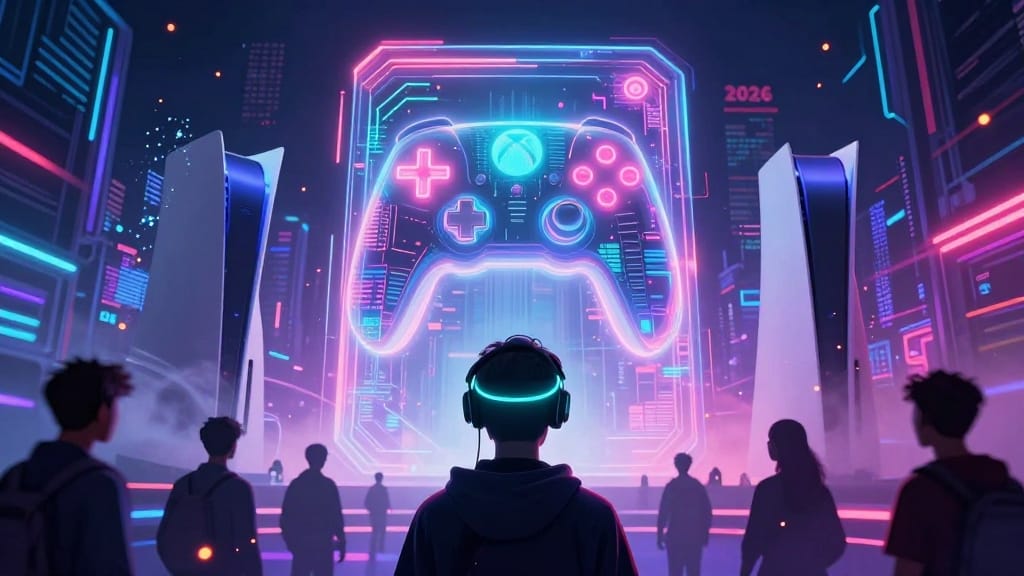
Listen up, fam—the gaming landscape isn't just changing; it’s being completely rewritten in real-time. We’ve officially entered a timeline where the term "console exclusive" is starting to sound like a dusty relic from the 16-bit era. Your favorite plastic box is no longer a walled garden; it’s basically just a portal to a massive, interconnected universe of content where IP is king and hardware is just the delivery mechanism. From Microsoft essentially printing money by dropping their crown jewels on PlayStation hardware to the rise of brain-sensing tech that feels like it’s ripped straight out of a Cyberpunk 2077 braindance, the industry is leveling up in ways we didn't think possible even three years ago. We're seeing a massive shift where the line between "gamer," "viewer," and "social butterfly" is blurring into one giant digital lifestyle. If you aren't multi-platform at this point, are you even playing? It's a Wild West scenario out there, and the traditional gatekeepers are finally realizing that staying behind a paywall is a one-way ticket to a "Game Over" screen. Whether you're a sweat in ranked lobbies or a cozy farmer in a pixel-art valley, the rules of engagement just got a massive patch update.
This year is already starting off with an absolute bang, and let’s be real, my backlog is crying for mercy. While we’re still reeling from the legendary difficulty of 2025 hits and the absolute domination of cross-media streaming platforms, the roadmap for 2026 is already looking stacked enough to break the internet. Whether you’re a frame-rate snob on a 4090-powered PC, a couch warrior on PS5 Pro, or a mobile grinder on the latest iPhone, the next 24 months are going to be a total fever dream. We’re diving deep into why the old "Console Wars" are effectively dead (RIP to the fanboy toxicity, you won't be missed), how tech is chasing the "pro-player" dream with literal neural interfaces, and why your next favorite movie might actually be a game you platinumed five years ago. GGWP to our free time and our bank accounts, because the grind literally never stops. Strap in, grab a Chug Jug, and let’s break down the state of the game in this deep-dive analysis. The meta is changing, and you don't want to be the noob left behind with a legacy controller.
The End of the Console Border: Xbox’s $300 Million Masterstroke
If you told me ten years ago that an Xbox flagship title would be the biggest thing on PlayStation, I’d have called you a total noob and told you to touch grass. But the numbers don’t lie, and they are absolutely massive. According to TrueAchievements, Playground Games’ Forza Horizon 5 has reportedly generated a staggering $300 million on PlayStation. This isn't just a small win for Microsoft's bank account; it’s a total shift in corporate philosophy that signals the end of an era. Further data reported by Pure Xbox suggests the game has moved five million units on PS5 alone within its first year on the platform. Think about that for a second. That's five million players who previously had zero access to the festival-racing GOAT, now handing over cash to the "rival" camp. This proves that high-quality "legacy" titles have massive untapped value when they finally shed their exclusivity shackles and go multiplatform. It turns out, gamers don't actually care about the logo on the box as much as they care about 4K drifting in a simulated Mexican desert.
This "Trojan Horse" strategy is honestly a genius move by Phil Spencer and the Xbox team. By saturating the rival market with their best hits, they are turning PlayStation into a secondary storefront for Microsoft Gaming. While Microsoft is raking in the loot from Sony fans, they aren't totally ghosting their own base. XboxEra reports that Xbox Game Pass continues its relentless momentum with three new titles dropping in mid-January 2026 to keep subscribers engaged and the "value king" narrative alive. However, it’s not all smooth sailing in the digital storefront world. Managing these massive libraries is getting complicated. Interestingly, TrueAchievements mentions that some Xbox players are receiving refunds for Red Dead Redemption after accidental double-purchases, highlighting the growing pains of managing digital rights across console generations and storefronts. It’s a reminder that even in a digital-first world, the pipes sometimes get clogged.
But wait, there's more nostalgia bait on the horizon. Ubisoft is also looking backward to move forward; as noted by Pure Xbox, a "Definitive Edition" of The Division seems to be in the works to celebrate its 10-year anniversary. This follows a surprise 60FPS patch for PS5 players that basically breathed new life into the post-apocalyptic looter-shooter. Why does this matter? Because we are seeing a trend where "Old Games" are basically the "New Games" of the mid-2020s. Publishers have realized that it's cheaper to polish a gem than to dig a new mine. For us, it means better performance on old favorites, but it does make you wonder when the "remaster fatigue" is going to hit. For now, seeing Forza on a DualSense controller is the ultimate proof that the "Console Wars" have been replaced by the "Ecosystem Wars." Microsoft isn't trying to sell you a box; they're trying to sell you a service, and if that service happens to run on a Sony TV or a Nintendo handheld, they’ll take your money with a smile and a "GG."
The 2026 Hype Cycle and the "Silksong" Evolution
Looking ahead, the industry is bracing for a monumental 2026. The lists are already coming out, and they are spicy enough to give you heart-burn. Eurogamer has identified 93 games to watch, signaling a year that could be one of the densest and most chaotic in gaming history. We’re talking about a release schedule that makes 2023 look like a dry spell. For those looking for specific heavy hitters that aren't just indies, Esquire highlights 25 must-watch titles, featuring everything from a new 007 adventure that promises to be the ultimate spy fantasy to the long-awaited return of high-stakes podracing. It feels like 2026 is the year where the "Next Gen" finally stops being a marketing buzzword and starts being the standard. We are seeing developers finally drop support for the PS4/Xbox One era, allowing them to push geometry and AI to limits that would have melted a console five years ago.
But we can't talk about the future without acknowledging the games that broke our spirits (and our controllers) recently. The legend of Hollow Knight: Silksong continues to grow, and not just because of the memes. It’s becoming a benchmark for what we call "masocore"—a genre where the suffering is literally the point. As The Guardian describes in a legendary 40-hour battle with the game, it’s more than just a platformer—it’s a psychological gauntlet. This trend toward high-difficulty gaming is a direct reaction to the "hand-holding" era. Modern players crave that "GG" feeling that only comes after beating a boss that's been wrecking them for three straight nights. It's about the prestige and the "get gud" culture that defines places like Twitch and Discord. If you haven't cried at a boss battle in 2025, are you even a gamer? Silksong isn't just a sequel; it's a testament to the idea that some of us actually like the pain.
Of course, for every player who wants to suffer, there’s a player who wants to be absolutely OP. Some people just want to watch the world burn with mods. As Screen Rant points out, Cyberpunk 2077 mods—specifically those that jack the level cap up to 80—allow players to become "brilliantly game-breaking" gods in Night City. This highlights the two-pronged nature of modern gaming: you either want to be humbled by a pixelated beetle in Hollow Knight, or you want to be an unkillable cyborg ninja in Cyberpunk. Developers are starting to lean into this by giving us more robust "Creative" and "Photo" modes, acknowledging that sometimes, we just want to break the toy to see how it works. 2026 is going to be the year where these two extremes—the ultra-hardcore and the sandbox-god—reach their final forms. Whether you're chasing the platinum trophy or just trying to find a glitch that lets you fly, the 2026 roadmap has a seat at the table for you.
Hardware Evolution: From Brain Sensors to QD-OLED Deals
The tech we use to play is getting as "OP" as the games themselves. We're moving way beyond simple RGB lighting and mechanical switches into the realm of actual neuroscience. This isn't science fiction anymore, guys. Gizmodo recently tested a new EEG gaming headset from HyperX and Neurable designed to track brain activity in real-time. The goal? To help players enter a "flow state"—that magical zone where your reflexes are perfect and you’re basically Neo in the Matrix. It tracks your focus levels and literally tells you when you're tilted or when you're peaking. While we might not all become esports legends overnight just by wearing a fancy hat, the integration of bio-feedback into peripherals is the next frontier of immersion. Imagine a horror game that gets harder because the headset knows your heart rate just spiked, or a stealth game that alerts guards when your focus wavers. That’s the kind of tech-enabled nightmares we’re looking at.
For those who prefer their upgrades to be a bit more "old school" (and by old school, I mean cutting-edge visuals), the market is currently in a major sweet spot. We are seeing a massive price crash in high-end display tech. As reported by PC Guide, high-end Samsung QD-OLED monitors are hitting record-low prices below $400. This is huge because QD-OLED was "influencer-only" tech just a year or two ago. Now, elite-tier visuals—deep blacks, insane contrast, and 180Hz refresh rates—are actually accessible to the average PC gamer. If you're still playing on a dusty 1080p TN panel from 2018, it's officially time to upgrade or get left in the blurry past. The "visual tax" is disappearing, and the gap between a pro setup and a budget setup is narrowing faster than you can say "Ray Tracing."
Even mobile gamers aren't being left in the dust. The "phones aren't for real games" argument is officially dead and buried. With the right tweaks, the IBTimes suggests the iPhone 17 Pro can be a genuine portable powerhouse if you optimize its RAM and GPU settings. We’re seeing dedicated "Game Modes" become standard, treating the phone like a miniature console rather than a communication device. This matters because it’s democratizing high-end gaming. Not everyone can drop $2,000 on a rig, but millions of people have a flagship phone. By optimizing hardware for things like resident memory management and thermal throttling, Apple and Samsung are turning every subway commute into a potential raid session. The line between "mobile gaming" and "real gaming" is now so thin you'd need a microscope to find it. Whether it's brain waves or OLED pixels, the hardware of 2026 is designed to make the barrier between you and the game world disappear completely.
The Transmedia Takeover: Why Streaming and Gaming Are Merging
The "Netflix-ification" of gaming isn't just about subscription services like Game Pass or PS Plus; it’s about the very DNA of the content we consume. We’ve finally moved past the "cursed" era of video game movies where everything was a Super Mario Bros. (1993) level disaster. According to Cracked.com, there are at least 12 major video games currently being adapted for the big and small screens. We're talking about high-budget projects that treat the source material with the respect it deserves. This synergy is why my Twitter feed is a 50/50 split between gaming news and streaming leaks. Fans don't just want to play The Last of Us anymore; they want to watch the prestige drama, buy the vinyl soundtrack, and visit the theme park attraction. We're living in the "Omni-Gamer" era where your favorite IP follows you from your PC to your phone to your TV.
The streaming giants are leaning into this binge-culture hard, recognizing that gamers have the longest attention spans of any demographic. TVLine highlights that Netflix has perfected the "one-day binge" with its miniseries format. This is interesting because the 6-8 hour miniseries mirrors the exact length of a narratively-driven indie game like Firewatch or Stray. It’s the perfect "snackable" content for a generation that wants deep stories without the 100-hour commitment of an Ubisoft open world. This crossover of formats is making it easier for non-gamers to get into our world. They watch the show, they fall in love with the characters, and suddenly they're at Best Buy asking what a "PlayStation" is. It’s a massive funnel for new players.
Even theatrical releases are finding a second, more powerful life on streaming platforms in a way that feels very similar to a game's "Cult Classic" status. As Yahoo News reports, a Sophie Turner thriller is currently dominating Paramount+ after a relatively quiet run in theaters. This mirrors how games like Among Us or Cyberpunk 2077 found their true audience long after their initial launch windows. In the digital age, "Launch Day" is just the beginning of a game (or a movie's) life cycle. SlashFilm recently ranked the top streaming movies of 2025, and the takeaway is clear: the quality of "at-home" content is now rivaling the big screen for prestige. For gamers, this is great news. It means the adaptations of our favorite stories are being handled by people who actually care about the lore, not just people looking for a quick cash-grab. We’re moving toward a future where the distinction between "playing a game" and "watching a movie" is just a matter of whether you're clicking buttons or not.
The Social Future: Digital Meets Physical
Finally, we have to look at how "gaming" is expanding into our physical social lives. It’s not just about sweaty Discord calls or trash-talking in Call of Duty lobbies anymore. We are seeing a massive resurgence in what I call "Tactile Gaming." Front Office Sports notes that a new boom in "social gaming clubs" is happening. They are taking the old-school bowling alley blueprint—food, drinks, and a shared activity—and applying it to things like pickleball, pool, and high-tech darts. It’s "active social" gaming, and it’s the physical equivalent of a multiplayer lobby. People are craving real-world connection, but they want it framed around a game or a challenge. It's the "gamification" of going outside, and honestly, if it gets us to leave the "gamer cave" for a few hours, I’m all for it.
This "active social" trend is even bleeding into how we watch sports, making every game feel like a community event. Whether it’s a high-stakes college basketball matchup like Iowa State vs. Kansas, detailed by Busting Brackets, or international tennis like the Kooyong Classic, which can be streamed via Yahoo Sports and the SBS On Demand app, sports are becoming multi-screen social events. We aren't just watching; we're betting on apps, tweeting on our phones, and hanging out in group chats. The modern sports fan is basically a gamer who doesn't have a controller in their hand. The infrastructure of gaming—streaming apps, live stats, community chats—has officially conquered every other form of entertainment.
However, there’s a dark side to this digital-first future that we need to talk about: digital preservation. As SVG warns, there are at least five incredible video games that you literally cannot play legally today due to licensing nightmares and server shutdowns. This is the "Final Boss" of the modern industry. As we move toward 2026 and beyond, with all our $300 million ports and our brain-sensing headsets, we are at risk of losing the history that brought us here. When a digital storefront closes or a license expires, a piece of art can just... vanish. It’s a sobering reminder that while chasing the next big hit is exciting, we need to find a way to save the classics from being deleted forever. As the industry matures, we have to demand better preservation. Otherwise, we're just building a giant digital library where the books disappear every ten years. Let's keep the past playable while we sprint toward the future. GG to the devs, but please, keep the servers on.
Conclusion
The gaming world in 2026 is going to be faster, more accessible, and more deeply integrated into our daily lives than we ever imagined. We’re witnessing a seismic shift where the walls between platforms are finally crumbling, hardware is getting smarter (and way more affordable), and the crossover between games and cinema has finally attained "prestige" status. It’s no longer "cringe" to be a gamer—it’s the dominant culture. Whether you’re grinding through the "soul-crushing" difficulty of an indie masterclass like Silksong, tinkering with level caps in a modded Night City, or setting record lap times in a cross-platform Forza lobby, the message is loud and clear: the game is changing, and the barrier to entry has never been lower. We aren't just witnesses to this evolution; we are the ones driving it with every purchase, every stream, and every "GG" in the chat.
As we head into this brave new world of 93-game hype cycles and neural-link headsets, the most important thing is to stay curious and stay connected. The tech will get better, the graphics will get more realistic, and the movies will get bigger budgets, but the core of gaming remains the same: it's about the challenge, the story, and the community. Let's make sure we don't lose that heart as we chase the next $300 million milestone. So, clear out your storage, check your internet speeds, and get ready for the ride of a lifetime. The 2026 hype train has no brakes, and I am definitely in the front car. Stay online, stay salty, and most importantly, stay gaming. We’ll see you in the lobby. GG!