The New Gaming Era: Xbox’s Hardware Crisis, the Steam Machine’s Return, and the Fallout Transmedia Takeover

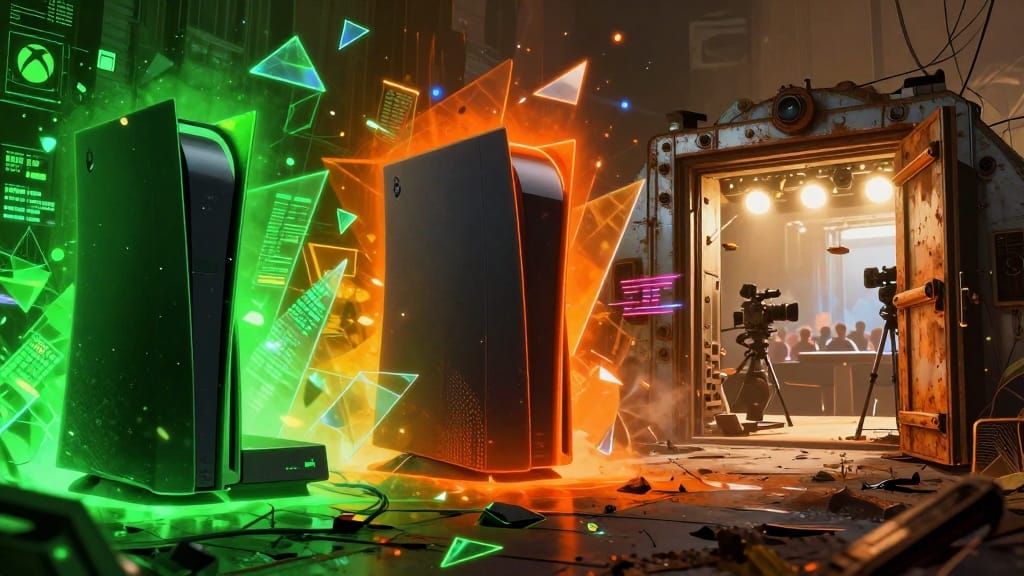
Listen up, gamers! The industry is currently in a state of absolute chaos, and honestly? I’m here for the drama. We are witnessing a massive, seismic shift in how we play, watch, and obsess over our favorite franchises. While Microsoft is out here struggling to move plastic boxes and facing "game over" screens in the retail space, Valve is reportedly jumping back into the living room fray to reclaim the throne. And don't even get me started on the Fallout universe! It’s out here proving that "video game movies" aren't a curse anymore—they’re a straight-up goldmine for lore hounds and casuals alike. Between hardware sales tanking and streaming services like Prime and Apple TV+ fighting over who gets to show us the next big RPG adaptation or live sports match, the lines between our consoles, our TVs, and our PCs are officially blurred. It’s like we’re playing a high-stakes match of Battle Royale where the map is shrinking and only the most adaptable publishers will survive. GG to anyone trying to keep track of it all, but don't worry, your favorite gamer girl has the full breakdown of everything going down in the industry right now. Grab your snacks, adjust your RGB, and let’s dive into the patch notes of the gaming world.
The Xbox Dilemma: Can Hardware Survive a 32% Sales Crash?
Kicking things off with some heavy news for the green team: Xbox is in a bit of a mid-life crisis, and it's looking pretty grim for the Series X/S fans. According to IGN, Xbox hardware revenue has been dropping for two years straight, with the most recent holiday quarter seeing a brutal 32% decline. Let that sink in for a second—a 32% drop during the most important shopping window of the year? That's not just a "dip," that's a total wipeout. It’s getting spicy in the boardroom, too. As reported by Media Play News, Microsoft’s gaming revenue fell 9% overall to $5.99 billion. When your hardware sales are down by nearly a third, people start asking the "big" questions about whether the box itself even matters anymore.
Forbes contributor Paul Tassi explores this existential dread in How Can Xbox Justify Another Hardware Generation After Sharp Declines?, noting that the investment might be getting harder for Microsoft's bean counters to defend. Think about it: why spend billions on specialized silicon and supply chains if your players are just as happy playing Starfield or Halo on their laptops or through a dongle plugged into their TV? This decline matters because it signals a potential end to the traditional console war. If Microsoft stops focusing on the box, Sony loses its main rival, which could lead to less innovation and higher prices for us. It’s a classic "be careful what you wish for" scenario for the PlayStation fanboys.
But wait, Microsoft isn't just going to AFK. They are pivoting hard toward the cloud to save their skin. To make things feel more "console-like" regardless of where you play, Techloy reports that Microsoft is testing a console-style redesign for the Xbox Cloud Gaming web interface. This move, combined with the metrics detailed by Game World Observer, suggests that the "Xbox" might soon be more of an app on your LG or Samsung TV rather than a physical machine tucked under it. Most people just want to jump into a lobby with their friends; they don't care about the teraflops if the latency is low enough. It’s a risky play, but with their hardware struggling to keep up with the PS5's momentum, the cloud might be their only Respawn point. We’re looking at a future where the hardware is invisible, but the Game Pass subscription is mandatory. Welcome to the "Xbox Everywhere" era—whether you like it or not.
The PC Rebellion: Valve’s New Cube and the Fight for "Eternal" Games
While Microsoft is out here struggling to justify its existence in the living room, Valve—the absolute GOATs of PC gaming—might be ready to take another shot at your TV setup. Rumors are swirling like a Smokescreen in CS2 about a new Steam Machine, a cube-shaped PC designed to hit a buttery-smooth 4K resolution at 60 fps. If this is true, it’s basically Valve saying "hold my Steam Deck" and going after the hardcore console market with the power of Linux and SteamOS. The original Steam Machines were a bit of a flop back in the day (RIP Alienware Steam Machine), but that was before the Steam Deck proved that Valve knows how to optimize hardware. A dedicated 4K box that plays your entire Steam library without a monthly subscription? That is a total game-changer for the PC Master Race members who want to game on a couch.
This potential hardware shift comes at a weird time for handhelds, too. Android Authority notes that AYN has discontinued the iconic Odin 2, though they're softening the blow with sales on the Odin 2 Portal. It feels like the market is consolidating—either you're a massive giant like Valve or Nintendo, or you're getting squeezed out of the game. But it's not just about the gear; it's about the right to actually *keep* the games we pay for. We’ve all been there: a developer shuts down a server for a game that’s only a few years old, and suddenly your favorite multiplayer title becomes a $70 paperweight. It's the ultimate "FeelsBadMan" moment.
According to The Irish Times, gamers are finally taking the fight to Brussels, campaigning for laws to stop developers from "killing" games by withdrawing online support without providing an offline patch. This movement for digital ownership is huge. If it succeeds, it could force companies like Ubisoft and EA to ensure their games remain playable long after the hype has died down. On a lighter note for the family-friendly crowd, the Nex Playground is reportedly delivering the motion-tracking dream that the Xbox Kinect failed to realize, proving that there's still a huge market for casual, active gaming that doesn't involve a keyboard and mouse. Between Valve's high-end aspirations and European legal battles, the PC ecosystem is basically a rebellion against the "planned obsolescence" of the console world.
Fallout and the Golden Age of Transmedia Takeovers
Can we talk about how Fallout is absolutely carrying the "gaming to TV" transition right now? It’s like the show got a permanent Buff to its Charisma and Intelligence stats. Season 2 is already generating massive hype by leaning into the deep, dark lore of the games that OG fans have been obsessed with for decades. As explained by SlashFilm, the show is reportedly going to reference the "Big Unseen War" with Canada—a brutal piece of lore from the games that’ll have lore-hounds screaming in excitement. This isn't just fan service; it's world-building that gives the show a weight most adaptations lack. Eurogamer also highlights that the show continues to deliver veteran cameos that make the series feel like a genuine love letter to the community rather than a corporate cash grab.
The success of the show is bleeding back into the games in a major way. Where there’s a hit show, there are remasters, baby! Rumors reported by indy100 suggest that Fallout 3 and New Vegas remasters might finally be happening to capitalize on the show's success. Imagine New Vegas without the crashes and with modern lighting... I might actually cry. This "transmedia" approach is the new meta for the gaming industry. You launch a show to bring in the "normies," then sell them a remastered game to turn them into hardcore fans. It worked for The Last of Us, it worked for Cyberpunk: Edgerunners, and now Fallout is perfecting the formula.
The trend of high-quality adaptations is spreading like a virus (the good kind, not the FEV kind!). Engadget reports that Apple TV has signed an unprecedented deal with fantasy author Brandon Sanderson, giving him major creative control. While not a game dev, Sanderson’s "Cosmere" is basically a massive RPG world-building exercise, and gamers are salivating over the potential crossovers. For those who prefer a little horror in their diet, Yahoo Tech reports that Bloober Team’s mysterious countdown is sparking hope for a remake of the cult-classic Rule of Rose. And for the "Disney Adults" out there who want a hit of pure nostalgia, AllEars.Net says a nostalgic video game bundle release date has been announced. We are living in a time where your favorite childhood hobby is now the pinnacle of mainstream culture, and I am 100% here for it.
The Streaming Wars: Sports, Thrillers, and Super Bowls
Streaming isn't just for 20-hour RPG adaptations anymore; it’s taking over the world of live events, and the "cable TV is dead" crowd is finally winning. Prime Video is flexing its muscles by live-streaming NBA games, positioning itself as a legitimate alternative to expensive cable packages. If you're a gamer, you're likely already on these platforms for the shows, so having live sports integrated is a huge "Quality of Life" improvement. Meanwhile, sports fans are prepping for the 2026 Super Bowl, with Yahoo Tech providing the ultimate guide on how to catch the big game without a traditional antenna. The convergence of tech and sports is real—pretty soon, you'll be betting on games and checking stats in a sidebar while the live feed runs in 4K.
Even international cricket is getting in on the streaming action, with NDTV Sports detailing where to watch the Pakistan vs. Australia T20I match. The message is clear: if it’s an event worth watching, it’s going to be on a platform that also houses your favorite gaming content. This is a massive shift in how we consume media. We’re moving away from "channels" and toward "hubs." If you’re more into movies than free throws, there’s plenty to look forward to. The thriller The Housemaid, starring Sydney Sweeney (who is basically a real-life video game protagonist at this point), is hitting VOD soon, according to NorthJersey.com.
For the college hoops fans who live for the brackets, Through the Phog breaks down the star-studded Kansas vs. BYU matchup. What does this have to do with gaming? Everything. The same tech that allows a million players to stay synced in an Apex Legends match is being used to deliver low-latency live sports to millions of viewers. Whether it's a basketball superstar hitting a buzzer-beater or a Vault Dweller escaping a Deathclaw, if it’s on a screen, it's being pushed through a fiber-optic cable in ultra-high definition. The "viewer" and the "player" are becoming the same person, and the streaming giants are betting billions that you'll stay tuned in for both. It’s a total takeover of our free time, and honestly, if the content stays this good, I’m not even mad about it.
Future Implications: The Great Convergence and the End of Platforms
The gaming industry is currently at a massive crossroads, and the roadmap for 2026 and beyond looks wild. Microsoft's hardware slump is more than just bad sales; it suggests that the "console wars" as we've known them since the 90s might be ending. We are moving into a "post-console" world where the brand matters more than the box. If Valve’s Steam Machine takes off, it could signal a return to high-end, open-platform gaming in the living room, effectively challenging the walled gardens of Sony and Nintendo with the sheer power of the PC library. It's a battle between the "closed" ecosystem of PS5 and the "open" ecosystem of Steam, and with the Steam Deck's success, Valve has the momentum to actually pull it off.
Moreover, as transmedia hits like Fallout continue to dominate the cultural conversation, expect every major gaming IP to get the Hollywood treatment. But here's the catch: gamers are picky. Bad adaptations (remember the Halo show? Yikes.) get roasted into oblivion, while good ones like Fallout and The Last of Us become legendary. Developers who focus on lore and respect the source material will win big, while those who just want a quick payday will get Ratioed by the community. We're also seeing a massive push for consumer rights. The battle in Brussels for game preservation is a turning point. If we can prove that digital purchases are actually *owned* by us, it will change the entire economy of digital storefronts forever. No more losing your library because a CEO wanted a tax write-off.
Ultimately, the power is shifting back to the players—whether that’s through legal battles for game preservation or the freedom to play Xbox games on a fridge via the cloud. The future isn't about which proprietary box you own; it's about the content you can access and the communities you build around it. The barrier to entry is dropping, and the quality of the "extended universe" content is rising. We are in the Golden Age of being a geek, and the next few years are going to be a wild ride. Just remember: in a world of cloud streaming and digital licenses, your Steam library and your lore knowledge are your true leveling stats. Stay tuned, keep your controllers charged, and don't let the sweaties get you down. GG, everyone! We’re just getting started.