The Future of Technological Integration: From AI Agents to Infrastructure Evolution

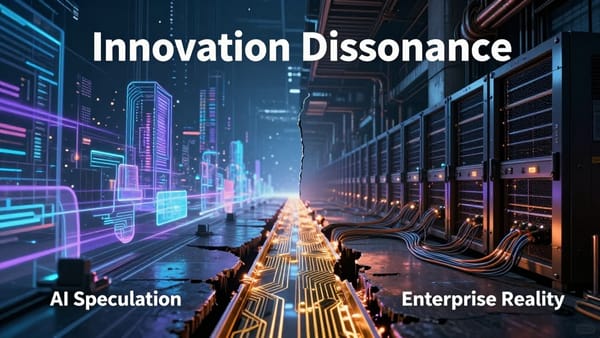
The global technology landscape is currently undergoing a systemic transition, characterized by the maturation of artificial intelligence and a significant recalibration of digital infrastructure. As the initial "hype cycles" of the past decade begin to settle, we are witnessing a shift from speculative investment to practical, value-driven implementation. This evolution is not merely about the deployment of new software but involves a fundamental restructuring of how platforms operate under regulatory pressure, how enterprises manage human capital, and how public infrastructure serves as a testing ground for innovation. Historically, technology has moved in waves of expansion and consolidation; we are currently entering a profound phase of consolidation where the "wild west" of early AI experimentation meets the rigid requirements of corporate governance and national security. The focus has moved from "what can the technology do?" to "how can the technology be responsibly integrated into the existing fabric of society?"
In this analysis, we will explore the critical developments shaping the tech sector, including the resolution of major platform disputes, the rise of agentic AI, and the ongoing modernization of software development tools. By examining current trends alongside the lessons learned from the "technology graveyard," we can better understand the trajectory of innovation in 2026 and beyond. This period represents a "great settling" where the digital and physical worlds converge through more sophisticated, autonomous interfaces. We will dissect how regulatory compromises are stabilizing the market, why the organizational chart of the modern corporation is being rewritten to accommodate AI, and why traditional infrastructure—like airports and childcare centers—is becoming the new frontier for high-tech deployment.
Platform Stability and the Resolution of the TikTok Mandate
One of the most significant regulatory hurdles in recent tech history has reached a resolution, marking a pivotal moment for international digital trade. As reported by ABC7 Chicago, TikTok has finalized a deal to spin off its U.S. operations, effectively concluding a multi-year struggle over data privacy and national security. This move ensures that the wildly popular short-form video app remains accessible to its millions of American users while satisfying legislative demands for structural independence. The resolution of this conflict serves as a case study in "digital sovereignty," where a nation enforces its right to oversee the data of its citizens without completely decoupling from the global internet economy.
According to Moneycontrol, this last-minute deal prevents a total ban that would have disrupted the digital advertising ecosystem and the creator economy. To understand the gravity of this resolution, one must consider the sheer volume of capital tied to the platform. A ban would have resulted in the immediate evaporation of billions in advertising spend and the displacement of thousands of small businesses that rely on the platform’s algorithm for customer acquisition. The survival of TikTok in the U.S. market suggests a growing preference for "divestiture over destruction" in modern tech regulation. This pragmatic approach provides a blueprint for how other foreign-owned platforms might navigate similar geopolitical pressures in the future, suggesting that the "splinternet"—a fractured global web—might be avoided through careful corporate restructuring and third-party oversight.
Furthermore, the structural shifts required for this spinoff involve significant technical migration. Moving the data of over 150 million American users to domestic servers, likely managed by domestic infrastructure giants, represents one of the largest data migrations in history. This process highlights the importance of "data residency" as a core tenet of 21st-century tech policy. Analysts should note that this outcome sets a precedent: technology companies are no longer viewed solely as private enterprises, but as critical components of national infrastructure that must adhere to the security standards of the host nation. The ripples of this deal will be felt in future negotiations involving other cross-border technologies, including cloud computing providers and AI model developers, who may now face similar demands for localized governance and operational transparency.
The Shift Toward Agentic AI and Structural Leadership
As artificial intelligence moves beyond simple generative prompts—where a user asks for a poem or a summary—the industry is pivoting toward "Agentic AI." These are systems capable of taking autonomous action to achieve specific goals, such as managing a supply chain, optimizing a corporate budget, or executing a complex software deployment without human-in-the-loop intervention. This shift is necessitating a new class of leadership within organizations. As reported by ZDNET, four new roles are emerging to lead this revolution, including AI leaders who are tasked with transforming technical capabilities into tangible business value. These "change agents" focus on responsible innovation, ensuring that AI is not just a novelty but a strategic asset integrated into the very workflow of the company.
The transition to agentic systems represents a fundamental change in the "human-computer interaction" (HCI) paradigm. We are moving from a world where humans use tools to a world where humans manage agents. This requires a different set of management skills, often referred to as "algorithmic management." The emerging roles identified by ZDNET—such as the AI Ethicist, the AI Architect, the AI Orchestrator, and the Chief AI Officer—reflect a move toward professionalizing AI oversight. These roles are not merely technical; they are deeply rooted in business strategy and risk management. For instance, the AI Orchestrator must ensure that different autonomous agents within a company do not work at cross-purposes, such as a procurement agent over-ordering supplies while a logistics agent is trying to reduce warehouse overhead.
The ethical implications of this rapid advancement remain a central topic for global thinkers. At a TIME100 Roundtable in Davos, leaders from tech and academia discussed how to foster responsible innovation. The consensus highlights that while the potential for efficiency is high, the industry must maintain a rigorous focus on the societal impacts of automated decision-making. The risk of "algorithmic bias" or "feedback loops" where AI agents reinforce existing social inequities is a primary concern. These discussions in Davos underscore the necessity of a unified global framework for AI governance as agentic systems become more prevalent in corporate environments. Without such frameworks, the deployment of agentic AI risks becoming a "black box" that can lead to unforeseen systemic failures in financial markets or social services. The goal for 2026 is to move toward "explainable AI," where every action taken by an autonomous agent can be audited and understood by human supervisors.
Market Recalibration and the Software M&A Landscape
Despite the broader AI boom, the traditional software sector has faced recent headwinds. Investors have noted a "software sell-off" as many legacy vendors are viewed as potential victims of AI displacement. If an AI agent can write code, manage databases, and generate reports, what is the value of a legacy SaaS platform? However, according to CNBC, this market cooling may actually be the precursor to a massive year for Mergers and Acquisitions (M&A). The "valuation gap" between high-flying AI startups and steady, cash-flow-positive legacy software companies has narrowed, creating an environment ripe for consolidation. As valuations normalize, AI-native companies may look to acquire established software suites to gain access to their deep datasets and customer bases, while legacy players may acquire AI startups to jumpstart their modernization efforts.
One area seeing considerable growth is the Human Capital Management (HCM) sector. A report found on Yahoo Finance indicates that the global HCM software market is increasingly leveraging AI and Machine Learning to automate tasks and improve the "employee experience." This trend reflects a broader move toward "Total Workforce Management." In this model, software doesn't just track hours; it actively manages skill gaps, talent retention frameworks, and internal mobility. By using AI to analyze employee performance and sentiment data, companies can predict turnover before it happens or identify employees who are ready for promotion but might have been overlooked by traditional management. This represents a shift from reactive HR to proactive human capital optimization.
The consolidation of the software market is also driven by the need for "data liquidity." For AI to be effective, it needs access to clean, structured data from across an entire enterprise. Legacy software often exists in silos—finance data in one app, sales data in another. A wave of M&A allows for the creation of "unified platforms" where data can flow freely between modules, providing a comprehensive view of business health. For stakeholders, this means that the software landscape of the late 2020s will likely be dominated by a few "super-platforms" that offer integrated AI capabilities across all business functions. This raises concerns about market competition, but for many enterprises, the promise of a single, AI-powered "source of truth" outweighs the risks of vendor lock-in. The survival of legacy software firms in this environment depends entirely on their ability to pivot from static record-keeping to dynamic, AI-enhanced intelligence.
Infrastructure as an Innovation Hub
Technology is increasingly moving out of the lab and into the real world. A notable example is found in Nevada, where the international airport in Las Vegas has been designated an "Innovation Hub." As reported by KNPR, this facility serves as a testing ground for new technologies—ranging from biometric screening to automated logistics—before they are scaled to other parts of the country. This model of using public infrastructure for live-testing ensures that innovations are resilient enough for the rigors of mass daily use. Airports are ideal environments for this because they are highly controlled, have high throughput, and require extreme security—representing the ultimate "stress test" for any new digital system.
The designation of Harry Reid International Airport as a tech hub follows a pattern of Nevada's broader efforts to modernize its economy through "smart infrastructure." By testing biometric "walk-through" security gates or autonomous baggage handling systems in Las Vegas, developers can gather real-world data on how diverse populations interact with these technologies. This approach helps mitigate the "uncanny valley" effect of new tech, making it feel more integrated into the daily travel experience. Furthermore, these innovations have direct economic impacts: reducing wait times at security or minimizing lost luggage increases the overall efficiency of the travel industry, which is a major driver of the regional economy. This trend confirms that the next stage of innovation will not be found in smartphone apps, but in the physical environment—the "Internet of Things" finally maturing into the "Internet of Everything."
On a more localized level, technology is also driving reform in essential services like childcare, an industry traditionally slow to adopt digital tools. In North Dakota, the Victorious Christian Kids Academy is expanding its capacity as new digital oversight tools and administrative software make it easier for facilities to meet regulatory standards while maintaining high-quality care. This demonstrates that technological advancement is not restricted to "big tech" but is providing practical solutions for community-based infrastructure. When administrative burdens are reduced through automated billing, attendance tracking, and compliance reporting, childcare providers can focus more on the actual care and education of children. This "democratization of efficiency" is a crucial, if often overlooked, benefit of the modern software revolution. It shows that even the most human-centric industries can be stabilized and enhanced through thoughtful technological integration, provided the tools are designed with the end-user’s specific constraints in mind.
Lessons from the Technology Graveyard
While the future looks promising, a balanced perspective requires looking backward at failed promises. Both WRDW and KOB.com recently reflected on the "technology graveyard"—a collection of trends that received billions in investment only to fade away. From over-hyped hardware gadgets like 3D televisions and Google Glass to social platforms that failed to find a sustainable audience, these failures serve as a reminder that being "first" or "well-funded" does not guarantee longevity. The history of technology is littered with "solutions looking for a problem," reinforcing the idea that utility, not novelty, is the only true predictor of success.
The "graveyard" highlights a recurring theme in tech history: technology that is "ahead of reality" often fails because the necessary infrastructure or consumer readiness isn't there yet. Consider the early PDA (Personal Digital Assistant) era of the 1990s; the concept was sound, but the battery life, screen technology, and network speeds were not sufficient to make them household staples. This historical context is vital when evaluating current trends like the Metaverse or early-stage autonomous robotics. Are we in an "iPhone moment" where all the pieces have finally come together, or are we in a "Newton moment" where the ambition exceeds the technical reality? By studying the graveyard, analysts can distinguish between lasting shifts and fleeting fads. For example, the current focus on "Agentic AI" seems more grounded than the "Metaverse" hype of 2021 because AI agents solve immediate, documented business problems like labor shortages and data silos, whereas the Metaverse struggled to define its primary use case for the average consumer.
Moreover, the graveyard teaches us about the "incumbency effect." Many technologies fail not because they are bad, but because they are only marginally better than what already exists. To displace an incumbent—whether it’s a physical tool or a software platform—a new technology must typically be ten times better, cheaper, or faster. This is the "10x Rule" of innovation. As we look at the current crop of AI-powered startups, the ones that survive will be those that don’t just "add AI" to an existing process, but fundamentally reinvent it in a way that makes the old method obsolete. The graveyard is full of companies that tried to build "Uber for X" or "Facebook for Y" without considering whether those markets actually wanted a social media or gig-economy component. In 2026, the graveyard will likely begin to fill with "GPT-wrappers"—companies that added a thin layer of interface over someone else's AI model without building any unique underlying value.
Fundamental Tools and Developer Ecosystems
Beneath the high-level trends of AI and M&A, the foundational tools used by developers continue to evolve, ensuring the stability of the software we use daily. The open-source community remains a cornerstone of this progress. Recently, Apache NetBeans IDE 29 RC1 was released, providing developers with refined features for Java and PHP development. Java, despite being an older language, remains the backbone of enterprise banking and server-side applications. Updates like these ensure that the "pipes" of the global economy remain secure and efficient. Similarly, the graphics stack is seeing updates with Mesa 26.0.0-rc1, which is essential for rendering on Linux-based systems, including those used in cloud servers and automotive displays.
The push for safer and more efficient code is further evidenced by the release of Rust 1.93.0. Rust has become a favorite among developers for its memory safety features, which prevent the types of bugs that lead to security vulnerabilities. Major companies, including Microsoft and Google, have increasingly adopted Rust for low-level systems programming to reduce the "attack surface" of their software. This latest update continues the trend of empowering engineers to build reliable software from the ground up. These incremental updates may not grab headlines like a flashy AI launch, but they represent the "engine room" of the technology industry, providing the stability and security required for more visible innovations to function. Without a secure language like Rust or a robust IDE like NetBeans, the ambitious AI agents discussed earlier would be too buggy and insecure for enterprise use.
Even in the world of casual consumer software, consistency remains key. Many users continue to engage with daily cognitive challenges provided by major media outlets, which have successfully pivoted from print to digital "habit-forming" products. For those tracking their progress, Forbes provides daily hints for the New York Times Wordle, while Forbes also offers walkthroughs for "Pips," the NYT's domino-based puzzle. This subset of technology—the "gamification" of daily news—remains a stable pillar of digital habit-building. While it may seem trivial compared to AI agents, it represents a masterful use of technology to maintain audience engagement in a fragmented media landscape. It shows that sometimes, the most successful "innovations" are simply digital versions of the analog rituals people have enjoyed for decades: the morning crossword, the daily puzzle, and the community of fellow solvers.
Conclusion: The Era of Pragmatic Innovation
The current state of technology suggests we are moving away from the era of "disruption for its own sake" and toward an era of pragmatic integration. The resolution of the TikTok saga indicates that even the most contentious platforms can find a path forward through structural reform and localized governance, rather than outright bans that stifle innovation and commerce. Meanwhile, the emergence of specific AI leadership roles and the testing of tech in hubs like Las Vegas show a concerted effort to ground innovation in tangible business and public utility. We are seeing a "maturation" of the industry, where the focus has shifted from growth at any cost to stability, security, and proven value. The lessons of the tech graveyard have been taken to heart: the market no longer rewards hype; it rewards resilience and real-world application.
As we look forward, the predicted wave of M&A in the software sector will likely consolidate the market, merging the "old guard" of enterprise software with the "new guard" of agentic AI. This will likely result in a more streamlined, albeit more concentrated, tech ecosystem. For businesses and consumers alike, the focus will remain on whether a technology can survive the transition from a trend to an essential tool—avoiding the tech graveyard and instead becoming part of the invisible, reliable infrastructure of modern life. The technologies that will define the rest of this decade are those that integrate seamlessly into our existing workflows, making them more efficient without making them more complex. In the end, the most successful innovations are those that eventually become boring—so reliable and ubiquitous that we forget they were ever "new." This is the goal of the 2026 tech cycle: to turn the extraordinary breakthroughs of the last few years into the ordinary utilities of tomorrow.