The Future of Leisure: Navigating the Intersection of Travel, Photography, and Global Change in 2026

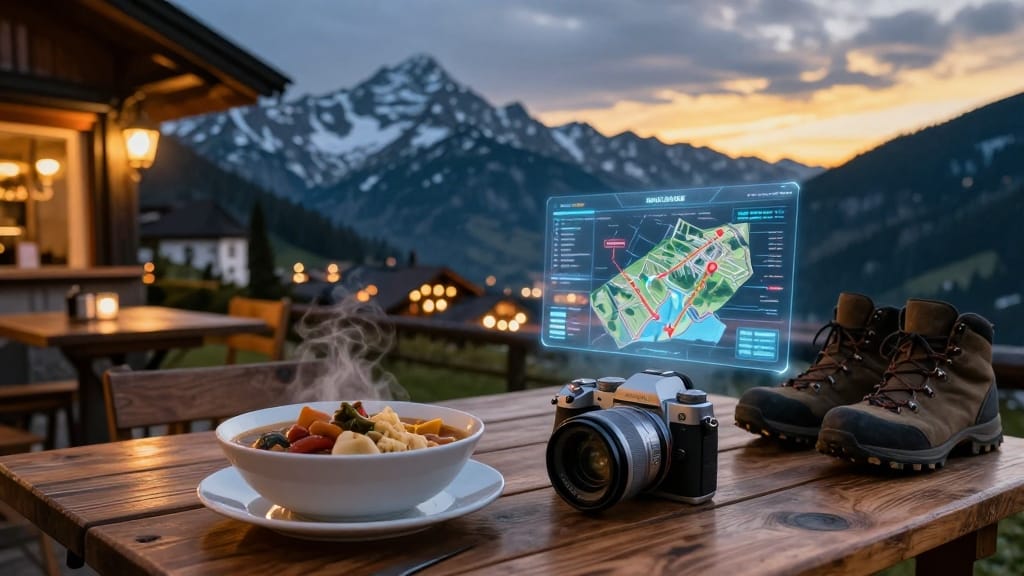
Hey everyone, it’s Anya! If you follow my socials, you know I’m usually found somewhere between a jagged mountain peak in the Tatras and a cozy, hidden-gem café in Warsaw, desperately trying to capture that elusive golden hour shot before the light disappears. But lately, my mind hasn't just been on shutter speeds and aperture settings. I’ve been thinking a lot about how we travel and live in this weird, transitional era. It’s not just about the aesthetic Instagram feed anymore—though, let’s be real, my camera gear is always the first thing I pack, right after my favorite hiking boots. We are living through some genuinely intense times in Europe, and between the shifting political tectonic plates and the way technology is rewriting our hobbies, the "vibe" of 2026 is looking very different from anything we’ve seen before.
Being Polish, I’ve got a front-row seat to the resilience of the EU and the spicy, often stressful debates surrounding our neighbors in Ukraine. I see how these big, heavy global shifts trickle down to our dinner plates, our travel budgets, and even the way we save files on our SD cards. It feels like we’re at a crossroads where leisure meets responsibility. From the rise of "whycations" to the ethical dilemmas of AI-driven post-process photography, the landscape of lifestyle is evolving at a breakneck pace. Whether you’re a fellow digital nomad, a photography nerd, or just someone trying to figure out where to find a decent meal on a holiday, there is a whole lot to unpack. Let’s dive into the trends shaping our world, as reported by recent insights from across the globe, and see if we can make sense of this beautiful, chaotic mess together.
Beyond the Postcard: The New Psychology of Travel and the Rise of Intentionality
For a long time, the travel industry was a "check-the-box" game. You went to Paris to see the Eiffel Tower, you went to Rome for the Colosseum, and you took the same selfie as everyone else. But in 2026, we’re seeing a massive, much-needed shift toward intentionality. We aren’t just traveling to go somewhere; we’re traveling to find a version of ourselves that isn't burnt out by Slack notifications and endless scrolling. As reported by Travel and Tour World, travel in 2026 is being shaped by "whycations," "glowmads," and "sonic sanctuaries." A "whycation" is exactly what it sounds like—asking *why* you are going before you even book the flight. Is it for healing? For connection? Or just to escape the noise? Personally, I’m obsessed with the idea of "sonic sanctuaries"—places curated specifically to lack noise pollution. As someone who lives in a bustling European city, the idea of a place where the only sound is the wind through the pines is basically my version of heaven.
This trend toward meaningful travel is also hitting the "in-between" moments of our lives. We’ve stopped seeing the gap between jobs as a period of panic and started seeing it as a window for radical self-care. According to experts at Travel and Leisure, there is a growing science to picking the right vacation between jobs to reset your mental health. It’s not just about "having fun"; it’s about neurological recovery. If your last job was high-stress and loud, you don't need a party in Ibiza; you need a slow-trekking tour in the Azores. This shift matters because it marks the end of "performative travel." We’re finally admitting that we’re exhausted, and we’re using our passports as tools for therapy.
However, the future of travel isn't all meditative silence and mountain air. As CNBC points out, five major trends are set to disrupt how we move through the world by 2026, ranging from deep tech integration to massive sustainability pressures. We’re seeing "bio-metric borders" becoming the norm and a "climate-conscious" tax on long-haul flights. I have mixed feelings about this—I want to save the planet, obviously (I need those glaciers to stay frozen for my winter photography!), but it’s making travel more expensive and exclusive. This is why flexibility is the ultimate travel hack now. You can plan everything perfectly, but as Patch.com reports, storms and airport delays can turn a dream trip into a logistical nightmare in seconds. I’ve spent enough nights on airport floors in Frankfurt and London to know that the "why" of your vacation better be strong enough to survive a 12-hour delay.
And let’s be honest about the social side of this—who you travel with is just as important as where you go. I’m incredibly picky. If you’re the type of person who wants to sleep until noon and then go to a shopping mall, we are not compatible travel buddies. I need someone who will get up at 4:00 AM to catch the sunrise on a ridge. It turns out I’m not the only one getting grumpy about this; NJ.com/Miss Manners recently tackled the awkward social politics of whether we are truly obliged to travel with friends who don’t share our interests. The verdict? No. 2026 is the year of the "travel divorce." Stick to your vibe, or you'll both end up miserable. Life is way too short for boring itineraries and compromising on which museum to visit.
The Photography Paradox: Authenticity in the Age of Perfection
As a photography nerd who literally carries my Sony A7IV everywhere, I’m constantly locked in a mental cage match: RAW or JPEG? Authenticity or Artifice? This isn't just a technical question anymore; it’s a philosophical one. Digital Camera World recently explored whether shooting in RAW might actually be harming our photography. The argument is that by capturing every single bit of data to "fix it later," we stop looking at the light and start looking at the histogram. I feel this in my soul. Sometimes, you get so caught up in the dynamic range and the post-processing possibilities that you forget to actually feel the moment you're capturing. In 2026, the trend is swinging back toward "SOOC"—Straight Out Of Camera. We want the imperfections. We want the grain. We want the truth.
Visual storytelling is peaking across every sector, and it’s getting more cinematic by the day. Just look at the Car and Driver Best Images of 2025. These aren't just photos of cars; they are moody, atmospheric pieces of art that use lighting and motion to tell a story of speed and solitude. This "high-def" lifestyle is everywhere. Whether it’s the 25 best sports photos of 2025 on Yahoo Sports, which capture the raw agony and ecstasy of competition, or the stunning, almost alien perspectives found in the Award-Winning Drone Photos of 2025 from 121 Clicks, our visual vocabulary is expanding. We are seeing the world from angles that were impossible a decade ago. But with that comes a weird pressure. If everyone can take a "perfect" drone shot, what makes a photo special? I think the answer is emotion. A technically perfect drone shot of a beach is boring compared to a blurry, slightly underexposed shot of a friend laughing over a pierogi in a dim Warsaw bar.
This obsession with the visual extends to our sports culture too. In Europe, football isn’t just a game—it’s a visual and emotional epic. Keeping up with the European Best Soccer Teams Power Ranking on ESPN is essential for anyone who wants to understand the current European mood. It’s about more than the score; it’s about the narrative of the "underdog" and the "titan." Following detailed athlete profiles, like those found on BBC Sport, allows us to see the humans behind the stats. For me, sports photography and street photography are essentially the same thing: it’s all about capturing that one split second where the mask slips and you see pure human drive. In 2026, as AI starts generating "perfect" images, the value of these real, gritty, unscripted moments is going to skyrocket. My advice? Don't delete the "bad" photos. They might be the only real things you have left.
The implications here are huge for creators. We’re moving toward a "Post-AI" aesthetic where we value the flaws. If a photo looks too perfect, people assume it’s fake. This is a massive shift for brands and influencers. The "perfection fatigue" is real, and the photographers who thrive in 2026 will be the ones who aren't afraid of a little shadow and a lot of reality. I’ve started leaving the lens flares in and stopped retubing every stray hair. It’s liberating, honestly.
Culinary Connections: Food as the Universal Language of 2026
Let’s talk about my favorite topic besides photography: food. In 2026, what we eat is becoming a primary driver of where we go. "Food tourism" used to mean going to a fancy Michelin-star restaurant in Lyon, but now it’s about the "honest" meal. Interestingly, the global palate is shifting toward a mix of hyper-local ingredients and global comfort-food classics. According to Gulte, the most ordered dish of 2025 tells a fascinating story about our collective need for comfort during times of global stress. We aren't looking for foam and liquid nitrogen; we’re looking for things that remind us of home, even if "home" is a place we’ve never been. It's that "global village" vibe where everyone is obsessed with authentic ramen or the perfect sourdough.
This search for the "perfect" meal has led to some interesting hotspots. If you’re looking for high-end, boundary-pushing experiences that still feel soulful, Curly Tales has rounded up the top restaurants in Mumbai that the internet absolutely obsessed over this year. It shows how the culinary center of gravity is moving. It’s not just about Paris and New York anymore; the internet is democratizing food excellence. I’ve seen this in Warsaw too—the food scene here has exploded with vegan fusion and traditional Polish recipes with a modern twist. If you haven't had a "deconstructed" pierogi yet, are you even living in 2026?
But beyond the trends and the Instagrammable plates, food remains our most basic way of showing community and care, especially when things get tough. I found it truly moving to see leaders like Prime Minister Albanese serving hot meals for Christmas lunch, as reported by The Guardian. In a world that often feels divided by screens and politics, sitting down at a table is the ultimate equalizer. For those of us just trying to survive the holiday rush and keep our own traditions alive, knowing the logistics is a lifesaver. NBC Chicago and The Palm Beach Post both provided essential guides for Christmas Day openings. It sounds mundane, but in 2026, the struggle to find an open grocery store or a hot coffee on a holiday is the "final boss" of the festive season.
Food also plays a massive role in how we understand culture. When I travel, I don't go to the museums first; I go to the local market. You can tell everything about a city’s soul by what's on sale for five Euros. The future of food is going to be defined by this tension between the "fast-convenient" world of delivery apps and the "slow-meaningful" world of farm-to-table dining. As someone who loves a good meme about "girl dinner" but also appreciates a four-hour traditional Polish Sunday lunch with my grandma, I think we need both. We need the efficiency to live our fast-paced lives, but we need the slow meals to remember why we’re living them in the first place.
Europe at a Crossroads: Politics, Disinformation, and Sovereignty
I can't write a blog about the "future of leisure" without acknowledging the heavy, complicated stuff that makes that leisure possible. Living in Poland, the geopolitical climate isn't just a headline on a screen—it’s the air we breathe. We are a "frontline" state, and that comes with a specific kind of intensity. We are fiercely pro-EU, not because it’s perfect, but because it represents a collective shield. Our support for Ukraine is unwavering because, let’s be real, we know that history has a nasty habit of repeating itself if you don't stand your ground. However, the relationship between Europe and the rest of the world is getting... well, spicy. According to NBC News, Europeans are increasingly pushing back against external authoritarian pressures and shifting sanctions. There’s a growing sense of "European Strategic Autonomy"—the idea that we need to be able to take care of ourselves without constantly checking what Washington or Beijing thinks.
The tension is everywhere. A recent CNN analysis of Russia-Europe relations highlights the precarious, high-stakes balance we’re trying to maintain in 2026. It’s a shadow that hangs over our travel plans and our daily lives. What frustrates me the most is the disinformation. It’s absolute brain-rot. Hindustan Times recently covered claims made by Moscow that Western allies are "fooling" Ukraine. We see these narratives popping up in our feeds constantly. But here on the ground, we know the truth: Europe’s intent is sovereignty and a peace that actually lasts, not just a temporary pause that suits an aggressor. Being an informed traveler in 2026 means knowing which headlines are clickbait and which ones are "psy-ops."
Even healthcare and science have become battlegrounds for European identity and autonomy. As reported by Politico, debates over vaccine schedules and the influence of American political figures like RFK Jr. are stirring up new, often heated conversations within the EU. It’s a reminder that lifestyle, health, and politics are all tangled up together. You can’t just talk about "wellness" without talking about the policies that govern our health. As a 19-year-old, I find it wild that things my grandparents took for granted—like facts and shared reality—are now things we have to fight for every day.
This political reality impacts how we "play" too. It affects which borders are easy to cross, which currencies are strong, and even which video game servers we play on. The "splinternet" is becoming a real thing, and it sucks. But through it all, there is a weird, stubborn optimism in Europe right now. We’re finally standing our ground, and there’s a sense that we’re building something that actually matters. Whether it's the green energy transition or standing up for democratic values, being European in 2026 feels like being part of a very difficult, very important project. It’s not always "vibey," but it is meaningful.
Conclusion: Finding the View from the Top
So, where does that leave us at the end of this deep dive? As we look toward the rest of 2026, it’s clear that our world is becoming both more connected and more complicated than ever before. We aren't just passive observers of these changes; we are right in the thick of it. Travel is becoming more mindful because we’ve realized that our time and our planet are finite. Photography is forcing us to choose between the dopamine hit of a "perfect" AI-enhanced image and the lasting value of a messy, human moment. Food is reminding us that, at the end of the day, we all just want a hot meal and a place to belong. And Europe? Europe is finding its spine and its voice in a world that is getting louder and more chaotic by the second.
My plan for the coming year is simple, but not necessarily easy: keep my boots on the muddy ground and my eyes firmly through the viewfinder. We have a responsibility to stay empathetic, stay curious, and most importantly, stay informed. Don't let the algorithms decide what you care about. Cross the borders, eat the local food, take the "bad" photos, and stand up for what’s right. The future is a lot like a long, grueling hike through the Tatras—it can be absolutely exhausting, your legs will cramp, and the weather might turn on you in a heartbeat. But if you keep moving, if you keep your eyes open, the view from the top is always, always worth it. I’ll see you out there on the trail, probably complaining about the incline but loving every second of it. Stay safe and stay real!