The Future of Computing: AI Miniaturization, Infrastructure Volatility, and the Shift to Physical Intelligence

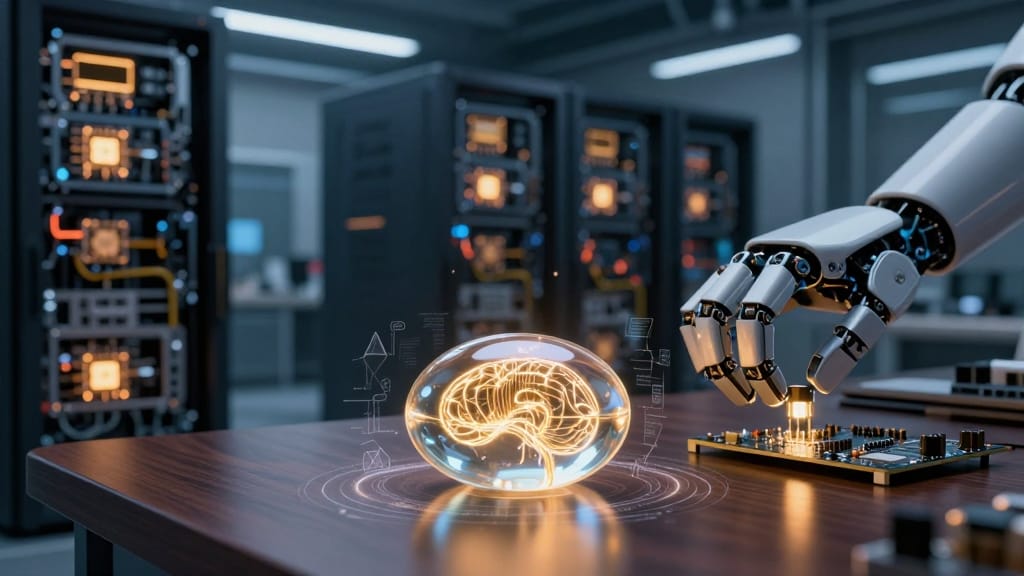
The technological landscape in early 2026 is witnessing a significant transformation as Artificial Intelligence transitions from a cloud-based service into a tangible, physical presence in the consumer market. While the previous years focused on large language models and digital interfaces housed within massive data centers, the latest developments indicate a move toward "Interactive AI"—small, specialized hardware designed to integrate directly into daily life. This evolution is happening against a backdrop of complex supply chain dynamics and infrastructure updates that are forcing both enterprises and consumers to reevaluate their digital security and hardware investments. We are moving past the era of the chatbot and entering the era of the autonomous agent, where intelligence is not something we merely "search" for, but something we carry, wear, and deploy in the physical world.
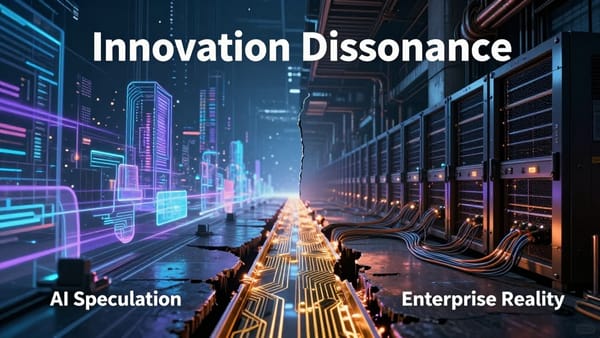
In this article, we analyze the critical shifts occurring in the semiconductor sector, the emergence of AI-powered consumer devices, and the increasingly urgent security protocols being issued by federal agencies. From the volatility of hardware stocks like Marvell Technology to the groundbreaking biotech collaborations between NVIDIA and Eli Lilly, the current tech cycle is defined by a push for physical efficiency and specialized application over general-purpose digital expansion. The "hype phase" of AI has collided with the reality of production costs, geopolitical friction, and the inherent limitations of battery technology. To understand 2026 is to understand the friction between software's infinite potential and hardware's physical boundaries. We will explore how these forces are reshaping the global economy and the daily lives of billions of users across the globe.
The Physicality of Intelligence: CES 2025/2026 and the Hardware Revolution
For years, AI was an abstract concept for the average consumer, existing primarily through browser-based chat windows. However, as reported by Tech Times, recent tech showcases have proven that AI is now "physical, interactive, and small enough to fit in your hand." Devices such as the Lepro Ami and the Tiiny AI Pocket Lab are spearheading a trend where tech focuses on companionship and specialized engagement rather than general search. This shift suggests that the era of the "AI Swiss Army Knife"—where one monolithic app does everything—may be giving way to highly specialized, purpose-built hardware that operates locally to reduce latency and enhance privacy.
This hardware evolution extends to the form factor of mobile devices as well. According to Tech Times, innovations in sleek and durable designs are addressing long-standing consumer pain points in foldable technology, potentially benefiting the rumored iPhone Fold. The engineering challenge is no longer just about fitting more transistors on a chip; it is about heat dissipation in foldable chassis and the integration of NPU (Neural Processing Units) that can handle real-time generative tasks without draining a device's battery in under three hours. We are seeing a move away from the "rectangle in a pocket" toward devices that change shape to match the task at hand.
Beyond mobile phones, the floors of the Las Vegas Convention Center have been filled with what MotorTrend describes as "category-defying" tech, ranging from smart cockpits to advanced sensor technology that blurs the lines between traditional consumer electronics and automotive engineering. This "Physical Intelligence" is manifest in vehicles that no longer just navigate but understand the emotional context of the driver and the physiological state of passengers. Why does this matter? Because it represents the decentralization of intelligence. When AI moves from the server farm to the local hardware, it becomes more resilient, more responsive, and more personal. However, this also complicates the manufacturing process, as companies must now secure specialized sensors and micro-actuators that were previously unnecessary for standard consumer electronics. The hardware revolution is, in many ways, an admission that the cloud cannot solve every problem—especially those requiring sub-millisecond reactions in moving vehicles or medical devices.
From an analytical standpoint, the success of these gadgets will depend on their ability to move beyond "novelty." Throughout the history of personal computing, from the PDA to the smartwatch, the devices that survived were those that automated a specific, recurring pain point. The Lepro Ami and its contemporaries are betting that "emotional companionship" and "on-the-go lab analysis" are those points. If successful, we could see a fragmentation of the smartphone market, where users carry a core device supplemented by several small, specialized AI tokens designed for health, productivity, or creative tasks. This would represent a complete reversal of the convergence trend that defined the last fifteen years of mobile technology.
Supply Chain Fractures and Semiconductor Volatility
While consumer-facing technology flourishes on the surface, the underlying infrastructure is facing significant headwinds. The semiconductor market, a bellwether for the broader tech sector, has seen recent turbulence that suggests the "AI gold rush" is entering a more sober, volatile phase. As noted by Yahoo Finance, Marvell Technology (MRVL) recently registered a sharper fall than the broader market, closing at $81.24. This downward pressure is reflected in reports from MarketBeat, which observed a 2.2% drop in Marvell's shares, sparking debate among analysts regarding whether even the strongest infrastructure plays are overvalued in the current climate.
The volatility is not limited to Marvell. A broader pull-back in tech stocks was triggered by reports that Chinese customs authorities blocked the entry of NVIDIA's H200 AI chips. This is a critical development for the global tech economy. According to Yahoo Finance, this move—effectively halting shipments despite U.S. export approvals—sent ripples through the market, causing shares of companies like Guidewire Software, Fastly, and Appian to plummet. This highlights the fragility of the AI boom, which remains heavily dependent on a few specific geographical nodes and the increasingly strained diplomatic relations between Washington and Beijing. When silicon shipments stop, the software innovation cycle grinds to a halt soon after.
This geopolitical bottleneck creates a "scarcity premium" that favors companies with diversified supply chains but punishes those reliant on specialized, high-end components. Analysts are currently focused on "infrastructure volatility," a term used to describe the wild swings in valuation for companies that provide the plumbing of the internet—content delivery networks (CDNs), edge computing, and backend enterprise software. For instance, when Fastly and Appian experience sharp declines, it is often a sign that investors are worried about the "cost of compute" rising faster than the "revenue from AI." If the chips required to power these services are stuck in customs, the growth projections for 2026 and 2027 must be radically revised downward.
Historically, the tech industry has relied on "just-in-time" manufacturing and globalized cooperation. The shift we are seeing now is toward "just-in-case" inventory management and localized production. This is an incredibly expensive transition. For the consumer, it means that the era of rapidly falling electronic prices may be over. For the enterprise, it means that "AI sovereignty"—the ability to run models on local hardware using domestic chips—is becoming a national security priority. The market's reaction to Marvell and NVIDIA is not just about quarterly earnings; it is a nervous assessment of whether the physical foundations of the digital age can survive the current geopolitical climate. We are observing the decoupling of the global tech stack in real-time, a process that is as disruptive as it is inevitable.
Enterprise Integration: Pharma, Analytics, and Industry 4.0
Despite market volatility in the semiconductor sector, the practical, industrial application of AI continues to deepen and prove its worth. The "hype" is being replaced by "utility," particularly in sectors where the cost of failure is high and the rewards for innovation are astronomical. One of the most significant pharmaceutical collaborations in decades was recently announced at the JPM Healthcare Conference. According to Drug Discovery Trends, NVIDIA and Eli Lilly have unveiled a $1 billion co-innovation lab in San Francisco. This partnership represents a massive bet on AI's ability to accelerate drug discovery, moving beyond the consumer-facing chatbots into the rigorous world of molecular biology and protein folding.
By leveraging NVIDIA's specialized Blackwell and Hopper architectures, Eli Lilly aims to reduce the time it takes to identify viable drug candidates from years to weeks. This is the "Physical AI" of the enterprise world—not a gadget, but a massive computational engine used to simulate the physical interactions of chemicals. The implications for stakeholders are profound: if AI can reduce the R&D costs for life-saving medications, it could reshape the economics of the entire healthcare industry. However, it also raises questions about the "computational divide"—only the largest, wealthiest firms can afford to build $1 billion labs, potentially leaving smaller biotech firms at a permanent disadvantage.
On the software side, companies are seeing increased demand for operational efficiency and data transparency. GuruFocus reports that Elastic (ESTC) has boosted its revenue guidance due to strong demand for its search and AI-driven analytics capabilities. This indicates that while hardware might be volatile, the software used to manage and make sense of massive datasets remains a high-growth area. Businesses are no longer just collecting data; they are desperate for tools that can synthesize that data into actionable insights in real-time. This aligns with broader market trends identified by Yahoo Finance, which suggests the global manufacturing operations management (MOM) software market is poised to reach $44 billion as manufacturers adopt Industry 4.0 trends and hybrid cloud systems for greater agility.
Specifically, the Manufacturing Operations Management market is expanding because factories are becoming more like data centers. Sensors on the assembly line now feed into "digital twins"—virtual replicas of the factory floor where AI can predict equipment failure before it happens. This "predictive maintenance" is the cornerstone of the $44 billion market. For stakeholders in the industrial sector, the transition to MOM software is not an optional upgrade; it is a survival strategy in an era of high energy costs and labor shortages. The ability to squeeze an extra 2% of efficiency out of a global supply chain can be the difference between profitability and bankruptcy. As we look at the integration of AI into these heavy industries, it becomes clear that the real "AI revolution" isn't happening on our screens—it's happening in the vats of pharmaceutical labs and on the conveyor belts of automated factories.
Security and Stability: The Growing Burden of Digital Hygiene
As technology becomes more ubiquitous and integrated into our physical lives, the burden of maintenance and security increasingly falls on the individual user. We are living through a period of "security fatigue," where the constant treadmill of updates and patches is becoming a source of friction for both consumers and professionals. Recently, federal authorities have issued stark warnings regarding mobile security that highlight the limits of current encryption and operating system protections. As reported by Forbes, feds are warning iPhone and Android users to delete sensitive messages, noting that even recent software updates from Apple do not fully address certain vulnerabilities related to how data is cached and stored in transit.
This is a sobering reminder that "end-to-end encryption" is not a magic shield if the device's physical memory can be exploited. Furthermore, Forbes highlights an urgent advisory for iPhone users to reboot their devices immediately to apply critical security patches. This "forced reboot" strategy is becoming more common as state-sponsored actors and sophisticated cyber-criminals exploit "zero-click" vulnerabilities that can only be cleared from a device's temporary memory through a cold start. For the average user, this signifies a shift from a "set it and forget it" mentality to one of active digital hygiene. The device in your pocket is a liability as much as an asset.
The struggle for stability is equally apparent in the Google ecosystem. According to BigGo News, the Android 16 QPR3 Beta 2 was recently released to address critical battery and stability bugs on Pixel phones. These bugs were not merely aesthetic; they were causing slow internet speeds and missed calls—fundamental failures of a communication device. This illustrates a growing problem in software development: the "move fast and break things" culture is colliding with the consumer's need for a reliable utility. As OS architectures become more complex to accommodate AI features, the number of potential failure points grows exponentially. Users are essentially becoming beta testers for the future, often at the cost of their device's core functionality.
Even our digital leisure is not immune to the need for guidance and the "daily check-in" ritual. The massive demand for solutions to daily puzzles like NYT Pips and NYT Wordle, which continue to be cornerstones of daily digital habits for millions, reveals a psychological shift. In an era of overwhelming technological complexity and geopolitical chaos, consumers are gravitating toward small, manageable, and "winnable" digital interactions. These games serve as a grounding ritual in an increasingly volatile digital landscape. However, the reliance on these platforms also concentrates more power in the hands of a few media giants, who use these "sticky" habits to drive subscriptions and collect data, further tightening the loop between our leisure and our digital identities.
Conclusion: Navigating the Path to Technological Maturity
The current state of technology reflects an industry in a profound state of transition. We are moving away from the "growth at all costs" mentality of the cloud era and into a "resilience and specialization" phase. Digital transformation is no longer a choice but a necessity, a fact reinforced by The Clarion-Ledger, which cited a recent Clutch report identifying the leading software firms businesses are partnering with to navigate this landscape. These partnerships are no longer just about building websites; they are about integrating AI, securing supply chains, and ensuring that legacy businesses can survive the "Physical Intelligence" shift.
From an analytical perspective, the next eighteen to twenty-four months will be defining for the tech sector. The winners will not be the companies with the loudest AI hype, but those that can navigate the geopolitical constraints of the semiconductor industry while delivering tangible, reliable value to the end-user. For the enterprise, this means investing in specialized labs and operational software that yields measurable ROI. For the consumer, it means a heightened responsibility for digital security and an acceptance that the "next big thing" might be a small, specialized gadget rather than a revolutionary new smartphone. The "Swiss Army Knife" of technology is being unscrewed into its component tools, each designed to do one thing perfectly rather than everything adequately.
Ultimately, the move toward physical AI and infrastructure sobriety is a sign of a maturing industry. The "wild west" days of the early 2020s are giving way to a more regulated, more expensive, but ultimately more capable technological ecosystem. As AI becomes physical, our interaction with it moves from the screen to the real world, bringing both unprecedented convenience and new, complex challenges. We must remain vigilant, both as investors in this new economy and as participants in this digital world, ensuring that as our machines become smarter, our systems for managing them become more robust, transparent, and secure. The future is no longer in the cloud; it is in the palm of our hand, the cars we drive, and the very medicine we take.