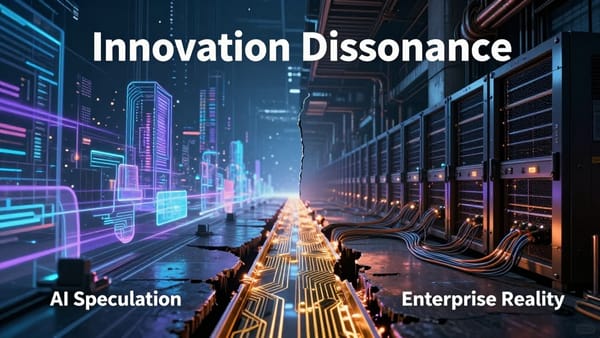
The Dual Face of Innovation: Surveillance, AI Saturation, and the Software Sector’s Identity Crisis


The technological landscape in early 2026 is defined by a profound tension between rapid, AI-driven innovation and the escalating ethical and security concerns that inevitably follow in its wake. We are witnessing a sharp divergence in the market: consumer-facing tools are becoming increasingly frictionless, propelling select startups to "unicorn" status with staggering speed, while the industrial and governmental application of these same technologies faces unprecedented public and regulatory scrutiny. From the deployment of real-time facial recognition by federal agencies to the emergence of social platforms designed exclusively for machine-to-machine interaction, the traditional boundaries of software—and its relationship with the end-user—are effectively dissolving. This is no longer a period of mere incremental updates; it is a structural reconfiguration of the digital economy.
This analysis examines the shifting dynamics of the software industry, exploring how artificial intelligence is rewriting the playbook for diverse sectors, including border enforcement, defense, developer productivity, and financial markets. As reported by Yahoo Finance, a "shadow of uncertainty" currently hangs over the sector, sparked by slowing growth in traditional cloud infrastructure and a fundamental questioning of how legacy software companies will navigate the transition to an AI-native architecture. We will explore these themes through a neutral, analytical lens, dissecting the latest developments in surveillance technology, automated development cycles, and the volatile tech economy to understand where the industry is heading—and who is being left behind in the process.
The Surveillance State: Biometrics and Corporate Responsibility
The integration of advanced technology into law enforcement and border control has moved beyond the theoretical, manifesting as a pervasive physical presence in metropolitan areas. According to a report by the New York Times, at least seven citizens in Minneapolis were recently informed by Immigration and Customs Enforcement (ICE) agents that they were being recorded and processed via facial recognition technology. This move, verified through social media footage and local activism, marks a significant transition from "passive" surveillance—where data is collected for later review—to "active," field-level biometric identification. For the tech observer, this represents the normalization of high-stakes algorithms in public spaces without the traditional buffer of a warrant or suspicion of a specific crime.
This trend has reignited a fierce debate over the ethical responsibilities of software vendors. Traditionally, software companies have operated under the "neutral tool" defense, arguing that they are not responsible for how a client utilizes their product. However, the depth of current integration makes this position increasingly difficult to maintain. For example, IPM reports that Bloomington-based Acadis has received nearly $100 million from the Department of Homeland Security (DHS) since 2004, specifically to track personnel training and compliance. While the software itself is administrative in nature, its functionality is critical to the operational readiness of agencies like ICE and Customs and Border Protection (CBP). When administrative software becomes the backbone of agencies involved in controversial enforcement actions, the line between "neutral utility" and systemic complicity begins to blur.
The implications here are twofold. First, the expanding use of facial recognition by agencies suggests a push for total domain awareness, where anonymity in public becomes a relic of the past. Second, the reliance on companies like Acadis or Palantir creates a "lock-in" effect where the government becomes dependent on proprietary datasets and algorithms to function. This relationship ensures a steady stream of revenue for tech firms but also creates a reputational risk that is becoming harder to manage in an era of heightened social consciousness. We are seeing a shift where the "user" of software is no longer a person at a desk, but a state apparatus looking to automate the identification and tracking of entire populations. The technological debt being accrued here isn't just code-based; it is ethical, and the long-term cost of this surveillance infrastructure remains unquantified.
AI Saturation: The Valuation Paradox and the 'Ghost' Social Web
In the private sector, artificial intelligence is driving a contradictory "gold rush." On one hand, we see a frantic search for productivity tools that justify high valuations; on the other, we see the rise of strange, automated digital ecosystems that seem to have no human purpose at all. The London-based startup Granola serves as an excellent case study for the former. Currently in talks for a funding round led by Index Ventures that could value the note-taking app at $1 billion, as reported by Forbes, Granola focuses on a very specific, high-friction problem: executive meeting notes. Its success suggests that while "general purpose" AI might be facing a cooling period, hyper-tailored tools that fit into existing workflows are still highly coveted.
However, as the capital flows into high-end productivity, a different type of AI saturation is occurring on the social web. Business Standard highlights the rise of Moltbook, a platform where AI agents interact with one another in a simulated social environment. This marks the transition from the "Dead Internet Theory" (the idea that most web traffic is bots) to the "Post-Human Internet Experience," where platforms are designed explicitly for non-human engagement. While these environments are interesting experiments in Large Language Model (LLM) interaction, they quickly become breeding grounds for systemic issues. Forbes notes that the entity formerly known as Moltbot has rebranded as OpenClaw amidst growing security concerns and the prevalence of fraudulent traffic within its ecosystem. When machines talk to machines in a closed loop, the validation of truth—and the prevention of scams—becomes an exponential challenge.
The contrast between Granola and OpenClaw illustrates the "dual face" of modern software. One represents the peak of capitalistic efficiency—using AI to save time for highly paid humans. The other represents the "AI slop" phenomenon—an automated entropy where content is generated for the sake of generation. For investors and developers, the challenge is discerning between the two. The current valuation of Granola is based on the assumption that AI can reliably augment human intelligence, but the rebranding of Moltbot suggests that without human-centric guardrails, autonomous systems quickly devolve into chaos. This is why the "shadow of uncertainty" mentioned by Yahoo Finance is so persistent: the market is struggling to price the difference between a transformative tool and a generative feedback loop.
Software Security and the Erosion of Institutional Oversight
As the sheer volume of AI-generated content and code expands, the burden of security is being redistributed in ways that should concern any risk-averse observer. At the individual level, users are being told to defend themselves. ZDNET has recently published guides on identifying "AI slop" and synthetic imagery, recommending free detectors to help users maintain a baseline of truth in a post-reality information environment. This is a significant shift; we have moved from an era where "seeing is believing" to one where every digital asset must be treated as a potential deepfake. This individual vigilance is increasingly necessary because the institutional guardrails are, quite literally, being dismantled.
In a policy pivot that contradicts years of advocacy for "Software Bill of Materials" (SBOM) transparency, Heise Online reports that U.S. federal agencies are no longer required to perform rigorous checks on the internal contents of the software they procure. This reduction in the requirement for internal code audits is a drastic departure from the security-first mindset that followed high-profile breaches like SolarWinds. The motive is clear: speed. The U.S. government is in a race to adopt AI and modern software stacks, and the "red tape" of security audits is viewed as a hindrance to agility. However, as any cybersecurity analyst will note, removing the requirement to know "what's inside the box" creates a massive attack surface for supply chain vulnerabilities.
When institutional oversight recedes, the market for secondary security layers thrives. According to Tech Times, multi-factor authentication (MFA) has moved from being a "best practice" to the absolute last line of defense. New biometric and hardware-based MFA solutions are emerging to combat the sophisticated phishing and credential-stuffing attacks that AI enables. The paradox here is striking: as we simplify the procurement of software to accelerate innovation, we are simultaneously forced to increase the complexity of our security protocols to mitigate the risks that simplification creates. The software sector’s identity crisis is caught in this loop—trying to be faster while simultaneously needing to be more secure, despite policy changes that favor the former over the latter.
The Future of Development: AI-Native Paradigms and Total Automation
The way software is conceived and constructed is no longer recognizable to those who learned the craft a decade ago. We are entering the era of "Software Survival 3.0," a term explored by veteran developer Steve Yegge on Medium. Yegge describes a workflow where complex systems, like his Beads and Gas Town projects, are built not by writing line-by-line code, but by acting as an architect and editor for AI agents. This shift toward AI-assisted coding is not just a productivity gain; it is a fundamental shift in the definition of a "developer." If the machine writes the code, the human's value lies solely in their ability to describe the problem and verify the output. This raises a critical question: as seniority in the field becomes synonymous with AI-orchestration, what happens to the entry-level talent who never learned to build the foundations manually?
This transformation is reaching into the most high-stakes environments, including the military. Times Now reports that IIT Ropar and the Indian Army have launched a new postgraduate programme in defense technology. This curriculum is specifically designed to train officers in navigating the intersection of traditional hardware and the automated, AI-driven battlefield. The move highlights a global recognition that the next generation of defense will be won through software superiority. Whether it is a drone swarm or a cyber-defense algorithm, the "survival" of these systems depends on how effectively they can out-think and out-process their human counterparts.
Perhaps the most visible and risky expression of this "software-first" ideology is Elon Musk’s strategy for Tesla’s Full Self-Driving (FSD). As analyzed by Forbes, Musk has essentially "burned the ships," prioritizing a vision-only software approach while eschewing expensive hardware like LiDAR. This is a high-stakes gamble: it assumes that software can overcome the physical limitations of camera sensors in diverse environments. If successful, Tesla achieves a software-based scale that no hardware-heavy competitor can touch. If it fails, it leaves the company with a fundamental safety ceiling that no amount of OTA updates can fix. This "all-in" approach mirrors the broader software industry's current trajectory: an aggressive push for total automation that often precedes the technical infrastructure or the regulatory framework necessary to ensure its safety.
Economic Realism: Resilience Amidst the Hype
Despite the prevailing narrative of volatility and "AI shadows," a more grounded economic reality exists for software companies that provide critical, non-experimental value. While venture capital chases the $1 billion valuation of Granola, established players are finding success through pragmatism. TradingView reports that Atoss Software, a specialist in workforce management, recently saw a 7.6% surge in share price. Their Q4 EBIT reached 20 million euros, significantly outperforming consensus estimates and pushing their FY EBIT margin to 36%. Atoss succeeds not by claiming to be a "god-like" AI, but by using technology to solve the logistical headaches of staffing and resource allocation—tangible problems with measurable ROI.
This resilience suggests that the "software recession" is selective. Companies that are "AI-washing" their lack of growth are being punished, but those that provide the plumbing of the modern economy are thriving. We also see this in the consumer space, where despite the availability of sophisticated LLMs, human-centric logic remains a dominant force. For example, millions of people still turn to the NYT Connections puzzle every day for cognitive stimulation. As noted by Forbes, the ritual of solving puzzles highlights a persistent demand for logic tasks that AI cannot—and should not—solve for us. It is a reminder that the human element of "finding patterns" remains a core part of our digital identity, even as we automate more of our professional lives.
Even in traditional service industries, we see a pragmatic integration of new technology. In Belton, TX, a local provider has recently enhanced their AC repair service using advanced diagnostics and scheduling software. This highlights the true end-state of the digital revolution: not a world where software replaces every physical task, but a world where software makes physical labor more precise and efficient. The economic winners of 2026 are likely to be those who bridge the gap between the high-flying world of VC valuations and the grounded reality of regional service and infrastructure. The software sector's "identity crisis" will only be resolved when it stops trying to replace the human experience and goes back to being the essential tool that supports it.
Synthesis and the Path Forward
The "Shadow of Uncertainty" currently cast over the software sector is not necessarily the harbinger of a collapse, but rather a necessary market correction. We are moving past the "peak of inflated expectations" regarding general-purpose AI and entering a more sober period of implementation. The industry is being forced to grapple with a triad of challenges: the ethical fallout of the surveillance state, the security risks of accelerated development, and the economic pressure to deliver real, non-speculative value. The divergence between companies like Atoss and startups like OpenClaw suggests a maturing market that is beginning to reward utility over novelty.
Looking ahead, the successful software companies of the late 2020s will be those that prioritize "Responsible Autonomy." This means leveraging the incredible speed and scale of AI development while maintaining—and perhaps even re-implementing—the human-centric audits and ethical guardrails that were recently discarded for the sake of speed. As we've seen with the U.S. agency procurement changes, speed without oversight is a recipe for catastrophic vulnerability. The future of software development will not belong to the most efficient coder, but to the most responsible integrator. Whether it is protecting citizen privacy in Minneapolis or ensuring the safety of autonomous vehicles on the highway, the technology must eventually serve a human purpose. If the software industry can navigate this paradox, it will emerge from its current crisis of identity as a more disciplined, resilient, and ultimately more useful component of human civilization.