The Dual Face of Innovation: Navigating the Integration of AI and Advanced Tech in 2026


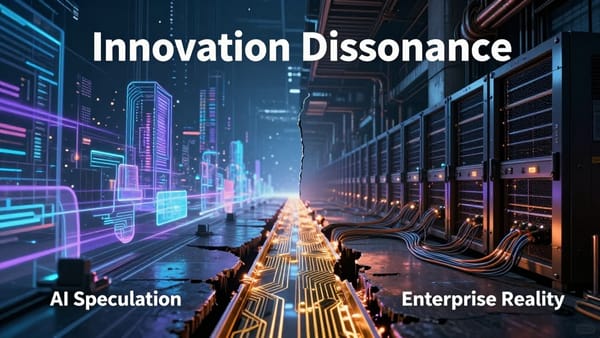
The technological landscape of 2026 is characterized by a definitive paradox: a period of unprecedented integration coupled with a mounting desire for radical simplification. As artificial intelligence moves from a novelty and a venture capital buzzword into a fundamental layer of global infrastructure, its impact is being felt across every sector. We have transitioned from the era of "AI experimentation" to an era of "AI ubiquity," where the nuances of senior care are as affected by algorithmic logic as the industrial economic engines of global superpowers. This evolution is not merely about more powerful silicon or more efficient neural architectures; it represents the maturation of an ecosystem where the benefits of automation must be weighed against emerging risks and the complexities of human-machine interaction. The veneer of "magic" has worn off, replaced by a cold, analytical assessment of utility, safety, and economic return on investment.
In this comprehensive analysis, we examine the current state of technology, synthesizing developments in consumer hardware, enterprise software, and the critical infrastructure that supports them. We will explore how AI is reshaping traditional industries, the financial health of the software sector, and the growing pushback against "feature bloat" in everyday digital tools. This is a critical juncture where the technology industry must prove its value beyond sheer technical capability. By understanding these shifts, we can better anticipate the trajectory of a world increasingly defined by algorithmic intelligence and connected devices. The following exploration details the friction points and the success stories of an industry at a crossroads, where the stakes are no longer just digital, but deeply physical and societal.
The High Stakes of AI in Healthcare and Education
While artificial intelligence offers ostensibly transformative potential, its rapid deployment is creating significant friction in sensitive sectors where "moving fast and breaking things" is not an acceptable mantra. This is most visible in the medical field. According to a report from PR Newswire, the misuse of AI chatbots now tops the annual list of health technology hazards for 2026. The danger is twofold: clinicians may over-rely on large language models (LLMs) for diagnostic summaries, and patients may substitute chatbot interactions for professional consultation. The fundamental risk stems from the probabilistic nature of these models; they are designed to predict the next likely word, not to adhere to the rigorous, evidence-based certainties required in clinical pathology or pharmacology. This hazard underscores a critical need for rigorous clinical validation and a "human-in-the-loop" requirement before AI becomes an unmonitored fixture in patient care.
In response to these hazards, regulatory bodies are beginning to categorize medical AI not as mere software, but as a "medical device," subject to the same clinical trials as a new heart valve or pharmaceutical agent. The implications for stakeholders are clear: developers who prioritize "explainable AI"—systems that can show the longitudinal data path for a diagnosis—will likely outlast those offering "black box" solutions. This shift toward accountability is essential because the cost of an algorithmic hallucination in a healthcare setting is measured in lives, not just lost data.
Similarly, the impact of new technology in educational environments is facing renewed scrutiny. As reported by Yahoo News, a comprehensive new report has uncovered "daunting" damages caused by the hasty implementation of tech in schools. The findings suggest that while technology can be an asset, its unmanaged use may be detrimental to learning outcomes and student wellbeing. We are seeing a "digital backlash" where educators advocate for a return to analog foundations—handwriting, physical textbooks, and undistracted peer collaboration—to counteract the attention-span erosion attributed to ubiquitous screens. This suggests that the future of educational technology will not be about "more" tech, but about "better-integrated" tech that serves specific pedagogical goals rather than serving as a digital babysitter. The "cautious implementation" phase has arrived, where the focus moves from rapid adoption to measurable safety and efficacy.
Hardware Evolution and the Linux Foundation of AI
On the consumer side, the hardware cycle continues its relentless march, yet the focus has shifted from aesthetics to the localized "inference" capabilities of the device. Forbes reports that the Samsung Galaxy S26 Ultra is nearing release, with leaks pointing toward a significant battery boost and a potential price increase. This hardware represents the "edge" of the AI revolution. In earlier years, AI lived in the cloud; in 2026, it must live in your pocket. To process sophisticated real-time translation or privacy-focused local data analysis, devices require massive thermal efficiency and specialized Neural Processing Units (NPUs). The potential price hike mentioned by Forbes reflects the soaring costs of the advanced 2-nanometer and 3-nanometer chip fabrication processes required to keep up with these algorithmic demands.
However, the visible hardware is only the tip of the iceberg. The true architectural backbone of this era is open-source. Analysts at ZDNET note that Linux is the quiet power behind virtually all AI, including ChatGPT and its many competitors. Without the open-source architecture of Linux, the current AI boom would be technologically impossible and financially unsustainable. The flexibility of the Linux kernel allows it to be stripped down for lean edge devices or scaled up for the massive supercomputing clusters maintained by NVIDIA and Microsoft. This highlights a critical lesson in the history of technology: while proprietary brands like Samsung and Apple capture the consumer's imagination (and wallet), it is the shared, collaborative infrastructure of the open-source community that enables the entire industry to function.
Innovation is also taking on a more compassionate, specialized form in the senior living sector, proving that technology's value is often highest when it is least intrusive. As noted by KING 5 News, Aegis Living is utilizing AI tools to prevent falls and implementing red light therapy to improve the quality of life for older adults. By using computer vision to detect subtle changes in gait or posture, these systems can alert caregivers before a fall occurs, rather than just reporting the incident after the fact. This represents a shift from reactive technology to proactive care. It demonstrates that when applied with specific human needs in mind, technology can move beyond mere utility to provide genuine care and safety enhancements, tackling the real-world challenges of an aging global population.
The Enterprise Ecosystem: Consolidation and Market Valuation
The business side of technology remains a landscape of high-stakes acquisitions and a grueling search for "profitable growth." A significant transaction recently occurred as SLB acquired RESMAN Energy Technology from Nordic Capital, a deal facilitated by Pickering Energy Partners, as reported by Business Wire. This consolidation in the energy tech space is symptomatic of a larger trend: established industrial giants are no longer trying to build software from scratch. Instead, they are absorbing specialized tech providers to enhance their digital capabilities. RESMAN’s focus on wireless reservoir monitoring allows SLB to integrate high-fidelity data into their broader energy management platforms, proving that "data and sensors" are becoming as valuable as "steel and oil" in the industrial sector.
In the software-as-a-service (SaaS) market, investors have moved past the "growth at all costs" mindset of the early 2020s. Progress Software, for instance, has seen a volatile year with a 25.3% decline in total returns despite a recent 10.8% daily jump, as analyzed by Yahoo Finance. This volatility reflects a market that is deeply skeptical of any company that cannot clearly articulate its AI monetization strategy. Despite these fluctuations, the company's Q4 earnings call highlighted a pivot toward "profitable growth," according to TipRanks. This means cutting experimental "moonshot" projects and focusing on core products that offer high renewal rates and predictable revenue.
Meanwhile, the battle for the "Enterprise AI Desktop" is heating up. ServiceNow is currently gaining an edge over creative SaaS giants like Adobe by leveraging AI-driven workflow gains and bold acquisitions, as reported by Yahoo Finance. The logic is simple: while Adobe focuses on individual creativity, ServiceNow focuses on the "plumbing" of a corporation—the IT requests, the HR tickets, and the customer service logs. AI is far more effective at automating these standardized workflows than it is at replacing high-level creative direction. As a result, companies focused on operational efficiency are currently seeing a higher valuation premium than those focused on content creation. We are entering a period where the "unsexy" side of software—back-office automation—is the primary engine of market growth.
The Expansion of Specialized Software and Services
Beyond the hype of general-purpose generative AI, specialized software segments—often referred to as "Vertical SaaS"—are seeing robust, data-driven investment. The market for Configure Price and Quote (CPQ) software is on an aggressive growth trajectory. According to Custom Market Insights, this market was valued at approximately USD 3.49 Billion in 2025 and is expected to grow at a compound annual growth rate (CAGR) of 16.5% through 2035. This data indicates that businesses are increasingly moving away from manual spreadsheets and toward automated systems to handle complex sales and pricing operations. In a global economy where supply chains are volatile and currency values fluctuate, the ability to generate an accurate, optimized quote in seconds rather than days is a massive competitive advantage. CPQ tools are becoming the "brain" of the sales department, integrating real-time inventory and shipping data to ensure profitability at the point of sale.
To support this burgeoning digital infrastructure, managed services are becoming an essential bridge for companies that lack internal tech expertise. Infysion, for example, has launched comprehensive IoT Managed Services to help businesses scale their connected ecosystems with 24/7 monitoring, as detailed by PR.com. As the number of connected sensors in a typical factory or smart city grows into the thousands, the operational burden of maintenance, security patching, and data governance becomes overwhelming. Managed services allow these companies to outsource the technical "heavy lifting" while retaining the insights the data provides. This "Service-as-a-Software" model is likely to expand as the complexity of the Internet of Things (IoT) continues to outpace the available pool of skilled cybersecurity and network engineers.
Furthermore, the growth of these specialized services suggests that the "all-in-one" platform approach is losing ground to "best-of-breed" ecosystems. Companies are choosing to stitch together specialized tools—a CPQ system for pricing, an IoT platform for monitoring, and a specialized AI for customer support—using robust APIs. This modular approach to enterprise tech allows for greater flexibility and prevents vendor lock-in, a major concern for CIOs in 2026. The success of these specialized sectors proves that the most valuable technology is often that which solves a specific, practical pain point in a business process, rather than attempting to solve every problem at once.
User Pushback and the "AI-Free" Movement
A notable counter-trend is emerging among power users and privacy advocates who feel overwhelmed by the unsolicited integration of AI into every digital surface. Browser manufacturers like Google and Microsoft have faced significant criticism for "bloating" their software with AI-assisted features that many users find intrusive or unnecessary. ZDNET reports that many users are now turning to specialized scripts and "de-bloating" tools to strip AI functionality from Chrome, Edge, and Firefox. The motivation is twofold: regaining digital privacy—since many of these AI tools require constant data scraping to function—and reducing interface clutter that hinders productivity. This "minimalist" movement suggests that for many, a browser should be a transparent window to the web, not a proactive assistant that interrupts their workflow.
The pushback extends into the functional realm of language and translation. While Google Translate has long been the global standard, ZDNET analysis suggests that OpenAI’s ChatGPT Translate is already outperforming Google in specific linguistic nuances, even without being fully multimodal. However, this competition has led to a "feature war" where both platforms are adding social features and real-time voice synthesis that some users find distracting. As AI becomes the default, the focus is shifting away from simply "having AI" to the "quality and discretion of AI." Users are becoming more discerning, favoring tools that provide value only when called upon, rather than those that try to "help" when they are not wanted.
This desire for digital simplicity is perhaps best exemplified by the continued, massive popularity of low-tech or "manual" digital experiences. The New York Times Wordle remains a dominant daily ritual for millions. Its success lies in its limitations: one puzzle a day, no AI assistance, and a focus on human cognition over algorithmic speed. This serves as a vital reminder to the tech industry that the human brain seeks engagement and mastery, not just frictionless automation. As we move deeper into 2026, the brands that respect user autonomy and provide "AI-free" or "AI-optional" modes are likely to foster stronger long-term loyalty than those that force integration at every turn. The "AI-free" movement is not a rejection of technology, but a demand for control over the digital environment.
Conclusion: The Path Toward Maturity
The data from 2025 and the early months of 2026 suggests that while the "hype" phase of the AI revolution may be cooling, the integration phase is accelerating and deepening. China's industrial and information technology sectors contributing over 40% to its national economic growth, as reported by Bastille Post, is perhaps the strongest indicator that technology is no longer a separate vertical—it is the very lifeblood of modern sovereign power and industrial stability. We are moving toward a period where "Information Technology" as a term may become redundant, as there will be no form of technology that does not fundamentally involve information processing and algorithmic optimization.
Looking forward, the tech industry faces a dual challenge of immense proportions. It must continue to innovate at the hardware level to support the massive computational requirements of advanced models, yet it must simultaneously address the safety, ethical, and privacy concerns that are generating friction in healthcare, education, and consumer markets. The "daunting" damages mentioned in recent educational reports serve as a warning: technology is a powerful tool, but without intentional, human-centric design, it can be a corrosive force. The future of the industry belongs to those who view themselves not just as "disruptors," but as stewards of a critical global infrastructure. Profitability in the software sector will increasingly depend not just on AI inclusion, but on the trust, reliability, and "quiet utility" these systems offer to a public that is becoming increasingly wary of digital noise. The transition from the "exciting" to the "essential" is almost complete; the next decade will be defined by how well we manage the responsibility that comes with that shift.