The Digital Realignment: How AI Integration and Hardware Evolution Are Reshaping Global Industry

The global technology landscape is currently undergoing a period of intense structural realignment, driven by the aggressive integration of Artificial Intelligence (AI) into legacy industries and a pivotal shift in consumer hardware design. As we move into 2026, the focus has shifted from mere experimentation with generative models to the practical, large-scale deployment of automation in sectors as diverse as manufacturing, accounting, and insurance. This evolution is not merely a technical upgrade; it represents a fundamental change in how national economies, such as India’s, project their future growth and how software engineers must redefine their professional value in an increasingly automated world. Amidst these shifts, hardware manufacturers like Apple are refining the user interface to maximize screen real estate, while software giants face the perennial challenge of maintaining stability during rapid update cycles. The friction between rapid innovation and the necessity for "high-nine" reliability is creating a new set of market winners and losers.
At the center of this transformation is the realization that AI is a force multiplier for existing economic frameworks rather than a standalone replacement. Whether it is through the optimization of global supply chains or the refinement of financial oversight, the data suggests that the next decade will be defined by how effectively traditional sectors can absorb digital innovation without compromising their core integrity. This article explores the multifaceted dimensions of this shift, from the macro-economic forecasts of the Indo-Pacific to the granular updates in consumer electronics and the critical need for software reliability. We are witnessing the end of the "move fast and break things" era, replaced by a more sober, analytical approach to technological deployment that values long-term industrial stability and human-centric design as much as raw processing speed.
Economic Anchors: AI as a Catalyst for National Growth and Geopolitical Positioning
The economic impact of AI is transitioning from theoretical projections to measurable industrial contributions, serving as a primary lever for national development in the Global South and a bridge for international cooperation. A recent analysis by Business Standard highlights a PwC report suggesting that AI could contribute $550 billion to India’s economy by 2035. This growth is anticipated to be most impactful in manufacturing sectors, including semiconductors, solar panels, and electronics. This isn't just about local production; it is about deepening India's role in global value chains and strengthening the "Aatmanirbhar Bharat" (self-reliant India) initiative through digital maturity. By automating the quality control layers of semiconductor fabrication and optimizing the yield of high-tech solar cells, India is positioning itself as a resilient alternative to existing manufacturing hubs.
The strategic deployment of AI in manufacturing addresses the "middle-income trap" by allowing developing economies to compete on precision and efficiency rather than just lower labor costs. For instance, when AI-driven predictive maintenance is applied to heavy industry, it reduces downtime by an estimated 20%, significantly increasing the return on capital investment for developing infrastructure. This shift requires more than just software; it necessitates a robust hardware layer. The convergence of AI and manufacturing is why we see a renewed global interest in domestic chip production. India’s push is not an isolated event but part of a broader "China Plus One" strategy where global hardware providers seek to diversify their supply chains across multiple sovereign entities to mitigate geopolitical risk.
This trend of high-tech economic solidification is further bolstered by bilateral cooperation, even in the face of shifting political winds. As reported by CGTN, the China-Finland Committee for Innovative Business Cooperation continues to serve as a vital platform for green energy and innovation-driven sectors. These partnerships suggest that while the geopolitical climate remains complex—as evidenced by reports from Zee News regarding investigations into PLA generals Zhang Youxia and Liu Zhenli—the momentum of technological and environmental collaboration remains a critical priority for international trade. Organizations are increasingly separating the "noise" of political volatility from the "signal" of technological necessity. In this new reality, technical standards and green energy protocols act as the common language that maintains global trade lanes even when diplomatic channels are strained.
Software Evolution: From Cloud Surge to Engineering Resilience
The software industry is witnessing a specific surge in specialized sectors like financial technology and insurance, where the mandate is to replace aging infrastructure with intelligent, cloud-native solutions. According to WebProNews, the accounting software market is sprinting toward a $50.79 billion valuation by 2035, growing at a CAGR of 9.15%. This surge is largely a defensive and offensive reaction to talent shortages in the U.S., where AI-driven cloud solutions are being deployed to fill the gap left by a shrinking human workforce. We are moving toward "Autonomous Accounting," where transaction reconciliation, tax compliance, and auditing are handled by self-correcting algorithms that provide real-time financial snapshots rather than quarterly reports.
Similarly, the insurance sector is moving away from purely transactional systems. As noted by Insurance CIO Outlook, companies are adopting "Design Thinking" to transform software into a strategic advantage that enhances the end-to-end user experience. The pivot here is from "claims processing" to "risk mitigation." By leveraging AI to analyze vast datasets—from IoT devices in homes to telematics in vehicles—insurance providers can offer personalized premiums and even intervene before an incident occurs. This proactive stance requires a fundamental redesign of software architecture, moving away from monolithic databases toward modular, API-first environments that can ingest and process data with minimal latency.
For the individual contributors in these spaces, the rise of AI presents a mandate for evolution rather than a threat of obsolescence. Writing for Level Up Coding, Walid LARABI emphasizes that software engineers must learn to co-exist with AI. The objective is no longer the rote memorization of syntax but the mastery of high-level system architecture and creative problem-solving. AI tools can now generate boilerplate code in seconds, but they lack the contextual nuance to understand business logic or the ethical implications of a specific algorithm. Future engineering roles will likely resemble that of a "System Conductor," overseeing a symphony of automated agents while ensuring the underlying logic remains sound and secure.
Even legacy languages are being refined for this new era of precision. Modern software engineering isn't just about the newest frameworks; it’s about ensuring that the foundational codebases—some decades old—are stable. For example, the CASS Community recently highlighted Julienne, a correctness-checking framework for modern Fortran. This development proves that the demand for software precision remains constant even as the tools of the trade change. Fortran remains critical in high-performance computing, weather modeling, and engineering simulations. The introduction of frameworks like Julienne signifies that as we integrate AI into these critical systems, we must have even more rigorous verification methods to prevent automated errors from cascading through vital infrastructure. This focus on "Correctness over Speed" is a recurring theme in 2026 software trends.
Hardware and Infrastructure: Shrinking Gaps and Stability Issues
In the consumer electronics space, rumors surrounding the iPhone 18 Pro suggest that the "all-screen" dream—a vision held by designers since the inception of the smartphone—is nearing its next iteration. According to IBTimes UK, leaks from industry insider Ice Universe indicate that the Dynamic Island width will shrink by approximately 35%, moving from 20.76 mm to 13.49 mm. This hardware miniaturization is made possible by new sub-display sensor technologies that allow FaceID components to reside beneath the pixels without losing accuracy. This reflects a broader industry trend where the "physicality" of hardware is being minimized to prioritize immersive digital experiences.
These incremental changes often preserve and reward brand loyalty, much like the Small Business Trends report on the five must-have features for loyalty app software, which emphasizes engagement and retention through consistent user experience. For Apple and its competitors, the hardware is merely a delivery mechanism for an ecosystem of services. Shinking the "island" or narrowing the bezels serves to remove the friction between the user and the software. However, this miniaturization comes with extreme engineering costs, requiring specialized manufacturing equipment from suppliers like TSMC and ASML, further cementing the link between consumer gadget trends and macro-economic semiconductor capacity.
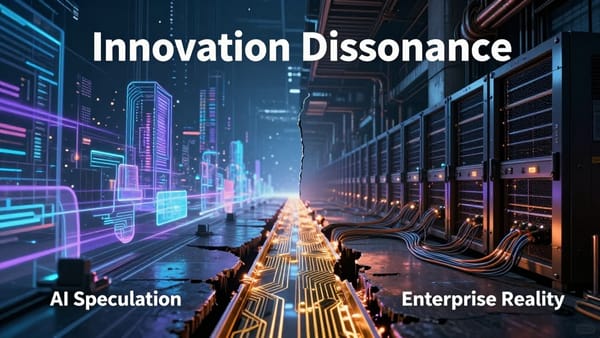
However, rapid updates in the software ecosystem often come with significant technical debt and stability risks. Recent reports from Forbes indicate that a new Microsoft update has caused some Windows PCs to fail upon startup. Such failures remind us that despite the focus on AI and high-end features, the foundational stability of operating systems remains a critical friction point. When a core OS update fails, it doesn't just annoy a consumer; it can halt operations for entire hospitals, airlines, and logistics firms. This "fragility of the core" is a major concern for CIOs who are under pressure to innovate but cannot afford the downtime associated with "bleeding-edge" updates. It highlights a widening gap between the consumer's desire for new features and the enterprise's need for boring, predictable uptime.
This concern regarding reliability extends to defense and critical infrastructure, where the stakes of technological failure are existential. An analysis from The Jerusalem Post examines the technological origins of the Iron Dome, questioning whether its success should be attributed primarily to Israeli or American ingenuity. This debate underscores how heavily modern nations rely on shared technological advancement for security. In the defense sector, the integration of AI for interceptor trajectories or radar recognition is hampered by the same issues facing Microsoft: how do you update a system in real-time without introducing a catastrophic bug? The answer lies in compartmentalization and rigorous "digital twin" testing, where updates are run in thousands of simulated scenarios before being deployed to the field.
The Human Element: Skills, Legacy, and Daily Habits
As AI changes the landscape, professionals are looking for ways to maintain a competitive edge. This is no longer an optional "upskilling" exercise; it is a requirement for survival in the modern workforce. ZDNET reports that companies like Colgate-Palmolive are already integrating AI into revenue growth management and product innovation, requiring employees to develop new analytical skills. Employees are increasingly expected to be "AI-literate," which means understanding how to prompt, verify, and incorporate machine-generated outputs into their workflows. The focus is shifting from "doing the work" to "orchestrating the work."
This transition in the corporate world mirrors a broader evolution in global health and leadership principles. The recent passing of global health legend Dr. William H. Foege, as chronicled by Forbes, serves as a poignant reminder that while technology scales solutions, the human principles of leadership, vision, and empathy remain the primary drivers of progress. Dr. Foege's work in smallpox eradication wasn't just a triumph of biology; it was a triumph of logistics, persuasion, and human cooperation. As we automate the "logic" of our world, the "legacy" of human-centered leadership becomes more valuable. We are learning that while AI can solve an equation, it cannot inspire a team or navigate the ethical nuances of a global crisis.
Even our leisure and symbolic traditions are being touched by the tension between the old and the new. While millions engage with digital puzzles like the daily Wordle to sharpen their cognitive skills in a bite-sized format, ancient traditions continue to surface in diplomatic life, proving that the physical world still holds weight. For example, Zee News recently recalled a historic moment when a simple coin toss decided the ownership of a colonial-era presidential buggy between India and Pakistan. It is a stark reminder that while the future is built on semiconductors and algorithms, our history and human interactions remain tethered to the physical and the ceremonial. We live in a hybrid reality where a software engineer might use an AI copilot to write code, only to spend their evening solving a word puzzle or participating in a centuries-old cultural tradition.
The "skills gap" is thus being redefined as a "hybridity gap." Successful individuals in 2026 are those who can navigate both the algorithmic efficiency of the machine world and the complex, often irrational world of human emotion and history. This requires a balanced cognitive diet: the technical rigor to understand how a cloud-based accounting system works, and the emotional intelligence to lead a team through the anxiety of digital transformation. Companies that fail to recognize the human side of this realignment—concentrating only on the "tech stack" while ignoring the "talent stack"—often face internal resistance that negates any gains from automation.
Conclusion: Navigating a Hybrid Reality with Analytical Rigor
The technological developments of early 2026 paint a picture of a world in transition, moving away from hyper-growth for its own sake and toward a more integrated, resilient digital economy. From the $550 billion AI-driven manufacturing boom in India to the 35% reduction of the iPhone’s Dynamic Island, the trend is toward greater efficiency and less-intrusive technology. We are entering a phase where the machine "fades into the background," becoming an invisible architecture that supports human productivity rather than an intrusive presence that demands constant attention. However, this seamlessness is earned through extreme complexity and rigorous standards.
As we have seen, this path is fraught with challenges. The Microsoft update failures and the ongoing debate over the authorship of defense technologies like the Iron Dome emphasize that innovation is rarely a straight line. It is a series of advancements followed by necessary stabilizations. Looking forward, the challenge for both corporations and individuals will be "co-existence." As software engineering adopts AI and industries like insurance and accounting undergo cloud-fueled surges, the successful participants will be those who can leverage these tools while maintaining the rigorous standards of correctness exemplified by systems like Julienne. The future is not just about the power of the algorithm, but about the strategic foundation upon which that power is built. We must remain vigilant observers of the "how" and "why" behind these changes, ensuring that as our hardware shrinks and our software expands, our human agency remains the central focus of the technological observer.
Ultimately, the digital realignment of 2026 suggests that technology is no longer a separate vertical; it is the horizontal layer that connects every human endeavor. Whether we are discussing the geopolitical implications of a semiconductor plant in Bangalore or the user interface of the next smartphone, we are talking about the same underlying story: the quest for a more efficient, reliable, and human-centric way of living. Success in this era will not be measured by who has the most powerful AI, but by who uses it with the greatest degree of wisdom and foresight. As the lines between the physical and digital continue to blur, our ability to maintain a neutral, analytical perspective becomes our most valuable asset.