The Convergence of Intelligence and Infrastructure: Analyzing the 2026 Tech Landscape


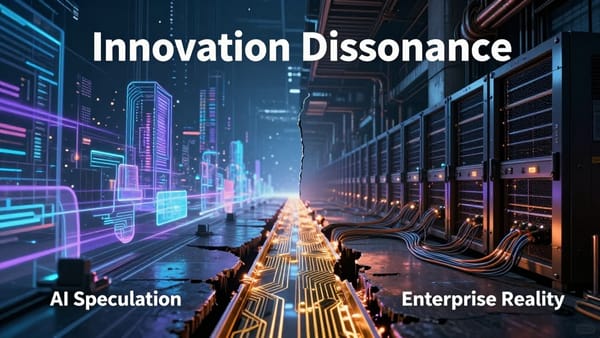
The technological landscape in early 2026 is defined by a resolute shift from exploratory experimentation to deep, systemic infrastructure integration. As artificial intelligence evolves from a novel interface into a "relationship-aware" agent, the underlying hardware and software frameworks—ranging from semiconductor giants to specialized logistics platforms—are recalibrating to meet these heightened demands. This transition represents a maturing of the digital economy, moving past the era of speculative "vaporware" into a period that industry veterans are calling the "prove-it" era. In this environment, the success of a technology is no longer measured by its theoretical potential, but by its practical delivery within complex, multi-layered ecosystems.
We are currently witnessing a rare alignment where biotechnology, defense systems, and telecommunications are converging under a unified umbrella of algorithmic optimization. This is not merely an incremental update to existing tools; it is a fundamental rearchitecting of how data is processed, stored, and utilized across sectors. From the precision of CRISPR gene editing—now bolstered by predictive AI—to the strategic maneuvers of defense contractors deploying directed energy systems, the tech sector is prioritizing resilience, scalability, and functional utility. This analysis provides a comprehensive look at the pivotal developments shaping the 2026 landscape, examining the data-driven insights and market movements that characterize this transformative period in technological history.
The Semiconductor and Storage Foundation: Engineering the AI Backbone
The stability and advancement of the global tech ecosystem remain inextricably linked to the physical realities of semiconductor fabrication and data storage capacity. In early 2026, the market has moved beyond the frantic chip shortages of the early 2020s, entering a phase characterized by specialized silicon tailored for specific AI workloads. Real-world market indicators suggest a cautiously optimistic outlook for these foundational players. For instance, Marvell Technology (NASDAQ:MRVL) saw its stock trade 1.9% higher in recent sessions, a movement that analysts interpret as a broader validation of the networking and "interconnect" layer of the data center. As AI models grow in complexity, the bottleneck is often not the processor itself, but the speed at which data can move between memory and compute units. Marvell’s trajectory highlights the premium investors now place on infrastructure that facilitates high-speed data movement.
Parallel to the semiconductor narrative is the resurgence of high-capacity storage as a critical bottleneck. The storage sector serves as a vital barometer for the health of the entire digital economy because it reflects the actual volume of data being retained for deep learning and historical analysis. As reported by Yahoo Finance, Seagate Technology is approaching a significant earnings milestone on January 27, 2026. This date is being watched closely as a potential catalyst for the industry. The demand for massive linguistic models and multimodal AI (integrating video, audio, and text) has necessitated a transition toward higher-capacity drives and Heat-Assisted Magnetic Recording (HAMR) technologies. The shift is no longer optional; as data latency directly impacts the real-time performance of autonomous systems and enterprise-level Large Language Models (LLMs), the efficiency of the storage layer becomes a competitive differentiator.
Historical analysis of the tech sector reveals that every major software boom—from the internet's birth to the mobile revolution—was preceded by a hardware expansion phase. Today, we see this repeating as data center operators move toward liquid cooling and specialized AI accelerators. The current "infrastructure play" suggests that the market is preparing for a decade where AI is not an add-on, but the core operating system of global commerce. This necessitates a move away from general-purpose hardware toward bespoke solutions that can handle the specific mathematical demands of neural networks without astronomical energy costs. The focus for 2026 is clearly on sustainability and throughput, ensuring that the physical foundation can support the heavy cognitive load of the next generation of software.
AI Integration and the Human-Centric User Experience
While hardware provides the essential physical backbone, the software layer is undergoing a radical metamorphosis in how it perceives and interacts with human users. We are moving away from "reactive" software—tools that wait for a command—toward "proactive" agents that understand intent. Google’s current roadmap for its communication suite epitomizes this shift. In a recent interview with Blake Barnes on ZDNET, it was revealed that Google is transforming Gmail into a "relationship-aware AI agent." This is a significant departure from traditional inbox management. Rather than simply filtering spam or categorizing mail, this relationship-aware system analyzes the historical depth and professional relevance of contacts to surface high-priority interactions, effectively acting as an executive assistant that understands the nuance of social and professional hierarchies.
This trend of specialized, context-aware software is not limited to consumer giants. It is increasingly visible in the industrial sector, where specialized platforms are solving niche logistics problems. Forbes recently explored how Dispatch Science, a transportation management software (TMS) provider, is revolutionizing how regional third-party logistics (3PL) firms operate. By utilizing advanced orchestration algorithms, Dispatch Science allows smaller trucking firms to manage complex, multi-stop routing requirements that once required the massive IT budgets of global giants like UPS or FedEx. This democratization of high-level logistics software is a pivotal theme of 2026: the ability of software to ingest vast amounts of real-time data and provide actionable summaries to human operators who no longer have the time to micromanage every data point.
Even in the realm of digital leisure, we see the importance of consistent cognitive engagement as a strategy for platform stickiness. The New York Times, for instance, has successfully pivoted into a gaming powerhouse by leveraging "snackable" daily challenges. Forbes continues to track the cultural dominance of Wordle, which has paved the way for newer ventures like Pips, a domino-based challenge. These gaming offerings serve as more than just entertainment; they are sophisticated data collection and user retention tools. For a technician or a strategist in 2026, these platforms represent the "entry point" of the daily digital habit, proving that even as AI takes over complex tasks, there remains a fundamental human need for structured, solved puzzles. The evolution of the user experience is thus two-fold: extreme automation for productivity and deliberate engagement for leisure.
The Future of Work: Skill Evolution and Strategic Procurement
The "prove-it" era of technology is placing unprecedented pressure on the global labor market to transition from generalist knowledge to deep, specialized technical proficiency. As automation handles routine coding and administrative tasks, the value of human capital is shifting toward oversight, ethics, and "adversarial thinking." According to Tech Times, Cybersecurity Analysis remains at the top of the hierarchy of essential skills. Specifically, the mastery of Security Information and Event Management (SIEM) tools like Splunk, combined with the rigorous Offensive Security Certified Professional (OSCP) certification, is becoming a baseline requirement for maintaining corporate digital integrity. In 2026, a cybersecurity professional is less of a "gatekeeper" and more of a "threat hunter," using AI to scan for vulnerabilities before they are exploited by automated black-hat algorithms.
Furthermore, the tools used for day-to-day business operations have become significantly more automated and data-rich, forcing a change in how software is procured by leadership. Chief Revenue Officers (CROs) are now tasked with evaluating software not just on features, but on how well its data can be integrated into a unified "truth" for the company. A comprehensive guide on Nextiva highlights the top eight outbound calling software platforms, emphasizing the importance of seamless CRM integration and AI-driven sentiment analysis. For an organization to remain competitive, it must use software that can "talk" to other tools in the stack. This trend is mirrored in the developer community, where stability and scalability remain the primary concerns. The release of Node.js 25.5.0 demonstrates this commitment to maintaining the essential runtime environments that power billions of dollars in global e-commerce. Developers are prioritizing environments that offer long-term support and memory safety, reflecting a broader industry shift toward reliability over rapid, unstable releases.
This evolution in skills also extends to the physical-digital divide. We are seeing the rise of the "Technician-Strategist"—individuals who can troubleshoot complex software-defined hardware systems. For example, maintaining a modern fleet of vehicles or industrial machines now requires more than mechanical knowledge. As seen in the Audi MMI software update guide on Alibaba, even consumer automotive maintenance now involves navigating hidden engineering menus and managing SD card firmware updates. This implies that "tech skills" are no longer confined to the IT department; they are becoming a universal requirement for participating in a software-defined world. Education and enterprise training programs are increasingly focusing on this hybrid literacy, preparing a workforce that can work alongside automated agents without being rendered obsolete by them.
Defense and Biotech: The High-Stakes Frontiers of Innovation
While consumer tech often leads in publicity, the most consequential advancements in 2026 are occurring in the high-stakes sectors of national defense and biotechnology. These areas are characterized by a "deliver-fast" methodology that prioritizes immediate, field-ready results. At the Aerospace & Defense Expo, RMX Industries highlighted this transition, noting that the defense sector has moved away from decadal development cycles in favor of agile, iterative prototyping. This is largely driven by the urgent need to counter drone swarms and hypersonic threats through modern directed energy systems.
The market for Directed Energy Weapons (DEW) is a prime example of this acceleration. As reported by Yahoo Finance, the DEW sector is on the verge of explosive growth, with some estimates placing its valuation toward $32.53 billion as drone warfare becomes a global constant. Unlike traditional kinetic munitions, directed energy offers a "bottomless magazine," powered by electrical energy rather than physical shells. This technological shift requires massive advancements in compact power storage and precision targeting algorithms—technologies that are beginning to trickle down into civilian sectors, such as satellite communication and high-speed industrial cutting. The strategic necessity of these systems is forcing governments to partner more closely with agile tech startups, blurring the lines between traditional defense contractors and Silicon Valley-style innovators.
In the medical arena, AI is proving to be a critical safety net for biological engineering. One of the most significant breakthroughs involves using machine learning to "keep CRISPR technology in check." According to Phys.org, AI models are now being used to predict "off-target" effects—instances where gene-editing tools might inadvertently modify the wrong part of a patient's DNA. By simulating millions of potential genetic interactions in a virtual environment before a single cut is made in a laboratory, AI is addressing the inconsistency that has long hampered the clinical rollout of CRISPR. This convergence of "In Silico" (computer-simulated) and "In Vivo" (in-living) science represents a new era of precision medicine. We are no longer guessing how a biological system will react; we are using high-performance computing to map the outcomes with a degree of certainty that was unimaginable even five years ago.
Corporate Resilience and the Real-Time 3D Economy
The financial markets of 2026 have begun to reward companies that provide the "engines" for digital creation and global connectivity. A notable performer in this regard is Unity Software Inc. (U), which recently outpaced market expectations by reaching $43 a share. Unity’s success is a signal of the growing importance of real-time 3D (RT3D) platforms. Beyond video games, RT3D is becoming the standard for "Digital Twins"—virtual replicas of factories, cities, and power grids used for simulation and stress-testing. As enterprises seek to optimize their operations without the risk of physical downtime, the software that powers these virtual worlds becomes an essential industrial tool. Unity’s resilience in a volatile market demonstrates that the "metaverse" hype has finally matured into a practical, industrial-focused utility.
Global collaboration is also a defining characteristic of the 2026 infrastructure boom. The tech sector is no longer siloed by geography; it is a web of strategic partnerships. A prime example is HCLTech winning the Innovation Award from Ericsson. This recognition highlights the critical role of IT services in building out next-generation telecommunications networks, specifically in the realms of Open RAN (Radio Access Network) and 6G research. As we move toward 2030, the ability of these firms to co-innovate will determine the speed at which autonomous vehicles and smart cities can be deployed at scale. The reward for HCLTech underscores a lesson for the entire sector: in 2026, the winners are those who make the entire ecosystem more efficient, rather than those who try to capture it for themselves.
Finally, we must address the "software-defined" nature of modern physical assets. The automotive sector, as mentioned earlier, is the clearest example of this transition. When a vehicle's value is derived more from its software updates than its horsepower, the manufacturers become software companies. This creates a new set of challenges for consumer rights and maintenance. The prevalence of guides and tutorials for high-end German and American vehicles on platforms like Alibaba indicates a growing "right to repair" movement that is increasingly technical. Consumers are demanding transparency in the software stacks of their vehicles, leading to a new regulatory environment that will likely define the latter half of the decade. The resilience of the sector depends on finding a balance between proprietary innovation and the consumer’s need for long-term support and serviceability.
Conclusion: Navigating the Era of Proven Delivery
As we analyze the technological milestones of early 2026, the overarching theme is the move toward a cohesive, interconnected, and reliable digital infrastructure. The transition from the "hype cycle" to the "prove-it" era has brought a much-needed grounding to the tech sector. Whether it is through the refinement of CRISPR via predictive AI, the scaling of directed energy systems in defense, or the evolution of the humble inbox into a sophisticated relationship-aware agent, the focus has shifted toward clarity, context, and consistency. The era of launching unfinished "beta" products and fixing them later is closing; in a world where AI manages our logistics, our health, and our security, the margin for error has narrowed significantly.
For business leaders, investors, and consumers, the current landscape rewards a blend of technical mastery and strategic patience. The winners of 2026 are not necessarily the ones with the loudest marketing campaigns, but the ones whose hardware can sustain the highest AI workloads and whose software can provide the most seamless user experiences. As we move forward, the convergence of intelligence and infrastructure will continue to accelerate, turning once-speculative technologies into the invisible gears that drive modern civilization. Those who can navigate this landscape—understanding both the silicon foundation and the algorithmic layer above it—will be the architects of the next era of global innovation. The "prove-it" era is not just a challenge; it is the ultimate validation of technology’s role in the real world.