The Convergence of Artificial Intelligence and Infrastructure: Analyzing the Technological Landscape of 2026


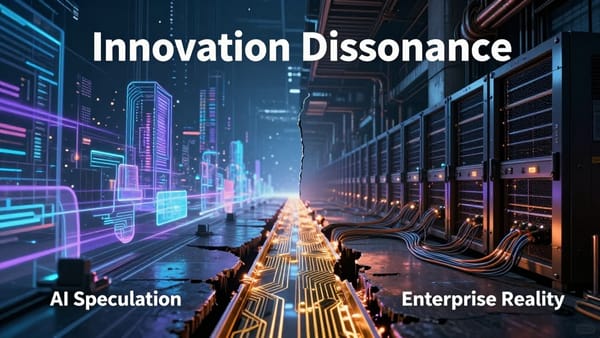
As we transition into 2026, the global technological landscape has moved decisively beyond the era of speculative potential. The "hype cycle" that characterized the early 2020s has matured into a period of rigorous integration, where artificial intelligence is no longer a bolt-on feature but a foundational component of societal infrastructure. In this new phase, the industry's focus has shifted from the novelty of generative capabilities to the practicalities of operational efficiency and institutional resilience. We are witnessing a systemic realignment where the digital and physical worlds coalesce, driven by the need to solve chronic labor shortages, optimize aging infrastructure, and manage the sheer volume of data generated by an increasingly connected world. This year represents a critical juncture: a "Great Implementation" where the promises made in boardrooms are finally manifesting in clinics, courtrooms, and consumer hardware. The Tech Observer provides this comprehensive analysis of the key developments in software, hardware, and global innovation corridors that are defining this pivotal year, moving past the excitement to examine the empirical realities of a tech-saturated society.
The Institutional Shift: Automating Essential Workflows
The most profound impact of artificial intelligence in 2026 is its deployment within specialized sectors to alleviate systemic administrative burdens. For decades, the "productivity paradox"—where increased computing power failed to yield significant productivity gains—plagued the professional services industry. However, we are now seeing a reversal of this trend through the automation of nuanced, high-stakes workflows. Nowhere is this more essential than in the healthcare sector, which has been pushed to the brink by administrative bloat and practitioner exhaustion. According to Technology.org, AI-driven documentation and diagnostic assistants are effectively freeing clinicians from the "paperwork overload" that has long contributed to professional burnout. By utilizing Large Language Models (LLMs) tuned for medical nomenclature, these systems can transcribe patient encounters and populate Electronic Health Records (EHRs) with high precision, allowing medical professionals to engage in actual patient care rather than data entry. This shift is not merely about convenience; it is a vital intervention for a healthcare system facing a global shortage of qualified personnel.
This modernization effort extends into the public sector, where the judicial system—notoriously slow to adopt digital tools—is undergoing a historic transformation. As reported by St. Louis Public Radio, judges and court administrators are increasingly adopting technology upgrades to streamline legal proceedings. These upgrades signify a broader cultural shift within the legal profession, where the goal is to reduce case backlogs and enhance the transparency of the judicial process. By automating the filing, categorization, and retrieval of legal documents, the "digital gavel" is ensuring that the wheels of justice turn with greater efficiency, a move that parallels the broader acceptance of digital transformation across government branches. However, the integration of AI in law also raises significant questions regarding algorithmic bias and the fundamental right to human oversight—tensions that will likely define legal scholarship for the remainder of the decade.
In the private enterprise space, the struggle for dominance has moved from basic SaaS offerings into the realm of "AI Service Management." A notable case study is the aggressive growth strategy of ServiceNow. According to the Daily Gazette, the company's recent $1.2 billion deal spree is strikingly reminiscent of the consolidation strategies previously seen at SAP. This suggests a period of intense competition as providers race to become the centralized operating system for the AI-enabled enterprise. These corporate maneuvers reflect a deeper maturity in information technology, a theme explored by analyst Yogi Schulz at EnergyNow, whose reflections on the developments of 2025 underscore that the successful organizations of 2026 are those that have prioritized data hygiene and infrastructure scalability over mere experimentation. The shift is clear: the institutions that survive are those that treat AI as a core utility rather than a temporary advantage.
Hardware Innovations and the "Smart" Consumer Ecosystem
The consumer electronics market in 2026 is pivoting away from "connected" devices and toward "intelligent" ones. This distinction is critical; while the previous decade was defined by the Internet of Things (IoT), where devices merely transmitted data to the cloud, the current era is defined by Edge AI. Hardware is now designed with local processing units—Neural Processing Units (NPUs)—that allow AI models to run on-device, enhancing privacy and reducing latency. As the industry prepares for the upcoming CES 2026 exhibition, CNET previews suggest that the primary theme will be "invisible AI"—technology that operates in the background of our lives without requiring constant user prompting. We are moving toward a world where our devices anticipate our needs through behavioral analysis and contextual awareness.
Industry analysts at ZDNET have identified several top trends for the coming year, including the rise of sophisticated AI agents that act as personal intermediaries for consumers. These are not the simple voice assistants of 2018; these are autonomous systems capable of booking travel, managing domestic energy consumption, and executing complex multi-step workflows. This trend is bolstered by advancements in battery technology and low-power silicon, enabling AI to persist in smaller form factors. We are seeing these sophisticated applications reach even the most specialized hobbyist markets. For instance, FeatherSnap is showcasing how AI-powered smart technology can be applied to ornithology, using computer vision to identify avian species in real-time. This demonstrates that no niche is too small for AI integration, provided the technology adds genuine value to the user experience.
The aesthetic of technology is also evolving. As noted by Popular Science in their review of home innovations, there is a newfound balance between high-end utility and minimalist design. Consumers are no longer interested in gadgets that look like science fiction props; they want tools that blend into their homes while providing superior performance. This sentiment is further articulated by Wallpaper*, which highlights that the most successful innovations of the past year were those that prioritized sensory appeal and tactile quality alongside technical ingenuity. The hardware of 2026 is characterized by a "quiet power"—capable of immense computation but presented with a human-centric design philosophy that respects the domestic environment. This suggests a maturing market where buyers are discerning, favoring longevity and build quality over the frequent upgrade cycles of the past.
Geopolitics and the Infrastructure of Innovation
As we move deeper into 2026, the geography of innovation is being redrawn, moving away from a Silicon Valley-centric model toward a multicentric global landscape. Major powers are now treating "science and technology corridors" as vital national assets, comparable to oil reserves or shipping lanes. This regional competition is particularly visible in East Asia. As reported by PR Newswire, Shanghai has launched an ambitious initiative to develop a massive innovation corridor in the Yangtze River Delta. This project aims to integrate high-end manufacturing with advanced academic research, creating a self-sustaining ecosystem that can weather global supply chain disruptions. Such corridors are the new front lines of geopolitical influence, where the goal is to achieve domestic self-sufficiency in semiconductor fabrication and AI development.
Parallel to these physical infrastructure developments is the evolution of the decentralized digital landscape. While the "crypto winter" of previous years cooled speculative fervor, it paved the way for more robust blockchain applications that serve actual utility within these innovation corridors. A pertinent example is the listing of HEX Chain (HEXK) on the LBank Exchange, as noted by Cantech Letter. This reflects a continuing trend where specialized, high-throughput blockchain networks are being integrated into the financial and logistics backbones of tech-heavy regions. These networks are no longer just for digital assets; they are becoming the "trust layer" for peer-to-peer energy trading, secure data sharing between research institutions, and automated supply chain management.
However, this rapid technological acceleration is not without its psychological toll on the global population. The "tech-shock" experienced by many in the face of such rapid change has manifested in surprising cultural ways. Even traditional prognosticators are feeling the influence of the high-tech era; Tatiana Borsch’s 2026 predictions, featured in Cantech Letter, speak to a deep societal anxiety about the future. Whether one follows astrology or econometric modeling, the underlying sentiment remains the same: 2026 is a year of profound transition. The geopolitical stability of the coming years depends on whether these "innovation corridors" result in a shared global prosperity or a fragmented world of "tech silos" where knowledge and resources are hoarded behind digital and physical walls. The Tech Observer notes that the most successful nations in 2026 are those treating tech infrastructure like public utilities: accessible, reliable, and fundamentally integrated into the social contract.
The Software Paradox: Efficiency vs. "Slop"
While hardware and infrastructure are reaching new heights, the software world is facing a quality crisis often referred to as the "Software Paradox." On one hand, AI has made it easier than ever to write code and generate content; on the other, this ease of production has led to a glut of low-value output. A significant report by ZDNET highlights the rise of "AI slop" and "brainrot" content on platforms like YouTube Shorts. This phenomenon describes the deluge of low-effort, AI-generated videos designed solely to gaming the algorithm, resulting in a degraded user experience. This "slop" threatens to erode the trust that users have in digital platforms, forcing developers and regulators to find new ways to prioritize human-centric, high-fidelity content over synthetic noise.
In response to this flood of transient content and the rising costs of the "subscription economy," we are seeing a notable return to software stability and ownership. One of the most telling trends of 2026 is the growing resentment toward "Subscription as a Service" (SaaS) fatigue. According to Macworld, there has been a resurgence in demand for perpetual licenses. The fact that a lifetime license of Microsoft Office is now more cost-effective than two years of a Microsoft 365 subscription is not lost on consumers. Users are increasingly seeking "sovereign software"—tools they can own and operate without constant recurring fees or the fear of being locked out of their own data. This shift suggests that for all the innovation in the cloud, there is an enduring value in local, reliable, and predictable software models.
This desire for control and reliability is also pushing users toward deeper technical self-sufficiency. As operating systems become more complex and integrated with AI, the potential for "black box" errors increases. Technical resources like How-To Geek are seeing a surge in engagement as users seek out powerful, overlooked troubleshooting tools. In 2026, the sophisticated user is one who understands how to peel back the layers of the OS to maintain system health, rather than relying on automated "fix-it" wizards that may prioritize corporate interests over user privacy. This tension between the "easy path" of AI automation and the "hard path" of technical mastery is the defining psychological conflict of the current software era. The Tech Observer posits that the software of the future must find a middle ground: offering the power of AI without sacrificing the user’s agency or the integrity of the data.
Conclusion: The Practical AI Era
As we conclude our analysis of 2026, it is evident that we have entered a period of technological "sobering." The initial euphoria surrounding artificial intelligence has been replaced by a pragmatic, data-driven approach to implementation. What we see today is a world where the success of a technology is measured not by its novelty, but by its ability to resolve the long-standing frictions of modern life. We have seen AI move from a chatbot gimmick to a foundational tool that rescues doctors from burnout, streamlines the Yangtze River Delta's tech corridor, and even enhances the simple pleasure of bird watching. However, this progress is accompanied by significant risks, from the "slop" of synthetic content to the geopolitical tensions inherent in a race for technological supremacy.
The mandate for the remainder of 2026 and beyond is clear: the focus must remain on high-value infrastructure and ethical integration. Stakeholders, from policymakers to the average consumer, must resist the noise of low-quality automation and instead prioritize tools that offer tangible efficiency and long-term stability. The evolution of our hardware, the stability of our software, and the resilience of our global innovation corridors will determine whether this decade is remembered as a era of chaos or a period of historic advancement. For those who navigate this landscape with a critical eye, the rewards are substantial. The Practical AI Era is not just about smarter machines; it is about building a more efficient, thoughtful, and ultimately more human-centric technological foundation for the future. The Tech Observer will continue to track these developments, focusing on the data and the reality behind the digital screen.