The Convergence of AI, Hardware, and Infrastructure: Analyzing the 2026 Tech Landscape

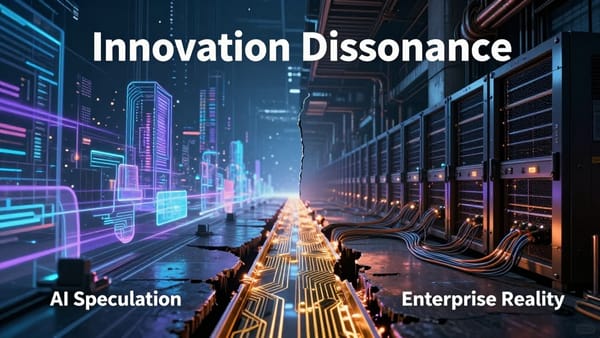
The dawn of 2026 marks a significant inflection point in the technological narrative, representing a departure from the speculative fervor of previous years toward a more grounded, industrial-scale implementation. We are moving beyond the initial "AI hype" phase—characterized by generative novelties and chatbot experiments—into a period defined by the deep integration of artificial intelligence into physical hardware, more sophisticated materials science, and a fundamental shift in the software engineering workforce. As the consumer technology sector gathers at major global forums, the industry's focus has transitioned from what AI can say to what AI can do within the constraints of our physical world. This is not merely an incremental update to the digital status quo; it is a structural realignment of how computing power is distributed and consumed. We are witnessing the maturation of "Edge Intelligence," where the latency of the cloud is being replaced by the immediacy of on-device processing. This analysis explores these evolving pillars—from the hardware innovations showcased at CES to the structural shifts in software development and the rise of decentralized global innovation hubs. By examining the interplay between raw materials, silicon architecture, and human capital, we can discern the trajectory of an industry that is becoming simultaneously more powerful and more invisible.
The Evolution of Physical Computing: Materials and Form Factors
Hardware in 2026 is defined by a paradox: devices are becoming increasingly powerful while simultaneously becoming more physically ephemeral. This shift is most evident in the laptop market, where traditional trade-offs between portability and structural integrity are being dismantled by breakthroughs in metallurgy and composite engineering. As reported by Engadget's coverage of LG’s Aerominum Gram Pro, the use of advanced alloys like Aerominum suggests a future where high-performance computing does not require bulk. This material innovation is essential for a mobile workforce that demands durability without the traditional weight penalties. From an analytical perspective, this represents the "industrialization" of mobile hardware; we are moving away from plastics and standard aluminum toward specialized aerospace-grade materials that can dissipate heat more efficiently—a critical requirement as on-board AI chips run at higher clock speeds.
The implications for the enterprise sector are profound. When hardware no longer dictates the limits of mobility, the "office" becomes truly decoupled from physical locations. However, the physical interface remains the primary bottleneck for user experience. Parallel to portable computing is the advancement of display technology, particularly for specialized sectors like gaming and professional design. According to a press release from ASUS regarding ROG RGB OLED developments, the industry is pushing the boundaries of color accuracy and refresh rates to accommodate high-fidelity AI-generated visuals. These displays are not just about aesthetics; they are designed to handle the "jitter" and frame-interpolation tasks now commonly managed by AI upscaling technologies. This synergy between the panel and the processor allows for visual fidelity that was previously restricted to high-end desktop workstations.
Yet, the true innovation lies deeper than the chassis or the screen; it resides in the silicon powering these devices. Understanding the foundation of modern hardware requires looking at Arm, the "invisible company" described by Interesting Engineering, which continues to provide the architecture necessary for energy-efficient, high-performance computing across nearly every mobile and embedded platform. In 2026, the dominance of ARM architecture is no longer just a mobile story; it is a data center and laptop story. The push for "performance per watt" has become the industry's north star, as energy costs and thermal limits become the primary inhibitors of AI growth. By optimizing the instruction set at the most granular level, ARM-based chips are enabling the "Always-On AI" features that characterize 2026’s gadgetry without compromising the 20-hour battery life that consumers now consider standard.
CES 2026: AI Integration and the Consumer Experience
The Consumer Electronics Show (CES) remains the primary barometer for the "gadgetization" of AI. This year, the focus has shifted toward ambient computing—devices that listen, record, and assist without requiring the constant attention of a screen. This is a move toward a "post-app" economy where the interface is conversational or situational rather than tactile. As noted by ZDNET’s review of the PLAUD NotePin S, wearable AI recorders are becoming more discrete, moving from the pocket to the lapel. This indicates a broader trend in professional productivity: the automated capture of "institutional memory." When every meeting, sidebar, and brainstorming session can be indexed and queried by a local AI, the friction of administrative overhead begins to evaporate.
This trend is mirrored in the audio sector, where TechCrunch reports on Subtle's new earbuds, which utilize sophisticated noise-cancellation models to enhance human interaction rather than just blocking it out. We are seeing the rise of "selective hearing" as a feature, where AI can isolate a single human voice in a crowded room, effectively acting as a hearing prosthetic for the digital age. This is a significant shift in philosophy; technology is being used to reconnect us with our immediate environment rather than isolating us within a digital bubble. The engineering challenge here is immense, requiring real-time neural processing with near-zero latency, further emphasizing the need for the specialized silicon mentioned previously.
The sheer scale of these developments can be daunting for the average observer. Real-time insights from Tom’s Guide’s live CES coverage and ZDNET’s live updates highlight a market saturated with "AI-first" products. Yet, the critical journalist must ask whether these innovations offer practical utility or merely "AI-washing" of existing tech. According to ABC News, the expectation for CES 2026 is a move toward more cohesive ecosystems where disparate devices communicate via common AI protocols. We are seeing the end of the "walled garden" as a viable strategy; consumers are demanding that their PLAUD recorder, their Subtle earbuds, and their LG laptop work within a unified intelligence framework. This demand for interoperability is driving a new wave of localized innovation. As reported by the Seoul Business Agency via the Milwaukee Journal Sentinel, the success of South Korean startups at the CES Innovation Awards underscores the globalization of tech ingenuity. Seoul has emerged as a powerhouse for "applied AI," focusing on niche hardware solutions that Silicon Valley often overlooks in its pursuit of massive software platforms.
The Software Shift: Engineering Talent and Open Source Resilience
While hardware evolves into more exotic forms, the software layer is undergoing a structural transformation that contradicts early predictions of the industry's demise. Contrary to fears that AI would automate away the need for human developers, the opposite appears to be true in 2026. Research from WebProNews indicates a surge in software engineering jobs reaching 105,000 openings. This surge is driven by the massive demand for AI implementation, legacy system migration, and cloud infrastructure management. We are not seeing a replacement of the developer, but rather a migration of the developer's role up the value chain. AI is remarkably efficient at generating boilerplate code, but it remains incapable of the high-level architectural thinking required to build resilient, scalable systems.
However, this growth brings complex legal and philosophical challenges that the industry is only beginning to reconcile. Developers must navigate increasingly intricate legal landscapes regarding the provenance of the code they use. As Programming Insider explains, understanding software licensing and terms of use is now a critical skill set. The collision between AI training data and open-source contributions has created a "gray market" of intellectual property that requires human oversight to manage. Furthermore, the philosophy of software development is shifting toward a "product thinking" approach. According to The European Business Review, Europe’s tech future depends on moving beyond simple coding toward creating holistic, user-centric products. This suggests that the successful engineer of 2026 must be part programmer, part ethicist, and part product manager.
Despite the commercialization of AI, the spirit of the "free web" persists, driven by a community of developers wary of corporate gatekeeping. Analysis by Xataka highlights the open-source projects that continue to maintain the decentralized dream of the internet. These projects are the "immune system" of the web, ensuring that privacy-preserving and accessible tools remain available to all. Even niche software continues to iterate at a rapid pace; for instance, the release of FlyOOBE 24 reported by NTCompatible demonstrates the ongoing importance of community-driven tools in tailoring the user experience, often providing functionality that major operating systems overlook. This grassroots innovation ensures that the tech landscape remains heterogeneous, preventing a total monopoly by the "Magnificent Seven" tech giants.
Infrastructure and the Energy Imperative
To understand the tech landscape of 2026, one must look below the surface at the infrastructure that sustains these innovations. The "Cloud" is no longer an abstract concept but a massive consumer of global resources. As AI models grow in complexity, the energy requirements for training and inference have reached a critical mass. This has led to a "nuclear renaissance" within the tech sector, with major players investing in Small Modular Reactors (SMRs) to power their data centers. The bottleneck for AI in 2026 isn't just data or silicon; it is the grid. This infrastructure reality is forcing a pivot toward efficiency that mirrors the evolution of the hardware sector.
The decentralization of infrastructure is another key theme. "Edge Data Centers" are proliferating, bringing the compute power closer to the user to support the low-latency requirements of augmented reality (AR) and autonomous systems. This infrastructure shift is what enables the real-time capabilities of devices like the PLAUD NotePin S. Without the underlying network density to process data locally or at the "near-edge," these gadgets would be little more than expensive toys. The convergence of 6G testing and advanced fiber optics is providing the "nervous system" for this distributed intelligence. The 2026 landscape is therefore defined by a triad: the intelligence of the software, the portability of the hardware, and the robustness of the infrastructure.
Furthermore, we must consider the geopolitical implications of this infrastructure. Innovation hubs are no longer confined to a single valley in California. As seen with the success of the Seoul Business Agency, regional governments are becoming venture capitalists in their own right, building localized ecosystems that compete on a global stage. These hubs are often more specialized, focusing on tactical applications of AI in manufacturing, logistics, and healthcare. This "diversification of ingenuity" is a healthy development for the global economy, as it reduces single-point-of-failure risks in the technology supply chain. The resilience of the 2026 tech landscape depends on this geographic and structural variety.
Strategic Implications and Forward-Looking Insights
Looking back at the broader trends of the past year, WebProNews notes that 2025 breakthroughs in quantum computing and AI have set the stage for the practical iterations we see today. We are transitioning from the "breakthrough" phase to the "optimization" phase. In 2026, the success of a technology is measured not by how "new" it feels, but by how seamlessly it integrates into the existing human experience. The period of disruption for disruption's sake is ending, replaced by a mandate for utility, sustainability, and reliability. The "next big thing" is no longer a localized event; it is a systemic shift in how we interact with the information layer of the world.
The future of technology will likely be characterized by three key themes that will dominate the remainder of the decade:
- Decentralized Innovation: As seen with the Seoul Business Agency's success, innovation hubs are becoming more geographically diverse, reducing the monolithic influence of traditional tech capitals. This will lead to more culturally specific tech solutions that address local challenges.
- Human-Machine Synergy: The surge in engineering jobs suggests that AI is presently an augmentative tool rather than a replacement. The most successful professionals will be "AI orchestrators" who can bridge the gap between human intent and machine execution.
- Silent Integration: The best technology in 2026 will be defined by its invisibility—whether through lighter materials like Aerominum or ambient AI interfaces that disappear into the background of daily life. The "screen" is no longer the center of the universe.
As we monitor the ongoing releases from CES and the evolving job market, it is clear that we are entering a more mature era of computing. The challenges ahead are significant—ranging from energy scarcity to the legal ethics of AI—but the tools at our disposal have never been more sophisticated. The "seamless fabric" connecting hardware, AI, and the human intent behind the code is finally being woven into a coherent whole. The Tech Observer will continue to track these developments with a focus on practical utility and long-term viability, looking past the marketing gloss to the engineering reality and the socio-economic impact of these historic shifts.
In conclusion, the 2026 tech landscape represents a triumph of engineering over hype. It is an era where the "invisible" foundations—ARM architectures, Aerominum alloys, and open-source protocols—provide the stability for a new generation of ambient, intelligent devices. For the consumer, this means technology that is more helpful and less intrusive. For the professional, it means a more complex but potentially more rewarding creative environment. And for the industry, it means a shift toward a more global, more sustainable, and ultimately more human-centric trajectory. The convergence is no longer a prediction; it is our current reality.