The AI Reconfiguration: Market Volatility, World Models, and the Shift to Physical Intelligence

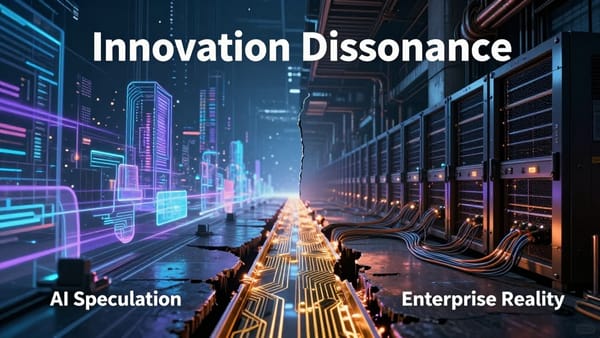
The global technology sector is currently navigating a period of profound structural realignment, marking the end of the "SaaS Golden Age" and the beginning of a more complex, hardware-integrated era. For the better part of two decades, the industry operated under the reliable assumption that Software-as-a-Service (SaaS) and cloud computing would remain the primary engines of exponential growth. This model, predicated on recurring revenue and high margins, is now facing a reckoning. Recent market movements and aggressive product pivots suggest a fundamental shift in the hierarchy of value. We are witnessing a divergence where traditional software providers are facing significant headwinds, while infrastructure, specialized silicon, and "Physical AI" are emerging as the new focal points for capital and innovation.
This transition is not merely a cosmetic update or a temporary market correction; it is a fundamental reassessment of how software is built, sold, and integrated into the physical world. As generative models move beyond simple text-based chat interfaces and into "world models" capable of understanding physics and spatial reasoning, the requirements for success are changing. This report analyzes the recent volatility in enterprise software stocks, the emergence of generative "world models," and the strategic moves by hardware and marketplace leaders to adapt to an AI-first economy. From Microsoft’s historic market cap fluctuations to the rise of autonomous logistics with Aurora Innovation, the landscape of technology is being rewritten in real-time. We will explore how these developments impact investors, developers, and the broader societal fabric, providing a clear-eyed look at the data driving these changes.
The Software Bear Market: Is AI Eating Its Own?
The once-indestructible narrative that "software is eating the world" has evolved into a more cannibalistic reality: AI is now eating software. This is no longer a theoretical warning circulated in Silicon Valley newsletters; it has become a quantifiable market trend. According to Seeking Alpha, analysts at Melius Research have identified a growing divergence where AI-driven disruption is devaluing the traditional SaaS model, while the infrastructure that supports these models continues to capture the lion's share of enterprise budgets. The logic is simple yet brutal: if an AI agent can perform a task that previously required five software licenses, the "per-seat" pricing model—the bedrock of SaaS—collapses.
This disruption manifested sharply during recent trading sessions. As reported by CNBC, the iShares Expanded Tech-Software Sector ETF officially entered a bear market, punctuated by ServiceNow plunging 10.9% in a single day. Investors are increasingly skeptical of "AI-wrapped" products that fail to offer distinct utility over foundational models. The fear is that traditional enterprise giants are trapped in a "middle-man" position, paying massive compute costs to providers like Microsoft or AWS while seeing their own pricing power eroded by automation. When a customer can use a frontier model to automate a workflow natively, the value proposition of a specialized subscription service diminishes significantly.
The tremors were felt most acutely among the industry's titans, signaling that no company is too large to be affected. Yahoo Finance noted that Germany’s SAP saw its shares drop more than 16% following a cautious cloud outlook. This decline reflects a broader anxiety: as enterprises migrate to the cloud, they are choosing to rationalize their software stacks rather than simply porting their old legacy systems. Perhaps most shocking was the performance of the sector leader; Seeking Alpha reported that Microsoft suffered the 7th largest one-day drop in its history—a 12% slide that wiped out billions in market capitalization. This was driven by two factors: capacity constraints for its AI services and its massive financial exposure to OpenAI. It suggests that even for those winning the AI race, the capital expenditure required to stay in the lead is creating a "margin squeeze" that investors are no longer willing to ignore. The transition from high-margin digital bits to capital-intensive AI infrastructure is a fundamental shift in the tech industry's financial profile.
This "software winter" is forced by the reality that AI integration requires a different kind of architecture. Traditional SaaS was about providing a UI for a database. AI, however, is about providing an intelligence layer that acts upon that data. For companies like Salesforce, Workday, or ServiceNow, the challenge is to prove that their specific application layer provides more value than a generalized AI agent with access to their APIs. As enterprises look to cut costs, the "shelfware" of the SaaS era is being purged, and the remaining budget is being redirected toward the GPUs and data centers that make AI possible. We are seeing a "re-platforming" similar to the move from on-premise to cloud in the late 2000s, but this time, the stakes are higher and the pace is significantly faster.
Generative Worlds and the Technical Evolution of Project Genie
While the financial markets grapple with the valuation of current software, the underlying technology is evolving toward what researchers call "world models." This represents a shift from AI that predicts the next word in a sentence (Large Language Models) to AI that predicts the next frame in a physical reality (World Models). Google’s latest innovation, Project Genie, represents a definitive milestone in this journey. As explained by Business Standard, Project Genie is an AI system capable of generating interactive, playable environments from simple text prompts or sketches. It is essentially a "foundation model" for interactive simulations, moving beyond the static generation of images or non-interactive video.
The technical significance of this cannot be overstated, as it hints at the future of digital interaction. According to Forbes, these models work by compressing the "rules of reality"—gravity, collision, cause and effect—into transferable principles. Unlike a traditional video game engine (like Unreal or Unity) that requires human programmers to code the physics of a world, Genie learns these physics through observation. This allows the AI to understand that if a character jumps, it must come down, or if a light switch is flipped, the room should brighten. By training on vast amounts of video data, the model develops an internal "physics engine" that can simulate novel environments on the fly. This capability is a precursor to more advanced AI that can predict outcomes in the real world, moving us closer to truly autonomous systems that don't just process data but understand the environment they inhabit.
The implications for the creative and industrial sectors are profound. In the short term, Project Genie and similar world models could democratize game development, allowing individuals to generate complex interactive experiences without deep coding knowledge. However, the long-term application lies in robotics and simulation. If an AI can accurately simulate the physical world, it can be used to "train" robots in a virtual environment before they ever touch a physical floor. This "Sim-to-Real" pipeline is the holy grail of automation. Instead of spending thousands of hours manually teaching a robot to navigate a warehouse, engineers can run millions of simulations in a "Genie-style" world model, significantly accelerating the deployment of autonomous systems. This transition marks the end of AI as a purely "digital" assistant and its birth as a "spatial" observer.
Furthermore, world models represent a shift in how we conceive of "truth" in digital media. If an AI can generate a consistent, interactive 3D world that obeys the laws of physics, the line between reality and simulation becomes increasingly blurred. This has significant ramifications for training AI in safety-critical applications. For instance, an autonomous vehicle AI can be tested in a world model that generates rare, high-risk "edge cases"—such as a pedestrian appearing from behind a truck in a rainstorm—that would be too dangerous or expensive to recreate in real-life testing. This level of predictive simulation is what will eventually separate "chatbots" from truly sophisticated "agents" capable of making real-world decisions.
Physical AI: Moving Intelligence from the Screen to the Street
The evolution of intelligence is moving from digital screens into physical hardware, a trend often referred to as "Physical AI." This is the convergence of high-level reasoning (LLMs) with low-level motor control. Microsoft is pushing this frontier by extending its Phi family of small language models into the tactile realm with Rho-Alpha. As reported by Forbes, Physical AI represents a transition from robots as strictly programmed tools—machines that follow a rigid X-Y-Z coordinate path—to robots as adaptable collaborators. Rho-Alpha is designed to handle unstructured environments, allowing machines to interpret visual data and "reason" about how to interact with objects they have never seen before.
Practical applications of this "Physical AI" are already reaching the commercial sector, particularly in the multi-trillion-dollar logistics industry. For instance, Yahoo Finance reports that Aurora Innovation has integrated its "Aurora Driver" self-driving system into McLeod Software, a dominant player in trucking enterprise management. This integration is critical because it treats the autonomous driver not as a piece of hardware, but as a digital employee integrated into the logistics workflow. It allows fleet managers to dispatch autonomous trucks with the same software they use for human drivers. This demonstrates how AI is no longer a standalone "feature" but is becoming a foundational component of industrial infrastructure, potentially offering massive upside for companies that successfully bridge the software-hardware divide.
The shift toward Physical AI also addresses one of the primary criticisms of LLMs: their lack of "grounding" in reality. A chatbot might tell you how to change a tire, but it has no conceptual understanding of the weight of the jack or the resistance of the lug nuts. By deploying models like Rho-Alpha into robotic platforms, the AI begins to learn from physical feedback. This "embodied cognition" is essential for the next generation of automation. We are moving away from factory robots that are bolted to the floor and toward "cobots" (collaborative robots) that can walk into a new facility, observe a human performing a task, and begin assisting them within hours. The economic implications are staggering, as this could solve labor shortages in manufacturing, elder care, and hazardous waste management.
However, the move to Physical AI introduces unprecedented safety and regulatory challenges. A bug in a spreadsheet software might lead to a data error; a bug in a Physical AI system could lead to property damage or physical injury. This is why the reliability of the hardware and the robustness of the "world model" (like Google's Genie) are so interconnected. To be truly useful, Physical AI needs to be able to predict the outcome of its actions with near-perfect accuracy. Companies that can provide both the intelligence (software) and the sensory hardware (cameras, LiDAR, haptic sensors) will hold the strategic high ground. This is likely why we see companies like Tesla and Amazon investing so heavily in their own custom robotics and silicon—they understand that "Physical AI" requires a vertical integration that traditional SaaS companies simply do not possess.
The Infrastructure Pivot: Silicon and Consolidation
Despite the "bear market" sentiment currently plaguing the application-layer software companies, the hardware and component manufacturers that power these AI systems remain in an entirely different economic cycle. Investors and industry analysts are looking deeper into the supply chain to find stability, recognizing that even if specific software companies fail, the demand for "compute" is a constant. Silicon Motion Technology (SIMO) has recently seen a 31.4% monthly return, leading investors to re-examine the company's fundamentals as reported by Yahoo Finance. As AI models move to the "edge"—meaning they run on local devices like phones or cars rather than in a central cloud—specialized controllers and high-speed storage become the new bottlenecks.
The memory market is also undergoing a transformative period. Memory is no longer just a commodity; it is a critical performance factor in AI training and inference. Per Seeking Alpha, the CEO of Micron Technology has recently released news regarding High Bandwidth Memory (HBM3E) shipments that could be a "game-changer" for its market position. The reality of the modern tech stack is that the smartest software in the world is useless if it cannot access data quickly enough. This has created a "flight to quality" in the hardware sector, where companies with a technological lead in advanced packaging and memory are seeing valuations that sharply contrast with the struggling SaaS sector. This reinforces the "Physical AI" thesis: value is moving from the abstract code to the physical atoms that allow that code to execute.
In addition to hardware resilience, this period of volatility is driving a massive wave of consolidation in the software ecosystem. Companies are trying to protect their market share by buying up the "discovery" layers where customers decide what software to buy. In a landmark deal, G2, the world's largest software marketplace, has formally agreed to acquire Capterra, Software Advice, and GetApp from Gartner. As reported by PR Newswire, this acquisition positions G2 as the undisputed leader in software reviews and lead generation. This move is a strategic reaction to the confusion in the market. As businesses are more overwhelmed than ever by the flood of "AI-powered" tools, the platform that controls the "trust" and "comparison" data becomes immensely valuable. G2 is essentially creating a "moat" around the purchasing decision, ensuring that regardless of which software wins, they profit from the transaction.
This consolidation also highlights the desperation within the legacy analyst community. Gartner's decision to divest its software review assets suggests a retreat toward its core high-level consulting business, perhaps realizing that the "bottom-up" peer review model of G2 has become more influential for modern IT departments than the traditional "Magic Quadrant." For the broader market, this means that the "Software 2.0" era will be characterized by fewer, more powerful platforms. Small players who cannot integrate into these marketplaces or secure their own silicon supply chains will likely be phased out. We are entering an era of "Industrial AI," where the scale of operations—both in terms of compute power and market reach—will be the primary determinant of survival.
The Human Paradox: Connection and Ethics in an Autonomous Era
As we celebrate breakthroughs like Project Genie or Rho-Alpha, there is a growing and necessary discourse regarding what these technologies might be eroding in our social fabric. A thought-provoking "long read" from The Guardian argues that Silicon Valley is increasingly delivering a life "void of connection," where fundamental human experiences are being optimized out of existence. The critique suggests that as we outsource our decisions to algorithms and our social interactions to chatbots, we are losing the "friction" that creates character and community. This tension between technical efficiency and human well-being is the "Human Paradox" of the AI age: the more "connected" our devices become, the more isolated the individual feels.
This tension is also visible in our digital town squares, which remain as fractured as ever despite—or perhaps because of—advanced algorithms. The ongoing debate over free speech and moderation continues to plague platforms like Twitch, illustrating that AI can solve complex physics (like Project Genie), but it cannot solve human cultural conflict. According to IBTimes UK, the seventh suspension of streamer Hasan Piker has reignited fierce discussions about the line between controversial remarks and hateful language. These incidents serve as a sobering reminder that human behavior is far more difficult to "model" than physical objects. Even as we build "world models" for robots, we have yet to solve the moderation problems of our own discourse, leading to a landscape where the technology is sophisticated but the social outcomes are increasingly chaotic.
Furthermore, the rise of AI-driven productivity is raising profound questions about the value of human labor. If "Physical AI" like Rho-Alpha can automate blue-collar tasks, and LLMs can automate white-collar tasks, the traditional social contract of "work for wage" may require a total overhaul. Critics argue that the current tech boom is concentrating wealth in the hands of the "infrastructure owners" while leaving the general population to navigate a hollowed-out job market. This has led to renewed calls for structural changes, such as Universal Basic Income or "robot taxes," as society struggles to keep pace with the exponential growth of machine capability. The Guardian’s analysis poignantly notes that we are "taking back" our time only to give it away to more screens, creating a cycle of consumption that lacks genuine human fulfillment.
Amidst these heavy transformations, users still look for small moments of digital normalcy and intellectual routine—a digital "third space" that isn't dominated by enterprise disruption or social conflict. For those seeking daily mental exercises as a form of "analog" digital retreat, Forbes continues to provide regular updates for the NYT Mini Crossword, and for fans of newer cognitive puzzles, Forbes offers walkthroughs for the NYT Pips puzzle. These micro-engagements serve as a stark contrast to the massive, disruptive shifts occurring in the enterprise sector. They represent the human desire for manageable challenge and predictable reward in a world that is becoming increasingly unpredictable and automated. In many ways, these puzzles are the last bastion of "Human-Centric Design," where the goal is internal satisfaction rather than external optimization.
Conclusion: The Path Forward
The technology industry is currently in a state of high-velocity "creative destruction." The current software bear market, triggered by giants like Microsoft and SAP, should not be interpreted as a failure of the AI vision, but rather as proof of its disruptive power. We are moving away from an era where "software is the product" and toward an era where "intelligence is the utility." As "Physical AI" and "world models" like Project Genie move from laboratories to the commercial market, the traditional definition of a "tech company" will continue to blur. The winners of this new epoch appear to be those who control the entire stack: the specialized silicon, the high-performance memory, the foundation models, and the physical robots that carry out the work.
Looking ahead, the successful integration of AI into our economy and society will require more than just raw compute power and algorithmic breakthroughs. It will require a delicate balance between digital efficiency and human connection. As we navigate this transition, the industry must remain vigilant about the societal costs—from the erosion of social bonds described by The Guardian to the regulatory and moderation challenges facing content platforms like Twitch. The technology of tomorrow is no longer confined to our screens; it is moving into our streets, our factories, and our daily interactions. For developers, investors, and consumers alike, the challenge will be to ensure that while our machines become more "human-like" in their capabilities, we do not become more "machine-like" in our existence. The path forward is one of cautious integration, recognizing that while the "world models" are here, the real world remains our primary responsibility.