The 2026 Technology Shift: From Agentic AI to the Evolution of Consumer Hardware

The dawn of 2026 marks a decisive pivot in the technological landscape, shifting away from the experimental "chatbot" era toward a regime defined by agentic automation and cross-industry convergence. As we observed at this year's Consumer Electronics Show (CES), the boundaries between traditional appliance manufacturing and automotive engineering are blurring, while the software industry is undergoing a ruthless "culling" to make room for AI-native ecosystems. This evolution is not merely about incremental hardware updates; it represents a fundamental change in how both domestic and professional environments function through deep integration and autonomous systems. Historically, tech cycles move from excitement to utility, and 2026 is the year where utility becomes the primary driver of market valuation. This report analyzes the core trends defining this transition, from the rise of AI coworkers to the physical manifestation of technology in the home and on the road, examining the socio-economic implications of a world where software no longer just suggests actions but executes them with varying degrees of autonomy.
Key takeaways
- The rise of "Agentic AI" is transforming productivity, moving beyond text generation to autonomous task execution and system-level intervention.
- CES 2026 showcased high-concept diversification, with appliance brands entering the hypercar market and home robotics reaching new levels of functional utility.
- Software ecosystems are undergoing aggressive consolidation, with major players like Microsoft retiring legacy applications to prioritize unified, AI-driven platforms.
- Consumer pushback against "AI-fatigue" is growing, leading to a burgeoning market for "de-bloating" tools that strip AI features from operating systems.
- The software development market is projected to reach nearly $773 billion, driven by custom AI integration, cloud-native transitions, and heightened cybersecurity needs.
The Rise of the AI Coworker: Agentic Software in the Enterprise
In the professional sector, the narrative has shifted from AI as a search assistant to AI as an autonomous agent—a transition from "Copilot" to "Autopilot." As reported by Axios, AI companies are now in a high-stakes race to sell "agentic software" designed to simplify information work by executing tasks rather than just suggesting them. This move into the "cubicle" represents a mature phase of Large Language Model (LLM) deployment where reliability and agency are the primary metrics of success. Unlike previous years where prompts were static interactions, agentic software can now navigate file systems, interact with APIs, and manage complex workflows over extended periods without constant human oversight.
A prime example of this is the launch of Claude Cowork. Available initially to Claude Max subscribers, ZDNET reports that this research preview empowers chatbots to handle complex actions, such as organizing folders, managing emails, and executing code locally. However, ZDNET notes that users must proceed "at their own risk" due to the inherent security complexities of giving AI control over system-level tasks. This risk-reward trade-off is the central tension of 2026. For an enterprise, the productivity gains are massive: an agent can theoretically perform the work of a junior analyst in minutes. But the "attack surface" increases exponentially when an AI has the permissions to delete files or move data. This has led to a surge in demand for "Agentic Governance" software, a new sub-sector dedicated to monitoring what AI agents actually do behind the scenes.
Despite these systemic risks, the practical value is becoming undeniable for technical users. For instance, ZDNET also highlights how developers are utilizing ChatGPT's Plus plan and Codex 5.2 to resolve "nightmare bugs" rapidly. By allowing the AI to iterate through codebases and run local tests, developers have shortened the debugging cycle by an estimated 40% in many dev-ops environments. This proves that mid-tier AI plans can provide substantial industrial-grade utility without the need for massive enterprise-level spending, democratizing high-level automation for startups and individual contractors alike. We are seeing a "blue-collarization" of AI, where the tool is no longer a luxury for the C-suite but a standard-issue wrench for the digital engineer.
The implications for the labor market are profound. We are transitioning from a world where we "use" software to a world where we "manage" software agents. This shift requires a new set of skills: prompt architecture and agentic oversight. Stakeholders must realize that the value of human labor is migrating toward the vetting of AI outputs rather than the generation of the work itself. As agentic software becomes more robust, the bottleneck will no longer be technical execution, but ethical and strategic decision-making. The "AI Coworker" is not just a tool; it is a fundamental restructuring of the corporate hierarchy, where the AI occupies the role of a tireless, albeit occasionally unpredictable, entry-level associate.
CES 2026: The Radical Convergence of Appliances and Automotive
The Consumer Electronics Show has historically been a venue for gadgets and televisions, but the 2026 edition revealed a startling trend of industrial convergence that challenges our traditional definitions of manufacturing. Most notably, the Chinese appliance giant Dreame Technology—known primarily for vacuum cleaners—transitioned from floor care to high-performance mobility. According to Gear Patrol, the company's Nebula Next 01 concept targets the hypercar segment occupied by brands like Bugatti and Rimac. This move signals that the expertise gained in high-torque electric motors and battery management for high-end home appliances is now being scaled for the automotive industry. It is a testament to the "modular" nature of modern engineering: if you can master the propulsion and energy density required for a cordless vacuum, the leap to an electric drivetrain, while massive, is increasingly a matter of scale and structural engineering rather than a separate discipline.
Within the home, innovation has focused on practical automation rather than "smart" gimmicks. As noted by CNET, the standout products ranged from compact smart ovens to robots capable of folding clothes. This addresses the "last mile" of domestic automation. For decades, we have had machines that wash clothes, but the labor of drying, folding, and sorting remained human-dependent. In 2026, vision transformers and tactile sensors have finally reached a price point and reliability level where a $2,000 home robot can successfully navigate the complexities of a laundry basket. This is not just a luxury; for an aging global population, these "last mile" robots represent a critical component of independent living and elder care.
The broader CES 2026 recap by ZDNET catalogued how industry titans like Samsung and LG are increasingly embedding intelligence into the very fabric of home life. We are seeing "Invisible AI"—systems that adjust lighting based on the user’s circadian rhythms or refrigerators that manage food waste by suggesting recipes based on expiring items, all without the user ever opening a specific "AI app." This represents a move toward ambient computing, where the environment itself reacts to human presence and needs. The vehicle is becoming a mobile room, and the room is becoming a stationary computer. This convergence suggests a future where brand loyalty is not tied to a single product category, but to an entire ecosystem of motor-driven, software-connected hardware.
Analytically, this hardware shift indicates a "re-tooling" of the global manufacturing base. Traditional automotive companies are under threat not just from established EV makers, but from any company that understands high-cycle electric motors and autonomous sensor arrays. This democratization of high-tech manufacturing is lowering the barrier to entry for complex hardware, potentially leading to a fragmentation of the automotive market as niche, hardware-savvy companies enter the fray. The hypercar from a vacuum company may seem like a novelty today, but it represents the first wave of a massive industrial reorganization where hardware expertise is increasingly fluid across sectors.
Strategic Consolidations and the "Software Reaper"
As AI becomes the central pillar of modern operating systems, legacy software is being treated as an unnecessary burden. The industry is currently witnessing a "Software Reaper" phase, where major tech conglomerates are aggressively pruning their portfolios to reduce overhead and focus on generative and agentic features. Microsoft, in particular, has begun a systematic decommissioning of its legacy tools. According to The Register, 2026 has started with a "bumper crop of tech funerals" as administrators prepare for the end-of-life for multiple legacy utilities that have been Windows staples for years. This is not merely a technical cleanup; it is a strategic forcing function. By removing the old ways of working, Microsoft effectively funnels its massive user base into AI-mediated workflows.
Part of this strategy involves a push toward radical centralization. As XDA-Developers reports, Microsoft is axing a beloved mobile app to bring its features under the Microsoft 365 Copilot banner. For the user, this means fewer icons on the home screen but a more tightly controlled, subscription-gated experience. The "unbundling" era of the 2010s is being replaced by a "super-bundling" era, where a single AI interface serves as the gateway to email, spreadsheet management, and communication. From a corporate perspective, this increases "stickiness" and reduces churn, but from a user perspective, it raises concerns about platform lock-in and the loss of specialized tools that served specific niches better than a generalist AI ever could.
However, this forced integration has sparked a significant counter-movement among power users and privacy advocates. We are seeing the rise of "AI-Fatigue." For those looking to reclaim their desktop and preserve their system resources for gaming or professional creative work, ZDNET provides a guide on how to disable or remove Microsoft Copilot from Windows 11. This resistance is not just about preference; it is about performance. AI agents running in the background consume significant NPU (Neural Processing Unit) cycles and memory. For a video editor or a 3D designer, that overhead is a tax they are increasingly unwilling to pay.
This pushback is even spawning entirely new software categories dedicated to "de-bloating." According to ComputerHoy, a tool known as "Winslop" has emerged as a popular utility for stripping Windows 11 of AI features, advertisements, and other systemic "annoyances." The fact that such a tool has gained mainstream traction indicates a fracturing of the market. While the average consumer may accept the AI-first approach, a vocal minority—often the "pro-sumers" who influence broader trends—is actively seeking ways to opt-out. This dual-track software market, where one side moves toward total AI integration and the other moves toward "distraction-free" minimalism, will define the next five years of operating system development. It suggests that the "one-size-fits-all" approach of the Windows/macOS era may finally be ending in favor of more modular, user-defined environments.
Economic Indicators and Breakthrough Frontiers
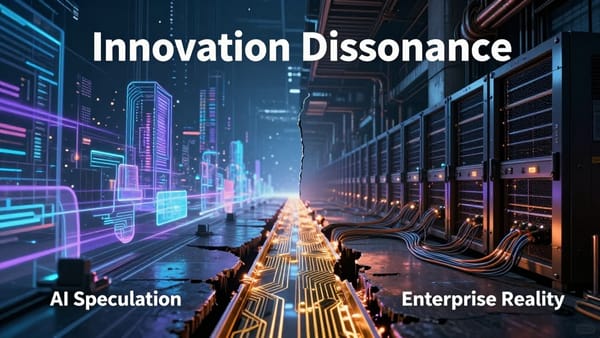
Despite the friction of integration and the vocal resistance of some users, the financial and industrial outlook for the tech sector remains remarkably robust, underpinned by the massive infrastructure required to support the AI transition. A comprehensive report featured on GlobeNewswire estimates the global software development services market will reach a staggering $772.47 billion. This growth is not coming from traditional software sales, but from the high-margin world of custom AI integration, cloud-native transitions, and a renewed focus on cybersecurity. In an era of agentic AI, "security" is no longer just about firewalls; it is about "instructional integrity"—ensuring that an AI agent cannot be tricked into performing malicious actions via prompt injection.
The physical expansion of the tech industry is also visible in significant real estate and infrastructure investments. For instance, TransMedics' new global headquarters at the Assembly Innovation Park in Somerville, Massachusetts, developed by BioMed Realty, represents the massive capital pouring into life science technology. These facilities are the physical hubs where the intersection of biotech and software engineering occurs. In 2026, we are seeing the "biological turn" of technology—where algorithms are used not just to sort data, but to design proteins and manage organ transport systems. This illustrates that the "agentic" nature of software is finding its most critical applications in life-saving missions, moving far beyond the trivialities of chatbot conversations.
Even standard business tools are evolving to meet these new technical demands. Expert Consumers recently recognized QuickBooks as a leading tax-ready platform for 2026, highlighting how even essential administrative software must now offer sophisticated, automated solutions to remain competitive. For small businesses, the integration of AI into accounting isn't about novelty; it's about survival in a world where tax codes are increasingly complex and margins are thin. This coincides with the release of the 10 Breakthrough Technologies of 2026 by MIT Technology Review. This authoritative list serves as a roadmap for the decade, moving from generative AI to breakthroughs in high-efficiency solar cells and genome editing. The presence of AI on this list isn't as a standalone entry, but as a "force multiplier" for all other scientific advancements.
The synthesis of these data points suggests an economy in moderate transition. The "easy money" period of AI hype has ended, and we have entered the "deployment phase." This phase is characterized by large-scale capital expenditure (CapEx) on physical infrastructure—data centers and innovation parks—and a relentless focus on B2B software that delivers measurable ROI. For stakeholders, the message is clear: the most valuable companies of the late 2020s will likely not be the ones that build the best chatbots, but those that build the best "agentic pipes"—the underlying infrastructure that allows AI to safely and effectively interact with the physical world and the global financial system.
Conclusion: The Analytical Perspective
The trends of 2026 suggest we have officially moved beyond the "novelty" phase of the current technological cycle and entered a period of profound restructuring. The entry of hardware companies like Dreame into the hypercar market and the shift toward agentic software in the workplace signal a world where digital intelligence is no longer an optional accessory but a foundational component of both physical and cognitive labor. The "Software Reaper" we are seeing at Microsoft and other giants is a necessary, if painful, stage of evolution; to build the future, the legacy systems that tether us to the 2010s must be dismantled. This is not just technical progress; it is a realignment of our digital landscape to prioritize action over information.
While the economic data points toward continued exponential growth in software and AI infrastructure, the emergence of "de-bloating" tools like Winslop indicates a maturation of the consumer mindset. Efficiency is no longer equated solely with "more features," but with "better control" and "high-fidelity utility." The friction between the tech giants' desire for centralization and the power user's demand for autonomy will likely be the primary source of innovation over the next few years. As we look toward the remainder of the decade, the winners in this space will be defined by their ability to balance the immense power of agentic AI with the user's growing desire for privacy, simplicity, and functional reliability. The "funeral" for legacy apps marks not just an end, but a streamlining of the human-machine interface for an era where the machine is finally expected to do more than just talk—it is expected to act. The Tech Observer will remain vigilant, documenting this shift as the lines between the digital and the physical continue to dissolve.