The 2026 Technology Landscape: From Specialized AI Diagnostics to Architectural Shifts in Enterprise Software


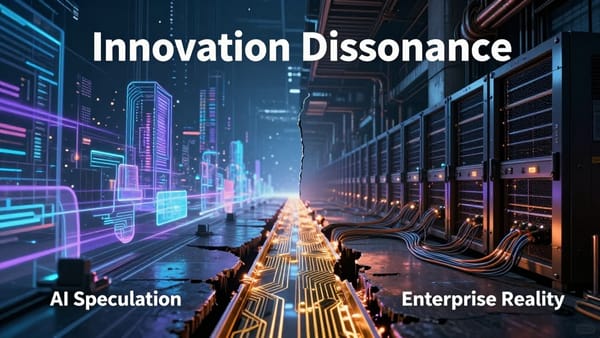
The dawn of 2026 marks a decisive pivot in the technological trajectory, moving away from the era of generalized generative hype toward a period defined by hyper-localized utility, structural resilience, and architectural hardening. For the past several years, the industry was captivated by the sheer "magic" of large language models and the promise of a singular, all-encompassing artificial intelligence. However, as we move through the first quarter of 2026, the market has matured. We are witnessing a dual movement: the democratization of software development through "micro-apps" and a simultaneous hardening of digital infrastructure against geopolitical and security threats. According to NPR, the MIT Technology Review’s annual list of breakthrough technologies highlights commercial space stations and advanced AI as the primary drivers for the coming year, suggesting that innovation is scaling both upward into orbit and deeper into the fabric of daily life.
This evolution is not merely about faster chips or larger parameter counts; it is about the practical integration of intelligence into existing workflows and the securing of legacy systems that form the backbone of global commerce. This report analyzes the recent surge in high-performance hardware, the shift toward sovereign digital infrastructure, and the growing market for specialized healthcare technology. As we navigate the complexities of 2026, the focus has shifted from what technology *can* do to what it *must* do to remain viable in an increasingly fragmented global landscape. The optimism of early silicon valley disruption has been replaced by a sober, analytical approach to engineering—one that prizes reliability, data sovereignty, and specialized utility over aesthetic novelty.
The CES 2026 Paradigm: Practical AI and Immersive Refinement
The Consumer Electronics Show (CES) 2026 has underscored a significant refinement in how we interact with hardware. Rather than focusing on "killer apps" or flashy, high-latency prototypes, manufacturers are prioritizing sensor-driven efficiency and hardware-level optimization. The industry has reached a consensus: for augmented and virtual reality (AR/VR) to achieve mass-market penetration, the focus must shift from resolution alone to biological integration. As reported by TechTimes, devices like the Dream Air SE are utilizing advanced eye-tracking technology to adjust image quality dynamically. This "foveated rendering" approach ensures that compute power is concentrated only where the user's eye is currently focused, significantly reducing the thermal and power demands on mobile processors.
This technical shift addresses one of the primary hardware bottlenecks in the AR/VR sector: the "thermal wall." By offloading processing tasks through intelligent gaze-tracking, manufacturers can create slimmer profiles without the bulky cooling systems that defined early iterations like the Apple Vision Pro or the Quest 3. Furthermore, the integration of AI into this year's hardware is particularly evident in the healthcare sector. According to Medical Daily, the newest innovations at CES are redefining AI diagnostics by blending them into assistive devices and wearables intended for everyday use. We are seeing a move away from "wellness" trackers toward "clinical" sensors. Devices now routinely monitor arterial stiffness, blood glucose (non-invasively), and neurological signals, providing a continuous stream of data for AI-driven preventative diagnostics.
The success of this sector is reflected in market sentiment as investors pivot toward companies that provide the foundational layers of these specialized devices. For instance, Stocks to Trade reports that Figure Technology Solutions (FIGR) has seen a stock surge of over 14 percent. This capital inflow suggests that the market is no longer satisfied with general software companies; instead, it is rewarding firms that bridge the gap between financial technology, AI-driven automation, and real-world hardware applications. The move toward specialized utility is not a trend but a fundamental recalibration of venture capital toward companies that solve high-friction, high-cost problems in specific verticals like healthcare and construction. This transition from "future roadmap" items to "practical tools" marks a shift where AI is no longer a standalone feature but an invisible, standard backend for health monitoring and industrial efficiency.
Infrastructure Autonomy and the Geopolitics of the Cloud
As digital tools become more personal and integrated into the human experience, the infrastructure supporting them is becoming increasingly regionalized. The era of the "borderless internet" is effectively ending, replaced by a "sovereign cloud" model where data residency and legal jurisdiction take precedence over pure performance. In a bid for digital independence, Europe is restructuring its cloud strategy. According to Tagesschau, the development of independent cloud data centers in Brandenburg, supported by Amazon Web Services (AWS), is a strategic move to ensure that European data and software remain under regional jurisdiction. This initiative, often referred to as the AWS European Sovereign Cloud, is designed to meet the stringent data privacy requirements of the public sector and highly regulated industries within the EU.
This shift toward "sovereign clouds" reflects a broader global anxiety regarding data security and geopolitical leverage. For years, European regulators have voiced concerns about the Cloud Act in the United States, which potentially gives U.S. authorities access to data stored by U.S. companies regardless of where the servers are located. By building physically and logically isolated infrastructure within the EU, AWS is attempting to pacify these concerns. However, this fragmentation creates a new technical challenge: how to maintain a globalized developer experience while operating on siloed infrastructure. This "splinternet" of clouds demands new tools for cross-border orchestration, leading to a surge in demand for decentralized middle-ware and localized encryption services.
The risks of centralized digital control and the weaponization of connectivity were highlighted by recent international events that have caught the attention of global security analysts. As reported by Forbes, Iran’s recent internet blackout decisions and internal network manipulations have exposed vulnerabilities that extend beyond national borders, impacting the security assessments of the U.S. and Israel. These disruptions emphasize that connectivity is not just a utility but a front in modern geopolitical conflict. For enterprises, the lesson is clear: reliance on a single geographic region or a single provider for critical operations is no longer a viable risk posture. The push for regional autonomy in the cloud is not just about compliance; it is about "digital survivalism," ensuring that essential services—from power grids to financial transactions—can continue even if a major global cable is severed or a regional internet shutdown occurs.
The "End of Support" Crisis and the Rise of Alternative Software
For millions of users and organizations, the primary technological focus in 2026 isn't the latest LLM, but the looming deadline of legacy software. With Windows 10 reaching its definitive end-of-life, hundreds of millions of functional computers face the prospect of becoming "electronic waste" due to the stringent hardware requirements of Windows 11 and its successor. This has created a vibrant market for maintenance and lifecycle extension. As noted by ZDNET, the software service 0patch has emerged as a critical defense, providing "micropatches" for vulnerabilities in systems that no longer receive official support. These patches are unique because they are applied in memory, skipping the need for traditional reboots and allowing legacy enterprise systems to remain secure without a total hardware overhaul.
This trend suggests a growing market for mid-life maintenance in enterprise and consumer computing. Microsoft, recognizing the potential mass exodus of users, is attempting to bridge this gap by offering incentives to modernize. According to Forbes, the tech giant has confirmed its first free Windows update for 2026, aimed at migrating hundreds of millions of users toward more secure, AI-integrated versions of their operating system. However, the corporate push for "Everything-as-a-Service" has led to significant "subscription fatigue." Consumers and small businesses are increasingly wary of monthly fees for software that has remained functionally unchanged for a decade.
This economic friction is driving a remarkable resurgence in "perpetual license" software and open-source alternatives. Mashable notes that classic versions of Microsoft Office, such as the 2019 Professional Plus suite, are seeing a surge in demand on third-party marketplaces as users prefer one-time purchases over recurring Microsoft 365 fees. Similarly, as reported by CNET, many users are replacing Microsoft 365 with LibreOffice, an open-source alternative that has sustained its relevance for decades. This shift highlights a fundamental disconnect: while companies want to move toward cloud-based, AI-enhanced subscription models, a significant portion of the global workforce simply requires a stable, local word processor. The tension between software vendors' desire for recurring revenue and users' desire for ownership and privacy is one of the defining conflicts of the 2026 software market.
The Democratization of Development: Micro-Apps and specialized Innovation
One of the most transformative trends surfacing in 2026 is the rise of the "non-developer" app creator, enabled by advanced code-generation models that have moved past basic text completion into full-stack orchestration. Modern coding tools have reached a level of abstraction that allows individuals to build highly specialized tools for personal or community needs without writing a single line of traditional syntax. According to TechCrunch, "micro-apps" are becoming common—highly specific programs built for a single purpose. For instance, individuals are creating bespoke medical loggers, such as a heart-palpitation tracker built specifically to export data in a format a user's specific cardiologist prefers. This pivot from mass-market software to hyper-specialized solutions is disrupting the traditional app store economy, where generalized apps often fail to meet the "last-mile" needs of users.
This democratization means that the "moat" for software companies is no longer the ability to write code, but the ownership of accurate, proprietary data and the trust of the user. As anyone can build an app, the value shifts to the specialized hardware and the verification processes that ensure the app's output is reliable. This niche specialization is where the investment capital is flowing. Yahoo Finance highlights that Onto Innovation (ONTO) has experienced a 20.8% weekly surge. Investors are increasingly betting on companies that provide the specialized measurement, inspection, and high-end semiconductor manufacturing tools required to power this new age of decentralized innovation. These "behind-the-scenes" innovators are the true beneficiaries of the AI surge, as they provide the physical infrastructure required to produce the chips that run the democratized software layers.
While the high-tech sector focuses on these structural advancements, digital culture remains anchored in the psychology of daily rituals. Even as platforms evolve and political climates shift, traditional engagement persists through simple, familiar game loops that provide a sense of cognitive order. Reports from Forbes on NYT Strands and Forbes on Wordle continue to draw millions of daily users, providing necessary hints and spangrams for solvers. These micro-interactions serve as a reminder that technology's most successful applications are often the most human ones—those that provide low-stakes intellectual stimulation. However, the broader social context is never far away. Outside the digital realm, regional political movements are recalibrating their strategies in response to these technological shifts. As Zee News reports, groups like the MNS in India are vowing to fight for local identity and pride following election losses. This illustrates that even in a globalized tech era, local cultural identity remains a powerful counter-narrative to the homogenizing influence of global tech platforms.
Conclusion
The technological landscape of 2026 reveals a sector that has graduated from the erratic experimentation of the early 2020s into a stage of disciplined, strategic maturation. We are seeing the industry's focus shift from the "infinite capabilities" of AI to the "finite requirements" of infrastructure, security, and user autonomy. Whether it is AWS establishing sovereign clouds in Germany to navigate the complex waters of data residency, or the rise of "micro-apps" that allow individuals to reclaim control over their personal data, the prevailing theme is specificity. The "move fast and break things" ethos has been replaced by a "build deep and secure things" philosophy, necessitated by a precarious global security environment and a more discerning consumer base.
As we look toward the remainder of the decade, the most resilient innovations will likely be those that address the "middle-of-the-road" problems: maintaining legacy systems, securing regional data, and providing specialized medical transparency. The era of the "one-size-fits-all" platform is yielding to a fragmented, yet more robust, ecosystem where longevity, privacy, and personal utility are the primary metrics of success. For the Tech Observer, the story of 2026 is not about a single breakthrough but about the collective hardening of our digital world. Those who focus on the practical, the secure, and the specialized will be the architects of the next era of computing, while those chasing generalized hype may find themselves increasingly irrelevant in a world that demands tangible results over visionary promises.