The 2026 Technology Landscape: From AI Integration to the Future of Consumer Electronics

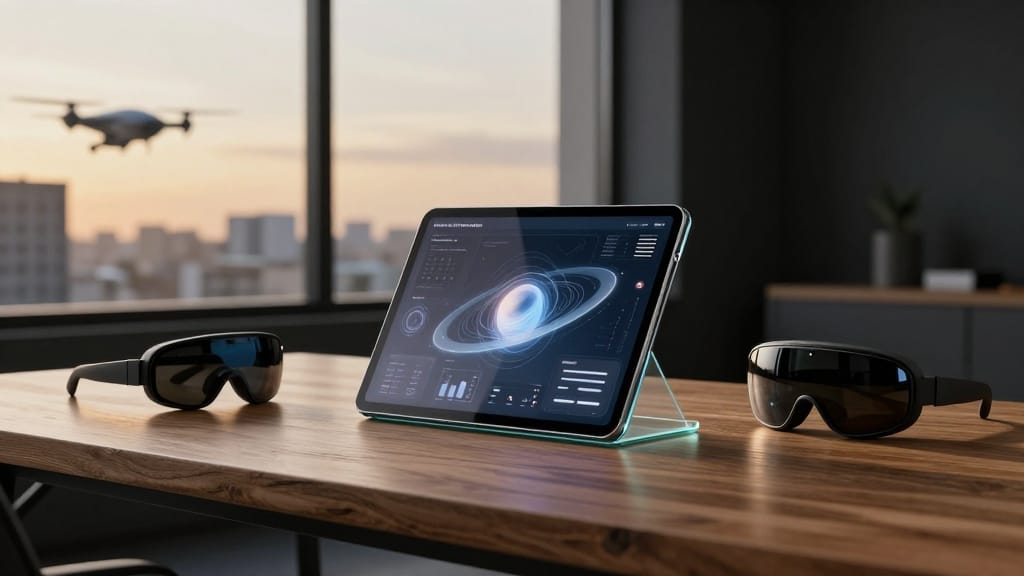
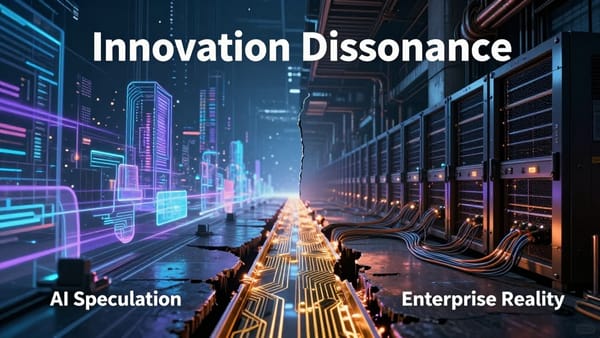
As we transition into 2026, the technology sector finds itself at a critical juncture, characterized by what historians of technology might call the "Great Realignment." The speculative hype cycles that dominated the early 2020s—fueled by the sudden explosion of Generative AI—are finally maturing into practical, infrastructure-focused implementations. We are moving past the era of digital parlor tricks and entering a phase where the primary metric of success is utility rather than novelty. From the refinement of global aviation logistics through predictive algorithms to the stabilization of independent software ecosystems, the focus has shifted toward how technology effectively integrates into the human experience without overwhelming it. This year, the industry is balancing rapid AI advancement with a renewed, almost urgent demand for personal privacy, software reliability, and hardware longevity. The "move fast and break things" mantra is being replaced by a more measured approach: "build deep and sustain."
This shift is not merely a reaction to market saturation but a fundamental evolution in consumer behavior. Users are no longer captivated by the mere existence of a new tool; they are interrogating its cost, its privacy implications, and its actual impact on their daily cognitive load. As we look at the year ahead, we see a tech landscape that is less about the "metaverse" and more about the "meaningful"—a transition toward ambient intelligence that serves the user in the background. The following analysis explores the core pillars of this 2026 evolution, from the grand stages of Las Vegas to the granular updates in open-source repositories.
The Anticipation of CES 2026: A Pivot Toward Practicality
The tech world's eyes are currently fixed on Las Vegas, where the Consumer Electronics Show (CES) serves as a traditional bellwether for the year's priorities. Historically, CES has been a venue for "vaporware" and over-the-top concepts, but the 2026 iteration suggests a significant course correction. According to Techloy, the event is expected to showcase a transition from experimental AI to ubiquitous, "invisible" integration. This is a critical distinction; in 2024 and 2025, AI was often an "add-on" feature—a dedicated button or a clunky chatbot overlay. In 2026, the industry is moving toward "Ambient Intelligence," where the technology is baked into the silicon and the operating system, responding to user intent rather than explicit commands.
This sentiment of grounded innovation is echoed by The Indian Express, which suggests that the spotlight will move toward how technology can bridge the gap between digital convenience and physical wellness. We are seeing a surge in "calm technology"—devices that utilize e-ink displays, haptic-only notifications, and localized processing to reduce the "digital noise" that has contributed to a global burnout crisis. The "wishlist" for 2026 isn't just about higher resolution; it is about smarter power management and devices that know when to leave the user alone.
As reported by ZDNet's live updates, early indicators suggest that 2026 will not just be about larger screens or faster processors, but about the reliability of the ecosystems they inhabit. For the Tech Observer, the most interesting developments are not the high-definition televisions, but the democratization of "Edge AI." By moving processing away from the cloud and onto the device, manufacturers are finally addressing the latency and privacy concerns that have dogged the smart home industry for a decade. This shift is essential as consumers grow weary of gadgets that require a constant, high-bandwidth connection to function, opting instead for resilient systems that operate autonomously. The narrative of CES 2026 is, therefore, one of "Infrastructure over Interface."
AI Workforce Evolution and the Reliability of Predictive Logistics
While consumer hardware generates the headlines, the underlying labor and data structures of Artificial Intelligence are undergoing a profound professionalization. The era of "unsupervised" learning from raw, uncurated internet scrapes has plateaued due to legal challenges and the degradation of data quality. As analyzed by ZDNet, the demand for AI data training roles has moved beyond simple image labeling to high-level domain expertise. We are seeing the rise of "Expert-in-the-Loop" systems, where doctors, lawyers, and engineers are employed to fine-tune models, creating a new tier of specialized, high-paying employment. This professionalization is what enables the high-stakes reliability required for 2026’s enterprise applications.
The practical application of this refined data is most visible in the travel and logistics sectors. For years, booking travel was a game of chance influenced by opaque pricing algorithms. However, according to research shared via ZDNet, predictive modeling for flight booking has reached a new level of precision in 2026. By integrating real-time weather patterns, geopolitical stability indices, and historical fuel costs, these systems allow travelers to navigate the volatile logistics of the mid-2020s with unprecedented accuracy. It is no longer about finding the "cheapest" flight, but the most "resilient" one—finding the route least likely to be disrupted by the cascading delays that have become common in global aviation.
However, this reliance on large-scale data systems remains a double-edged sword. The friction between modern algorithms and aging public infrastructure is a recurring theme of 2026. For instance, The New York Times recently reported on technical errors within the California DMV’s REAL ID systems. This incident highlights a critical vulnerability: even the most advanced predictive AI is only as effective as the legacy databases it must interact with. When government systems, often running on COBOL or outdated mainframes, fail to sync with modern digital ID protocols, the result is "digital friction" that can stall the movement of millions of citizens. This serves as a stark reminder that while we look toward the future, much of our world still runs on the fragile architecture of the past. The challenge for the coming years is not just building new AI, but "refitting" the old world to handle it.
Hardware Refinement and the "Course Correction" of Personal Tech
In the realm of personal devices, observers are noting a distinct "maturation" of hardware design. The period between 2020 and 2024 was defined by experimental, often fragile form factors—foldables that cracked, wearables without clear purposes, and "pro" devices that prioritized thinness over thermal efficiency. Analysis from The Hindu Business Line suggests that 2026 is a year of "course corrections." Manufacturers are increasingly prioritizing battery longevity, thermal management, and consumer repairability over aesthetic novelty. The influence of European "Right to Repair" legislation is finally being felt globally, with modular designs becoming a selling point rather than a niche hobbyist feature.
This trend is supported by retrospective analysis of the previous year's market winners. As noted by Yanko Design, the gadgets that truly resonated with the public in late 2025 were those that solved specific ergonomic and sustainability challenges. We are seeing a return to tactile controls—a "physicalization" of the interface. After years of burying every function in a nested touch-screen menu, manufacturers are reintroducing physical dials and buttons for critical tasks like volume, climate control, and focus modes. This is a design philosophy rooted in cognitive science; it acknowledges that humans interact better with the world when they have tactile feedback.
Cultural discussions surrounding these shifts are becoming increasingly prominent as society grapples with its relationship to screens. The Hard Fork podcast via The New York Times recently explored listener tech resolutions, which revealed a broader societal desire to reclaim focus. The "attention economy" is facing a consumer revolt. Users are expressing a desire for "minimized" modes—features that strip a smartphone down to a simple communication tool during work or family hours. In response, we are seeing the rise of a new category: the "Focus Device." These are high-end, purposefully limited gadgets, such as distraction-free writing tablets or music players that do not connect to social media. The Tech Observer views this not as a step backward, but as a sophisticated understanding of human limits in the face of infinite digital stimuli.
The Software Ecosystem: Open Source and Creative Empowerment
While the hardware world focuses on physical refinement, the software landscape is witnessing a significant power shift. On the desktop and server side, the community-driven innovation of the open-source world is beginning to outpace traditional corporate cycles in terms of sheer stability and adaptability. For power users and developers, the release of Mesa 25.3.3 represents a critical milestone. As the primary graphics stack for Linux, this update ensures that open-source systems remain fully competitive with proprietary alternatives like Windows or macOS, particularly in high-performance computing and gaming. This is no longer a fringe movement; the reliability of the Linux kernel is the backbone of the modern cloud, and its desktop iterations are finally reaching a level of polish that makes them viable for the average consumer.
The accessibility of the Linux platform continues to grow, driven by a new wave of user-friendly applications. How-To Geek highlighting a new wave of applications demonstrates how "The Year of the Linux Desktop" has transitioned from a meme to a gradual reality for users tired of the telemetry and forced updates of mainstream operating systems. This move toward "Software Sovereignty" is a defining characteristic of 2026; users want to own their tools, not just rent them through a subscription model that can change its terms at any moment.
For the broader consumer base, the emphasis remains on the democratization of high-end productivity. Essential software guides, such as those provided by TechSpot, indicate that despite the rise of mobile-first workflows, the desktop remains the primary hub for localized performance. This is particularly true in the creative arts. As reported by Small Business Trends, there is a burgeoning market for entry-level video editing software that integrates AI-assisted features. These tools allow small businesses to produce professional-grade content without the steep learning curve of legacy suites. By automating the "janitorial work" of video production—such as color grading, noise reduction, and auto-captioning—software is empowering a new generation of digital entrepreneurs.
However, this era of creative empowerment is unfolding against a backdrop of increasing regulation. Reports from the BBC (corroborated by additional reporting) underscore the ongoing geopolitical complexities involving data sovereignty. As nations implement stricter rules on where data is processed and who owns it, the "Splinternet" becomes a greater risk. Software companies in 2026 must navigate a fragmented global landscape, where a tool that works in North America may be legally non-compliant in the European Union or Southeast Asia. This regulatory friction is becoming a primary driver of software architecture, forcing developers to build more modular, localized systems.
Conclusion: A Future of Measured Growth and Resilient Systems
As we evaluate the remainder of 2026, the overarching narrative is one of "The Great Refined." The industry has collectively realized that constant, disruptive change is unsustainable for both the consumer and the infrastructure. We are seeing a move away from "AI for the sake of AI" toward specialized, localized benefits—whether that is optimizing a complex flight path, generating a marketing video for a local bakery, or ensuring the security of a digital ID. The "wild west" era of Generative AI is being replaced by a more disciplined, engineering-centric approach that prioritizes reliability and human-centric design.
The challenge for the remainder of 2026 will be ensuring that these systems remain transparent and that the infrastructure supporting them is as resilient as the hardware it powers. We must bridge the gap between our advanced algorithms and the legacy systems of our public institutions to prevent the "digital friction" that currently hampers progress. The shift toward a more analytical, less hype-driven market is not a sign of stagnation, but a sign of a maturing industry that is finally prioritizing utility over novelty. As a Tech Observer, this is a welcome development. The future of technology in 2026 is not a flash in the pan; it is the quiet, steady building of a more efficient and less intrusive digital world. We are finally learning that the most powerful technology is often the one you forget is even there.