The 2026 Technology Landscape: From AI Agent Autonomy to Geopolitical Infrastructure Challenges

The dawn of 2026 marks a pivotal transition in the global technology sector, signaling a definitive move away from the experimental phase of generative models toward a world of functional, integrated AI agents and high-stakes hardware infrastructures. For the past three years, the industry has operated largely on the currency of "potential"—the promise that Large Language Models (LLMs) would eventually transform productivity. Now, that maturity is being tested. While the recent ceremonies of the Consumer Electronics Show (CES) showcased the habitual eccentricities of gadget culture—ranging from bone-conduction lollipops to advanced smartglasses—the underlying industry narrative is significantly more sober. Key developments in semiconductor competition, the fragility of software reliability, and the increasing weaponization of connectivity suggest that the tech industry is finally grappling with the structural consequences of its most hyped innovations.
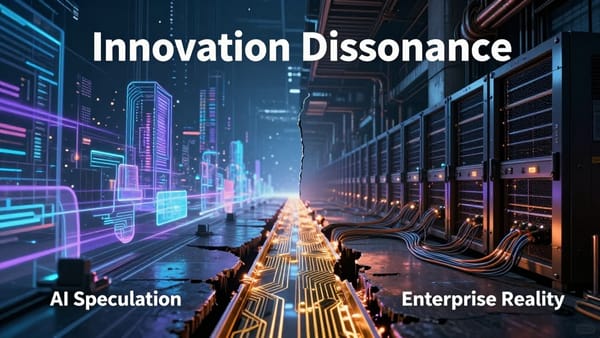
The current landscape is defined by a fundamental dichotomy: the consumer-facing world of "smart" productivity tools and the invisible, high-stakes infrastructure race powering them. As reported by NPR, the MIT Technology Review has identified ten major breakthroughs poised to redefine the year, signaling that we are entering an era where theoretical AI potential must finally yield practical, error-free results. This is no longer an era of "move fast and break things"; it is an era of "scale and secure." This article explores the evolution of AI integration, the shifting tides of hardware manufacturing, and the emerging security vulnerabilities inherent in a world that has become dangerously dependent on a handful of fragile technological bottlenecks.
The AI Implementation Gap: From Chatbots to Autonomous Agents
In the software realm, 2026 is becoming the year of the "agent." This represents a definitive shift in user interface philosophy. For the last several years, we have been in the era of the "copilot"—AI that sits beside the user, waiting for a prompt to summarize text or draft an email. The agent era, however, is characterized by delegate-level autonomy. Unlike basic chatbots that merely summarize text, new iterations of software are designed to perform complex, multi-step tasks on a user’s behalf without constant supervision. A prime example of this is the recent rollout of new capabilities for the workplace. According to ZDNET, Slackbot has received a significant AI agent upgrade that allows it to execute actions within the workspace, theoretically simplifying complex workflows by managing permissions, scheduling meetings, and synthesizing cross-channel data into actionable briefs.
This shift represents a move toward autonomous software that manages the "busy work" of professional life, but it also introduces a new layer of risk regarding data privacy and executive error. If an agent has the permission to "execute actions," it by definition has the power to make mistakes. This transition to fully automated AI integration is proving many-layered and often frustrating for power users who require absolute precision. While agents show promise in closed environments like Slack, broader consumer applications are facing a significant credibility crisis. As detailed in a review by ZDNET, Google's Gemini features in Gmail have been criticized for missing key details and delivering misleading summaries. For instance, in real-world testing, the AI’s propensity to hallucinate meeting times or miss nuanced sentiments in long email threads suggests a growing "reliability gap."
This gap is the central challenge of 2026: the speed of deployment is currently outpacing the accuracy of the underlying models. For many professional users, the default "AI-everything" approach is becoming a deterrent rather than a feature. We are seeing a return to "verification-first" workflows, where users spend more time checking the AI's work than they would have spent doing the original task. To bridge this gap, developers are beginning to focus on "Narrow AI Agents"—specialized tools that don't try to solve the world's problems, but instead focus on high-fidelity performance in specific niches, such as legal document review or healthcare billing. The shift from "General AI" to "Specialized Agents" will likely be the dominant software trend of the next eighteen months, as enterprises demand ROI that simple, hallucination-prone chatbots cannot provide.
Hardware Infrastructure and the Global Memory War
Beneath the software layer, the hardware that powers these AI agents is undergoing a massive capital restructuring. We have entered a phase where the bottleneck is no longer just the logic of the processor (GPU), but the speed and capacity of the memory (HBM). The market for High Bandwidth Memory (HBM) has become the primary battleground for semiconductor dominance. According to TechStock², Micron Technology recently saw a drop in stock value following the news that SK Hynix is launching a massive $13 billion AI-memory buildout. This aggressive investment highlights a critical reality of the 2026 technology landscape: without high-speed data access, even the most advanced GPUs remain underutilized. Memory is the new oil in the AI economy.
This $13 billion expenditure by SK Hynix is not merely a competitive move; it is a defensive necessity. As AI models grow in parameter count, the "memory wall"—the lag between how fast a processor can compute and how fast it can retrieve data—has become a physical limit on intelligence. For institutional investors, this has created a volatile environment. While the "Big Six" tech firms continue to demand more hardware, the suppliers are entering a cycle of heavy capital expenditure (CapEx) that may take years to yield a profit. This highlights the "pickaxe and shovel" strategy in the modern gold rush: everyone wants a piece of the AI pie, but only those controlling the silicon and memory supply chains hold the leverage.
While institutional investors watch the giants, others look for value in long-term software consolidators that provide the operational software for these hardware-heavy industries. Analyzing the investment landscape, The Motley Fool Canada notes that Constellation Software remains a significant player to watch, despite being down from its all-time highs. This underscores a broader, more conservative trend: as "hot" AI stocks experience volatility, established software aggregators with proven track records continue to represent the industry's structural backbone. These companies don't build the AI models; they build the software that keeps the lights on at utility companies, hospitals, and logistics firms—industries that are increasingly using AI to optimize their existing high-margin businesses. The investment focus is shifting from "who is building the coolest AI" to "who is using AI to make their existing business 10% more efficient."
The Fragility of Connectivity and Emerging Geo-Technical Threats
As digital connectivity becomes a prerequisite for participation in modern society, 2026 is revealing unprecedented vulnerabilities in global communication networks. For much of the early 2020s, satellite-based internet services were deemed the ultimate solution to local censorship, providing a "sky-borne" path to information. However, recent events have shattered this illusion of invulnerability. As reported by Rest of World, Iran’s internet shutdown successfully crippled Starlink access within its borders through a combination of sophisticated terrestrial jamming and signal interference. This development dispels the myth of truly "uncensorable" internet and suggests that nation-states are developing increasingly sophisticated methods to intercept, jam, or physically disrupt orbital signals.
This erosion of satellite immunity has significant implications for global security and activism. If a nation-state can effectively geofence or jam satellite signals, the "out-of-band" communication that dissidents and NGOs rely on becomes a liability. Furthermore, the vulnerability of these networks extends beyond political censorship. In an era of escalating geopolitical tension, the ability to blind a population or an opposing force by disrupting the low-earth orbit (LEO) satellite layer is now a standard part of modern electronic warfare doctrine. We are moving toward a "fragmented internet," where connectivity is contingent upon the permission of both the provider and the local sovereign power.
Perhaps more alarming are reports of directed-energy or acoustic technologies being utilized in geopolitical contexts, adding a physical dimension to technological warfare. According to CNN Politics, the Pentagon recently investigated a device suspected of being linked to "Havana Syndrome" ailments, raising concerns that such technology may have proliferated among multiple state actors or rogue groups. This highlights a dark side of technological innovation: devices capable of causing physiological harm through non-traditional, non-kinetic means. As we develop more advanced sensors and transmitters for consumer use, the dual-use nature of these technologies becomes a primary concern for international security officials. The same frequencies used for high-speed data transmission can, in theory, be repurposed for disruption or harm, complicating the security profile of every international embassy and military installation in the digital age.
CES 2026: When Sensory Novelty Meets Immediate Utility
The Consumer Electronics Show remains the primary stage for technological experimentation, ranging from the bizarre to the highly practical. In 2026, we are seeing a fascination with "sensory hacking"—using technology to bypass traditional human interfaces. One of the more talked-about examples is the bone-conduction lollipop. As noted by ZDNET, this device allows users to "taste" music or receive audio notifications by biting down on the candy, using the jawbone to transmit sound—a fun, if niche, application of established medical-grade bone-conduction technology. While it may seem like a novelty, the underlying tech has serious implications for accessibility, providing potential audio solutions for individuals with certain types of hearing impairment.
On the more practical side of the hardware spectrum, The Guardian highlighted five gadgets available for immediate purchase that reflect the industry's focus on "tangible utility" over "abstract futurism." These include augmented reality smartglasses that offer real-time translation and nano-phone chargers that can provide a full day’s charge in minutes. These products demonstrate that while the big tech narrative is dominated by AI, the consumer market still thrives on iterative, useful improvements to the tools we carry every day. There is a palpable "gadget fatigue" among consumers regarding software-heavy features, leading to a renewed appreciation for hardware that simply works well.
Furthermore, even legacy wireless technologies are undergoing a conceptual shift to meet the demands of the AI era. According to ZDNET, new perspectives shared by Bluetooth representatives at CES suggest the protocol is evolving far beyond simple audio streaming. The next generation of Bluetooth is leaning heavily into spatial awareness (Channel Sounding) and ultra-low-latency data transmission. This is essential for the next generation of wearables, where devices must coordinate seamlessly in physical space. For instance, your smartglasses, watch, and phone need to maintain a "spatial web" to ensure that an AI agent knows exactly what you are looking at or pointing toward. This evolution from "connection" to "perception" is a subtle but vital shift in how we interact with our immediate digital environment.
Software Stability and the User Experience: The Great De-Cluttering
Amidst the relentless push for AI and complex new hardware, a significant segment of the population is pushing back, fueling a movement toward "digital minimalism" and software slimming. After a decade of platform bloat and data-harvesting, there is a growing movement toward "slimming down" the digital experience. For instance, many users are abandoning dominant platforms in search of better privacy or performance. As argued by ZDNET, moving away from Chrome in favor of alternative, privacy-centric browsers like Brave or Vivaldi is becoming a priority for those seeking to escape the "default" ecosystem of tracking and resource-heavy extensions. This reflects a broader trend of users reclaiming their "digital sovereignty."
This desire for a cleaner, more efficient experience extends to operating system (OS) maintenance. Analysis from XDA Developers suggests that much of the "performance" software—cleaners, optimizers, and registry fixers—marketed to users actually degrades PC health, often acting as "snake oil" that creates more problems than it solves. Instead, technical experts are advocating for proper daily maintenance over "optimizer" apps. Even Microsoft is attempting to refine its much-maligned cloud integration in response to user pushback. According to ZDNET, recent undocumented changes to OneDrive have made it easier for users to restore local files and opt-out of aggressive cloud syncing, though the company continues to push cloud-first defaults. The tension between "User Choice" and "Company Defaults" has never been higher.
Finally, the open-source community remains the bedrock of technical progress, providing the tools that allow developers to bypass the walled gardens of Big Tech. Recent updates such as the release of Wine 11.0 and new Long-Term Support (LTS) versions of Node.js ensure that the infrastructure for cross-platform compatibility and server-side development remains robust. These releases are not just technical footnotes; they are essential for developers working across diverse environments, from Pop!_OS to Alpine Linux. By maintaining these open frameworks, the community ensures that technology remains accessible, interoperable, and resistant to the monocultures that often stifle innovation in the proprietary world. The vitality of the Linux and Node ecosystems proves that even in an age of $13 billion hardware buildouts, the most enduring innovations are often the ones that are shared, not owned.
Conclusion: The Era of Pragmatic Innovation
The technology sector in 2026 is characterized by what can best be described as a "reality check" phase. The initial, wide-eyed wonder that accompanied the rise of generative AI has been replaced by a critical eye toward reliability, economic sustainability, and the massive infrastructure costs required to sustain the digital dream. We are seeing a maturation of the industry where the "shiny object" syndrome is being tempered by the hard realities of semiconductor supply chains and geopolitical vulnerabilities. While we continue to be entertained by the "weird" side of tech at CES, the significant stories of the year lie in the foundational elements: the $13 billion memory wars that will determine the next decade of compute power, the fragility of satellite networks in a contested global arena, and the ongoing struggle to make AI agents truly useful assistants rather than deceptive distractions.
Moving forward, the industry's success will likely depend not on who can create the most impressive demo, but on who can provide the most stable, secure, and accurate tools for a global workforce that is increasingly skeptical of hype. The "Year of the Agent" will only succeed if those agents are trustworthy; the "Revolution in Hardware" will only matter if it leads to tangible gains in human productivity. As we look toward the remainder of 2026, the focus must remain on building a technological ecosystem that is as resilient as it is "smart." The transition from novelty to necessity is always difficult, but it is the essential path for any technology that hopes to have a lasting impact on human civilization. The goal now is to move beyond the simulation of intelligence toward the realization of real-world utility.