The 2026 Technology Inflection Point: Scaling Intelligence, Infrastructure, and Innovation


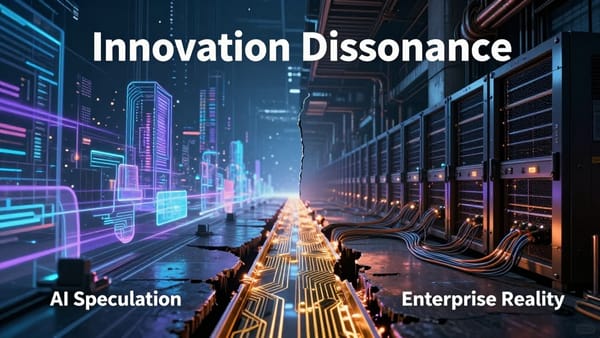
The global technology landscape is currently undergoing a fundamental transition from a period of erratic, hype-driven discovery to one of refined, systematic maturity. As the initial "Cambrian explosion" of generative artificial intelligence (AI) begins to stabilize, the industry’s collective gaze is shifting toward the foundational infrastructure and rigorous philosophical frameworks required to sustain long-term digital growth. We are moving past the era of experimental novelties—where the mere existence of a large language model was enough to disrupt markets—and entering an era of deeply integrated, high-utility systems. This shifts the burden of proof from "what is possible" to "what is sustainable and scalable." Historically, such inflection points have heralded the transition from early adoption to mass utility, much like the maturation of the internet in the early 2000s or the mobile revolution of the early 2010s. For the observer, identifying the signals within the noise is essential to understanding the trajectory of the next decade. Analysis of current market indicators suggests that the focus of 2026 will be the "quiet" optimization of hardware, the democratization of innovation hubs, and a renewed scrutiny of software ethics and utility. This comprehensive exploration examines these shifting paradigms and their structural implications for the global economy and the individual consumer experience.
The Hardware Backbone: Powering the Next Intelligence Cycle
In the history of computation, software has always been limited by the physical constraints of the hardware it inhabits. Today, we find ourselves in a period where the demand for high-performance computing (HPC) and localized memory architectures has created a significant bottleneck for intelligence scaling. The narrative of AI is, at its core, a narrative of silicon and energy. As noted in a recent financial evaluation from The Motley Fool regarding Micron Technology's stock, the demand for memory is reaching unprecedented levels. This is not merely a quantitative increase; it is a qualitative shift. We are seeing a move toward High Bandwidth Memory (HBM3E and beyond) that is essential for feeding data-hungry GPUs at speeds that prevent processing latency. Without these advancements in memory density and speed, the "intelligence" of our models would effectively starve.
The implications of this hardware dependence extend far beyond the server racks of Silicon Valley. We are witnessing the integration of sophisticated sensing hardware into the very fabric of our civil infrastructure. High-fidelity data processing is no longer a luxury but a necessity for basic utility management. As reported by Interesting Engineering, the development of technologies like the GridEdge Analyzer allows for the processing of higher measurements, a critical component for stabilizing modern power grids. As we transition to renewable energy sources, which are inherently more volatile than fossil fuels, the necessity for hardware capable of real-time, edge-based analysis becomes paramount. The power grid is no longer a passive delivery system; it is becoming a bidirectional, intelligent network that requires massive computational overhead just to maintain equilibrium.
Looking ahead into the mid-2020s, the hardware trend is shifting from "generalized" to "specialized." According to TechRadar, the biggest tech trends for 2026 will likely center on the intersection of purpose-built hardware and autonomous systems. This means moved away from the "one-size-fits-all" approach of the traditional CPU/GPU toward Application-Specific Integrated Circuits (ASICs) designed for highly specific neural network architectures. This specialization is the only path toward reducing the exponential energy costs associated with AI. For stakeholders, this means that the semiconductor supply chain is no longer just a sector of the economy; it is the fundamental geostrategic asset of the 21st century. The ability to manufacture, secure, and deploy these hardware components will dictate which nations and corporations lead the next cycle of innovation.
Geopolitical Shifts: India’s Role as a Global Innovation Engine
While the 20th century was defined by a centralized tech hegemony, the 21st century is defined by a decentralized, polycentric model of innovation. Geopolitically, the nexus of progress is diversifying, with India emerging as a central pillar of this new architecture. This is not a sudden emergence but a "quiet maturation" of decades of investment in human capital and digital infrastructure. According to The Tribune India, 2025 marked a period where high-level research in India successfully translated into practical, everyday applications for over a billion people. This includes the widespread adoption of the Unified Payments Interface (UPI) and the "India Stack," which has leapfrogged traditional Western banking and identity systems.
The primary driver of this shift is demographic. As discussed in Devdiscourse, youth power is serving as the primary catalyst for India's innovation output. With a median age of approximately 28, India possesses a digitally native workforce that is increasingly opting for entrepreneurial ventures over traditional corporate ladders. This is a critical psychological shift. For decades, the goal was "brain drain"—moving to the West to work for established giants. Now, we are seeing a "reverse brain drain" and a surge in local startup ecosystems. A prime example of this is reported by The Indian Express, where a prominent Indian-origin techie who assisted Apple with high-stakes security matters transitioned to build a startup. This represents the movement of top-tier talent toward agile, mission-driven innovation that addresses regional and global challenges simultaneously.
This trend toward localized innovation hubs is not limited to Asia. Europe is also attempting to recapture its competitive edge through targeted investment. For instance, Valencia Plaza highlights a 370% increase in European funds for innovation in Valencia, reaching 17 million euros by 2025. This creates a fascinating competitive landscape. As the "Big Tech" firms in the United States face increasing regulatory scrutiny and saturation, these emerging hubs in India and Europe are providing the necessary friction and competition to keep the industry from stagnating. The focus in these regions is often on "practical" tech—solutions for agriculture, localized logistics, and sovereign digital identity—which stands in contrast to the often speculative nature of Silicon Valley's venture capital model.
The Software Paradox: Deconstructing Fatigue and Sovereignty
As we navigate the mid-2020s, a profound paradox has emerged: while software has never been more powerful, consumer trust and satisfaction are at an all-time low. This "software fatigue" is a reaction to the bloat and over-reach that characterized the last five years of application development. Users are increasingly rejecting the "all-in-one" platform model in favor of specialized, transparent tools. In the mobile ecosystem, even traditional leaders like Apple are finding that foundational updates are no longer enough to mask underwhelming feature sets. A review by Tom's Guide regarding Apple's iOS 26 highlights this sentiment; while the OS level is stable, new first-party applications often feel like uninspired additions to an already cluttered desktop. This signals that the marginal utility of "new features" is diminishing.
This skepticism is rooted in a deeper concern regarding digital sovereignty and privacy. An analytical piece from XDA Developers explores the phenomenon of users abandoning software that attempts to "do everything." This trend of "poly-utility" often masks data harvesting and creates fragile, complex ecosystems that are difficult for the average user to manage. Consequently, the philosophical debate between different software models has returned to the forefront. The Spanish media outlet Infobae recently reiterated the vital distinctions between free (libre) and proprietary software. For organizations, this is no longer a technical choice but a strategic one: do you own your tools, or are you merely renting them at the whim of a provider’s licensing terms?
The standard for excellence is also being raised in the professional software sector. In a competitive market like the UK, precision remains the ultimate arbiter of success. As noted in a release on PR Newswire, Sage has been recognized for its accuracy and ease of use in accounting. This suggests that in the "boring" but essential sectors—finance, law, logistics—the value is in reliability, not AI flashy interfaces. Simultaneously, the open-source community is facing its own reckoning. As How-To Geek argues, the "good enough for open source" excuse is no longer acceptable. If open-source software is to truly compete for digital sovereignty, it must match the UX/UI and security rigors of proprietary giants. The coming years will see a "survival of the fittest" in the software world, where utility and trust will outweigh marketing and novelty.
The AI Threshold: Transitioning from Curiosity to Core Competency
Artificial Intelligence has reached the end of its "wonder" phase. We are no longer amazed that a machine can write a poem or generate an image; we are now asking if these tools can reliably assist in scientific discovery, legal analysis, or engineering. The focus has shifted from "generative" to "agentic" AI—systems that don't just talk, but act. However, this transition comes with significant economic questions regarding the value proposition of these services. ZDNET recently provided a rigorous comparison of ChatGPT's tiers, emphasizing that for the professional user, the cost is increasingly justified by speed, context window size, and reliability rather than the novelty of the interaction. We are seeing a "professionalization" of the AI user base.
The deployment of these systems is also hitting architectural limits. Large Language Models (LLMs) are beginning to experience "model collapse" as they are increasingly trained on AI-generated data from the web, leading to a degradation in quality. The solution, according to industry analysts, is a shift toward "Small Language Models" (SLMs) and Retrieval-Augmented Generation (RAG). These systems are more efficient, cheaper to run, and far more accurate because they pull from verified, proprietary data sources rather than the chaotic open web. This "niche-ification" of AI allows companies to deploy intelligence that is actually useful for specific business tasks without the massive overhead of a general-purpose model. This is where the true ROI of AI will finally be realized.
Finally, we cannot ignore the regulatory landscape. The BBC has consistently highlighted the intensifying friction between rapid AI development and the slow-moving evolution of global regulation. The European AI Act and various US executive orders are attempting to create "guardrails," but the technology moves faster than the ink can dry. By 2026, the success of an AI firm will likely depend more on its compliance and ethical transparency than on its raw compute power. Consumers and enterprises alike are becoming wary of the "black box" nature of current models. The next frontier is "Explainable AI" (XAI)—systems that can show their work and provide a clear lineage for their outputs. This transparency is the only way to integrate AI into high-stakes environments like medicine or judicial systems, where accountability is non-negotiable.
Analysis of Socio-Economic Implications and Digital Stewardship
As technology matures, its impact on the labor market and social fabric becomes more profound. The transition we are seeing is not just about tools; it is about the redefinition of "human value" in an automated world. Historically, technological revolutions have automated physical labor; the current revolution targets cognitive labor. This shift requires a systemic rethink of education and social safety nets. If intelligence is commoditized, then the ability to facilitate, manage, and ethically direct that intelligence becomes the new premium skill set. We are seeing this already in the rise of "Prompt Engineering" evolving into "System Orchestration," where humans manage fleets of autonomous agents to achieve complex goals.
This maturation also demands a new level of digital stewardship. As we integrate AI into the power grid, the financial system, and our social communications, the surface area for systemic failure—or malicious interference—increases exponentially. Cybersecurity is no longer an IT concern; it is a matter of national security and personal safety. The convergence of AI and cyber-offensive capabilities means that our defensive systems must be equally autonomous and adaptive. This leads back to the necessity of hardware-level security and the sovereign software models discussed previously. For a nation to be "secure" in 2026, it must possess a complete stack of technological control, from the silicon to the software to the data protocols.
Furthermore, the environmental impact of this tech-centric future cannot be ignored. The "quiet maturity" of the industry must include a radical focus on sustainability. The energy demands of AI data centers are on a collision course with global carbon reduction targets. The innovation we see in 2026 will likely include "green compute" initiatives—liquid-cooled servers, energy-aware scheduling algorithms, and the co-location of data centers with renewable energy plants. This is the ultimate test of our technological maturity: can we build an intelligent civilization without depleting the physical world that sustains it? The companies and nations that solve this puzzle will be the true leaders of the next century, proving that innovation and sustainability are not mutually exclusive, but are, in fact, codependent.
Conclusion: The Era of Pragmatic Innovation
The trajectory toward 2026 marks the end of the "wild west" era of digital transformation and the beginning of a period defined by pragmatic innovation. We have moved through the heights of the hype cycle and are now settling into the more difficult, yet more rewarding, work of building systems that actually work—reliably, securely, and at scale. The critical takeaway for the observer is that the most significant advancements are no longer the most visible ones. The breakthroughs are happening in the underlying memory architectures that prevent data bottlenecks, in the localized innovation hubs of India and Europe that are solving real-world problems, and in the "boring" professional software suites that are being rebuilt with precision and sovereignty as their core tenets. This "quiet maturity" is a sign of a healthy, advancing civilization that is learning to master its tools rather than be overwhelmed by them.
For investors, the opportunity lies in the infrastructure and the "picks and shovels" of the digital age—semiconductors, energy management, and secure software. For consumers, the future promises more utility and less noise, provided we remain vigilant about our digital sovereignty and the ethics of the systems we invite into our lives. As we look toward the 2026 tech inflection point, the standard of success is no longer the "disruptive" app that changes everything for a week, but the resilient infrastructure that changes everything for a generation. We are entering a decade where substance finally outweighs style, and the true power of intelligence—both human and artificial—is harnessed for the long-term stabilization and advancement of our global society. The observer who prioritizes these foundational pillars will be best positioned to navigate the complexities of this new, mature digital era.