The 2026 Tech Landscape: Consolidation, Infrastructure, and the Specialized AI Era

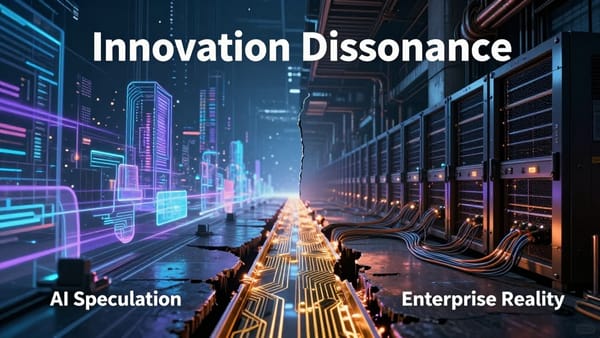
The technological landscape entering 2026 is marked by a definitive shift from speculative hype to structural permanence. For the past several years, the discourse surrounding innovation was dominated by the "wow factor" of generative models and the abstract potential of the metaverse. However, we have now transitioned into a utilitarian phase where the "picks and shovels" of the digital age—massive data centers, specialized semiconductors, and industrial-grade software—receive the lion's share of global investment. This transition is not merely about achieving faster clock speeds or larger parameters; it is about the integration of machine intelligence into the bedrock of global infrastructure and the refinement of the user experience through next-generation hardware that prioritizes efficiency over raw power.
As we analyze the current state of innovation, the overarching theme is specialized efficiency. The general-purpose "Swiss Army Knife" approach to technology is being replaced by high-utility, domain-specific applications. We are seeing a meticulous decoupling of hardware from its legacy constraints, as industry leaders realize that the energy demands of universal computing are unsustainable. In its place, a more nuanced ecosystem is emerging—one where geography, architectural specificity, and regulatory compliance dictate the winners of the market. From the hardware powering the cloud to the software managing the world's intellectual property, the industry is moving toward a more mature, analytical era that rewards resilience and precision over disruptive chaos. This report examines the pivotal pivots in hardware, infrastructure, and applied intelligence that are defining our current trajectory.
Advanced Hardware and the Race for Compute Supremacy
The semiconductor industry continues to be the primary engine of modern innovation, but the nature of that engine is changing. We have hit a metaphorical wall with general-purpose GPUs (Graphics Processing Units) as the sole solution for artificial intelligence. While they remain the gold standard for training massive models, the industry's focus has shifted toward inference—the phase where a trained model actually handles requests. This pivot is why specialized architectures are gaining such rapid traction. A pivotal moment in this evolution is highlighted by Reuters, which reports on Nvidia's move to acquire Groq for approximately $20 billion. This acquisition is a strategic acknowledgment that "Language Processing Units" (LPUs) offer the deterministic performance and low latency required for real-time AI interactions that GPUs struggle to match efficiently.
The financial markets have responded to this architectural shift with vigor. According to Seeking Alpha, the technology sector soared by 25% in 2025, with Lumentum emerging as a top performer. Why does a company like Lumentum, specializing in photonics and optical networking, outperform? Because the bottleneck of AI is no longer just how fast a chip can think, but how fast data can move between those chips. As AI clusters grow to the size of small cities, the transition from electrical signals to optical interconnects becomes mandatory to reduce energy consumption and heat. This growth underscores the market's confidence in the physical, tangible components required to connect the massive AI clusters of tomorrow. It is an era where the "plumbing" of the digital world is as valuable as the "water" flowing through it.
On the consumer side, the hardware narrative is shifting from novelty to high-fidelity utility. We are seeing the death of the "gimmick" gadget. As noted by Vice, anticipation is building for a new generation of devices that bridge the gap between human intent and machine execution. This isn't just about faster smartphones; it’s about specialized tools for high-stakes environments. For instance, Interesting Engineering reports on the development of the world’s first 5K AI technology monitors. These displays do not just show pixels; they use on-board AI to dynamically adjust color gamuts, reduce eye strain based on ambient light, and even track user engagement to optimize power usage. This signifies a move toward "perceptive hardware"—devices that sense their environment and adapt without human intervention.
The implications of this hardware race extend far beyond the balance sheets of Silicon Valley. For stakeholders in manufacturing and design, the rise of specialized silicon means that the cost of deploying AI is finally starting to drop. When you move from a general-purpose processor to an LPU or an NPU (Neural Processing Unit), the energy cost per query can drop by an order of magnitude. This makes AI "on the edge"—within your phone, your car, or your industrial sensor—financially viable for the first time. The future path is clear: hardware is becoming more fragmented by design, with different chips optimized for different tasks, leading to a more efficient, albeit more complex, supply chain.
Global Infrastructure: The Pivot to India and Beyond
As algorithms become more complex and data-hungry, the physical footprint of the internet must expand. We are witnessing a geographic redistribution of digital power. For decades, the "cloud" was largely hosted in North America and Northern Europe. However, the surge in demand for localized AI services has prompted a massive shift in capital toward the Global South. No region is currently more critical to this expansion than South Asia. Reportage from the New York Times details how Google, Amazon, and Microsoft are aggressively scaling data center investments in India. This move is driven by a two-pronged necessity: the need for low-latency delivery of AI services to a massive, tech-savvy population and the increasingly stringent requirements of data sovereignty laws.
Data sovereignty—the concept that a citizen's data should be stored on servers located within their own country—is no longer a fringe policy; it is a global standard. By building massive server farms in Mumbai and Hyderabad, tech giants are ensuring they remain compliant with local regulations while tapping into a market that is increasingly producing its own digital IP. This globalized innovation is reflected in the Science and Technology Daily releases of 2025's top sci-tech news, which emphasize the convergence of global scientific efforts. We are moving away from a US-centric model toward a multi-polar tech ecosystem where innovation can originate from anywhere and must be supported by infrastructure everywhere.
However, this infrastructure boom is not just about the "Big Three" hyperscalers. It is filtering down to the municipal and community levels, creating a new "middle class" of tech hubs. For instance, the Journal Record highlights how localized "innovation halls" are becoming hubs for community-driven tech development. These spaces blend traditional business settings with high-tech fabrication labs and high-speed data access, allowing local entrepreneurs to compete on a global stage without relocating to San Francisco or London. This democratization of infrastructure is essential for the "long tail" of the AI revolution, ensuring that small-scale developers have the same access to compute power as the giants.
The long-term implications of this infrastructure pivot are profound. As India and other emerging markets become the "server rooms" of the world, we can expect a shift in how software is designed. If the primary user base of a new AI tool is located in a region with different linguistic or cultural needs, the training data and the UI will reflect that. We are entering an era of "localized globalism," where the underlying infrastructure is standardized, but the applications are deeply rooted in the specific needs of the local geography. The massive investments by Amazon and Microsoft are not just about market share; they are about securing the physical territory upon which the next generation of global commerce will be built.
AI in Practice: Education, Manufacturing, and Healthcare
The true value of any technological innovation is measured not by its theoretical capacity, but by its practical impact on societal systems. By 2026, we have moved past the era of "AI as a toy" and into the era of "AI as a tool." Education is perhaps the most visible beneficiary of this maturity. For years, the "learning gap"—the disparity between students of different socioeconomic backgrounds—has plateaued. Now, as an analysis by ZDNet reveals, AI tutoring is being deployed at scale to provide personalized instruction. Unlike a human teacher who must manage 30 students at once, an AI tutor can provide 1-on-1 attention, identifying a student’s specific misconceptions in real-time. This is not about replacing teachers; it is about augmenting them with tools that handle the monotonous task of diagnostic assessment.
To support this pedagogical shift, the software used to create educational content has had to evolve. For educators and instructional designers, choosing the right platform is critical; as Atomi Systems points out, the best authoring tools for instructional design in 2026 are those that allow for seamless integration of interactive, AI-driven content. These tools allow teachers to build "living" textbooks that adapt their difficulty based on the reader’s performance. This creates a feedback loop where the curriculum itself evolves to meet the needs of the learner, a prospect that was entirely unthinkable in the era of static PDF downloads and traditional LMS (Learning Management Systems).
In the industrial sector, the advancements are equally transformative. We are witnessing the rise of "Manufacturing 4.x," a term that signifies the move beyond simple automation to autonomous decision-making. As reported by IT Business Today, digital innovation is making global supply chains smarter and more resilient. By utilizing real-time data from IoT sensors and satellite imagery, manufacturers can now predict disruptions—such as logistics bottlenecks or raw material shortages—weeks before they occur. This resilience is mirrored in the healthcare sector, where the stakes are even higher. According to WebProNews, new software solutions are streamlining patient data management and enhancing diagnostic accuracy. In 2026, healthcare software is not just an administrative burden; it is a clinical assistant that can flag potential drug interactions or early oncological signs that might be invisible to the human eye.
This "applied AI" era requires a change in mindset for professionals across all sectors. The focus is no longer on *how* the AI works, but on the *provenance* and *integrity* of the data it uses. In manufacturing, a "smart" supply chain is only as good as the sensors on the factory floor. In healthcare, an AI diagnosis is only as reliable as the medical records it was trained on. This is leading to a massive demand for data governance and quality assurance roles—jobs that didn't exist a decade ago but are now essential for the safe and effective operation of our most critical social systems. The future of work is not about competing with the machine, but about supervising its output.
The Evolution of Software and Intellectual Property
In the mid-2020s, the old adage "software is eating the world" has reached its logical conclusion. Software is no longer just a tool for business; it is the definitive structure of the business itself. According to La Opinión A Coruña, a staggering nine out of ten companies are now fundamentally reliant on apps and software to maintain their daily operations. This total dependency has created a "software-as-survival" environment where any disruption to the digital stack can lead to immediate financial loss. This reality necessitates a far more robust legal and administrative framework than we have seen in the past. Consequently, the Global Intellectual Property Software market is seeing intense competition. Companies are no longer just patenting physical inventions; they are patenting the specific algorithms, datasets, and user-experience flows that give them a competitive edge.
This focus on IP management highlights a growing tension in the industry: the balance between open-source collaboration and proprietary protection. While much of the foundational work in AI was built on open-source frameworks, the commercial "last mile" is increasingly protected behind paywalls and patent thickets. For businesses, this means that software procurement is now a legal and strategic minefield. Managing a company’s digital assets requires sophisticated IP software that can track licenses, monitor for infringement, and ensure that the "intelligence" being used is actually owned by the entity using it. This is a critical point for the mid-2020s—as software becomes more autonomous, determining who owns its output becomes a central challenge for the legal system.
Even at the municipal level, the transition to modern software is unavoidable and, at times, disruptive. Local governments are currently in a heavy cycle of modernization to keep up with citizen expectations for digital services. As evidenced by the Finger Lakes Times, which reports on temporary closures of public offices to accommodate critical software upgrades, the "maintenance window" for society is becoming more visible. These upgrades aren't just about better interfaces; they are about security and interoperability. As governments move to "Digital Twins" of their cities—models that help manage traffic, waste, and energy—the underlying software must be as reliable as the physical bridges and roads it represents.
In the private sector, specific advancements in imaging and productivity are also making waves, particularly for the creative and technical classes. The latest professional applications, such as those highlighted by Prokerala, show a trend toward "context-aware" software. Whether it is an image editor that understands the physics of lighting or a spreadsheet that suggests financial models based on current economic trends, the software of 2026 is moving toward proactive partnership. The user is no longer just an "operator"; they are a "director." The challenge for the software industry moving forward will be maintaining this level of sophistication while ensuring that systems remain transparent and that the intellectual property of creators is not swallowed by the very tools they use to create.
Conclusion: Moving Toward an Analytical Future
As we survey the technological landscape of 2026, the transition from the "move fast and break things" era to an era of "build deep and sustain" is unmistakable. The era of pure speculation is drawing to a close, replaced by a rigorous focus on the physical and legal foundations of our digital world. The massive consolidation of power in hardware—exemplified by Nvidia’s strategic $20 billion acquisition of Groq—coupled with the multi-billion dollar infrastructure builds in India and other emerging markets, indicates that the foundations of the next decade are being poured right now. We are no longer just experimenting with what technology *could* do; we are deciding what it *must* do to sustain a global, high-tech society.
For businesses, educators, and consumers, the takeaway is clear: the future is specialized, efficient, and increasingly localized. Whether it is a monitor that understands your physiological workflow, an AI tutor that deciphers a student’s unique learning struggles, or a supply chain that anticipates geopolitical shifts with eerie accuracy, the goal of technology is becoming increasingly human-centric. Paradoxically, as the math behind these systems becomes more complex and opaque, their outputs must become more intuitive and reliable. The "black box" of AI must be wrapped in a "clear box" of utility and accountability. The primary challenge for the remainder of the 2020s will not be the invention of the next great algorithm, but the management of this vast complexity to ensure that the benefits of innovation reach all sectors of society, from the county clerk’s office to the heights of the global semiconductor market. The tech observer’s role is no longer to watch for the next "shiny object," but to monitor the heartbeat of the infrastructure that now sustains us all.