The 2026 Tech Landscape: Agentic AI, Computing Shifts, and the Era of 'Software Pruning'

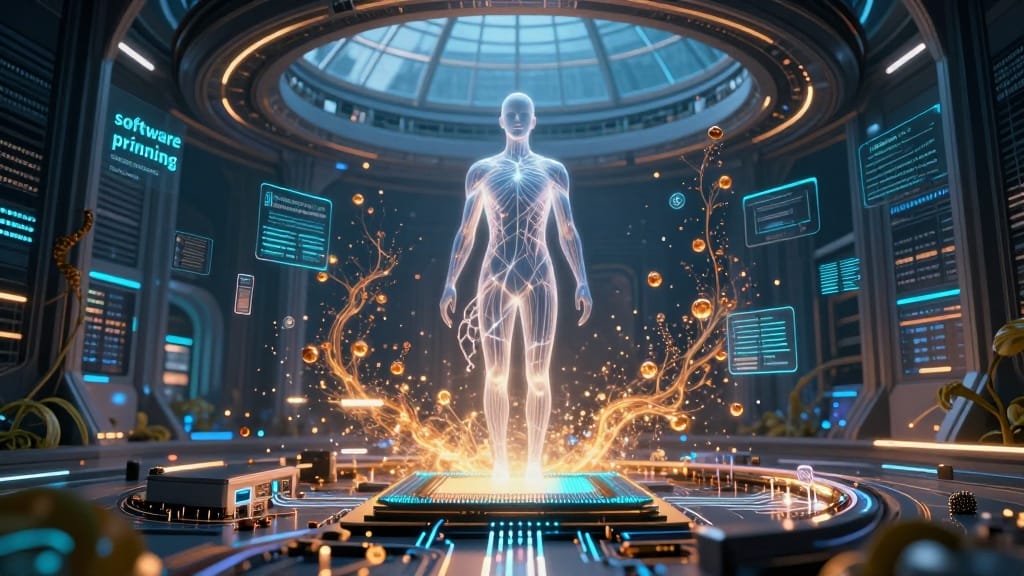
The dawn of 2026 marks a significant inflection point in the technological narrative, shifting from the frantic, often disparate experimentation of the early 2020s toward a more structured, albeit aggressive, era of implementation. We are witnessing a dual movement: while hardware manufacturers push the boundaries of silicon efficiency through advanced process nodes, software giants are increasingly "pruning" their ecosystems to make way for pervasive, agentic artificial intelligence. This transition is not merely about incremental improvements like faster chips or smarter chatbots; it represents a fundamental restructuring of how both consumers and enterprises interact with digital infrastructure. The era of the "app" as a siloed destination is beginning to wane, replaced by a vision of interconnected agents that act upon intent rather than simple commands. This shift demands a rigorous analysis of the trade-offs between automated efficiency and individual digital sovereignty.
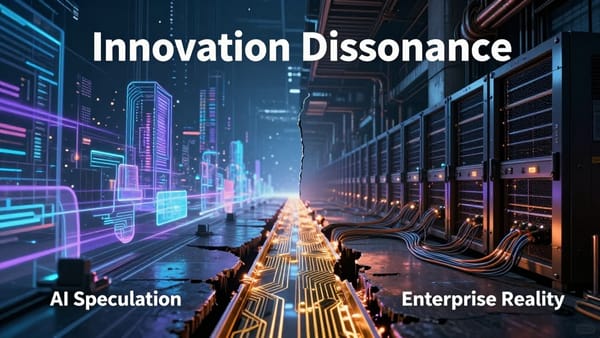
As we analyze the fallout from major industry events and market reports, a clear pattern emerges. Innovation is becoming more specialized, moving into hyper-performance automotive sectors and highly regulated life sciences, even as the "all-in-one" AI model begins to face pushback from users seeking to regain control over their operating systems. This article will examine the pivotal developments in AI agents, the latest hardware breakthroughs from CES 2026, and the consolidation of software platforms that are defining the current fiscal year. The goal is to provide a neutral, data-driven perspective on a year that promises to settle long-standing debates about the utility of Large Language Models (LLMs) while opening new questions regarding the longevity of legacy software as we have known it for decades.
Key takeaways
- The rise of "agentic AI" is shifting software from passive tools to active coworkers capable of executing complex workflows autonomously.
- Intel's 18A process technology signifies a major leap in mobile computing, potentially eliminating the need for multi-device setups through extreme efficiency.
- Consumer pushback against "AI bloat" in Windows 11 has led to a surge in third-party debloating tools and a renewed focus on digital privacy.
- Legacy software "funerals" are accelerating as Microsoft and other giants consolidate mobile and desktop services under unified AI frameworks.
- Beyond the office, AI and robotics are entering the hypercar market, signaling a diversification strategy for traditional appliance-heavy tech firms.
The Shift to Agentic AI: From Chatbots to Coworkers
For the past several years, generative AI has primarily functioned as a sophisticated interface for information retrieval—a better search engine with a prose-heavy output. However, 2026 is the year of the "agent." According to Axios, AI companies are now in a high-stakes race to sell agentic software designed to simplify information work by performing tasks autonomously rather than just answering prompts. This evolution moves us away from RAG (Retrieval-Augmented Generation) toward actual "action" models that can interact with APIs, navigate browser windows, and manage cross-platform workflows without human intervention for every step.
This evolution is perhaps best exemplified by Anthropic’s recent move into the workspace. As reported by ZDNET, the new "Claude Cowork" feature allows the chatbot to handle complex actions, though it currently remains a research preview. The central challenge here—and the reason for its "preview" status—lies in the inherent security risks of granting AI control over browser environments. If an agent can "see" a screen and "click" buttons, the surface area for prompt injection attacks and unauthorized data exfiltration expands exponentially. Enterprises are currently weighing the productivity gains of an agent that can autonomously schedule meetings and compile financial reports against the liability of an autonomous system making errors in a live environment.
These developments are already yielding practical results for developers and power users who are willing to navigate this early-stage risk. While higher-tier subscriptions were once seen as the only way to access functional AI, optimized models are becoming more efficient at "agentic" tasks. For instance, ZDNET reports that the Codex 5.2 model on ChatGPT’s Plus plan has proven sufficient for resolving high-level debugging issues that previously required more expensive, specialized tiers. This suggests a maturing market where the focus is shifting from raw model size, which dominated the 2023-2024 news cycles, to task-specific reliability. The "agent" is only as good as its ability to complete a loop; if it fails 5% of the time, the human cost of verification may outweigh the time saved. Thus, the 2026 narrative is as much about error reduction as it is about capability expansion.
The impact of this shift on the labor market cannot be ignored. When AI transitions from a tool to a "coworker," the definition of entry-level tasks begins to blur. We are seeing a shift in software engineering and data analysis where the "junior" roles are being augmented—or in some cases, replaced—by these agentic frameworks. The long-term implication is a "skills gap" crisis where the pathway from junior to senior professional becomes steeper, as the foundational tasks used for training novices are now handled by autonomous systems. The economic shift is profound: we are moving from paying for "software seats" to paying for "outcome-based" AI services.
Hardware Innovation at CES 2026: Silicon and Supercars
The Consumer Electronics Show remains the primary stage for hardware breakthroughs, and this year’s edition highlighted a surprising convergence of household tech and high-performance engineering. While the automotive industry has long flirted with "software-defined vehicles," 2026 marks the entry of consumer electronics giants into the high-performance hardware space. In a notable departure from its traditional product line, Chinese appliance firm Dreame Technology unveiled automotive concepts, including the Nebula Next 01. According to Gear Patrol, this flagship concept targets the hypercar segment occupied by brands like Bugatti and Rimac, suggesting that the expertise gained in high-speed motors for vacuums is now being applied to automotive propulsion. This cross-pollination of industries illustrates a broader trend: the electrification of everything has turned motor design into a universal tech skill, whether you are tidying a floor or breaking speed records.
On the computing front, the focus has shifted toward extreme efficiency, a necessary pivot after the energy-hungry peak of the early AI boom. Intel’s Panther Lake chips, built on the 18A process technology, represent a critical milestone for the company’s "five nodes in four years" strategy. As noted by The Outerhaven, the performance-to-efficiency ratio of Panther Lake is now reaching a point where a single mobile device can handle both everyday tasks and heavy video encoding without thermal throttling. This is significant because it potentially ends the era of the two-laptop setup—the "MacBook for travel, workstation for home" paradigm. With the 18A process, Intel is finally posing a direct challenge to the power-efficiency dominance that Apple Silicon has enjoyed since 2020.
This hardware evolution was just one of many highlights at the event, which served as a reminder that the physical world is catching up to the digital one. ZDNET cataloged major announcements from Samsung, LG, and Hisense that dominated the TV and laptop sectors, emphasizing transparent OLEDs and AI-driven image processing. However, the true innovation lies beneath the surface. The 18A process is not just about speed; it is about the "backside power delivery" (PowerVia) that allows chips to run cooler and more reliably. This is a prerequisite for the "Agentic AI" world described earlier; if the hardware can't handle the constant background processing of an AI agent without draining a battery in two hours, the "agent" dream remains tethered to a desktop. The 2026 hardware cycle is, for the first time, prioritizing sustained background performance over peak clock speeds.
Furthermore, the diversification of firms like Dreame into the hypercar market signals that the "tech" sector is no longer confined to screens. We are seeing a "robotization" of appliances. If a company can build a motor that spins at 150,000 RPM for a vacuum, they have essentially solved the core mechanical challenge for a range of robotics and high-performance vehicles. This convergence is creating a new competitive landscape where traditional automotive manufacturers must compete against agile consumer electronics firms that move at "software speed" rather than the traditional five-year automotive development cycle. This transition suggests that in the future, the "brand" of your car might matter less than the "OS" and the "motor efficiency" developed by companies previously known for domestic hardware.
Market Consolidation and the 'Pruning' of Legacy Software
The aggressive push toward AI integration has necessitated what industry veterans are calling a "spring cleaning" of the software industry—or more accurately, a forced migration. Microsoft, in particular, has begun an aggressive campaign to sunset older applications in favor of a unified ecosystem that is easier to maintain and "AI-ify." As reported by XDA Developers, the company is axing several beloved mobile apps to bring all productivity functions under the Microsoft 365 Copilot banner. This move is strategic; by reducing the number of standalone apps, Microsoft can focus its LLM integration efforts on a single, unified interface, but it often leaves users who preferred specialized, lightweight tools in the lurch.
This trend of "software funerals" is expected to continue throughout the year as technical debt becomes too expensive to carry in the AI era. According to The Register, administrators are facing a "calendar of carnage" as legacy systems are retired to make way for AI-centric architecture. This is not just about the convenience of the developer; it is an economic necessity. Maintaining legacy codebases that were never designed for semantic search or natural language interfaces is a drain on resources. For the enterprise, this means a painful period of transition where "the way we've always done it" is being systematically dismantled to accommodate a Copilot-first world. The risk here is "vendor lock-in" on an unprecedented scale, as the deeper AI integrates into these consolidated platforms, the harder it becomes for a business to switch providers.
The global market for these shifts remains massive, driven by the need for companies to modernize or face irrelevance. According to a report on GlobeNewswire, the software development services market is projected to reach $772.47 billion, driven by custom solutions, cloud adoption, and AI integration. Within this market, specialized tools are maintaining their dominance by leaning into these trends; for example, PRNewswire notes that QuickBooks has been recognized as the leading tax-ready platform for 2026. This illustrates how incumbent players are successfully navigating the transition by automating the most tedious aspects of professional work—in this case, tax compliance—before a generic AI agent can disrupt their niche.
The "pruning" process also reveals a shift in software philosophy. For decades, the trend was "feature creep"—adding more buttons and menus to every update. In 2026, the trend is "abstraction." Software companies want to remove the menus and replace them with a single text box or a voice prompt. While this makes software more accessible to the average user, it often frustrates the "power user" who requires precise control. This divergence is creating a bifurcated market: mass-market software that is highly automated and "pruned," and a high-end niche for specialized, "offline" tools that eschew AI integration in favor of manual predictability. The "Software Development Services" market mentioned above is increasingly being split between those building these mass AI platforms and those hired to maintain the increasingly valuable legacy systems that refuse to be pruned.
The Counter-Movement: Privacy and 'Debloating'
As AI becomes more deeply embedded in operating systems—often without a clear opt-out path—a significant and vocal portion of the user base is seeking ways to reclaim their hardware. The integration of Microsoft Copilot, in particular, has met with resistance from users who prioritize system privacy, performance, and clear boundaries between their data and training models. To address this, ZDNET has provided guides on how to completely remove the AI from Windows 11, reflecting a growing demand for "AI-free" environments. This is a fascinating reversal of the historical trend where users clamored for the newest features; now, a "feature" is often viewed as a liability or "bloat."
This resistance has birthed a new software sub-industry dedicated to "debloating." As reported by ComputerHoy, tools like 'Winslop' have emerged to help users "clean" Windows 11 of AI, advertisements, and other perceived disruptions, returning control to the individual. These tools are no longer just for enthusiasts; they are becoming essential for businesses that require high-security environments where data cannot be "telemetried" back to a cloud-based LLM. The "debloating" movement is a direct response to the "Software Pruning" mentioned in the previous section—as companies prune features users liked, and add AI they didn't ask for, the users are pruning back.
This tension highlights a broader debate about the 10 breakthrough technologies that will define our future. As MIT Technology Review notes in its 2026 list, these advances matter because they fundamentally change our relationship with technology. The release of this annual list, as detailed by PRNewswire, underscores that while some technologies like AI agents are ubiquitous and controversial, others—such as healthcare innovations and advanced materials—are making more quiet but equally profound impacts. The pushback against AI "bloat" suggests that personal computing is entering a "minimalist" phase for those who value performance over novelty.
The philosophical divide here is between "Technology as a Service" and "Technology as a Tool." When a computer is a tool, the user is in charge. When it is a service, the provider is in charge. The popularity of debloating scripts and third-party OS modifications suggests that the "Tool" philosophy still has a massive following. This will likely lead to a "Pro" market in late 2026 and 2027, where manufacturers may start offering "Clean OS" versions of their hardware at a premium—essentially charging users more for the privilege of less software. This paradoxical market dynamic is a direct result of the industry's rush to monetize every pixel through AI integration and data collection.
The Frontiers of Specialized Innovation
While consumer electronics and operating system wars often grab the headlines, the expansion of specialized technology centers is equally vital for long-term economic and scientific growth. True innovation requires physical space and specialized clusters where hardware and software can be co-designed. Infrastructure plays a critical role in this, as evidenced by TransMedics' announcement of a new global headquarters at Assembly Innovation Park. This move, supported by BioMed Realty, emphasizes the physical infrastructure required to sustain the life sciences and tech industries, ensuring that medical hardware can keep pace with software advancements like agentic AI diagnostic tools.
The specialized sector is seeing a massive influx of capital because it is viewed as "higher ground" compared to the volatile consumer market. In the life sciences, AI is being used not for chatbots, but for protein folding and drug discovery—applications with clear, quantifiable value. The Assembly Innovation Park expansion is a testament to the belief that the next "Trillion Dollar" industry will be at the intersection of biology and silicon. This is where "Agentic AI" becomes truly transformative: when a digital agent can conduct thousands of simulated experiments in a lab environment, the pace of discovery accelerates far beyond human capability. This "behind the scenes" innovation is arguably more significant than the latest Windows update, as it directly impacts human longevity and global health security.
Furthermore, the development of these innovation hubs suggests a "regionalization" of tech. While the early 2000s saw a push toward remote work and decentralized teams, the complexity of 2026-era hardware (like the aforementioned 18A Intel chips or TransMedics' organ-perfusion systems) requires physical proximity. You cannot build a hypercar or a next-generation medical device entirely on Zoom. We are seeing a resurgence of "Innovation Hubs" that combine academic research, venture capital, and manufacturing capability. This suggests that while software is becoming more global and abstract, the "frontiers" of tech are becoming more localized and physical. The Assembly Innovation Park move is a strategic bet on the importance of this physical ecosystem.
In conclusion, 2026 is shaping up to be a year of profound refinement and pragmatic consolidation. The reckless "AI for everything" approach of the mid-2020s is being replaced by targeted agentic tools and more efficient hardware process nodes like Intel's 18A. We are seeing the industry mature: the "funerals" of legacy software are the price we pay for a unified, more capable digital future, even if that future currently feels cluttered with "AI bloat." The pushback from users, armed with debloating tools and a renewed focus on privacy, serves as a necessary check on the ambitions of "Big Tech."
The future of innovation lies not just in what technology can do, but in how seamlessly—and optionally—it integrates into the human experience. As we look toward the remainder of 2026, the key metric for success will not be the "number of AI features," but the "reliability of AI outcomes" and the "efficiency of the underlying hardware." Whether it is a hypercar from a vacuum manufacturer or an autonomous "coworker" from Anthropic, the goal is the same: moving from the era of digital distraction to the era of digital agency. For the tech observer, the most interesting developments will be found at the fringes, where users and developers alike are redefining what it means to be truly "connected" in an increasingly automated world.