The 2026 Shift: Navigating a New Era of European Travel, Tech, and Mindful Exploration

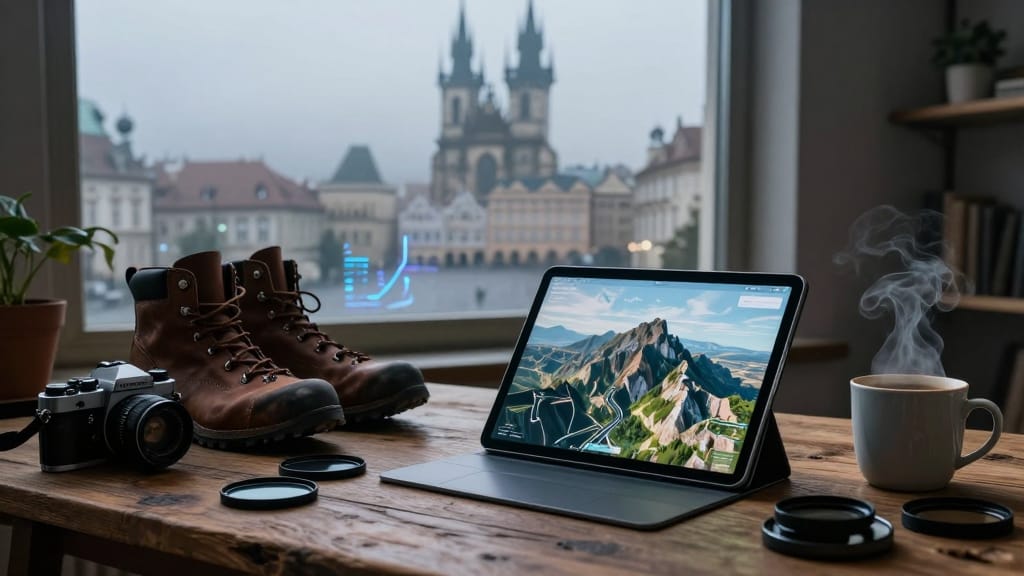
Hey everyone, it’s Anya. If you’re like me, you probably spent New Year’s Eve looking at flight prices and wondering why your favorite hiking boots suddenly look so worn out after just one season in the Tatras. 2026 is officially here, and honestly, the vibe is shifting. Being Polish, I’ve always felt we sit at this unique, sometimes chaotic crossroads of old-school tradition and fast-paced European change. We’re the generation that remembers the stories of closed borders but grew up with the privilege of the Schengen Area, and that perspective is everything right now. Between the geopolitical drama at our eastern borders and the way social media has basically turned every "hidden gem" into a crowded, over-saturated set piece for TikTok, traveling this year is going to require more than just a passport and a dream—it’s going to require some serious strategy, grit, and a better data roaming plan.
From the cobblestone streets of Warsaw to the rugged, maple-scented peaks of the Adirondacks, the world is becoming more complicated, but also more intentional. We’re seeing a massive tension between the desperate desire to escape—fueled by post-pandemic burnout and a craving for solo-travel soul-searching—and a tightening web of global travel restrictions and economic fluctuations. I feel like we’re all collectively tired of the "influencer" version of reality. We want something that feels real, even if it’s a bit messy. Today, I’m breaking down the big shifts in food culture, the tech slump, photography trends, and the evolving European lifestyle that are going to define our adventures in 2026. Grab a coffee (the strong kind, no decaf allowed here), and let's dive into the state of the world.
Solo Quests and the New Geopolitical Landscape
I’ve always said that travel is the best therapy—cheaper than a psychiatrist, though sometimes more stressful when you miss a train in rural France. This year, it seems like everyone is catching on. According to Business Insider, more people are ditching their soul-crushing 9-to-5 routines after breakups or mid-twenties burnout to start fresh in places like Belgium. It’s that "main character energy" we all need sometimes. People aren't just taking vacations anymore; they are undergoing "location-based resets." When your life feels like a glitchy game of The Sims, sometimes you just have to move your character to a new map. Belgium, with its mix of medieval charm and Brussels-based bureaucracy, offers a strange but soothing stability for the weary soul.
However, actually getting to your destination might be getting a lot trickier than the Pinterest boards suggest. As reported by ABC7 Chicago, new travel bans and restrictions are coming into effect, specifically targeting regions like Burkina Faso and Mali. This is a stark reminder that the freedom to roam is a fragile privilege, never a guarantee. As a European, I find these shifting borders deeply unsettling. We’re seeing a return to "Fortress" mentalities, where safety is often prioritized over the fluid exchange of culture. For travelers, this means constant vigilance. You can't just book a flight and wing it anymore; you have to be a part-time political analyst just to make sure you won't get stuck in a transit zone for forty-eight hours.
If you are heading to the States to escape the European winter—maybe chasing that classic East Coast aesthetic—you have to be incredibly smart about your wallet. The dollar-to-zloty or dollar-to-euro exchange rate is always a bit of a rollercoaster, and 2026 is no exception. As highlighted by Travel and Tour World, maximizing a New York City trip in 2026 requires specific budget and time-saving strategies. We're talking digital passes for the subway, booking your "cheap" eats weeks in advance, and avoiding the tourist traps of Times Square like the plague. Honestly, as much as I love the energy of an NYC bagel shop, the prices can be absolute robbery. I’d much rather spend my time in the quiet woods where the only thing charging me is a stray squirrel. For instance, Travel + Leisure points out that Speculator in the Adirondacks is the ultimate spot for those who want that raw, outdoor adventure without the commercialized "mountain-theme-park" vibe of places like Aspen. It’s basically the American version of my favorite hiking spots in the Tatras, but with more maple syrup and significantly higher chances of seeing a bear. It's about finding places where the Wi-Fi is weak but the connection to yourself is strong.
The Evolution of European Identity and the Tech Slump
Living in Poland, the EU isn’t just a political entity we read about in news alerts; it’s our playground, our safety net, and sometimes our biggest headache. 2026 marks a fascinating time for our continental identity. We just saw a huge milestone as Euronews reported on Spain and Portugal celebrating four decades in the European Union. These countries have transformed from struggling dictatorships into cultural and economic powerhouses, and seeing their journey makes me incredibly proud of our shared European history. It reminds me that despite the current tensions near Ukraine—which we feel very acutely here in Poland—the EU project is about long-term resilience and the beauty of open borders. However, we can't ignore the cracks in the foundation.
There’s a lot of nervous chatter lately regarding The Guardian's analysis of how shifting US policies and internal European "woke" debates might be contributing to a sense of economic and technological decline. While the term "woke" is often used as a political football, the real issue is the stagnation of innovation. Are we spending too much time arguing over culture while the rest of the world outpaces us in AI and green tech? It’s a valid question. We’re seeing a brain drain where our best developers head to Silicon Valley because the European venture capital scene is more conservative than my grandmother’s Sunday dinner. This impact filters down to how we travel—from the apps we use to navigate to the high-speed rail projects that keep getting delayed. If we want to stay relevant, Europe needs to stop looking in the rearview mirror and start looking at the horizon.
We can see this reflected most clearly in the automotive industry, which used to be the crown jewel of European engineering. It’s been a rough ride for the EV market; Bloomberg reports that Tesla is closing out a "brutal year" in Europe with massive sales declines. It turns out that when electricity prices skyrocket and the charging infrastructure remains "meh" at best, people get cold feet about ditching their gas-guzzlers. Interestingly, the data from Reuters shows a weirdly divided market: while Tesla is slumping in France and Sweden, they are still surging in Norway. It’s a total geographic coin-flip. For those of us planning to road-trip through the continent in 2026, LiveNow from FOX notes that there are several new things travelers need to keep in mind regarding regulations, infrastructure, and the ETIAS (European Travel Information and Authorisation System) that’s finally making things more bureaucratic for our non-EU friends. If you're planning a Eurotrip, double-check your paperwork. The days of "just showing up" are slowly fading into a sea of QR codes and digital forms.
Food Culture: Fast Food Giants and Brain Health
Let’s talk food because, honestly, what is a trip without eating something "extra" that you'll regret at 3 AM? The world of Quick Service Restaurants (QSR) is blowing up in a way that feels almost dystopian. According to the Economic Times, everyone wants a bite of the burger boom right now. We're seeing venture capitalists dumping money into fast food like it's the next crypto. This is especially wild in India, where CNBC reports a massive merger between Yum Brands partners to create a fast-food franchisee giant. It’s crazy how global these brands have become—you can go to the other side of the planet and still find a Taco Bell. There’s something comforting about that, but also deeply boring. Why go to India to eat a Crunchwrap? Go find some local street food that will make your taste buds tingle and your eyes water!
But we have to be careful with our food choices, especially with the "viral" influence of the internet. Social media is currently obsessed with some pretty weird (and borderline dangerous) culinary trends. Fox News recently discussed some of America's strangest food obsessions that have "alarmed experts." I’ve seen some of these on TikTok—putting butter in coffee was one thing, but now people are deep-frying things that should never see the inside of a vat of oil. It’s like we’re competing to see who can get a heart attack the fastest for views. Beyond the viral "disaster" foods, there's the long-term impact on our health. As The Times of India reveals, a leading doctor has identified the absolute worst food for your brain—and it’s not just the usual fried suspects, but ultra-processed foods packed with hidden sugars and chemical stabilizers. When you're traveling, your brain is your most important piece of gear. You need it sharp to navigate foreign metros and remember the name of that cute café in Krakow. Feeding it junk is like putting low-grade fuel in a Ferrari.
And while we enjoy our oat milk lattes in gentrified neighborhoods, we can't forget about the dark side of global food security. Organizations are stepping up to show us the reality of the world beyond our brunch plates. The World Food Program's efforts in Chad highlight the critical need for monitoring in vulnerable regions. It’s a sobering reminder of our privilege as travelers. We worry about whether the hotel has 5G, while millions are facing acute hunger. This year, "mindful travel" should include a bit of perspective. Maybe donate to a local food bank in the country you’re visiting, or choose restaurants that support local farmers. It’s a small way to ensure our hobby doesn't just extract value from a place but gives something back.
Capturing the Moment: Photography Trends to Watch
If you don’t have a photo, did it even happen? Just kidding—mostly. But as someone who basically lives through my viewfinder, I’m obsessed with where photography is going in 2026. We are finally seeing a massive pushback against the "perfect" aesthetic. People are tired of the over-saturated, AI-sharpened, plastic-looking photos that have dominated Instagram for a decade. Fstoppers argues that black and white photography is making a serious comeback, and I am absolutely here for it. B&W strips away the distractions and focuses on the emotion, the texture, and the light. It adds so much soul and mood, especially when you're capturing the brutalist architecture of Warsaw or the misty, jagged peaks of the High Tatras. It feels more honest. It’s not about showing how blue the water was; it’s about showing how the place *felt*.
For those who love the technical side of things, 2026 is going to be a "stellar" year—literally. Digital Camera World has listed 10 must-shoot events for astrophotographers this year. I’m definitely planning some camping trips away from city light pollution to try and catch a glimpse of the cosmos. There’s something so humbling about realizing how small your "travel problems" are when you're looking at a galaxy that's millions of light-years away. And for the wildlife fans who want to see something more impressive than a street pigeon, 121 Clicks has curated some of the most breathtaking wildlife photos from 2025 that will give you all the inspiration you need to get out into the wild. Just remember: if you see a bear in the Adirondacks, put the camera down and back away slowly. No photo is worth being a snack.
When it comes to gear, please—I am begging you—stop listening to influencers telling you to buy a $3,000 setup with five different lenses for a weekend trip. Your back will hate you, and you’ll spend more time changing lenses than actually looking at the scenery. A professional photographer from Digital Camera World shares their "no-nonsense" packing list after seven years of travel, and it's a breath of fresh air. It’s usually just one solid body and a versatile prime lens. Also, for my fellow divers, Divernet has some great New Year’s resolutions for underwater photography—the main one being to respect the reef. Don't touch the coral just to get a closer shot of a clownfish! Finally, keep an eye on your own travel quirks as discussed by One Mile at a Time. Whether it’s having a specific playlist for takeoff or refusing to use hotel pillows, our weird routines are what make the journey personal. Embrace the weirdness.
Conclusion: The Future of Exploration
As we move deeper into 2026, it’s clear that traveling isn't just about ticking boxes on a generic "Top 10" list anymore. The world has changed, and we have to change with it. Travel in this era is about being resilient, adaptable, and a little bit skeptical of the high-gloss version of reality we see online. Whether it’s navigating complex new travel bans, choosing the raw honesty of black-and-white film over digital perfection, or opting for a quiet, muddy hike in the Adirondacks over a crowded, overpriced beach in the Med, the focus is shifting toward authenticity and mindfulness. We are searching for moments that feel "un-curated."
The tech industry might be in a temporary slump, and the geopolitical landscape is definitely "complicated" (to put it mildly—it’s more like a mess), but the human drive to see what’s over the next hill remains untouched. From a Polish perspective, we know a thing or two about enduring through change and finding beauty in the struggle. We are a people of survival and celebration. My final advice for 2026? Pack light—both in terms of your suitcase and your emotional baggage. Eat food that actually nourishes your brain, stay curious about the EU's evolving story, and don’t be afraid to go it alone. The world is still enormous, still beautiful, and it’s waiting for a better, more honest photograph than the one everyone else has already taken a thousand times. Stay safe, stay skeptical, and keep exploring! I'll see you out there—probably at a small coffee shop in a city you've never heard of.