The 2026 Gaming Shift: Xbox’s Hardware Crisis, the Rise of 'Anywhere PCs,' and the Cloud’s Ad-Supported Future

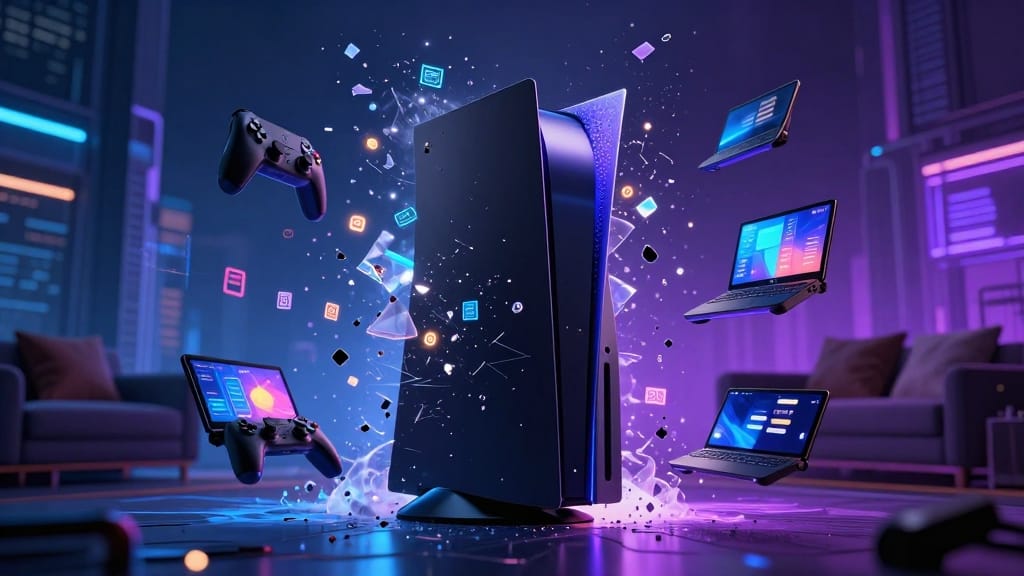
Welcome to 2026, besties, where the gaming landscape is officially a chaotic fever dream. If you thought the last few years were wild, Q1 of 2026 is here to tell you: "Hold my energy drink." We are witnessing a massive, tectonic shift away from the traditional "box under the TV" model and moving toward a fragmented, platform-agnostic future that feels like something out of a cyberpunk novel. The industry is currently screaming through a mid-life crisis. On one hand, Microsoft is absolutely slaying as a software giant, but their hardware business? It’s looking like a potential death spiral. Meanwhile, "Anywhere PCs" have finally leveled up from niche enthusiast toys to the actual "daily drivers" for the masses. This isn’t just about 4K resolution or faster SSDs anymore; it’s a fundamental pivot in how we consume media. Between aggressive retail "BOGO" deals on high-end monitors and a desperate push into ad-supported cloud streaming, the barriers to entry are crumbling, but the cost of actual stability in our games has never been higher. GG to our wallets and our sanity, because the sheer volume of content—from $300 million AAA flops to classic Disney ports—is reaching a breaking point. Let’s dive into the digital wreckage and see what’s actually worth our time.
The Microsoft Dilemma: A Software King Without a Throne?
The most shocking narrative of 2026—and trust me, the tea is piping hot—is the documented decline of Xbox as a hardware platform. We've been smelling smoke for a while, but the fires are finally visible from space. According to IGN, Xbox hardware revenue has been sliding for two consecutive years, with sales plummeting a staggering 32% during the most recent holiday quarter. That’s not just a "dip," fam; that’s a "get the defibrillator" level of decline. While Microsoft's overall business remains healthy (thanks, Excel), Yahoo Finance reports that the gaming division specifically is struggling as console sales continue to slump, even as the company's cloud and business services thrive. It paints a very clear, very spicy picture: gamers are totally down to pay for Game Pass, but they aren't buying the plastic boxes required to play it anymore.
This creates a massive strategic vacuum that’s honestly kind of terrifying for the "console war" veterans. As noted by GamesIndustry.biz, Microsoft’s status as a leading publisher is virtually guaranteed—they own everything from Call of Duty to World of Warcraft—but the financial data casts a shadow of doubt over the long-term viability of the Xbox platform itself. We’re essentially watching Xbox morph into the world’s most powerful third-party publisher. They are becoming the "New Sega," but with enough money to buy a small country. The catch? If you aren't selling consoles, you aren't controlling the storefront. You lose the 30% "platform tax" on every V-Buck or skin sold by other developers. This is a massive blow to the "walled garden" strategy that Sony and Nintendo still use to print money. For us, it means Xbox games are showing up everywhere—PS5, Switch 2, your smart fridge—but it also means the "Xbox" brand might eventually just be an app on your TV. Is it "Game Over" for the Xbox console? Maybe not yet, but they’re definitely on their last life and looking for a health pack.
The implications here are wild. If Microsoft steps back from the hardware arms race, it leaves Sony in a weird position. Without a direct rival pushing the specs of a "traditional" console, does the PS6 just become a mid-range PC? Microsoft's pivot to a software-first model is a huge win for accessibility—no more $500 barriers to entry—but it sucks for anyone who loves the simplicity of a dedicated console ecosystem. The RNG of hardware cycles is being replaced by the constant "Subscription Fatigue" of living in a 100% digital world. We’re trading ownership for access, and while the "Software King" is winning the battle for our monthly $20, they’re losing the battle for the space under our TVs.
The Rise of the 'Anywhere PC' and the Handheld Revolution
While the traditional "big box" consoles are struggling to justify their existence, the PC market has evolved into something much more portable and, frankly, way more "poggers." We have finally arrived in the era of the "Anywhere PC." This isn't just about the Steam Deck anymore; the entire industry has pivoted to making high-end PC gaming portable. According to Digital Trends, the lines between console and PC have completely dissolved in 2026. Handhelds have matured from niche enthusiast toys that required a PhD in Linux to run, into polished "daily drivers" that can handle AAA beasts like Cyberpunk 2077 or Highguard on the go. This shift is rendering the loud, clunky gaming laptop of the past totally obsolete for anyone who isn't a professional video editor or a hardcore spreadsheet warrior.
To support this ecosystem of high-performance portable gaming, hardware manufacturers are getting absolutely aggressive with their incentives. They know we need the pixels to pop, and they're willing to cut prices to make it happen. For instance, ZDNET reports that LG is offering a "BOGO" (Buy One, Get One) deal where buyers can get a free 27-inch UltraGear monitor. We’re talking about a display with a 540Hz refresh rate and a 0.02ms response time. Those specs used to be reserved for NASA or some ultra-sweaty esports pro at a LAN tournament, but now they’re being bundled like a fast-food meal deal. This level of tech is crucial because as the "Anywhere PC" becomes our main rig, we need a high-end dock and monitor setup at home to get the most out of it. It's the "Switch" model, but with the power to run ray-traced graphics at 144fps.
Why does this matter? Because the "Anywhere PC" fixes the one thing consoles couldn't: freedom. I can play my Steam library on the train, dock it at my desk to finish a raid, and then move to the couch to watch Netflix. It's the ultimate "Flex." However, this hardware boom also highlights a growing divide in the community. If you can afford the $700 handheld and the "BOGO" OLED monitor, you’re living in the future. If not? You’re stuck with aging hardware and "performance mode" that looks like soup. The democratization of gaming is happening, but it’s still gated by how much you’re willing to drop on a handheld that will probably have a "Pro" version released six months later. Such is the life of a PC gamer, I guess. At least the RGB looks cool.
Cloud Gaming and the Free-to-Play TV Future
If you don't feel like dropping a paycheck on a handheld or an expensive PC, don't worry—the industry is coming for your Smart TV. The era of "no console required" is finally, actually here, and it’s being fueled by ads because, of course it is. A major player in this space is PHȲND, which has joined forces with LG to launch an ad-supported Smart TV cloud gaming platform. This "FAST" (Free Ad-supported Streaming TV) model for gaming is basically the "Pluto TV" of video games. It’s intended to be the ultimate "noob-friendly" entry point for billions of people who wouldn't know a GPU from a CPU but want to play something more substantial than Candy Crush.
But wait, it gets weirder! For the families who miss the days of the Wii or the (admittedly cursed) Kinect, there’s a new contender in town. As reported by Engadget, the Nex Playground is being hailed as everything the Xbox Kinect wanted to be—a tiny, non-intrusive box that brings motion-tracked family games to the living room without the creepy "eye" watching your every move. It’s a nostalgic nod to the 2000s motion-control craze, and according to Engadget's 'The Morning After', it successfully channels that "lost" spirit of interactive motion gaming. This is the "casual" flank of the hardware war. While the "Anywhere PC" caters to the sweaties and the hardcore fans, the Nex Playground and PHȲND are fighting for the living room dominance that Nintendo has enjoyed for decades.
This "Cloud + Casual" strategy is the industry's attempt to solve the "entry cost" problem. If you can play a high-quality game by just clicking an app on your TV, the potential audience for gaming explodes. But let’s be real for a sec: ad-supported gaming sounds like a nightmare. Imagine being in the middle of a boss fight and getting hit with a 30-second unskippable ad for insurance. Gross. This "Free" future might come at a cost of immersion that some of us aren't willing to pay. However, for the industry, this is the Holy Grail. It's about data, engagement metrics, and reaching the "non-gamer" demographic. We are watching the medium transform into a utility, like water or electricity, where the box doesn't matter as much as the connection speed. Just make sure your Wi-Fi is cracked, or it’s going to be a laggy mess.
The State of Software: From AAA Fixes to Indie Gems
Now, let's talk about the actual games, because man, the software side of 2026 is a rollercoaster of emotions. The "release now, fix later" culture is still absolutely wrecking the industry’s reputation and my personal sanity. The hero shooter Highguard is the current poster child for this "trash fire" trend. According to Yahoo Tech, after a lackluster debut at The Game Awards 2025, the game launched with performance issues so bad they were almost impressive. We’re talking a baseline crash rate that would make a Windows 95 PC look stable. A recent patch claims to reduce crashes by 90%, but honestly? The fact that such a "significant" update was needed immediately after launch is a massive L for the devs. It highlights the toxic instability of the current live-service market—where "Launch Day" is basically just the start of an unpaid beta test for the players.
But don't lose hope! While the AAA space is busy tripping over its own shoelaces, the indie scene is absolutely carrying the team. Green Man Gaming highlights a packed February 2026 for indie releases, proving that small-scale innovation is where the actual soul of gaming lives right now. These smaller teams don't have $200 million budgets, so they actually have to make games that, you know, work and are fun. Retro fans also have plenty to celebrate; ComingSoon.net reports that eight classic Disney titles are heading to the Nintendo Switch, bringing back that 90s nostalgia that we all crave when modern gaming fails us. If you're looking to build your backlog without going broke, IGN notes that Woot is currently running a "Video Game Mega Sale" with deep discounts on Switch titles. Meanwhile, DealNews points out that Best Buy has slashed prices by up to 76% on over 900 games, including Battlefield 6 for the PS5. Yes, even the "big" games are being fire-sold just months after release because the market is so oversaturated.
The lesson here? Stop pre-ordering, seriously. Whether it’s a buggy mess like Highguard or a discounted AAA title, patience is literally a superpower in 2026. The indie scene is where you’ll find the next Palworld or Lethal Company, games that actually respect your time and don't feel like a second job. The gap between "Corporate Gaming" and "Community Gaming" has never been wider. While the suits are worring about "monetization loops" and "retention metrics," the indie devs are just making cool stuff. Support them. They’re the ones keeping this hobby from becoming a total corporate wasteland. Plus, who doesn't love a good retro Disney binge? It’s cheaper than therapy.
The Streaming Convergence: Games, Sports, and Cinema
We need to talk about the fact that gaming doesn't even exist in its own bubble anymore. In 2026, everything is just "content," and it’s all fighting for the same eyeballs. This is the era of the "Mega-App," and Amazon is leading the charge by integrating high-stakes live sports directly into the platform where you buy your mousepads and snacks. As reported by Media Play News, Prime Video has returned to weekly nationwide prominence by live-streaming NBA games. This "appointment viewing" is being mimicked across all genres. Whether it’s tennis fans catching the Novak Djokovic vs Jannik Sinner Australian Open semi-final or music fans trying to figure out where to stream the 2026 Grammy Awards, the walls are down. Gaming, sports, and music are all just tabs on the same dashboard.
The "what to watch" fatigue is so real it should be a medical condition, but the content pipeline is literally a firehose. USA Today is constantly pushing new streaming hits like Wrecking Crew and Eleanor the Great, while The Boston Globe suggests checking out the Jason Momoa and Dave Bautista action-comedy If I Had Legs I’d Kick You. (Side note: Can we talk about that title? It’s iconic.) Even the horror community is on high alert, with Forbes reporting on the hype for Sam Raimi’s 'Send Help.' This convergence means the devices we use for gaming—our handhelds, PCs, and Smart TVs—are now our primary delivery systems for *all* entertainment. You’re playing Elden Ring, then switching tabs to watch the Lakers, then checking the Grammy noms—all on the same OLED screen.
This is the ultimate evolution of the "entertainment center." The battle isn't just Xbox vs. PlayStation anymore; it's Netflix vs. Game Pass vs. Amazon Prime vs. Live Sports. For us, the consumers, it means we have more choice than ever, but it also means our attention is being sliced thinner than a pro-player’s reaction time. The "Anywhere PC" isn't just for games; it's a portable cinema and a front-row seat to the NBA. The lines are blurred, the content is endless, and honestly, it’s a lot to keep up with. But hey, at least we’ll never be bored? Just maybe a little overwhelmed. If you need me, I'll be in my "Anywhere PC" bunker trying to finish my backlog while also keeping an eye on the Australian Open. Multi-tasking is the only way to survive 2026.
Conclusion
So, where does that leave us? The gaming industry in 2026 is at a massive tipping point where hardware is finally taking a backseat to the ecosystem. It's not about what's inside the box anymore; it's about what you can access through it. As Xbox navigates its console sales slump and leans harder into its role as a publishing powerhouse, and as "Anywhere PCs" and cloud platforms like PHȲND remove the $500 barrier, we’re entering a truly democratic (and slightly chaotic) era of gaming. This isn't just a transition; it's a metamorphosis. We’re shedding the skin of the "traditional console gamer" and becoming "all-platform warriors."
However, let’s keep it 100: this transition has some serious "boss fights" ahead. Technical stability in live-service games is still a complete dumpster fire (seriously, Highguard, get it together), and the market is more crowded than a Twitch chat during a major reveal. Looking forward, expect the battle for your living room to shift from "who has the best console" to "who has the best app integration." The hardware wars might be ending, but the battle for our attention spans and our subscription dollars has only just begun. Whether you’re a handheld geek, a cloud gaming casual, or a PC elitist, the message is clear: the future is platform-agnostic, ad-supported, and portable as heck. Stay woke, keep your drivers updated, and don't forget to touch some grass occasionally—if you can find some between all these amazing game releases. GG, everyone. See you in the lobby.