The 2026 Gaming Shift: Multi-Platform Expansions, Regulatory Crackdowns, and the Evolution of the Backlog

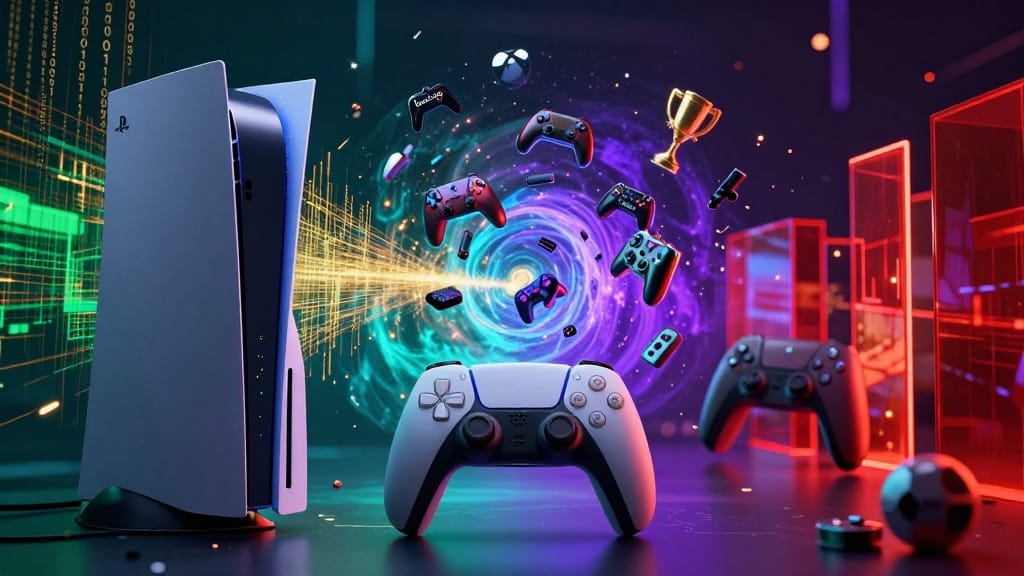
Buckle up, nerds, because the gaming landscape in 2026 is moving faster than a speedrunner on frame-perfect inputs. We are officially in an era where the old "console wars" are being replaced by a massive, chaotic scramble for cross-platform dominance and transmedia clout. If you thought the "walled gardens" of the past were permanent, think again; those walls aren't just cracking, they're being demolished by corporate suits who finally realized that more platforms equal more profit. This isn't just about who has the beefiest GPU or the flashiest ray-tracing anymore; it's about ecosystem retention. Whether it’s Sony bringing its prestigious heavy hitters to the silver screen or Microsoft fighting off aggressive European regulators, the industry is undergoing a serious loot-drop of changes that affect how we play, how we pay, and how we rot in our gaming chairs. In this deep dive, we’re looking at why your "backlog" is becoming an existential crisis, how the Nintendo Switch 2 is finally shaking up the status quo with some unexpected allies, and why the line between "gamer" and "viewer" has basically evaporated. GG to our free time, I guess? We're reaching a tipping point where the "meta" of the industry is shifting toward a live-service, multi-screen lifestyle. Let’s get into the patch notes of the industry.
The Death of Exclusivity and the Rise of the Switch 2 "Pro-Player" Meta
For decades, we’ve been tethered to specific plastic boxes to play our favorite RPGs, but that wall is finally crumbling, and honestly? It’s about time. We’re seeing a total 180-degree turn on "exclusivity culture." In a move that has JRPG fans screaming into their pillows, TechRadar reports that Square Enix is bringing Final Fantasy 7 Remake Intergrade to both Xbox and the highly anticipated Nintendo Switch 2. This isn't just some lazy, low-res port; it's launching with a "Streamline Progression" update designed to help players catch up before the final part of the trilogy drops. This shift signals a massive pivot in strategy for developers who realize that locking a masterpiece to one platform is basically "noob energy" in a market where development costs are skyrocketing into the hundreds of millions.
Why does this matter? Because the "Switch 2" isn't just a handheld gimmick anymore; it’s becoming a legitimate destination for high-fidelity gaming that was previously reserved for the PC master race or PS5 stans. When you have a game as technically demanding as FF7 Remake running on a Nintendo handheld, the barrier to entry for "hardcore" gaming effectively vanishes. This forces Sony and Microsoft to stop relying on exclusives and start focusing on feature sets and subscription value. If I can play Cloud Strife's journey on my commute, why am I chained to my desk? It’s a power move from Square Enix that basically tells platform holders: "Your install base isn't enough; we need everyone."
Speaking of next-gen power moves, the hype for the next Xbox showcase is reaching "emergency room" levels of high blood pressure. Fans are already obsessing over the new trailer for The Elder Scrolls 6, according to Screen Rant. While Bethesda takes its sweet time—which is standard for them, let’s be real—Microsoft isn't letting the momentum stall. As detailed by Xbox Wire, the upcoming Xbox Developer_Direct 2026 is set to showcase heavy hitters like Fable, Forza Horizon 6, and Beast of Reincarnation. We’re seeing a future where "where you play" matters infinitely less than "what you play," creating a more unified—if more expensive—gaming culture. The implications here are huge: if Microsoft can bridge the gap between their console, PC, and cloud services while Nintendo provides the portable powerhouse, the traditional "console" might just become a legacy relic.
Regulatory Boss Battles: Fighting Predatory Monetization
While we’re enjoying the games, the suits are in the hot seat, and the "regulatory boss battle" is getting intense. The era of "anything goes" in mobile and live-service monetization is finally hitting a brick wall made of government red tape. For years, we've dealt with loot boxes, "surprise mechanics," and FOMO-driven battle passes that prey on our dopamine receptors. But the party might be over for the publishers. Reuters reports that Italy is investigating Microsoft’s Activision Blizzard unit for "misleading and aggressive" sales practices in Diablo Immortal and Call of Duty Mobile. This is a massive earthquake for the industry. It shows that regulators are finally waking up to the RNG-heavy, predatory tactics that have plagued mobile titles, specifically focusing on how information about "win probabilities" and "hidden costs" is presented—or hidden—from the player.
This isn't just one country being salty; it's a ripple effect. When a major EU member like Italy starts digging into the code and the psychology of Diablo Immortal, you can bet other regulators are taking notes. The impact here could be a total redesign of how "premium currency" works. We might see a future where "gacha" mechanics are restricted to adults only or where companies have to show a "nutrition label" for every microtransaction. For us gamers, this is a huge W. It means fewer games designed around "whales" and more games designed around, you know, actually being fun to play without a credit card.
It’s not just about the money, though; the big corporations are also trying to fix the "toxic lobby" meta. The "Big Three" are actually playing nice for once to protect the community from the radioactive sludge that is online discourse. According to Nintendo Life, Sony, Xbox, and Nintendo have updated their "Safer Gaming" principles to improve player safety and use AI-driven moderation to curb harassment. This coincides with a tighter grip on community-generated content that goes off the rails. For instance, Nintendo recently stepped in when things got a little too "spicy" in their family-friendly sim. As Screen Rant noted, an "Adult Only" island in Animal Crossing: New Horizons was recently shut down. While some "free speech" trolls might complain, keeping the "wholesome" vibe of certain IPs is crucial for their longevity. Even with corporate crackdowns, developers are still leaning into the cozy meta; Screen Rant also highlighted an update to New Horizons that adds sweet dialogue for former villagers, proving that even in 2026, the emotional connection we have with NPCs is a core part of the gaming experience.
The Backlog Crisis and the New Health Meta
Let’s be real for a second: your "To-Play" list isn't a list anymore; it's a graveyard where dreams of 100% completion go to die. We are currently living through a content deluge that is practically unmanageable. In an era of infinite live-service titles like Fortnite and Genshin Impact, Kotaku asks the ultimate question: What even is a video game backlog in 2026? When games are designed to be "forever games," the concept of "finishing" a game is becoming as obsolete as a physical manual. This digital fatigue is starting to take a toll, and it’s not just mental; it’s physical. The pressure to keep up with the "seasonal meta" or the latest battle pass is turning a hobby into a second job.
This "always-on" gaming culture is finally getting some serious medical scrutiny. A recent study mentioned by GameSpot suggests that "excessive gaming"—which they surprisingly categorize as over 10 hours a week—could be damaging your health, specifically citing issues with hearing loss from high-volume headsets and cardiovascular strain from sedentary behavior. Honestly, 10 hours feels like a casual Tuesday night to most of us, but the data is a wake-up call to start taking care of our meat-suits. If we want to be playing GTA VII in twenty years, we might need to actually stand up once in a while.
To combat the physical toll of those marathon sessions, the community is pivoting toward "gaming wellness" and ergonomics. It’s not just about "RGB everything" anymore; it’s about lumbar support and wrist health. As suggested by Desky, optimizing your desk layout with height-adjustable desks and smart cable management isn't just for aesthetics—it’s about staying in the game longer without your spine sounding like a bag of Doritos. We’re seeing a rise in "pro-gamer" wellness products, from blue-light glasses that actually work to stretches specifically designed for Apex Legends players. This focus on health is a direct response to the industry's shift toward games as a lifelong commitment. If the industry wants our time and money for the next decade, they—and we—have to ensure we don't burn out physically or mentally.
Transmedia Triumphs: When Gaming Invades the Living Room
The "Prestige TV" era of gaming is no longer a fluke; it's the new standard. After the success of The Last of Us, every studio is raiding their archives for IPs to turn into live-action gold. If you aren't playing the game, you're probably watching the show, and that’s exactly what the megacorps want. We’ve got Esquire breaking down everything we know about Prime Video's God of War series, which looks to bring Kratos' Norse saga to a mainstream audience. This is part of a massive trend where "normies" are finally understanding why we've been obsessed with these stories for years. But it’s a double-edged sword: as these worlds expand, the pressure on the games to match the "cinematic" quality of the shows increases tenfold.
Netflix is leadings the charge here, positioning itself as the unofficial "Game Pass for TV." From Tomb Raider starring Sophie Turner to the continued expansion of the Cyberpunk universe, Netflix Tudum is proving that gaming IP is more valuable than original scripts right now. This convergence is changing how games are designed; we’re seeing more "cinematic" pacing in titles because developers are already thinking about how the scene will look on an IMAX screen. It's a "transmedia loop"—you play the game, watch the show, buy the DLC, and then wear the merch. It’s an ecosystem that’s hard to escape, but man, the content is eating good lately.
The convergence doesn't stop at scripted TV. The very platforms we use to consume digital life are blending into one giant entertainment slurry. While Android Police reports that YouTube is adding "childhood defining" shows like Sesame Street to its library to capture the family demographic, the music world is also being fueled by the gaming lifestyle. According to Vice, music streaming numbers hit the trillions in 2025, driven heavily by genres like rock and synthwave—which, let's be honest, are the only acceptable soundtracks for a Doom run or a Cyberpunk heist. Even traditional sports are finally surrendering to the digital shift, with fans abandoning cable in droves to stream the NFL playoffs on digital-first platforms, as noted by USA Today’s Touchdown Wire. We are living in an era where "cable" is a dirty word and your Twitch subscription is more important than your zip code.
The Creator Economy: Burnout, Clickbait, and Hyper-Evolution
Finally, we have to talk about the creators who keep us entertained while we’re "not-gaming"—the influencers who are essentially the new-age rockstars of our generation. But being at the top of the Twitch or YouTube mountain in 2026 is a mental health nightmare. The drama never sleeps, and the "attention economy" is a cruel mistress. Take Kai Cenat, for example; the internet went into a total tailspin when he dropped a video simply titled "I Quit." Everyone thought the King of Twitch was handing over the crown. However, as The Tab revealed, it was actually a high-level marketing stunt for a new clothing line. This is the "meta" of modern stardom: you have to fake a career ending just to get people to look at your socks.
This constant need for reinvention and "vibe checks" mirrors how even our favorite fictional characters have to evolve to stay relevant in a changing culture. Just as TVLine explains that the early episodes of Bob’s Burgers were much more "caustic" and mean-spirited before shifting to the wholesome family dynamic we love today, streamers and game devs are constantly recalibrating their "brand" to survive the 2026 algorithm. If you don't adapt, you get "ratioed" into oblivion. Whether it's through jumping on the latest EA Sports sale on the Xbox Store or checking out the Free Play Days on Game Pass to find the next viral hit, the goal is the same: staying relevant in a world that has the attention span of a goldfish on espresso.
The creator economy is also being hit by the same "regulatory boss" we mentioned earlier. With new transparency laws, creators are being forced to be more honest about their "ad" and "sponsored" content. This is creating a weird tension where fans want "authentic" connection but creators need "corporate" money to keep the lights on. The result? A weird, hybridized form of entertainment that is half-performance art and half-infomercial. For the average viewer, it’s getting harder to tell where the "real" person ends and the "brand" begins, making the gaming community more skeptical—and more vocal—than ever before.
Closing Thoughts: The 2026 Endgame
As we look toward the horizon of 2026, the takeaway is crystal clear: gaming is no longer a "hobby" you do in your basement; it’s a lifestyle, a health consideration, a massive legal battleground, and the primary driver of global entertainment. We are seeing the total convergence of every medium—TV, music, sports, and social media—into a single "gaming-adjacent" singularity. The "console wars" of the 90s look like a playground squabble compared to the multi-trillion dollar ecosystem war we’re witnessing now. Whether you're playing Final Fantasy on a Nintendo Switch 2, watching Kratos on Prime Video, or dodging predatory microtransactions in the latest mobile shooter, you are part of an evolution that is fundamentally changing how humans interact with technology.
The future looks bright, but it also looks exhausting. With backlogs growing faster than we can play and the line between "work" and "play" blurring for creators and gamers alike, the "win condition" for 2026 isn't just getting the high score—it's maintaining your sanity and your health in a digital landscape that never wants you to log off. So, as we move into the next patch of this crazy year, remember the golden rules: Stay hydrated, fix your posture before your back decides to retire without you, and for the love of everything holy, try to clear at least one game from your backlog this month. The industry is moving fast, and if you don't take a second to appreciate the journey, you're going to miss the most exciting "level" we've ever played. GG, everyone. See you in the next lobby.