The 2026 Gaming Shift: Hardware Struggles, Mystery Showcases, and the Evolution of Digital Entertainment

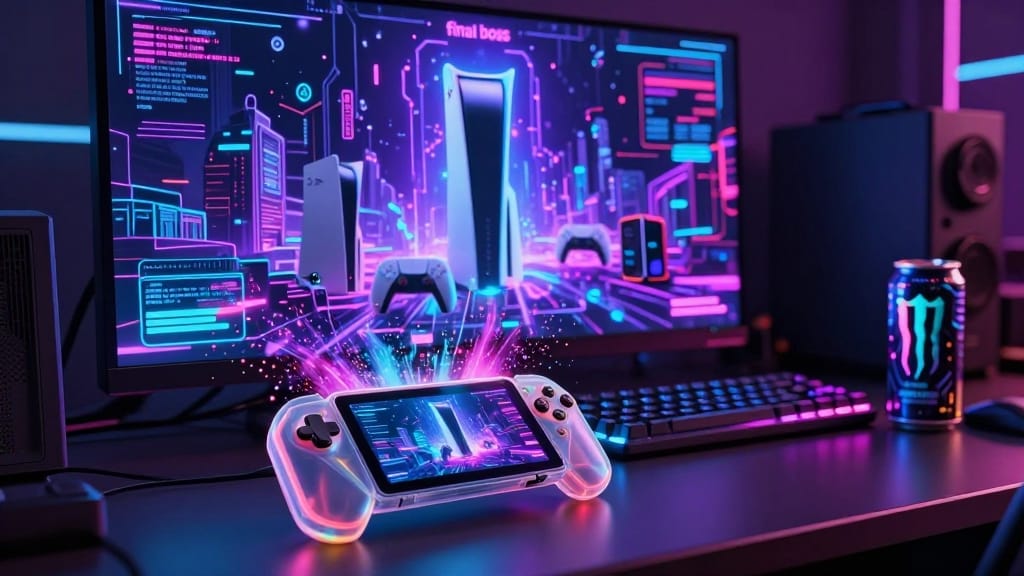
Hey everyone, it’s Gamer Girl Galaxy here! If you thought 2025 was a wild ride for the industry, buckle up because 2026 is already moving at 144fps and we’ve barely hit the main menu. Honestly, my sleep schedule is already non-existent and my energy drink budget is skyrocketing. Between the shifting power dynamics of the console wars, the rise of "personal" GOTY lists over corporate hype, and a massive mystery event looming on the horizon like a final boss we haven't geared up for, the meta of the gaming industry is being rewritten in real-time. Whether you're a PC master race loyalist (I see you and your RGB setups), a handheld enthusiast, or a console peasant (jk, I love you all), the landscape is changing under our feet. We’re seeing a massive pivot in how games are being marketed, consumed, and even felt. The days of just buying a disc and playing it are basically ancient history; now, it’s all about ecosystems, cross-media synergies, and dodging spoilers at light speed. Some of these stats for the big green machine are kinda RIP, but the software side? That’s where the real magic—and the real chaos—is happening. Let’s dive into the patch notes of the gaming world for January 2026.
The Console War Heat Map: PS5 Dominance and Xbox’s Uphill Battle
Let’s talk numbers, because the data is getting spicy and, frankly, a little bit scary if you’re a fan of the Xbox ecosystem. We’ve been tracking the "Console War" for years, but the gap is starting to look less like a rivalry and more like a canyon. According to a detailed PS5 vs Xbox Series sales comparison from VGChartz, Sony continues to maintain a significant lead in global hardware adoption. As of late 2025 and heading into 2026, the PlayStation 5 has built a lead that feels almost insurmountable for this generation. This isn't just about brand loyalty or having a prettier box; it's about the "snowball effect" of social gaming. When all your friends are on one platform, you’re forced into that ecosystem just to stay in the party chat. Sony’s focus on high-fidelity, single-player cinematic experiences has created a "must-have" culture that Xbox is struggling to replicate with its service-heavy model.
The situation in Europe is even more dire for Microsoft, and as a fan of competition, it’s honestly a bummer. As reported by Technobezz, Xbox console sales plummeted a staggering 39 percent in the UK throughout the 2025-2026 period. The UK has historically been a stronghold for Xbox—it's their "hometown" territory in the PAL region. To see a drop that significant suggests that the "value" proposition of Game Pass might not be enough to sell a $500 box anymore. People are realizing they can get Game Pass on PC or even stream it to their TVs, leaving the actual Xbox hardware in a bit of a weird "no-man's land." If Microsoft can't stabilize their hardware sales, we might be looking at a future where they become the world's biggest third-party publisher rather than a console manufacturer. It's a "press F to pay respects" moment for the traditional console cycle.
To make matters more somber for the Xbox community, the industry is also mourning a legend who helped build the very foundation of the platform. According to Windows Central, the passing of Albert Penello marks the loss of a visionary whose work defined the soul of Microsoft’s gaming vision from the OG Xbox through the 360 era. It’s a bittersweet time for the brand; they are trying to honor a legacy of innovation while navigating a very rocky financial present. Penello understood that gaming was about the "magic" of the experience, something that often gets lost in spreadsheets and quarterly earnings reports. As Xbox tries to pivot its strategy in 2026, they desperately need to recapture that "magic" to stop the bleeding in hardware sales.
Analytically speaking, the "Console War" is evolving into a "Platform War." Sony is winning the box battle, but Microsoft is playing a long game with cloud and PC. However, if sales keep tanking at a 39% clip, "the long game" might run out of time before the next generation even begins. Developers are going to start questioning if it's worth the dev hours to optimize for a platform with a dwindling install base, creating a vicious cycle that’s hard to break. Xbox needs a "killer app" that isn't just on Game Pass, but something that makes you *need* to own the hardware to experience it at its best.
What’s Next? Huge January Releases and Mystery Showcases
Despite the hardware drama, the software pipeline is looking absolutely OP (overpowered for those who’ve been living under a rock). If you're wondering what to spend your holiday gift cards on, Men's Journal has highlighted the top 5 video games releasing in January 2026, and the lineup is actually fire. We're seeing a mix of long-awaited sequels and experimental indies that are pushing the boundaries of what "next-gen" actually means. But the real hype isn't just about what we can put in our carts right now—it's about the shadow looming over the entire industry. The gaming community is currently holding its breath for what might be the biggest "drop" of the year.
As noted by Comicbook.com, the first big game showcase of 2026 is happening next week, and the secrecy is unprecedented. Usually, we have "insiders" and "leakers" (you know who you are) ruining the surprises months in advance, but this time, the seal is airtight. Is it a new Nintendo console reveal? A surprise "shadow drop" from a major studio? Nobody knows, and that level of mystery is rare in the 24/7 news cycle. This event is critical because the industry is in a state of flux. We've seen so many layoffs and studio closures in 2024 and 2025 that this showcase needs to act as a beacon of hope for what’s actually coming next.
To understand the broader context of why these showcases have changed, Polygon points out that gaming events in 2026 are no longer just about flashy trailers and "coming soon" dates; they are about survival in an incredibly saturated market. We are seeing a move away from the "E3 style" corporate presentations and toward something more raw. A similar sentiment is shared across the media, with another report from Polygon detailing how these industry gatherings are pivoting toward community engagement and influencer-led marketing. Basically, devs have realized that a 30-second clip from a popular streamer is worth more than a $5 million stage show. It's about "hype-density"—making sure every second of the reveal is clip-worthy and shareable on TikTok or Reels.
And let’s talk about the rumors that are actually gaining steam. One of the most anticipated potential reveals involves the "Mistborn" universe. According to Comicbook.com, fans are finally getting a glimpse of what a Mistborn game could look like in the current gen. For the book nerds out there (myself included), the idea of Allomancy—burning metals to gain powers—translated into a high-speed action game is GOATed material. Imagine the traversal mechanics! If a studio like FromSoftware or PlatinumGames is behind it, we might be looking at a new masterpiece. The shift in 2026 seems to be toward "prestige IP"—developers are no longer taking risks on unknown worlds; they are looking for established lore that they can turn into a 100-hour epic.
Beyond the Hype: Personal Connections and Missing Awards
In an era of aggregate scores and Metacritic obsession, some gamers (including yours truly) are pushing back against the "Game of the Year" industrial complex. I love a good trophy as much as the next girl, but sometimes the best games aren't the ones with the gold statues or the 95+ scores. There’s a growing movement of "Subjective Gaming," where we celebrate the games that hit us differently, regardless of their technical flaws. Game Rant recently took a deep dive into the best games of the last decade that deserved GOTY but never won, and it’s a total mood. It reminds us that games like *Bloodborne* or *Red Dead Redemption 2* (wait, did RDR2 really lose the big one? I'm still salty) have a lasting impact that transcends a single awards night.
This shift toward personal preference is becoming a massive trend in 2026. As expressed by Wolf's Gaming Blog, sometimes the "best" games aren't the technical masterpieces with 4K ray-tracing, but the ones that actually mattered to us on an emotional level during a tough year. We’re seeing more people embrace their "trash" games or "comfort" games. This is leading to a renaissance for smaller, niche titles that offer something the AAA space is too scared to touch. For instance, The Xbox Hub recently reviewed "Master Lemon: The Quest for Iceland," a title that definitely wouldn't be on a mainstream radar but offers a unique, heartfelt experience. In 2026, the "cool" thing to do is to find that one indie game with 10 reviews on Steam and make it your entire personality.
This democratization of gaming is also reaching a global scale. Being a "gamer" is a radically different experience depending on where you are, and as the industry matures, we’re seeing new hubs of innovation. According to La Verdad Noticias, the investment and culture of being a gamer in Mexico is absolutely booming. It’s not just about consuming games anymore; it’s about development and esports participation. This global growth is mirrored in tech hubs like Israel; Ynetnews reports on the digital and tech advancements that continue to push the boundaries of what gaming hardware can do. When we talk about the "future of gaming," we need to stop looking only at San Francisco and Tokyo. The next big gameplay innovation might come from a dev in Mexico City or Tel Aviv, and that’s a huge win for the medium's diversity and longevity.
The takeaway here is that we are moving away from a "monoculture." There is no longer one "Big Game" everyone has to play. We are fracturing into smaller, more passionate communities. This is great for us as players, but it’s a nightmare for big publishers who are trying to make "The Next Big Thing." The "Next Big Thing" is actually a thousand small things, and that’s why user-generated content and modding communities are becoming more powerful than the original developers in some cases. If you aren't listening to your community in 2026, you're basically shouting into a void.
The Convergence: Streaming, Cinema, and Subscription Services
Gaming isn't existing in a vacuum anymore, it’s basically the sun that the rest of the entertainment world is orbiting. It’s bleeding into everything we watch and every service we pay for. The "Transmedia" era is in full swing. While we wait for our favorite massive open-world games to download (thanks, 250GB file sizes), we're jumping on Netflix or Disney+ to watch shows based on... well, video games. But it goes both ways. Speaking of which, if you're into the weird side of cinema to decompress after a sweaty Warzone session, MovieWeb notes that the 2025 body horror movie "Together" is now streaming on Disney+. Or, if you need that sci-fi fix to get into the headspace for a space RPG, Screen Rant recommends "The Great Flood" from Korea as a top-tier Netflix pick.
Even our favorite action stars are staying relevant by leaning into the digital age's obsession with high-concept narratives. According to Collider, despite no sequel being in sight, Tom Cruise’s "Edge of Tomorrow" is seeing a massive global streaming resurgence in January 2026. Why does this matter to us? Because "Edge of Tomorrow" is basically "Video Game: The Movie"—complete with checkpoints, respawning, and learning boss patterns. This "gaming-adjacent" content—stories about time loops and sci-fi wars—is exactly why the lines between gaming and film are blurring into one giant blob of digital content. Consumers want stories that feel like games, even when they don't have a controller in their hands.
Of course, for many of us, the monthly subscription is the lifeblood of our hobby. We are living in the "Netflix-ification" of gaming, and the battle for your $15/month is getting intense. Microsoft might be struggling with console sales, but they are doubling down on Game Pass as their ultimate weapon. As reported by Pure Xbox, two major games have already been announced for Game Pass in January 2026, keeping the "value" argument alive even for those of us who are primarily PC gamers. The strategy here is clear: even if you don't buy an Xbox, Microsoft wants to make sure you're still paying them every month to access their library. It's a pivot from "selling hardware" to "owning the habit."
And for those who balance their gaming with live sports (how do you find the time?), the streaming era is making it easier than ever to never leave the couch. The integration of sports betting, live stats, and gaming-style overlays on live broadcasts is the next frontier. Whether you’re looking for Fulham vs Liverpool lineups and streaming info via Athlon Sports, or checking out the ILT20 Final live streaming info on Sportstar, the infrastructure for digital entertainment has never been more robust. We are reaching a point of "Entertainment Parity," where your console, your smart TV, and your phone are all essentially the same portal into a unified digital experience. The silos are coming down, and the winners will be the companies that provide the smoothest, most "frictionless" way to jump between a round of Battle Royale and a live football match.
Conclusion: The Future of Play
So, what’s the final boss verdict for 2026? We are seeing an industry that is simultaneously expanding its reach and contracting its traditional hardware models. While traditional sales like the Xbox might be taking a hit in certain regions, the "culture" of gaming is more ubiquitous than it has ever been. We're seeing more diverse voices from around the world, more niche "personal" favorites challenging the mainstream meta, and a complete merging of gaming, streaming, and cinema into a single, cohesive timeline. The "Gamer" identity has won—everyone is a gamer now, whether they're playing a 100-hour RPG or just scrolling through a puzzle game on their phone during a commute.
The future isn't just about who has the fastest GPU or the most teraflops (remember when we used to argue about those? Lol). It's about who owns the most engagement across every screen you own. As we head into next week's mystery showcase, keep your eyes peeled for how the big players try to solve the "Hardware Paradox"—how to keep selling consoles in a world that is increasingly cloud-based. It's an exciting, messy, and totally unpredictable time to be a gamer. Whether you're here for the tech, the stories, or just the GG moments with your squad, 2026 is shaping up to be a legendary year. Stay tuned, keep your controllers charged, and don't let the RNG gods get you down. It might just change the game forever. GGWP!