The 2026 Gaming Revolution: Console Wars Die, Valve Cube Arrives, and the Web3 Comeback

Welcome to 2026, gamers! If you thought the last few years were a wild ride of chip shortages and mid-gen refreshes, hold onto your ergonomic chairs because the industry just pulled a complete 180. We’ve officially hit a point where "exclusivity" is becoming a vintage concept, right next to wired controllers and physical discs. It’s a chaotic battle royale out there, and the traditional "walled gardens" are getting their fences kicked down. Between the rise of new hardware contenders and a massive shift in how AAA giants are funded, the stakes have never been higher for us players. We’re living in a timeline where the meta is shifting daily, and honestly? I’m here for the absolute spice of it all. In this deep dive, we’re looking at why Xbox is finally bringing its heavy hitters to PS5, how Valve is trying to reclaim the living room with a literal cube, and why the "GameFi" winter might finally be thawing despite a stagnant crypto market. Buckle up, because we’re analyzing the pixels, the profits, and the massive pivots that are making February 2026 a month for the history books. GG, let’s get into it.
The Death of the Wall: Xbox Heavyweights Land on PlayStation
For decades, the "Console War" was the heartbeat of the industry. You were either a Green Team or Blue Team loyalist, and the idea of Master Chief or a Forza engine running on Sony hardware was pure fan fiction or a fever dream. But in 2026, those walls haven't just cracked; they’ve officially crumbled into dust. As reported by GameDaily, legendary franchises like Halo, Gears of War, and Forza Horizon are finally making the jump to PlayStation. This isn't just a minor experiment to see if Sony fans like bright cars and space marines; it's a fundamental pivot in how Microsoft defines their brand. They’ve realized that being a hardware-first ecosystem is "old-gen" thinking. In 2026, Microsoft wants to be the Netflix of gaming—they don't care where you watch (or play), as long as you're paying for the sub.
The biggest shocker that sent the forums into a total meltdown? The Fable Reboot is set for Fall 2026, and surprisingly, it will debut on PS5. Let that sink in. A franchise that was once the crown jewel of the original Xbox is now helping Sony sell consoles. This news dropped shortly after a Microsoft Developer Direct that basically confirmed the "Project Latitude" rumors: Microsoft is prioritizing software margins over hardware units. Why sell 30 million consoles at a loss when you can sell 100 million copies of a game to every gamer on the planet? It makes total business sense, even if it makes hard-core Xbox fanboys want to rage-quit life. This shift represents a massive win for game preservation and accessibility, though it raises questions about why anyone would buy an Xbox "Next" if the games are everywhere.
Naturally, this has left the community confused about release schedules. In an effort to manage expectations and stop the absolute deluge of angry tweets, an Xbox representative recently explained that while the strategy is shifting, not every game will hit PS5 on "Day One." There’s still a window of "timed exclusivity" to make the Xbox hardware feel relevant. This lack of transparency has led to some serious community friction, especially when legacy titles like Bloodborne remain neglected in Sony's basement. According to The Outerhaven, Bloodborne is still stuck at 30 FPS on PS4 in 2026. Think about the irony: Xbox is literally handing over their biggest IPs to Sony, yet Sony won't even give their own fans a 60 FPS patch for their most requested dormant IP. Fans are currently relying on unofficial emulation for 4K upgrades that Sony refuses to provide, which is a major L for the Blue Team's community relations.
Hardware Innovations: Valve’s Cube and the PC-to-TV Bridge
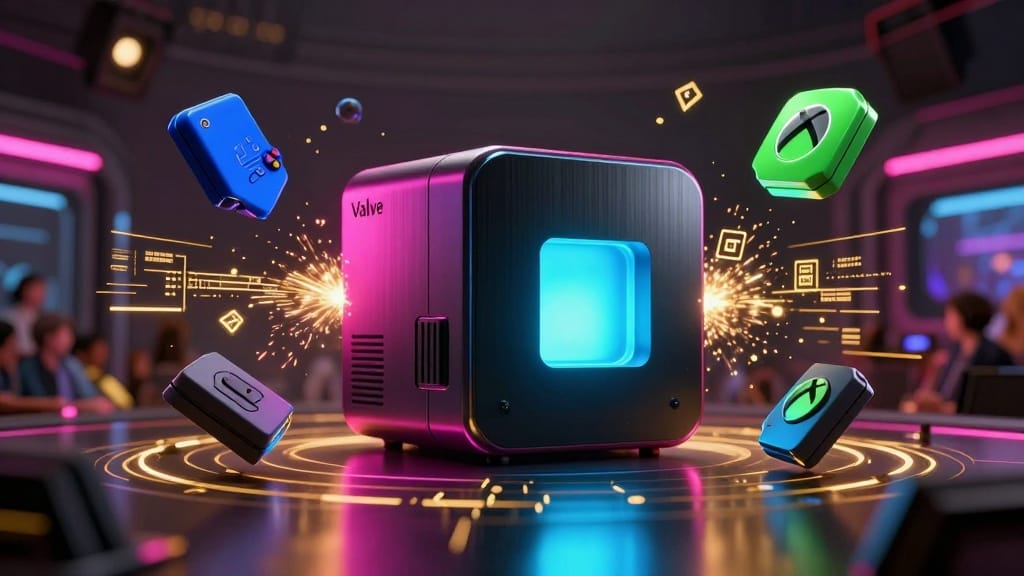
While the big two play musical chairs with their IPs, Valve is entering the hardware ring again with a bold new form factor that looks like it came straight out of a sci-fi flick. As detailed by indy100, the new Steam Machine is a small, cube-shaped gaming PC designed to deliver 4K resolution at 60 fps directly to your living room TV. But wait, didn't Valve try this before? Yeah, and it was a total "RIP" back in the day. However, 2026 is different. This iteration leverages the massive success of the Steam Deck’s Proton software ecosystem. Valve isn't just selling a box; they're selling the "SteamOS" experience, which is now more polished than Windows for gaming. It’s a "Gabe Newell" masterclass in waiting for the tech to catch up with the vision.
The "Valve Cube" (as the community has dubbed it) is essentially the console that PC gamers actually want. No proprietary SSDs, no paying for online play, and a library that carries over from your PC. This is a direct threat to the PS5 Pro and whatever mid-gen refresh Xbox is cooking. It bridges the gap between the "sweaty" desktop setup and the "chill" couch experience. The analysis here is simple: Valve has seen the friction of Windows 11 on handhelds and decided to take matters into their own hands for the big screen. If they can keep the price point competitive, the "Cube" could become the standard for high-end home gaming, especially as the barrier between PC and console software continues to evaporate.
This push for high-end performance comes at a time when PC gamers are getting some of the best deals in history, making the entry cost of the platform way more palatable for the average noob. Currently, Rockstar Games is holding a massive sale on Steam, offering GTA 5 Enhanced and Red Dead Redemption 2 at 80% off through early February. These deals highlight a massive value proposition. While console players are paying $70 for "remasters" of games they already own, PC players are building massive libraries for the price of a few Starbucks lattes. This is setting the stage for a stacked February 2026 release calendar, which IGN promises will be filled with "monsters and scary things." With titles like Monster Hunter Wilds' DLC and Resident Evil 9 rumors swirling, having a 4K-ready Steam Cube is looking like the ultimate power move for 2026.
The Business of Play: Unions, Buyouts, and Web3 Volatility
Behind the glossy trailers and high-end hardware, the industry's engine room is smelling a bit like burnt thermal paste. The business side of gaming in 2026 is becoming increasingly polarized between corporate consolidation and labor movements. The United Video Games union has issued a scathing attack on Electronic Arts (EA) regarding a potential buyout by Saudi Arabia’s Public Investment Fund (PIF). This isn't just about money; it’s about the soul of development. Unions are worried that PIF’s involvement could lead to censorship or a shift in labor standards, further complicating the already messy world of AAA development. This pushback is a signal that the "shut up and code" era is over; developers want a say in who owns their IP and their work-life balance.
Simultaneously, corporate transparency is taking a hit elsewhere. Allied Gaming & Entertainment Inc. has had to issue statements regarding legal investigations involving Ourgame International Holdings. This matters because Allied is a huge player in the esports and "gaming experience" space. When the companies that host our tournaments and build our arenas are bogged down in legal drama, the whole ecosystem feels the "lag." It’s a reminder that while gaming is all fun and emotes for us, for the suits, it’s a high-stakes game of legal chess that can impact everything from tournament prize pools to the local LAN center’s survival.
Now, let's talk about the elephant in the digital room: Web3. For the last couple of years, mentioning "NFTs" or "Crypto" in a gaming discord was a great way to get banned. But surprisingly, the "dead" world of GameFi is showing signs of life. While Bitcoin remains stuck in neutral, Axie Infinity’s token is going parabolic. This resurgence suggests that the "extraction" phase of Web3 is over, and we're entering a "utility" phase. Investors aren't looking for JP-EGs anymore; they're looking for tokens that actually power game economies. It’s still a massive RNG gamble, but the fact that gaming tokens are decoupling from Bitcoin is a huge indicator that the market is finally treating games as their own asset class. For those who prefer traditional "low-ping" investments, Seeking Alpha argues that Gaming and Leisure Properties (GLPI) is currently undervalued, offering a 7% yield. It’s the safe, "tank" build of the investment world, focusing on the real estate behind casinos and hospitality.
Beyond the Screen: Streaming, Sports, and Cultural Impact
Gaming doesn't exist in a vacuum anymore; it’s the center of the entertainment universe. We’ve reached total convergence where what you play, what you watch, and what you wear are all part of the same "lifestyle" DLC. This weekend, the content slate is absolutely cracked. According to Forbes and USA Today, we’re getting the release of The Smashing Machine and a trippy documentary called "Secret Mall Apartment" on Netflix and MAX. It’s that vibe of "I spent 40 hours in an open-world RPG, and now I need a documentary about people living in a mall to ground me." It’s all part of the same digital-native culture.
For the sports fans who spend their halftime breaks playing UFC 5 on their phones, Paramount+ has released its 2026 UFC schedule. We’re also seeing major college hoops action, like Alabama vs. Tennessee, which is being marketed heavily to the Twitch and YouTube Gaming demographics. Even the Denver Broncos are leaning into the "hype video" meta, with Peyton Manning narrating their AFC Championship video. The production value on these sports promos now looks exactly like a Call of Duty cinematic, proving that gaming aesthetics have won the cultural war.
But gaming’s reach also has some truly bizarre "only in 2026" moments. In a surreal reminder of how tech permeates every corner of society, Ian Huntley was recently stripped of his Xbox during a prison crackdown. It’s a wild headline, but it shows that consoles are seen as a ultimate "commodity" even in the most restricted environments. On a much more wholesome note, gaming is serving as a legitimate career catalyst. ECU students are leveling up their dev skills through dedicated programs, proving that the dream of "making it" in the industry is alive and well. And for those who enjoy a bit of cringe, SVG reminds us of the infamously bad box art of the past—a hilarious reminder of how far we've come from the days of "Mega Man" looking like a random middle-aged man in a jumpsuit to the sleek, minimalist 4K interfaces of the Steam Machine.
Conclusion: The Converged Future
As we wrap up this deep dive into the state of the game in 2026, one thing is glaringly obvious: the traditional definitions of gaming are being deleted and overwritten. The lines between "PC gamer," "Console gamer," and "Streamer" have transitioned from distinct categories into a single, fluid identity. Microsoft’s willingness to bring Fable and other titans to PlayStation is the final nail in the coffin of the hardware loyalty era. We’re moving into a future where the service is the platform, and the controller in your hand matters way less than the account you’re logged into. It’s a win for us, the players, even if it feels a bit like we’re losing the "identity" of the consoles we grew up with.
With Valve poised to simplify the 4K experience with their Steam Cube and the GameFi sector showing a weird, resilient second life, the industry is more technically proficient and economically complex than ever before. Whether you’re waiting for that elusive 60 FPS Bloodborne patch (keep holding that W, guys) or you’re ready to drop your paycheck on the latest Web3 utility token, the landscape is shifting in real-time. The industry is bigger, louder, and more chaotic than a 100-player lobby on a shrinking map. 2026 isn't just another year for gaming; it's the year the ecosystem finally grew up—and I can't wait to see what the next patch notes bring. Stay online, stay salty, and most importantly, stay gaming. GG, everybody.