The 2026 Gaming Horizon: Hardware Delays, Global Growth, and the Meta-Crisis of the Digital Era

Listen up, fellow nerds—it’s YOUR girl, Gamer Girl Galaxy, coming at you with a massive, high-bitrate debrief on the state of our digital addiction. We’ve survived another year of RNG madness, sweaty lobbies that smell like energy drinks and broken dreams, and some seriously OP hardware prices that make my credit card want to uninstall life. As we pivot from the absolute chaos of 2025 into the mysterious, fog-of-war-covered landscape of 2026, the gaming world isn't just evolving; it’s basically going through a total system reboot. We’re talking about next-gen console drama that’s saltier than a League of Legends chat, the rise of the Indian gaming powerhouse, and why your resume might actually look like straight-up trash if you admit to being a pro-level raider in your favorite MMO. According to CNBC, 2025 was a "play on or game over" year for the industry, and looking back, the stakes have never been higher for developers and players alike. We are standing at the edge of a new era where the tech is struggling to keep up with our hype, and the culture is shifting faster than a speedrunner on a world-record pace. Grab your snacks and sync your controllers, because we're diving deep into the patch notes of the future.
The Next-Gen Stalling: Why RAM Prices Are Ruining Our Dreams
I know, I know—we’re all thirsty for the PS6 and whatever cryptic, probably-confusing name Xbox chooses for their next monolithic black box. But I’ve got some "low FPS" news for you that's going to hit harder than a boss fight you weren't leveled for. Rumors are swirling that both Sony and Microsoft might push back their next-gen timelines well past the initial 2026 expectations. Why? Because the real-world economy is currently a griefing mess. As reported by Game Rant, a massive spike in RAM prices is threatening to delay console cycles because manufacturing costs are hitting the ceiling. If the tech giants can't get affordable parts, they can't sell us consoles at a price that doesn't require selling a kidney on the dark web just to hit 60fps at 4K. This sentiment is echoed by Pure Xbox, which highlights that these supply chain nightmares could keep us locked into the current-gen lifecycle for much longer than we planned.
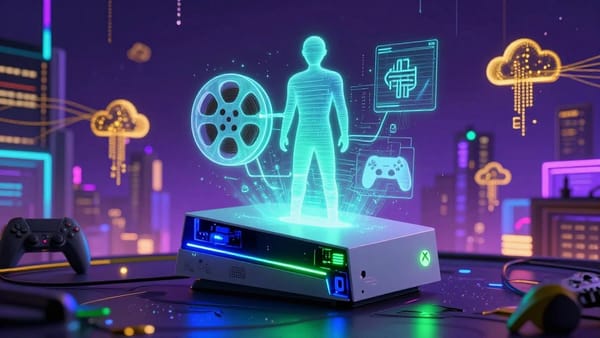
This delay isn't just about hardware; it's a total debuff to the creative pipeline. When hardware stalls, developers have to keep optimizing for "old" tech, which means we get "cross-gen" titles that never truly flex the muscles of what’s possible. It’s like trying to run Cyberpunk on a calculator—eventually, you just hit a wall. For developers, this means a "safety first" approach where they can't take risks on revolutionary engine updates because they have to ensure the game still runs on a base PS5 or Series S. However, Team Green isn't just sitting around in their spawn point. Looking at the TechRadar Xbox predictions for 2026, we might see a pivot toward more handheld integration or even a surprise reveal of their next-gen roadmap despite the component shortages. Xbox is leaning hard into the "play anywhere" meta, focusing on cloud architecture to bypass the hardware gatekeeping. If you can't build a faster box, you build a faster network, right? For those who can't wait for "next-gen" to finally drop, the savvy move right now is checking out The Independent’s Xbox Boxing Day deals to maximize value while we wait for the global economy to stop lagging. We're effectively in a "mid-gen" plateau where the software is getting smarter even if the silicon is staying the same size. This means more AI-driven upscaling and less raw power—a trend that will define 2026 as the year of "Work Smarter, Not Harder" for console builds.
Digital Chaos: Security Breaches and the Death of the "Day One" Polish
While we wait for new hardware, the current games we love are getting hit with some major, game-breaking griefing. Honestly, it’s getting exhausting. Case in point: Rainbow Six Siege. In one of the wildest security collapses I’ve ever seen—and I’ve seen some bad ones—hackers didn't just break the meta; they broke the entire treasury. According to Tom’s Hardware, Ubisoft was forced to take servers offline after players were flooded with billions of credits and elite skins. It was basically an accidental socialist revolution in tactical shooter form where everyone was a millionaire for five minutes. But the fallout was grim: random bans, loss of progress, and a total nuke of player trust. It’s a total GG for server integrity when RNG becomes "hacker-controlled," showing us that our digital libraries are way more fragile than we want to admit.
This modern mess makes us nostalgic for the days when a game came on a cartridge, had a cool manual with art in it, and actually *worked* on launch day without needing a 100GB patch over 5G. It’s why looking back at Time Extension’s look at how the NES defined the industry is so relevant right now. The NES saved gaming from an earlier crash because it prioritized quality control and "Nintendo Seal of Quality" standards. Fast forward to 2026, and we’ve gone from "Plug and Play" to "Wait for the Day-One Patch and pray you don't get hacked." This transition from physical perfection to digital volatility is the defining conflict of our era. The industry is currently struggling with what I call the "Live Service Curse." Every game wants to be a forever-experience, but very few companies have the infrastructure to protect those experiences from the dark side of the internet. We're going to see a massive push in 2026 for "Sovereign Gaming" and improved anti-cheat measures that might actually require more invasive kernel-level access, sparking a whole new debate about privacy versus security. It’s a trade-off: do you want a clean lobby, or do you want Ubisoft knowing what you ate for breakfast? (Spoiler: they already know you like spicy ramen).
The Global Shift: India as the New Frontier of Esports
If you think gaming is just a Western or East Asian phenomenon, you’re playing on easy mode and missing the biggest expansion pack in history. The Indian gaming market is absolutely blowing up, and it’s not just about mobile clones anymore. After some shaky regulatory hurdles with real-money gaming (RMG) that threatened to stall the whole region, the focus is shifting to legitimate, high-stakes competition. As discussed by Business Today, 2025 was the "grow up or give up" moment for Indian gaming. They chose to grow up. With the RMG ban settling, the industry is pivoting toward high-octane esports that can rival the viewership of cricket.
According to Fortune India, there is massive potential for esports to become India’s primary gaming engine in 2026. We're talking about a transition from gambling-lite apps players used just to win a few rupees to legitimate competitive play in titles like Battlegrounds Mobile India (BGMI) and Valorant. This is huge for the global meta because more players means more talent, and India’s demographic is basically a "youth-buff" for the entire industry. By 2026, we might see the first Indian-led orgs winning major internationals, which would shift the center of gravity for sponsors and advertisers away from North America. This isn't just a win for India; it’s a win for the global ecosystem. It forces developers to localize content better, optimize for mid-range mobile devices (the true kings of the Indian market), and reconsider how they distribute server loads across Southern Asia. This "Global South" gaming boom is the real story of the next five years, making the old US-vs-Japan console wars look like a side quest compared to the main objective of capturing the next billion gamers.
The Professional Paradox: Pro Gamer or Resume Killer?
Here’s a spicy take for you that usually gets me flamed in the comments: gaming might be the biggest hobby on Earth, but our society still has a "noob" level understanding of its value. Analysis from IFL Science suggests that while gaming builds leadership and teamwork, putting it on a resume might still be a major debuff depending on the HR department. It’s a wild double standard when "sports leadership" or "varsity quarterback" is a massive buff, but "leading a 40-man raid through an ultra-hard dungeon" is seen by boomers as a waste of time and a red flag for productivity.
We need to talk about why this bias still exists in 2026. If you're managing a guild, you're basically doing high-level project management, conflict resolution, and resource allocation. If you're a high-ranked tactical shooter player, your communication skills and ability to remain calm under pressure are objectively better than someone who has never had to clutch a 1v5 while four people scream in their ear. It’s time the workforce buffs their perspective, especially since the skills we learn in high-pressure digital environments are totally 1-to-1 with remote work and tech management. However, until the "old guard" retires, my advice is to keep your Steam achievements on the low-low during interviews unless you're applying at a studio. The "Professional Paradox" is that we are the most tech-literate generation in history partly *because* of gaming, yet we have to hide the source of our power to get a paycheck. We’re seeing a slight shift, though—some tech startups are actually starting to look at competitive rankings as a sign of grit and "grind-set." By late 2026, don't be surprised if your LinkedIn has a "Gaming Achievements" section right next to your "Certifications." GG to the HR managers who actually get it.
Streaming, Cinema, and the Convergence of Entertainment
The gaming world isn't just about playing—it's about the entire lifestyle, from what you wear to what you binge-watch after a tilt-inducing loss streak. We are seeing a total convergence of streaming media and gaming culture until they basically become one giant puddle of entertainment. For example, the upcoming High on Life 2 coming to Xbox Game Pass proves that comedic, narrative-driven gaming—the kind that feels like being inside a cartoon—is still king. Games are becoming more like interactive movies, and movies are desperately trying to bottle that gaming energy. If you're looking for sci-fi vibes to match your gaming aesthetic, MovieWeb suggests checking out Event Horizon on Paramount Plus in early 2026. It’s a classic that every Dead Space fan needs to see to understand where that cosmic horror DNA came from.
Or, for a more grounded experience that reflects the rising interest in sports-sims and niche athletes, keep an eye out for the Marty Supreme streaming release, which is generating buzz in the community as reported by ComingSoon. However, the streaming world isn't always a flawless 60fps experience. We saw major technical issues with the NFL on Peacock during the Ravens-Packers game, as noted by The Mirror, reminding us that even the biggest streaming platforms can suffer from lag—an experience every gamer knows all too well. This matters because as more "Always Online" games rely on these same server infrastructures, the line between "watching a game" and "playing a game" blurs. Whether it’s watching live sports like Angola vs. Egypt or catching up on the best shows of the summer as recommended by The Australian Financial Review, the tech infrastructure is still playing catch-up to our demand for high-quality, instant content. In 2026, "The Great Convergence" means you’ll probably be able to launch a game directly from a movie trailer on your TV. We're moving towards a "single screen" ecosystem where your console, your streaming box, and your work PC are all essentially the same device. It's convenient, sure, but it also means if the internet goes down, your entire life just hit a "Game Over" screen.
2026 Release Radar and Budget Tactics for the PC Master Race
Finally, let's talk about the gear and the games—the stuff that actually makes us click those "Pre-order" buttons (even though we know we shouldn't). If you’re a member of the PCMR (PC Master Race) on a budget, you don't have to spend a fortune to stay in the game and keep those frames high. According to Tom’s Hardware, you can grab an RTX 4050-powered HP Victus laptop for under $600—a total steal for entry-level 1080p gaming that can actually handle modern ray-tracing. You're going to need that hardware too, because the January 2026 release schedule is looking absolutely stacked, following the momentum of the most notable games of 2025 as cataloged by Yahoo Tech.
We're expecting a massive influx of titles that were delayed during the 2023-2024 slump. The shift we're seeing in 2026 is a move away from the "Oversaturated Open World" toward "Deep Systems" games. Think more immersive sims and survival games with complex AI and less "climb this tower to see the map." The January 2026 window is traditionally a dead zone, but developers are starting to realize that dropping a game when people are still on holiday break is a 500-IQ move. My advice? Don't fall for the hype of every AAA release. Look for the "AA" gems—those games with a medium budget but a huge amount of heart. The 2025-2026 era proved that "indie" is no longer a niche; it’s the backbone of the industry while the giants like Ubisoft and EA figure out how to stop their stocks from tanking. Keep an eye on those Steam Wishlists, use price trackers, and remember: a game that's "Great on Steam Deck" is going to be the gold standard for 2026 portability.
Conclusion: The Future is Buffed
The gaming industry is currently standing at a crossroads where rising hardware costs and economic "lag" meet skyrocketing popularity and cultural dominance. While RAM prices and chip shortages might postpone our next-gen dreams of PS6-level fidelity, the expansion of esports in regions like India and the constant evolution of game pass services mean there’s never been a better time to be a gamer—even if your wallet disagrees. We are moving into a bold new era where "gamer skills" will eventually be recognized as real-world assets, and where the barriers between streaming movies and interactive play will completely dissolve into a singular entertainment experience.
The "Meta-Crisis" of security breaches and buggy launches is just a growing pain of a world that is becoming 100% digital. As we look toward the rest of 2026, the real winners won't just be the ones with the fastest GPUs, but the communities that can build something lasting in the face of all this digital chaos. Gaming is no longer just a hobby; it’s the lens through which we see the future of technology, social interaction, and career development. So, keep your drivers updated, don't forget to hydrate between matches, and whatever you do, don't let the hackers take your skins. The horizon is bright, the frames are (mostly) stable, and the lobby is waiting for you. Stay frosty, fellow nerds—it’s been a wild ride, and the best levels are still ahead of us. GG.