The 2025 Tech Paradigm Shift: From Cloud Dominance to Autonomous Systems

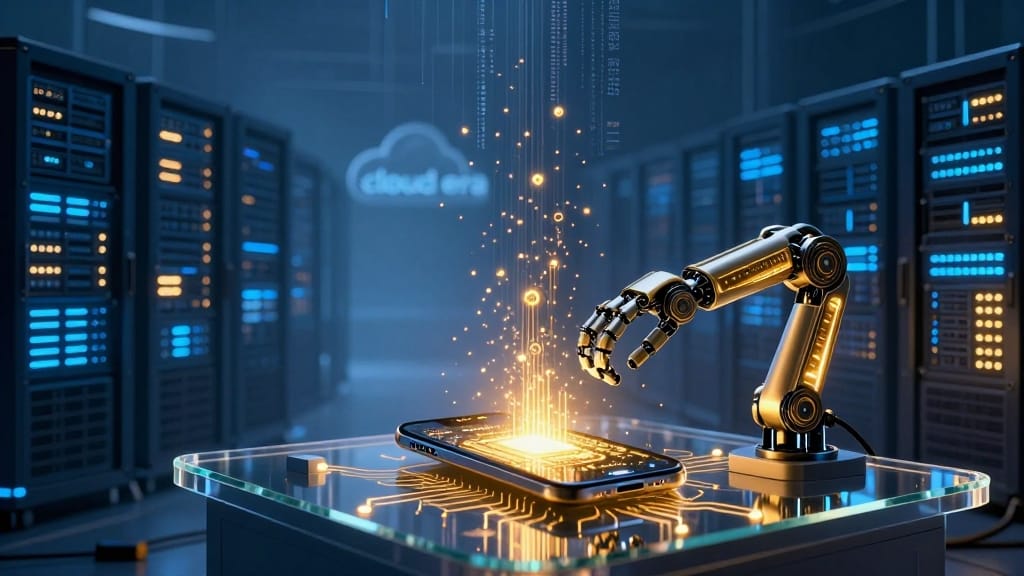
The technological landscape of 2025 has reached a critical inflection point, one characterized not by the arrival of a single "killer app," but by a fundamental reorganization of how computing power is distributed and utilized. For the better part of the last decade, the industry operated under a centralized model—the "cloud-first" era—where data and intelligence were outsourced to massive, distant server farms. However, as we look back on the developments of the past year, it is evident that this model has reached its limit. We are witnessing a transition from passive, cloud-reliant software to autonomous, agentic systems that operate with increasing sovereignty. This is a structural evolution that touches every facet of the ecosystem, from the silicon in our pockets to the global infrastructure that powers the internet. The following analysis explores how the industry is prioritizing localized efficiency over unbridled expansion, moving away from incremental updates toward a more integrated, intelligent digital reality. By examining shifts in consumer hardware, the maturation of artificial intelligence, and the necessary "sunsetting" of legacy technologies, we can discern the blueprint for a tech industry that is finally outgrowing its adolescent phase of "growth at all costs" and entering a more disciplined, analytical era.
The Rise of Agentic AI and Structural Consolidation
The most significant shift in the artificial intelligence sector throughout 2025 involves the transition from passive large language models (LLMs) to active "agentic" systems. For the past three years, AI was largely treated as a sophisticated query engine—a tool to which a user poses a question and receives a static response. In 2025, that dynamic changed. We have entered the era of the "Agent," a system capable of planning, reasoning, and executing complex workflows without constant human intervention. This shift represents a move from artificial intelligence as a "feature" to AI as an "operator."
Industry giants are currently in a high-stakes race to secure the foundational intellectual property required for these autonomous systems. A primary example of this consolidation, as noted by ZDNET, is Meta’s strategic $2 billion acquisition of Manus AI. This acquisition is not merely about talent acquisition; it is a signal that the giants of the social and digital space see the future in integrated digital agents that can navigate the web and internal software ecosystems on behalf of the user. By acquiring Manus AI, Meta is positioning itself to move beyond the "chatbot" phase and into a world where a digital assistant can manage your schedule, negotiate service prices, and execute cross-platform tasks autonomously.
In his analysis for the Times of India, tech observers note that this "next leap" effectively changes the fundamental relationship between humans and machines. We are moving toward a collaborative ecosystem where the machine is no longer a tool, but a junior partner. This has profound implications for corporate productivity. When an AI can understand the "intent" behind a project and coordinate the resources to complete it, the bottleneck moves from execution to ideation. This creates a "leverage gap" where those who understand how to orchestrate agents will see orders of magnitude more productivity than those who simply use apps.
However, this rapid progress brings significant ethical and legal friction. We have reached a point where the capability of the technology is outstripping our legal frameworks for accountability. As reported by The Guardian, there is a growing movement involving AI pioneers questioning the rights and ethical safeguards surrounding the very technologies they helped create. These pioneers suggest that the industry may face a "pull the plug" moment regarding unregulated growth. The debate is no longer just about bias in algorithms; it is about the "agency" of these systems. If an autonomous agent makes a financial or legal error, where does the liability lie? The push for "sovereign AI"—systems that are governed by strict national or personal ethical boundaries—is becoming the dominant counter-narrative to the "move fast and break things" ethos of the previous decade. This structural consolidation, while efficient, necessitates a new social contract between technology providers and the public.
Infrastructure Inversion: The Return of Hybrid Computing
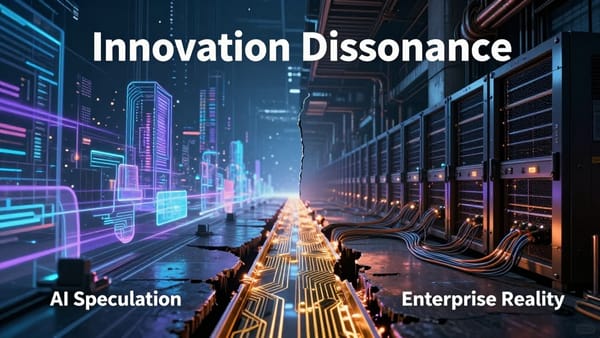
For nearly a decade, the consensus in enterprise and consumer IT was that the cloud was the final destination for all data. "Cloud-first" was the mantra, driven by the desire for scalability and the reduction of on-site hardware costs. However, 2025 has exposed the Achilles' heel of this centralized model: latency and the "data gravity" problem. The immense computational demands of real-time, agentic AI have demonstrated that sending every request to a data center Raleigh or Dublin and waiting for a response is simply too slow for a world that requires immediate, local decision-making. We are now witnessing what I call "Infrastructure Inversion"—a resurgence of localized processing and the return of hybrid computing.
According to ZDNET's analysis, AI is effectively ending the cloud-only era. The move toward hybrid computing is driven by a two-pronged necessity: speed and privacy. For an autonomous car or a personal health monitoring agent, a two-second latency is not just an inconvenience; it is a failure. By processing data closer to the source—at the "Edge"—companies can maintain the velocity required for real-time interactions while keeping sensitive data off of public servers. This shift has forced cloud providers like AWS and Azure to pivot, offering more localized "outpost" hardware that brings cloud-level intelligence into the home or factory floor.
This shift toward localized utility is also evident in the consumer software market. We are seeing a "de-tethering" of professional capability from specialized, bulky hardware. Professional-grade tools that once required high-end workstations are now being optimized for mobile NPU (Neural Processing Unit) silicon. For instance, Macworld highlights how mobile solutions like the iScanner app are replacing traditional, tethered hardware. This is more than just a convenience; it represents the democratization of high-fidelity digital transformation. When your phone can perform complex OCR (Optical Character Recognition) and spatial mapping locally, the need for centralized, hardware-specific environments diminishes. This is a hallmark of 2025: the intelligence is in the device, not just the connection.
The implications for this are vast. Small businesses that previously couldn't afford a complex cloud infrastructure can now run sophisticated enterprise resource planning (ERP) systems locally on powerful specialized hardware. This reduces long-term subscription costs and increases data sovereignty. The "Cloud" is evolving to become a backup and synchronization layer, rather than the primary engine of computation. This transition marks the end of the "thin client" era and the return of the "power user" device, where onboard silicon is once again the primary differentiator in the market.
Software Evolution and the Paradox of Coding
One of the more contentious debates of 2025 has been the "death of the developer." Early prognostications suggested that as AI became more capable of writing code, the need for human software engineers would evaporate. The reality, as we have observed this year, is far more nuanced and creates what I have termed the "Paradox of Coding." While AI can now generate boilerplate code and troubleshoot syntax with ease, the role of the human engineer has actually become more—not less—critical to the integrity of our digital infrastructure.
As reported by ZDNET, the advent of AI-generated code makes deep coding knowledge more essential. Why? Because the volume of code being produced has skyrocketed, but the "architectural intent" remains a human responsibility. Engineers must now act as sophisticated editors, security auditors, and architects. When an AI generates 1,000 lines of code in seconds, the human in the loop must be able to spot subtle logic flaws or "hallucinations" that could lead to systemic vulnerabilities. We are moving away from "syntax-focused" coding toward "system-focused" engineering. This has led to a hiring shift: companies are no longer looking for "coders," they are looking for "problem solvers" who can manage a fleet of AI coding assistants.
Simultaneously, we are seeing a much-needed "polishing" of the software experience for the end-user. After years of feature bloat, 2025 was the year of refinement. Within the Apple ecosystem, MacRumors identified five key software features that defined the user experience this year, specifically pointing toward cross-device continuity and intelligent prioritization. The focus is no longer on "more features," but on "better intuition." On the Windows side, we see a parallel trend. As noted by Windows Central, the convergence of popular Windows 11 apps is creating a more unified workflow. This "ecosystem tightening" is a direct response to a creative class that is increasingly platform-agnostic, choosing tools based on friction-less integration rather than brand loyalty.
Interestingly, some of the most reliable tools in a professional's arsenal remain those that have resisted the urge to constantly "innovate." XDA Developers points out that several of the best Windows software programs have remained largely unchanged for years. This highlights a growing desire for stability in a volatile market. In an era where UI changes and subscription models are forced upon users every six months, software that offers a "legacy" level of reliability and predictability has become a high-value asset. This "stability-as-a-feature" trend is a significant pushback against the "perpetual beta" state of modern software development.
The Great Sunset: Tech We Lost in 2025
Innovation is a process of creative destruction. To make room for the agentic, localized future we are building, the industry must "clear the decks" of technologies that are no longer viable in a high-efficiency, AI-driven world. 2025 saw the retirement of several long-standing services and hardware formats that had lingered long past their prime. This "Great Sunset" is an essential, if bittersweet, part of the technological lifecycle, signaling that we are moving from a multi-modal era into a more streamlined, integrated one.
CNET documented the major departures of the year, noting that these losses often mark the end of specific eras of user interaction. We are seeing the final death of standalone consumer electronics—devices that do "one thing" well—as they are subsumed into the smartphone/wearable ecosystem. This sentiment was echoed by Vice, which detailed five specific pieces of tech that were discontinued. These discontinuations reflect a broader industry move toward subscription models and integrated services. While some mourn the loss of "owning" a standalone piece of hardware, the market is clearly voting for the convenience of the service-based cloud-and-edge model. The "gadget" is being replaced by the "access point."
However, the sunsetting of technology isn't just about hardware; it's also about the survival of the companies that build them. The economic environment of 2025 has been unforgiving to those who lack financial discipline. Market volatility has impacted the corporate landscape, showing that even the most innovative ideas cannot survive without a solid fiscal foundation. Reflecting these financial pressures, Cantech Letter reported on the administrative and financial struggles facing smaller innovators like Sankamap. These late filings and regulatory hurdles are symptomatic of a broader Darwinian event in the tech sector. The "easy money" era is over; investors are now demanding transparency and a clear path to profitability over "user growth" metrics.
What we are losing in 2025 is not just physical objects, but the "looseness" of the 2010s tech boom. We are saying goodbye to the era of experimental apps that had no business model, and to hardware that solved problems no one actually had. This "pruning" of the tech ecosystem is healthy, albeit painful for those attached to legacy systems. It forces both consumers and developers to focus on what actually provides value. As we move into 2026, the tech that remains will be that which is indispensable, efficient, and integrated into the broader AI-driven fabric of daily life.
2026 and Beyond: Looking Toward Equilibrium
As we conclude our retrospective on 2025 and cast our gaze toward 2026, the overarching theme is a search for "equilibrium." The industry has spent the last year rapidly adopting AI and decentralizing its infrastructure, and the coming years will be about finding the balance between these powerful new capabilities and the practical, ethical limitations of the world we live in. We are moving away from a period of "disruption" and into a period of "integration."
For those looking to invest in the hardware of today, the strategy has shifted from "the latest" to "the most durable." ZDNET provided an essential guide to the best tech splurges of 2025, emphasizing quality and utility over mere novelty. These investments—whether high-end portable workstations with advanced NPU capabilities or sophisticated privacy-focused home servers—serve as a bridge to the next wave of innovation. The "smart" money is no longer chasing the next social media platform; it is investing in the physical and digital tools that grant the user more autonomy and better data control.
According to a forward-looking report from The Guardian, the industry in 2026 will likely be defined by five key trends. These include the deep integration of "wetware" or biotech (where health monitoring becomes proactive through AI), the refinement of green energy solutions for the increasingly power-hungry data centers, and the maturation of decentralized web protocols (Web3 finding actual utility in verifying AI-generated content). The defining challenge will be power consumption. As AI agents become more ubiquitous, the demand for energy will force a reckoning between our technological ambitions and our climate goals.
In conclusion, 2025 was a year of "clearing the decks." By sunsetting legacy technologies and reinvesting in localized, hybrid computing and agentic AI, the industry has laid the groundwork for a more autonomous and efficient future. We have transitioned from a world where we "use" technology to a world where we "orchestrate" it. The technological "sovereignty" of the individual and the enterprise is the new North Star. The challenge for 2026 will be managing the social, ethical, and environmental consequences of this rapid transition. We must ensure that as our systems become more autonomous, they remain aligned with human values and needs. The "Tech Observer" will continue to monitor these developments, focusing not on the hype of the next launch event, but on the structural changes that define our digital reality.