The 2025 Gaming Rewind: Why This Year Was an Absolute Rollercoaster for Gamers

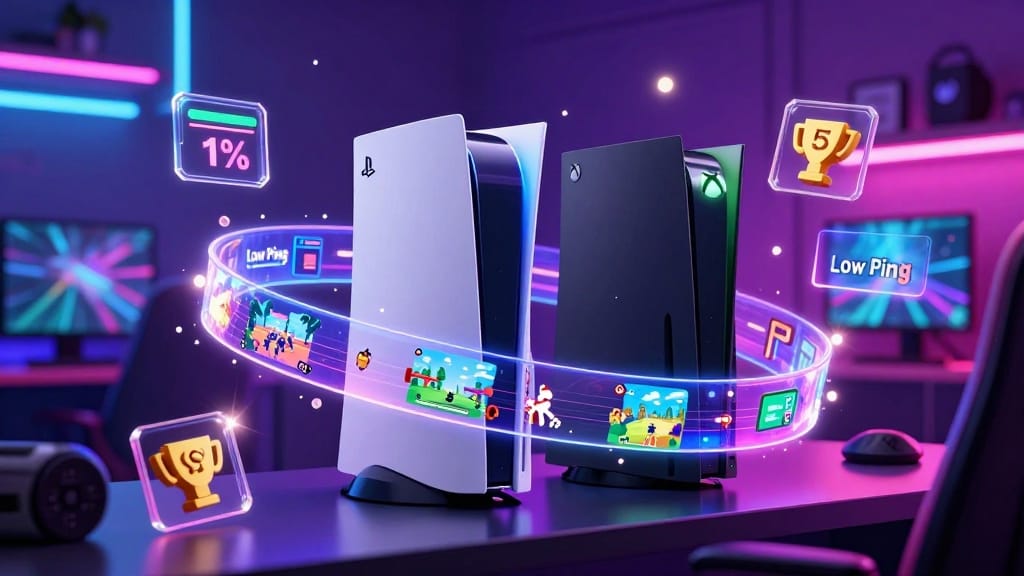
Hey guys, Gamer Girl Galaxy here! If you’ve been glued to your setups like I have, you know that 2025 has been a total fever dream for the gaming industry. We aren't just looking at another year of "press X to pay respects"; we are witnessing a massive evolution in how we play, how developers learn, and even how our favorite hardware handles our late-night grinds. From the high-octane hype of massive sequels to the soul-crushing reality of industry shifts, we've seen it all. Seriously, my backlog is screaming, my ping is fluctuating, and my wallet is basically on life support after all the Steam sales and collector's editions. But would I have it any other way? Absolutely not. This year felt like a turning point where the "next-gen" tag finally stopped being a marketing buzzword and started feeling like a reality.
The industry has faced some seriously "low HP" moments this year, but the resilience of the community and the sheer quality of the top-tier releases have kept us in the game. As CNBC notes in their year-end look back, the industry is balancing on a fine line between "play on" and "game over," reflecting a mix of economic challenges and creative triumphs. We've dealt with layoffs that felt like a critical hit to our favorite studios, yet we've also seen indie darlings rise from the ashes to challenge the AAA titans. It’s a weird, wild time to be a gamer. Whether you're a PC master race disciple or a console loyalist, the meta is changing, and honestly, it’s about time. Let’s dive into the patch notes of 2025 and see why this year was such a GG WP for the culture.
The Heavy Hitters: 2025’s GOTY Contenders and What’s Next
If you weren't hyped for 2025, were you even gaming? This was the year where the "release drought" finally ended with a flood of absolute bangers. We saw titles that pushed the PS5 and Xbox Series X to their absolute thermal limits. We finally got a look at Ghost of Yotei, which basically broke the internet and sent the hype train into overdrive. It’s not just a sequel; it’s a statement that Sucker Punch knows exactly how to craft a world that makes you want to stop and use the photo mode every five seconds. Along with heavy hitters like Split Fiction and the eternal dominance of Mario Kart, the sheer variety of genres reaching peak performance was insane. According to The Week, these titles redefined what we expect from open-world immersion and multiplayer chaos. It’s not just about RTX 4090-level graphics anymore; it’s about that silky smooth gameplay and worlds that feel alive rather than just being a checklist of icons on a map.
The competition for Game of the Year was a total bloodbath. Picking a favorite this year is like trying to choose a main in a fighting game—everyone has a different opinion, and everyone thinks yours is wrong. As reported by The Information, the best games of the year focused on deep narrative and technical polish, proving that players are officially tired of buggy, half-baked AAA releases that need a 50GB day-one patch just to run. We're seeing a pivot back to quality over quantity. This sentiment is echoed by Screen Rant, which curated a list of the top 10 games that absolutely dominated our SSD space this year. What makes these games stand out isn't just the "newness," but the way they respect the player's time. In an era of endless live-service grind, 2025 gave us single-player experiences that felt complete, purposeful, and—dare I say—artistic.
Why does this matter? Because the industry is finally learning that "bigger" isn't always "better." We saw massive RPGs that actually had choices with consequences, and shooters that focused on experimental mechanics rather than just recycling the same battle pass formula. The impact on stakeholders is huge; developers are seeing that investing in polish leads to better long-term retention than rushing to hit a quarterly fiscal target. For us gamers, it means the bar has been raised. If a game launches as a broken mess in 2026, it won't just get a "mixed" review on Steam—it'll be DOA because the 2025 lineup proved that we can have nice things if the devs are given the time to cook. These games aren't just flashes in the pan; they’re setting the stage for a future where technical debt is the ultimate boss fight that studios are finally starting to win.
Hardware Evolution: Mice, Handhelds, and the Xbox Ecosystem
Let’s talk gear, because we all know skill only takes you so far—sometimes you need the right specs to avoid that 1-tap. For the mouse-and-keyboard purists, the search for the perfect click-feel peaked this year. PC Gamer crowned the best gaming mouse of 2025, highlighting how sensor tech has reached a point of near-perfection with DPI levels that are honestly higher than my human brain can even process. We are talking about sub-millisecond latency and weights so light you’d think the mouse was made of air. This matters because in the sweat-fest that is competitive Valorant or Apex, even a tiny bit of hardware lag is the difference between a clutches and a tilt-inducing loss.
Meanwhile, the handheld market is getting absolutely spicy. I’m obsessed with how portable gaming is becoming more "pro" and less "casual." The days of handhelds being underpowered bricks are over. As pointed out by Tom's Hardware, Lenovo Legion Go devices just got a massive buff with native full-screen experience support and Xbox Game Bar integration. This is huge for the UX! It makes handheld PC gaming feel way more native and less like you’re trying to hack Windows into a tiny screen. We are seeing a future where your "PC" isn't a tower under your desk; it's a device in your backpack that can pull 60 FPS on AAA titles while you're on a bus. This portability shift is forcing developers to optimize games like never before, benefiting everyone—even the desktop users.
Speaking of the green team, Xbox has had a wild 12 months. They’ve been playing the long game, and the results are... complicated. According to TechRadar, the Xbox year in review shows a brand that is leaning hard into its services, even if the hardware sales are a bit "meh." Xbox Game Pass continues to be the best deal in gaming, but the question remains: is the "Netflix of Gaming" sustainable? We've seen prices creep up, but the library growth is undeniable. Plus, the deals this year have been insane. If you haven't played the latest carnage-fest, IGN reports that Doom: The Dark Ages is currently 50% off for both PS5 and Xbox. This is a massive steal for a game that literally lets you fight demons with a shield-chainsaw. It shows that even with a focus on subscriptions, the traditional "buy-to-play" model is still alive and kicking with aggressive discounts to keep the player base surging.
This hardware evolution is more than just "ooh, shiny." It’s about accessibility. When handhelds become more powerful, more people can play high-end games without needing a $2,000 rig. When controllers and mice become more ergonomic and precise, the skill ceiling for esports rises. The future implication here is a total convergence: your save file follows you from your 4K TV to your handheld to your cloud-streaming phone. We’re moving toward a "platform-agnostic" world where the hardware you own matters less than the account you log into. And honestly? That's a huge win for gamers who don't want to be locked into one ecosystem forever.
The Streaming Wars and the Convergence of Sports and Gaming
Is it even 2025 if we aren’t complaining about streaming services? The line between "gamer" and "sports fan" is blurring, especially with how we consume live content. We're seeing "gamification" everywhere in sports broadcasts, and esports increasingly looks like traditional sports production. But we saw some major lag in the system this year—and not just in my ranked matches. According to The Mirror, Peacock faced some serious issues during the Ravens vs. Packers game, proving that even big tech still struggles with high-traffic live events. For us gamers, this is a red flag. If massive streamers like Peacock can't handle a football game, how are they going to handle the next massive esports tournament or a cloud-exclusive game launch?
The fragmentation is honestly getting exhausting. It’s like trying to find a specific mod on a sketchy forum—you have to look five different places just to find the "play" button. Whether you're trying to figure out how to watch the Texans vs. Chargers or looking for where to stream the Packers and Ravens, the struggle is real. This matters because as more "gamers" become "viewers," the platform that provides the most seamless experience is going to win. Right now, it's a mess of exclusive rights and varying subscription fees. We want one app to rule them all, but instead, we get five apps that all want $15 a month. It’s a classic "too many chefs in the kitchen" situation that’s hurting the end user.
But it's not all sports drama and buffering wheels. Streaming platforms are also where we find hidden gems that inspire the next generation of games. Collider recently highlighted The Chair Company as an underrated comedy success on HBO Max, showing that varied content is still king. Why do I care about a TV show? Because the crossover between gaming narratives and cinematic TV has never been stronger. Look at The Last of Us or Fallout—the better our TV shows get, the more mainstream gaming becomes. For those of us who just want to keep it simple and catch a game, Hindustan Times provides a breakdown of NFL Network streaming options, illustrating that the "all-in-one" dream is still just a dream for now. We’re in the "messy middle" of a digital revolution, and while the tech is cool, the business side of streaming needs a serious patch.
The future implications are clear: consolidation is coming. We can't keep juggling ten different streaming services. Over the next year, expect to see more bundles and partnerships. We might even see gaming platforms like PS Plus or Xbox Game Pass start bundling sports streaming directly into the sub. Imagine watching a Lakers game and then immediately jumping into NBA 2K on the same UI. That’s the dream, and despite the current "server lag" in the streaming industry, that’s where we are headed. The stakeholders—be they the NFL, Sony, or Netflix—are all fighting for your "screen time," and eventually, they'll have to play nice to keep us from just switching over to Discord and playing Minecraft instead.
The Industry’s Future: Education, Indie Soul, and the 2026 Horizon
One of the coolest things I’ve seen this year is how the industry is finally taking the next generation of devs seriously. We need fresh blood to keep the "noob" energy out of our AAA studios and bring in some actual innovation. We’ve all seen what happens when a studio gets complacent—we get the same game every year for a decade. As reported by Respawn (Outlook India), IICT and GDAI have signed a memorandum of understanding to align gaming education with actual industry needs. This is huge! It means more devs who actually understand what we want to play, focusing on coding, narrative design, and community management rather than just how to monetize a loot box. This bridges the gap between "academic theory" and "shipping a game that doesn't crash."
In the meantime, the indie and mid-tier scene keeps us fed when the "big guys" are on cooldown. We’ve seen spooky vibes like Skinwalker 3D creeping onto Xbox, offering that frostbitten survival horror that hits different. These smaller titles often take the risks that AAA titles are too scared to try. But the industry moves fast—Game Pass is already refreshing its lineup, reminding us that digital ownership is a bit of a meme. According to EGW News, the reverse-horror hit Carrion is leaving the service on December 31st. Play it now or regret it later! This "revolving door" of content is the price we pay for low-cost subscriptions, and it really highlights the importance of supporting the devs by actually buying the games we love.
As we look ahead, the nostalgia for the "good old days" remains strong, but with a modern twist. SVG argues that 1990s video games have aged flawlessly, and honestly, they aren't wrong—sometimes you just need that retro RNG and a game that doesn't require an internet connection to play. However, the future is calling, and it's calling loudly. Screen Rant has already posted the January 2026 release schedule, and Analytics Insight is looking even further into the best upcoming releases of 2026. We're looking at a year that could somehow top 2025, with more AI-driven NPCs, cloud-native physics, and a potential "Switch 2" that could reset the entire handheld meta. If you thought 2025 was wild, just wait until next year's roster drops. We're talking about the cumulative effect of years of development finally reaching the finish line.
What does this mean for the industry as a whole? It means "sustainability" is the new keyword. Studios are moving away from the "crunch culture" of the past and trying to find a rhythm that doesn't burn out their best talent. The focus on education ensures that even as veterans leave the industry, there's a pipeline of passionate new creators ready to take the mantle. For us, it means better games, more diverse stories, and hopefully, fewer delays. We are entering an era where the "indie" and "AAA" lines are blurring, creating a "AA" space that provides high production value without the committee-driven design of the biggest corporate giants. That’s where the real magic happens.
Conclusion: GG 2025, Bring on the Next Level
So, what’s the consensus? 2025 was the year the industry had to grow up. We moved past the "new console" jitters and started seeing what these machines can actually do. We saw better hardware integration, a focus on education for future creators, and a streaming landscape that is still—let’s be honest—a bit of a mess. But most importantly, we got games that reminded us why we play in the first place. This year wasn't just about the numbers or the metrics; it was about the moments. Whether it was finally beating a boss you'd been stuck on for hours, or the collective gasp of the community during a major trailer drop, the vibes were immaculate.
The move toward 2026 suggests even more cross-platform synergy and a deeper reliance on subscription models like Game Pass, even as we lose some favorites to the "vault." The industry is refining its "build," and while the meta might shift, the passion of the players is at an all-time high. We’re going to see more integration of AI, not just in development but in-game, making worlds feel more responsive than ever. We're going to see the "pro-sumer" market expand as handhelds become more powerful and VR/AR finally finds its footing beyond the niche enthusiasts. The "hardware wars" are fading, replaced by the "content wars," and as long as there are great games to play, we’re the real winners.
As we wrap up this rollercoaster of a year, take a second to appreciate your setup, your friends list, and even that one guy who always spams "EZ" in the chat—because they're all part of this wild ecosystem we love. The industry is in a state of constant flux, but the core of it—the fun, the challenge, the escapism—is stronger than ever. So, grab your controller, update your drivers, and get ready for what’s next. Stay salty, stay hyped, and I’ll see you in the lobby! GG, and see you in 2026! Galaxy out.