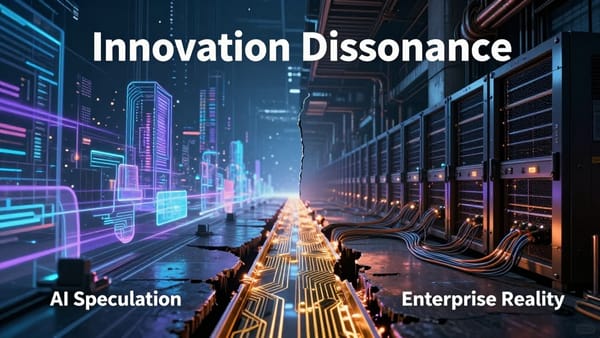
The 2025-2026 Technology Paradigm: From Agentic AI to Material Innovation

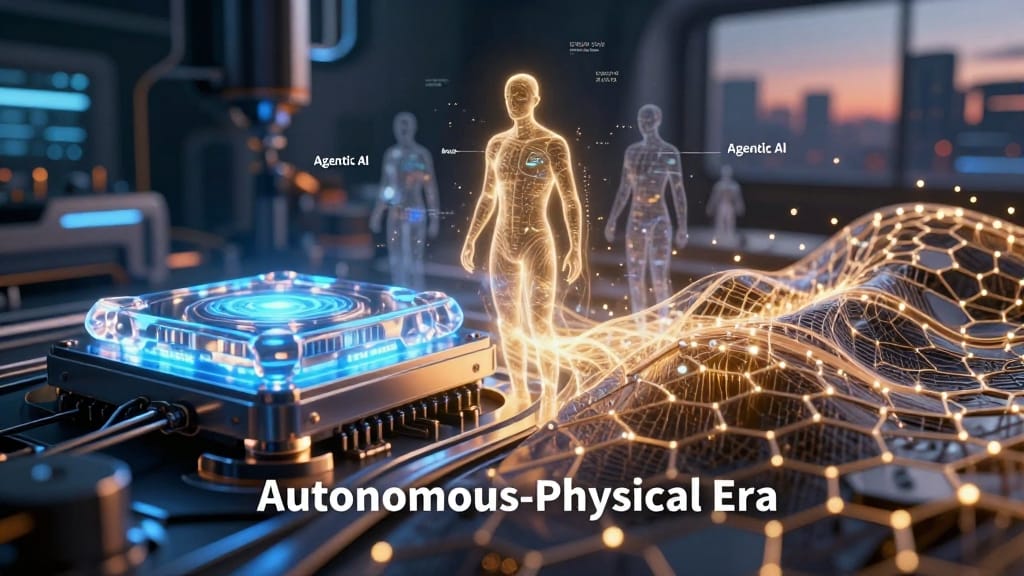
The global technology landscape is currently undergoing a foundational shift. As we transition from the experimental phase of generative AI into a more pragmatic, implementation-focused era, the industry is witnessing a convergence of high-performance hardware, autonomous software agents, and breakthroughs in physical materials. This shift is characterized not just by incremental improvements, but by a restructuring of how enterprises and consumers interact with digital systems. In the historical context of computing, we have moved from the "mainframe era" to the "mobile-cloud era," and we are now firmly entering the "autonomous-physical era." This new epoch is defined by the decentralization of intelligence—moving it from massive centralized data centers to the very edge of our networks and into the fabrics of our physical tools. From the hardware infrastructure powering "Blackwell" GPUs to the rise of localized innovation funding, the trajectory of 2025 and 2026 suggests a move toward sovereign tech capabilities and "agentic" autonomy. The following analysis examines how these disparate threads of innovation are weaving together to create a more resilient, intelligent, and tactile technological future, focusing on the practical implications for stakeholders across the global economy.
The Evolution of Intelligence: Agentic AI and the Backbone of Computing Power
The primary narrative of the coming year is the transition from static Large Language Models (LLMs) to "Agentic AI"—systems capable of independent reasoning, multi-step execution, and autonomous decision-making. Unlike the chatbots of 2023 and 2024, which required constant prompting to produce text or code, agentic systems are designed to achieve goals with minimal human intervention. As noted in the Times of India's A to Z of Technology, the industry is moving from "A for Agentic" to the hardware necessity of "B for Blackwell," referencing NVIDIA’s high-performance architecture. This hardware-software synergy is not merely a technical requirement; it is a prerequisite for the economic viability of AI. The Blackwell chips represent a shift toward high-density, energy-efficient computing that can handle the billions of parameters required for real-time robotic reasoning.
Analysis of the The Guardian’s Biggest Tech Stories of 2025 suggests that these advancements are not occurring in a vacuum. We are seeing a consolidation of power among firms that can manage the massive energy and compute requirements these agents demand. Why does this matter? Because the "cost per intelligence" is becoming the primary metric for enterprise success. Agentic AI allows for the automation of complex workflows—such as supply chain management, legal discovery, and even scientific research—by allowing AI "agents" to talk to one another and synchronize tasks. For example, a procurement agent could autonomously negotiate with a logistics agent to optimize shipping routes based on real-time weather data and fuel prices.
However, the future implications of this autonomy are double-edged. While productivity gains are projected to be significant, the demand for specialized hardware like Blackwell GPUs places a strain on global power grids. This has led to a surge in "sovereign AI" initiatives, where nations seek to build their own data centers to ensure they are not entirely dependent on a handful of Silicon Valley giants. The move toward agentic systems turns software into a proactive partner rather than a passive tool, necessitating new governance frameworks to manage digital accountability. As we bridge the gap between software that "thinks" and hardware that "executes," the focus shifts from the novelty of the algorithm to the reliability of the outcome.
Gadget Innovation and the New Consumer Interface
Beyond the data center, the physical tools of technology are becoming more specialized and integrated. The novelty of the "smartphone-as-everything" is being challenged by a new class of specialized devices. According to Popular Science's Gadget Innovations 2025, the focus has shifted toward devices that leverage on-device AI to provide real-time utility without constant cloud connectivity. This "edge" processing is a critical response to privacy concerns and latency issues. Consumers are increasingly wary of sending every biometric data point to a remote server; therefore, the 2025-2026 gadget market is prioritizing "local-first" intelligence. This includes wearable devices that can process health alerts locally and augmented reality (AR) glasses that provide navigational overlays with millisecond latency.
The practical application of these technologies is further highlighted in Popular Mechanics' Editors' Choice Tech Gadgets 2025, which showcases how traditional hardware is being reinvented through advanced sensors and resilient materials. We are moving away from fragile, high-gloss glass slabs toward ruggedized, "smart" devices that can withstand extreme environments. This trend toward "smart" physicality is exemplified by scientific breakthroughs such as the 3D-printed smart composite reported by Interesting Engineering. This development allows materials themselves to sense and respond to their environments—effectively turning a bridge girder or a car door into a sensor platform.
This "material intelligence" represents a fundamental shift in manufacturing. When smart composites are integrated into consumer gadgets, the device no longer needs a separate sensor suite; the chassis itself can detect stress, temperature, or touch. This leads to more durable and efficient designs. The impact on stakeholders is profound: manufacturers can reduce the bill of materials (BOM), while consumers get more robust products. Looking forward, the "Ambient Intelligence" era suggests that our gadgets will become less intrusive, fading into our clothing and architecture, only demanding our attention when a specific action is required. This transition from "attention-seeking" gadgets to "utility-providing" interfaces marks the maturity of personal technology.
Regional Innovation and the Shifting Funding Landscape
While the headlines often focus on global giants in San Francisco or Shenzhen, the health of the tech sector depends heavily on the vibrancy of local innovation ecosystems. As reported by UK Tech News, innovation remains high at UK firms, though securing late-stage funding continues to be a hurdle in a high-interest-rate environment. This dichotomy suggests that while the "will" to innovate is present, the financial "way" requires strategic intervention. The "Series B gap" remains a significant threat to European and British startups, which often find themselves acquired by US-based firms just as they are reaching scale. This leads to a loss of sovereign intellectual property and long-term economic value.
In the United States, we see a localized, state-level response to this challenge. As mentioned by Norfolk NE Radio, new legislative pushes like the Business Innovation Act in Nebraska aim to provide the necessary capital to sustain regional competitiveness. These localized efforts are vital for maintaining a diverse technological footprint. By funding hubs outside of the traditional tech silos, governments can foster innovation in sectors like agtech, manufacturing, and renewable energy that are often overlooked by consumer-focused venture capital. Interesting Engineering's top stories of 2025 further underscore how varied these pockets of innovation can be, ranging from breakthroughs in fusion energy to the development of bio-inspired robotics.
Analyzing these trends, it becomes clear that the "globalization" of tech is shifting toward "regionalization." The pursuit of "Tech Sovereignty" is driving governments to subsidize domestic semiconductor fabrication and local AI model development. This is not just about economic protectionism; it is about national security and supply chain resilience. For the tech observer, the key takeaway is that the next "big thing" might not come from a Silicon Valley garage, but from a state-funded incubator in the Midwest or a research park in the North of England. The decentralization of capital is mirroring the decentralization of computing power, leading to a more robust, albeit fragmented, global innovation map.
Enterprise Strategy: Operational Resilience and High-Value Acquisitions
The enterprise tech market in 2026 is expected to prioritize operational resilience over speculative growth. According to the Straits Times’ Seven Enterprise Tech Trends, Singapore and other global financial hubs are doubling down on cybersecurity and sovereign cloud infrastructures. This move toward self-reliance is a direct response to global geopolitical uncertainties and the increasing frequency of state-sponsored cyberattacks. For large-scale enterprises, the "move fast and break things" mantra has been replaced by "build securely and scale sustainably." Chief Information Officers (CIOs) are now focusing on "clean room" environments for data and AI models that ensure proprietary information never leaks into public training sets.
Strategic acquisitions are also reshaping the competitive landscape, as companies seek to "buy" the specialization they cannot "build" fast enough. For instance, Accenture’s acquisition of Cabel Industry signals a consolidation in the financial technology sector, as global consultancies look to verticalize their service offerings. By acquiring a firm with deep roots in Italian banking technology, Accenture is not just buying a client list; they are acquiring specialized regulatory knowledge and localized software architectures. Similarly, HCLSoftware's intent to acquire Jaspersoft highlights the ongoing value of data analytics and business intelligence tools. In a world awash with raw data, the ability to visualize and interpret that data through embedded analytics is a high-value commodity.
These maneuvers suggest that the 2025-2026 period will be one of "verticalization." Companies are no longer satisfied with general-purpose tools; they want industry-specific software that addresses the unique constraints of their sector. This impacts stakeholders by forcing a consolidation among software vendors, but it also provides enterprises with more tailored, efficient solutions. The future implication is a market dominated by "platform ecosystems" where a single provider offers a seamless stack of hardware, cloud, and agentic AI services, all hardened with enterprise-grade security. The challenge for the industry will be maintaining interoperability between these increasingly siloed corporate ecosystems.
Software Trends: Productivity, Open Source, and Supply Chain Intelligence
On the software side, the theme for 2026 is "pragmatic efficiency." After years of "SaaS fatigue," where businesses and individuals were overwhelmed by a dozen monthly subscriptions for disparate tools, the market is correcting. ZDNET notes the rise of open-source Windows apps as a primary driver for productivity, offering users high-quality alternatives to subscription-heavy models. This "open" philosophy provides a necessary counterbalance to the walled gardens of major tech ecosystems. Open-source software is increasingly seen not just as a "free" alternative, but as a more secure and transparent one, allowing for community-driven audits of the code that runs our essential systems.
Furthermore, the demand for specialized logistics and industrial software is surging as global supply chains remain volatile. As analyzed in the recent report on Advanced Planning and Scheduling (APS) software, industries are seeking smarter ways to handle complex manufacturing and distribution in real-time. APS software uses predictive algorithms to anticipate bottlenecks before they happen, allowing for a "just-in-case" resilience rather than a fragile "just-in-time" efficiency. This market resilience is also reflected in the financial sector; for example, Barchart analyzes a "washed out" software stock that analysts believe could see a major turnaround in 2026. This indicates that as market fundamentals stabilize, investors are looking past the hype and focusing on companies with solid recurring revenue and essential utility.
The convergence of open-source transparency and analytical depth is creating a more sophisticated software layer. We are moving away from surface-level dashboards toward deep-stack integration. For developers, this means a shift toward "low-code" or "AI-assisted" coding, where the routine tasks are handled by agentic systems, allowing humans to focus on higher-level architecture and security. The implication for the workforce is significant: the value of "pure coding" is decreasing, while the value of "systems thinking" and "domain expertise" is rising. The software of 2026 will be defined by its ability to integrate with the physical world, bridging the gap between digital planning and physical execution.
Looking Ahead: CES 2026 and Future Implications
As we look toward the near future, events like CES 2026 will likely serve as a litmus test for "ambient intelligence"—the idea that technology should disappear into the background and work autonomously on our behalf. The focus is shifting from "what a device can do" to "what a device can do for you without being asked." This is the ultimate goal of the agentic AI and material innovation mentioned throughout this analysis. We are moving into a period where the "interface" is no longer a glowing rectangle in our pockets, but the world around us. Whether it is a smart composite in a building that automatically adjusts for seismic activity, or an AI agent that manages a person's entire logistical life, the trend is toward frictionless interaction.
In conclusion, the trajectory of 2025 and 2026 represents a critical maturation of the digital revolution. The era of "blind disruption" is ending, replaced by an era of "informed implementation." We are no longer solely enamored by the theoretical potential of Large Language Models; we are now engaged in the difficult, necessary work of integrating these capabilities into our physical materials, our regional economies, and our enterprise workflows. The winner of this era will not be the company with the loudest hype or the largest venture round, but the one that most effectively bridges the gap between digital capability and tangible utility. As we move forward, the "Tech Observer" must remain focused on the fundamental question: does this innovation solve a real-world problem at a sustainable cost? The answered to that question will define the winners and losers of the 2026 landscape. Wealth and influence will accrue to those who can master the "physical-digital" nexus, ensuring that technology serves as a reliable, secure, and invisible foundation for the global economy.