State of the Game 2026: AI Backlash, Console Chaos, and the Death of the Streaming Dream

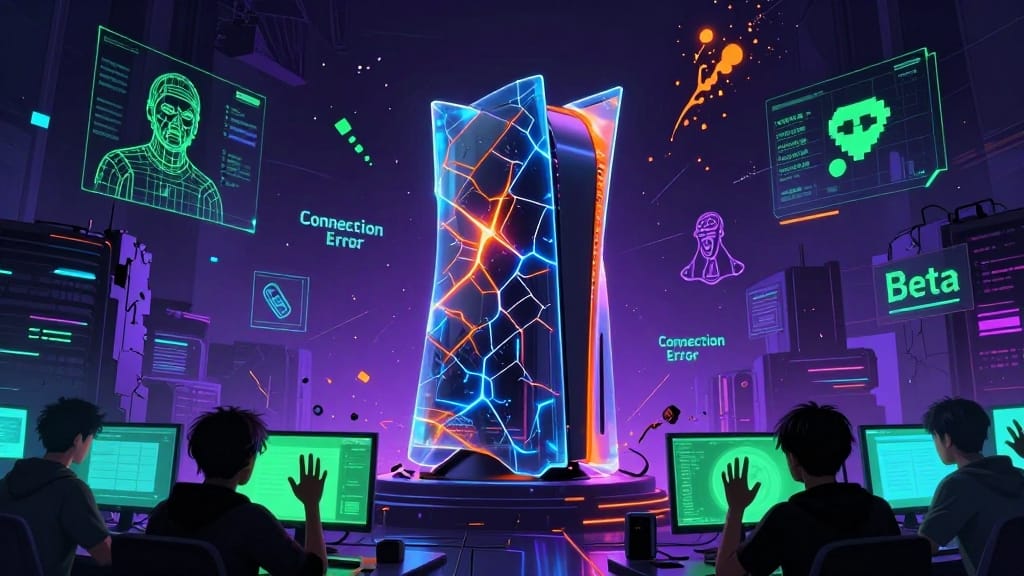
Hey gamers, Gamer Girl Galaxy here, and wow, the industry is absolutely unhinged right now. We are currently navigating a wild transition period where the "next big thing" is constantly crashing into old-school player values. From massive pushbacks against "AI slop" to the weirdly inconsistent release schedules of the big three console makers, the vibes in the community are definitely... spicy. Whether you’re waiting for the next big extraction shooter to drop after a billion delays or you’re just trying to figure out why your favorite retro collection was snatched away days before launch, there is a ton of drama to unpack. This week, we’re diving into how player sentiment is literally rewriting developer roadmaps and why the "streaming future" we were promised is starting to look more like a laggy mess. It feels like every time we take one step forward with hardware, we take two steps back with anti-consumer licensing or lazy tech implementation. But don't worry, your girl's got the breakdown on why this matters, how it’s changing the meta of the industry, and why we, as players, actually hold more power in 2026 than we ever have before. Grab your energy drinks and settle in, because this is going to be a long one.
The Great AI Rebellion: Quality Over "Slop"
In a world where CEOs want everything done by a bot to save a buck, the community is finally saying "GG" to lazy tech. We’re seeing a massive wave of "gamer protests" where fans are essentially blacklisting titles that smell like AI generation. According to The Washington Post, this suspicion of AI-generated content is so intense that studios are deleting entire projects or issuing "human-made" promises to stay alive. A prime example is the tension at Sandfall Interactive, where the focus on human-crafted character art has become a point of pride and survival. This isn't just about being "pissed off"—it's a fundamental demand for soul in our games. We don't want procedurally generated junk; we want the craft that makes gaming an art form. When you look at a character's eyes or the way a landscape is composed, you can tell when a human spent hours obsessing over the lighting versus when an algorithm just vomited out a "generic fantasy hilltop."
This desire for human depth isn't just about the art—it's about the psychological complexity of how we play. As noted by The Guardian, even reality TV stars like Jade Scott are crediting games like Among Us for teaching them how to read human behavior and survive social deception. AI can't replicate that kind of tension. It can’t simulate the "tell" of a friend lying to your face in a lobby or the specific, intentional jank of a developer who loves their world. Meanwhile, the industry's history of controversy continues to haunt us; SVG reminds us that games being pulled for "wrong vibes" isn't new, citing retro titles that were yanked from shelves way before the AI era. However, the current "AI slop" era feels different—it’s a collective push for industry-wide accountability. We aren't just consumers anymore; we're the quality control department when the suits at the top lose their way.
The implications here are massive. If studios realize they can't cut costs by replacing artists with prompts, they might actually have to invest in human talent again. Imagine that! We're seeing a bifurcation in the market: "Certified Human Made" titles are becoming a premium marketing tag, much like "Organic" at a grocery store. This matters because it protects the middle class of the industry—the concept artists, the writers, and the animators who give games their identity. If we let the "slop" win, gaming becomes a commodity rather than a culture. The future of this movement depends on us being loud. When a developer shows off a trailer that looks like it was birthed by a mid-journey hallucination, the community's swift "L + ratio" response is the only thing standing between us and a totally soulless library of content. We're seeing developers at Sandfall and other mid-sized studios double down on "hand-painted" and "bespoke" designs because they know that's their unique selling point in an automated world.
Hardware Wars and the "Superconsole" Dream
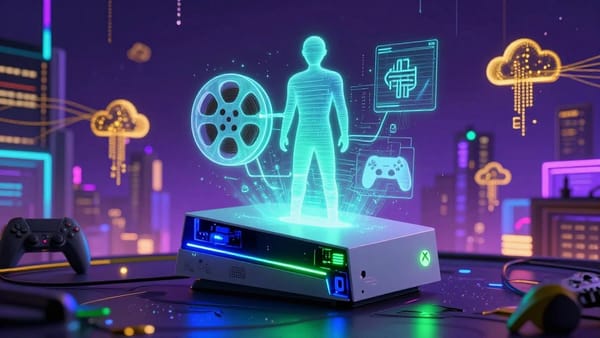
The console loyalty landscape is a total wreck right now, and honestly? It’s kind of funny to watch from the sidelines. Microsoft is playing a very confusing game with Sony. As reported by WinFuture, the Xbox release policy for PS5 remains "chaotic," with marquee titles like Fable getting direct releases while others are held back behind vague exclusivity windows. This "will-they-won't-they" vibe is making some players pivot toward custom solutions. Why wait for Phil Spencer to decide if you can play a game on your preferred plastic box when you can just build your own? For instance, BILD.de highlights a brilliant hobbyist who built a "Superconsole" that physically combines a PS5, Xbox Series X, and Switch 2 into one shell. This is the ultimate "fine, I'll do it myself" energy, and frankly, it’s the hero we deserve in 2026. If the big companies won't play nice and give us true cross-platform parity, the DIY community will find a way to circumvent the gatekeeping.
Xbox isn't just focusing on hardware, though. They are pushing hard into the cloud, even if the execution feels like a perma-beta test. According to Yahoo Tech, a redesigned Xbox Cloud Gaming interface has hit public preview with a cleaner web UI. While Sportskeeda notes the new UI is much more intuitive, it’s still stuck in preview mode. This slow rollout is frustrating, especially when you consider how volatile the platform is. Take the Nickelodeon Splat Pack—Vandal reports this retro collection was abruptly cancelled for Xbox Series consoles just four days before launch, leaving PS5 and Switch players as the only ones getting the nostalgic goods. It’s a bad look for Team Green, TBH. How are you going to preach about the "power of the cloud" and "gaming everywhere" when you can't even get a SpongeBob collection through certification in time?
This hardware fragmentation is creating a "lost generation" of gamers who don't know where to invest their money. If I buy a game on Xbox, will it be on PS5 in six months? If I buy it on PS5, will the PC port be superior and arrive on day one? The lack of clear communication from platform holders is driving people toward the PC ecosystem or towards insane "franken-console" mods. The future impact is clear: brand loyalty is dying. We’re moving toward a service-based model where the hardware matters less than the subscription, but until the infrastructure (like Cloud Gaming) actually works without five bars of fiber internet and a prayer, we’re stuck in this awkward middle ground. The "chaotic" multi-platform strategy isn't just a meme; it's a symptom of a company that has realized it can't win the hardware war and is now lunging at software sales wherever it can find them, even if it means annoying its most loyal "green team" fans.
The Future of Competition and Social Gaming
Esports and competitive play are also hitting some major speed bumps, mostly because developers are finally realizing they can't just force a "live service" hit via a spreadsheet. Bungie’s highly anticipated Marathon reboot is the poster child for this reality check. As reported by CNET, the game was delayed after a "lukewarm" reception to its alpha test. Bungie is actually listening to the feedback and "fine-tuning" the loop, which is a rare W for developer-player communication. Usually, a studio would just ship the mid product, charge $70, and try to "fix it in post" over the next two years. But the competitive market is too crowded for that now. If your extraction shooter isn't perfect at launch, players just go back to Apex or Tarkov. While we wait for Bungie to find the fun, Old School RuneScape fans are showing us how you actually maintain a competitive community. They are gearing up for the brutal Deadman: Annihilation event, with Radio Times confirming the release dates to help players prep for the grind. That’s a 20-year-old game still putting up numbers because it knows its audience.
But let's be real: competitive gaming isn't for everyone, and the industry is finally waking up to the fact that we're all a bit burnt out. Some of us just want to chill without a sweaty 12-year-old screaming in our ears about our K/D ratio. The New York Times recently explored how "anxious gamers" are finding solace in 2-player titles like Crossplay, which trades the panic of Call of Duty for collaborative puzzles. It's about finding your space in the community, which is exactly why sites like Mothership are launching in 2026. As The Guardian explains, there’s a massive need for gaming coverage that isn't just cater-made for the "traditional" dudebro demographic. We need diverse voices because the player base is more diverse than ever. If the media only talks to one type of person, they miss the fact that cozy games and social puzzlers are carrying the industry's retention rates right now.
The pivot we’re seeing in social gaming matters because it proves that "engagement" doesn't always have to mean "aggression." By prioritizing accessibility and diverse perspectives, the industry can avoid the boom-and-bust cycle of "the next big esport" that dies in six months. When Marathon finally drops, it won't just be competing with other shooters; it'll be competing for our time against hundreds of other social experiences. This is why player testing—like the alpha that humbled Bungie—is so critical. You can't simulate a community in a vacuum; you have to build it with the players. The future of competition isn't just about who has the best aim; it's about which developers are humble enough to admit when their "vision" isn't actually fun to play.
Nostalgia and the Streaming Meltdown
Speaking of the community, we have to talk about how we access our media, because the "everything is streaming" era is officially in its flop era. Sioux Falls Live argues that the streaming era has basically failed us, making it harder than ever to follow games or connect with each other. We’re also seeing major services shut down—MassLive reports a major streaming service is phasing out next month, leaving subscribers in the lurch. This is the "digital ownership" nightmare we’ve been warned about for a decade. You pay your monthly fee, you "own" nothing, and one day the server just vanishes, taking your progress, your library, and your memories with it. It’s making physical media look like a luxury investment rather than a relic of the past.
Despite the chaos, some gems are making it through to the remaining platforms. Zootopia 2 is already hitting streaming services after a massive box office run, according to Forbes. If you're into darker vibes, the survival sequel Greenland 2: Migration is also available, as noted by Forbes. And for the real film nerds, SlashFilm points out that Roger Ebert’s favorite "masterpiece," The General, is finally easy to stream. It's great that we have access to these, but when the platforms themselves are unstable, do we really "own" anything? If Disney+ or Prime Video decided to pull these tomorrow, they’re just... gone. This transience is bleeding into gaming, where digital-only releases can be delisted in a heartbeat.
This instability makes preservation more important than ever. While Xbox is cancelling retro packs four days before they launch, the PC community is out here doing the Lord's work. Android Authority reports on PS2Recomp, a new tool that allows for native PS2 ports on PC faster than ever before. This is huge because native ports are 10x better than glitchy emulators for high-fidelity gaming. It means we don't have to wait for Sony to sell us a "remaster" for $70; the community can port the games we already love to modern hardware with better performance. Speaking of things we're hyped for, let's talk sports. The hype train for WWE 2K26 is leaving the station. Times Now reports that pre-orders start January 30, and Yahoo! Tech has confirmed big roster moves, including Powerhouse Hobbs joining as "Royce Keys." At least in the world of wrestling games, we have a predictable release cycle to cling to while the rest of the industry burns.
The Evolution of the "Gamer" Identity
As we head deeper into 2026, it’s clear that the very definition of a "gamer" has evolved into something much more complex and politically active. We aren't just people who play games; we're a demographic that demands ethical standards from the companies we support. The pushback against AI isn't just about aesthetics; it's about labor rights and the value of human creativity. When we see projects like Mothership launching, it signals a shift toward curated, meaningful content that reflects real-world values. The industry has spent years trying to stay "apolitical," but in 2026, that's impossible. Every choice—from which console you buy to which streaming service you subscribe to—is a vote for the kind of future you want for the medium.
The rise of tools like PS2Recomp also shows a rebellious streak in the community. If the corporate behemoths won't give us a reliable way to play our old favorites without a subscription tether, we’ll build the tools to do it ourselves. This tension between corporate control and community freedom is going to define the next decade of gaming. We're seeing it in the way Bungie had to pivot on Marathon; the power dynamic has shifted. Shareholders might want infinite growth and automated "slop" pipelines, but if the players don't log in, those stocks are worthless. The "Death of the Streaming Dream" is actually the rebirth of player agency. We’re realizing that convenience isn't worth it if it means losing our history and our connection to the art. This matters because it forces developers to treat us as partners rather than just "DAU" (Daily Active User) metrics on a chart.
Looking ahead, expect more "Superconsoles," more community-led preservation projects, and a lot more drama as the "big three" try to figure out their identities. The industry is in a chrysalis phase—it’s messy, gross, and confusing, but what comes out on the other side could be something much more sustainable. We are moving toward a world where the best games aren’t the ones with the most marketing budget, but the ones that respect the player’s time, intelligence, and humanity. Whether you are prepping for your Deadman run or just trying to figure out which streaming service actually still exists, remember that your voice is the most OP tool in the game right now.
The Verdict: Play Your Way
The gaming industry in 2026 is a weird, contradictory mess, but that’s also what makes it exciting. We're seeing developers get humbled by player feedback (looking at you, Bungie), and we’re seeing gamers take back control of what "quality" looks like by rejecting AI shortcuts. The future of gaming isn't just about more teraflops or faster ray tracing; it's about transparency, preservation, and making sure everyone has a seat at the table. We’ve learned the hard way that the "streaming utopia" was a bit of a lie, but in its place, we’re seeing a renewed love for native hardware, community-driven ports, and niche websites that actually care about the culture. The chaos of Xbox's release schedule or the sudden cancellation of retro packs on certain platforms is annoying, sure, but it’s also a wake-up call to not put all our eggs in one corporate basket.
So, what’s the move for the rest of 2026? My advice: stay loud, support the artists who refuse to use "slop," and maybe look into those native PC ports if you want to experience the classics the right way. The industry is currently trying to decide if it wants to be an art form or a vending machine, and we’re the ones who get to cast the deciding vote. Whether you're grinding out OSRS, waiting for the WWE 2K26 roster reveal, or solving puzzles in a 2-player indie gem, keep pushing for the games you actually want to see. The meta is changing, and for the first time in a long time, it feels like the players might actually be winning. Stay spicy, stay opinionated, and most importantly, stay gaming. GG, everyone! I'll see you in the next lobby (unless it's an AI-generated one, in which case, I'm out)!