State of the Galaxy: Remakes, Streaming Wars, and the Evolution of Gaming Culture

Hey everyone, it’s Gamer Girl Galaxy here! Grab your favorite energy drink and settle in, because if you’ve been living under a rock (or just grinding a massive RPG backlog for the last three months), the gaming landscape is shifting faster than a speedrunner on a world-record pace. We are currently witnessing a massive, tectonic convergence of hardware, cloud technology, and Hollywood adaptations that are fundamentally changing what it means to be a "gamer" or even just a consumer of media. It’s not just about the plastic boxes under our TVs anymore—it’s an all-encompassing lifestyle that dictates how we socialize, how we spend our holidays, and even how our brains function. From the rise of K-gaming dominance to the way we consume live sports on Christmas Day, the industry is transcending its origins. However, it’s not all GGWP; between the brutal industry layoffs, server-shattering outages, and soul-crushing delays of titles like GTA 6, there are plenty of reasons to feel a bit tilted. This is the state of the galaxy, and let’s just say, the meta is changing in ways we never expected. If you're ready for a deep dive into the pixels and the politics, let’s get into it!
The Cloud Revolution: Xbox Without the Box and the End of Hardware Loyalty
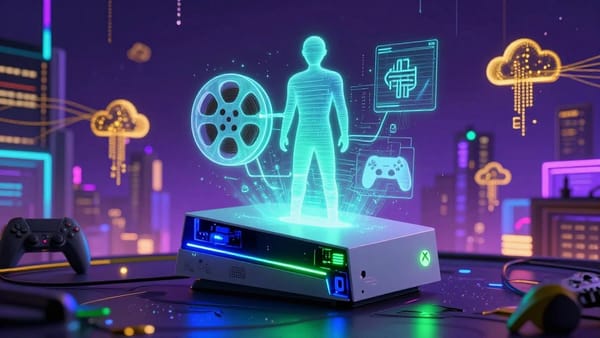
Let’s get real for a second: the "console wars" are starting to feel like a legacy mechanic from an era when we still bought physical discs at the mall. We are moving into a "post-box" world, and Microsoft is the one leading the charge with a strategy that would have seemed like heresy ten years ago. They are leaning hard into a future where your hardware doesn't define your library, your identity, or your ability to play with friends. As reported by The Tech Portal, Microsoft has officially expanded Xbox Cloud Gaming to Amazon Fire TV devices, making console-free play a reality for millions who might not even own a desk, let alone a gaming rig. This isn't just a niche feature for the tech-savvy; Geo TV breaks down exactly how players can now access AAA titles like *Halo* or *Forza* on select smart TVs with nothing but a Bluetooth controller and a Game Pass subscription.
This "platform-agnostic" strategy is a massive brain move, but it also signals a fundamental shift in how the industry generates revenue. According to CEO Today Magazine, the future of the industry is being defined by how these titans pivot toward services rather than just chasing "units sold" milestones. For Microsoft, the goal is no longer to sell you a Series X; it’s to sell you a subscription that lives in your pocket, on your TV, and on your laptop. If they can capture the "casual" crowd that doesn't want to drop $500 on a console but is happy to pay $15 a month for a "Netflix of Games," they win the long game. This impacts everything from game design—where "hop-in, hop-out" accessibility becomes king—to global market reach, especially in regions where expensive hardware is a barrier to entry.
However, while Xbox moves toward the cloud, Sony is doubling down on the premium, high-fidelity experience that only dedicated hardware can provide. If you’re a new owner of the "white monolith," Digital Trends outlines the essential steps you must take with your PS5 before even booting up a game, from optimizing HDR settings to managing that precious SSD space. This divergence shows two completely different philosophies: Sony is building a cathedral for "Prestige Gaming"—single-player, cinematic masterpieces that demand 4K OLED screens—while Microsoft is building a utility that lives everywhere. As a gamer, this is actually kind of OP because we get the best of both worlds: the "God of War" spectacle and the "play anywhere" convenience of Game Pass. But we have to wonder, if everything moves to the cloud, does the sense of "ownership" just go AFK forever?
The implications here are huge for developers too. When you develop for a cloud-first ecosystem, you have to account for latency and varying internet speeds across the globe. We might see a future where games have "streaming modes" that adjust asset quality on the fly to prevent lag-induced rage quits. It’s a brave new world, and while I’ll always love my RGB-lit PC, the idea that I can play *Starfield* on a hotel TV using a Fire Stick is honestly a vibe.
Remakes, Rumors, and the Nostalgia Trap
Is it just me, or is everything old new again? We are living in the Golden Age of the Remake, and honestly, I’m not even mad about it. Developers have realized that nostalgia is a powerful "buff" for sales, and they are mining our childhoods for all they’re worth. We’re seeing a massive wave of tactical RPGs and classic platformers returning to the spotlight with modern QoL (quality of life) improvements that make them actually playable in 2025. Fans of the mech-heavy tactical genre should be hyped because, as Gematsu reports, the Front Mission 3 Remake is officially dropping on January 30, 2026. It’s coming to PS5, Xbox Series, and PC, which is a total W for fans of turn-based strategy who want to see their Wanzers in glorious high-def without the PS1-era polygon jitter.
But the nostalgia train doesn't stop at mechs. The purple dragon might finally be coming home to roost in a way that isn't just a remaster. According to Pure Xbox, sleuths in the community have been digging through social media teasers and developer credits, believing they’ve found evidence that a completely *new* Spyro game is in development under the Xbox/Activision umbrella. This is the kind of hopium that keeps us going during the dry seasons. Why does this matter? Because in a market flooded with gritty "sad dad" simulators and hyper-competitive shooters, there is a massive thirst for the "mascot platformer" that focuses on pure, unadulterated fun. If Xbox can turn Spyro or Crash into a flagship Game Pass staple, they tap into a multi-generational audience that PlayStation has largely moved away from in favor of "The Last of Us" style realism.
However, let’s keep it 100—not everything in the rumor mill is sunshine and rainbows. The industry is currently dealing with a massive "hype hangover." Kotaku recently highlighted some of the biggest disappointments in the industry, and the elephant in the room is the persistent dread regarding GTA 6. Whenever a report surfaces about potential delays or internal production "crunch," the entire internet goes into a meltdown. When the hype is this high, the fall feels twice as hard. This cycle of "leak, hype, delay, disappointment" is becoming the standard cadence of the industry, and it's exhausting. We're also seeing the dark side of nostalgia: "remake fatigue." While *Front Mission 3* looks great, some fans are starting to ask when we’ll see new IPs that take the same risks those old classics did back in the day. Using nostalgia as a service is a safe bet for shareholders, but it can leave the creative landscape feeling a bit like a "rebroadcast" rather than a live event.
The impact of these remakes also extends to the "preservation" conversation. When a remake like *Front Mission 3* drops, it often becomes the definitive way to play, but it can also lead to original versions being delisted from digital stores. As gamers, we have to advocate for the history of the medium even as we enjoy the shiny new graphics. It's a delicate balance between honoring the past and being stuck in it. Personally, I'm just here for the mech customization—if the remake allows me to spend three hours painting my robot's left foot, I'm sold.
The K-Gaming Powerhouse and the High-Stakes PC Grind
While we often spend our time obsessing over Western studios like Naughty Dog or Rockstar, South Korea is quietly (and sometimes loudly) absolutely dominating the global scene. If you thought they were just about K-Pop and skincare, you’ve been sleeping on some of the most intense gaming culture on the planet. A deep dive by The Guardian explores how South Korea has become a global video game powerhouse, blending a legendary esports infrastructure with high-end development that now rivals—and often exceeds—US and European studios. This isn't just about the *StarCraft* and *League of Legends* dominance of the early 2000s; it’s about games like *Lies of P*, *Stellar Blade*, and the massive mobile-to-PC crossovers that are capturing global market share. South Korea treats gaming as a legitimate pillar of national pride and economic strength, and it shows in the polish and "sweat" present in their titles.
This dominance is filtering down into the hardware space too. In the world of the PC Master Race, the grind for the perfect setup never stops, but occasionally the RNG (Random Number Generator) of the real world smiles upon you. One lucky gamer recently managed an absolute steal of a lifetime, as 3DJuegos reports on a €2,000 gaming PC setup that was snagged for a fraction of its value—a deal so good it qualify as "the best offer in history." When you’re talking about high-end RTX cards and liquid cooling, these stories are like urban legends for us tech geeks. It proves that even in an era of scalpers and inflated component prices, if you have the patience of a level-99 rogue, you can still find the loot.
But let’s talk about the "Always-Online" nightmare that plagues even the best rigs. You can have a triple-monitor setup with a 4090, but you are still at the mercy of the "server gods." Recently, Engadget noted that Steam and Valve’s online services suffered significant partial downtime. This is more than just an inconvenience; it’s a reminder that our digital libraries and our ability to play "Live Service" games are incredibly fragile. When Steam goes down, millions of players lose access to their social hubs, their marketplaces, and their save data in the cloud. It raises a serious question about the future of PC gaming: as we move further away from physical ownership and offline play, are we trading stability for convenience? The "K-Gaming" model often relies heavily on always-online, microtransaction-heavy frameworks which, while lucrative, can be a total "feels bad man" moment when the infrastructure fails.
Moreover, the South Korean influence is changing the "meta" of Western game design. We’re seeing more Western studios adopt the "Live Service" model perfected in Asia, for better or worse. It means more frequent updates and "Battle Pass" content, but it also means more "grind." The PC platform is the frontline for this evolution. Whether you're playing a high-stakes tactical shooter or a beautiful Korean-developed ARPG, the expectation is now constant connectivity. This shift requires better global infrastructure, which is why when Steam stutters, the tremors are felt from Seoul to San Francisco. We need to see more investment in server stability and "offline modes" if the industry wants to maintain the trust of the hardcore PC community.
From Pixels to Popcorn: The Transmedia Blitz
Gaming isn't just for playing anymore; it's the new "source code" for Hollywood. We’ve entered the "Transmedia Era" where a game isn't successful until it has a prestige HBO series or a Michael Bay-directed cinematic spectacle. The "The Last of Us" and "Fallout" effect has changed everything—executives have realized that gamers are a loyal, built-in audience that will show up for a good adaptation, and the "video game movie curse" is officially broken. According to IGN, the pipeline for video game movies and TV shows through 2026 is absolutely stacked with titles like *Minecraft*, *Sonic 3*, and even more niche adaptations. One of the most talked-about (and slightly terrifying for my fellow cinematic snobs) projects involves a true heavy hitter of the "Explosion Genre"; ComicBook.com provides an exclusive update on the Michael Bay and Sydney Sweeney video game movie project. While details are still "Top Secret," the pairing of high-octane action with one of the most popular actresses in the world shows that gaming IPs are no longer the "nerdy" backup plan for Hollywood—they are the main event.
This crossover into mainstream entertainment is being fueled by more than just pretty faces on screen; it’s being driven by the relentless evolution of streaming technology. It’s not just about movies; the entire "iGaming" and interactive media landscape is being reshaped. Gaceta del Turismo explores how modern tech is shaping the iGaming landscape, making it more socially interactive and accessible through mobile devices and cloud streaming. This integration means that the boundary between "playing a game" and "watching a show" is becoming paper-thin. We’re seeing "interactive cinema" and gamified streaming experiences that let the audience vote on plot points in real-time. It’s no wonder gaming is moving into the social mainstream at light speed.
But here’s the most wholesome part of this whole transmedia push: it’s actually good for our brains. For years, we’ve heard the "gaming is bad for you" narrative from people who probably still use an AOL email address. However, science is finally catching up to what we’ve known all along. A fascinating study mentioned by HotHardware found that gaming can actually boost brain power, improve spatial awareness, and significantly reduce symptoms of burnout. In an era where everyone is stressed out 24/7, jumping into a fictional world to solve puzzles or coordinate a raid with friends is a legitimate form of mental health maintenance. See, Mom? Those 4,000 hours in *Destiny 2* weren't a waste of time—I was just "optimizing my neural pathways." This shift in public perception is why brands and movie studios are so eager to jump into our world; they realize that gamers are not just "kids in basements," but a sophisticated, mentally sharp demographic that consumes media across every possible screen.
The danger here, of course, is "content saturation." If every game gets a movie, do any of them stay special? We've seen what happen to the MCU when it became a "homework assignment" rather than an event. The gaming industry needs to ensure that these adaptations respect the source material and the "player's journey" rather than just being a soulless cash grab. When Michael Bay gets his hands on a controller, I'm expecting a lot of lens flare and explosions—let's just hope there's some story in there too.
The Streaming Wars: Holiday Edition and Live Content Dominance
If you weren't gaming this holiday season, you were probably parked on your couch streaming enough content to power a small city. This past Christmas was a major milestone in the "Streaming Wars," where the competition for our eyeballs moved beyond just movies and into the realm of live, "appointment" viewing. CNBC reports on the explosive growth of Tubi, as Fox leans into free, ad-supported streaming (FAST) to capture the "cord-cutter" and budget-conscious viewer who is tired of paying for twenty different $15/month subscriptions. This "free" model is becoming a massive disruptor, proving that people are willing to watch a few ads if the content library is deep enough. Meanwhile, for those who prefer the premium route, Mashable highlighted massive holiday deals for Prime Video and Roku users, essentially weaponizing the holiday spirit to lock people into ecosystem contracts for the new year.
Christmas Day itself was the ultimate stress test for these platforms. It wasn't just about "home for the holidays"; it was about "content for the holidays." From the Rolling Stone guide on how to watch the Disney Parks Parade for free (a holiday staple for families), to the massive draw of live sports. The NFL has officially become a "streaming first" entity during the holidays; as Engadget reported, the NFL's Christmas Day games were a cornerstone of the streaming schedule, driving millions to platforms like Netflix and Amazon. This is a huge "meta" shift. Sports used to be the one thing keeping cable TV alive, but now, the big tech giants are snatching up broadcasting rights, making a high-speed internet connection more valuable than a satellite dish.
For those of us who just wanted to chill and avoid the family drama, the day was packed with fresh drops. Mashable provided a comprehensive list of everything new to streaming on December 25th, ranging from blockbuster films to binge-worthy docuseries. This "saturation" of content means that the holidays are no longer about what's "on TV," but about navigating a complex web of apps and subscriptions to find what you want. The synergy between gaming and streaming is obvious here—many of the same people watching the NFL games are the same ones logged into *Warzone* or *Fortnite* as soon as the fourth quarter ends. The platforms are all fighting for the same "Screen Time," and the winners are the ones who can offer a seamless, lag-free experience across all devices.
Wait, is there a downside? Absolutely. With every service splintering off into its own app, we are seeing "subscription fatigue" hit an all-time high. It’s getting harder to track where your favorite shows are, and the costs are starting to eclipse the old cable bills we all ran away from. As gamers, we are used to this—we’ve been managing different launchers (Steam, Epic, EA, Ubisoft) for years. But for the general public, it’s a bit of a "loading screen" nightmare. The future likely involves more "bundling," where your Game Pass subscription might eventually include your streaming services, creating a "one sub to rule them all" scenario. Until then, keep your passwords in a vault and your auto-renewals in check!
Conclusion: The Future is Multi-Screen and Hyper-Connected
Looking ahead, the gaming industry is clearly moving toward a "play anywhere, watch everything, own nothing" model. The lines between a console, a PC, and a smart TV are blurring faster than a 144Hz refresh rate, and the content we love is jumping from our PCs to the big screen at an unprecedented rate. We’ve seen how cloud technology is making hardware secondary to the service, how nostalgia is being used to bridge generational gaps, and how the global power of K-gaming is redefining what "polish" looks like in a modern title. It’s a wild time to be part of the community, even if the "Always-Online" gods occasionally kick us from the server for no reason.
While delays and server outages are a total "feels bad man" and the "GTA 6" wait is testing our collective sanity, the data and the culture show that gaming is more than just a hobby—it's a brain-boosting, global phenomenon that's taking over the world. We are no longer a subculture; we *are* the culture. Whether you’re grinding for a new PC deal, watching a Sydney Sweeney-led game adaptation, or streaming the NFL on your Xbox, you are part of an ecosystem that is more connected across borders and platforms than ever before. So, keep your controllers charged, your internet stable, and maybe take a break to appreciate how far we've come since the days of 8-bit sprites and dial-up. The future of the galaxy is looking bright, even if we have to wait a few more years for Rockstar to finally press the "release" button. Stay legendary, fam. GG!