State of Play 2026: Xbox’s Juggernaut Leap, the Battle for Digital Rights, and Gaming's Cultural Crisis

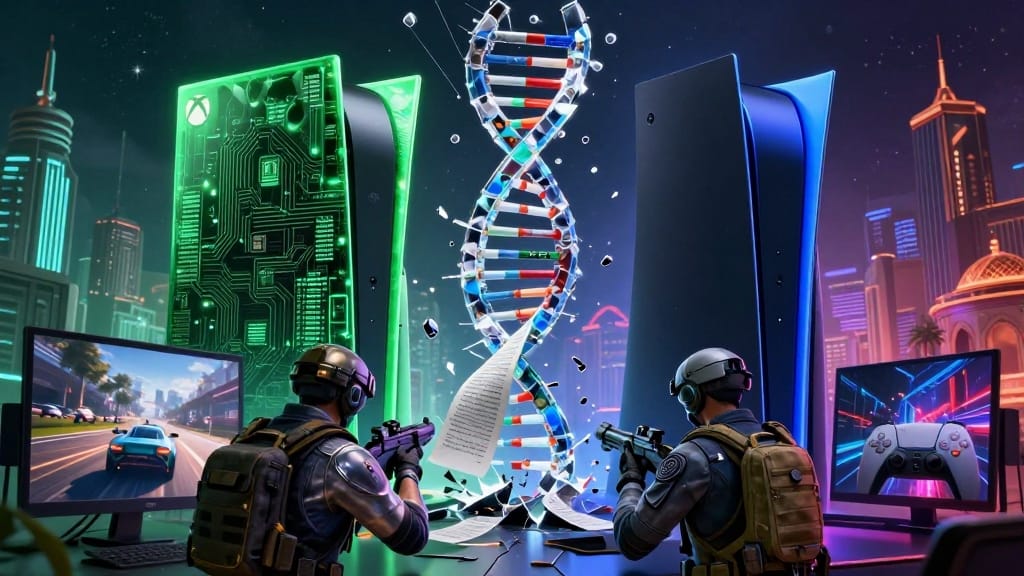
The gaming landscape in 2026 is officially wild, fam. We’re seeing a massive shift in how we buy, play, and even value our digital libraries. Between the absolute mic-drop of the latest Xbox Developer Direct and the ongoing sales war between the industry's biggest shooters, the "good old days" of stable gaming feel like a lifetime ago. While we’re getting hyped for gorgeous open-world sequels and high-octane racing sims, there’s a darker undercurrent of legal battles over digital ownership and tragic real-world violence that reminds us gaming isn't just a hobby—it's a massive, sometimes volatile, cultural force. From the rise of Web3 tech in the Middle East to the "Big Two" shooters trading blows on the sales charts, the industry is at a massive crossroads. We are living through a "patch" in human history where the digital and the real are colliding in ways that are both exhilarating and, honestly, a little bit terrifying. This isn't just about who has the better GPU anymore; it's about who owns the culture and how we protect our rights in a world that wants to rent us our own joy.
This week, we’re breaking down the huge reveals for Forza Horizon 6 and Fable, the surprising upset in the Call of Duty vs. Battlefield rivalry, and why your digital game library might actually be under legal fire in California. It’s a lot to process, but don’t worry—I’ve got the full meta-analysis on what this means for your wallet and your console of choice. Whether you're a PC Master Race loyalist or a console peasant (jk, love you all), the ground is shifting beneath your feet. Let's dive into the patch notes of the gaming world and see who's getting buffed, who's getting nerfed, and why the "End User License Agreement" might be the final boss we never saw coming.
Xbox Shakes the Table: Forza Horizon 6 and the Hardware Priority Shift
Microsoft isn't playing around anymore when it comes to ecosystem dominance. During the latest Xbox Developer Direct 2026, Team Green made it very clear that while they are "sharing" their toys with other platforms eventually, they still want you in their house first. The star of the show was undoubtedly Forza Horizon 6. As reported by Bleeding Cool, the teaser sent the community into a frenzy, confirming the long-rumored Japan setting. We’ve been asking for Tokyo drift vibes since FH3, and Playground Games is finally delivering the neon-soaked streets and cherry blossom mountain passes we’ve been dreaming of. This isn't just a map change; it's a statement of intent. By choosing Japan—a territory traditionally dominated by Sony and Nintendo—Microsoft is planting a flag in the heart of racing culture.
According to Engadget, the game is locked for a May 19 release on Xbox Series X/S and PC, but PS5 players will have to wait until later in the year. This timed exclusivity is a power move that feels like a throwback to the 360 era. As analyzed by The Outerhaven, prioritizing Xbox and PC is exactly what Microsoft needs to maintain brand value while still cashing in on Sony’s install base later. It’s the "double-dip" strategy, and while it might annoy the blue team, it’s a genius way to pad the bottom line. However, we need to talk about the "griefing" happening to our bank accounts. Yahoo Tech notes that the Premium Edition will cost a staggering $120 and STILL doesn't include all future DLC. This is getting out of hand. We’re paying collector’s edition prices for digital files, and the fact that a "Premium" version doesn't even grant a full "Season Pass" for the game's entire lifespan is a massive red flag for consumer trends in 2026.
The showcase wasn't just about cars, though. Fans finally got eyes on Fable and the mysterious Beast of Reincarnation. As Engadget and Indy100 highlighted in their coverage, the 2026 lineup looks stacked, signaling that Microsoft is finally hitting a consistent rhythm with its first-party studios after years of "coming soon" promises. Fable’s British humor seems intact, but the graphical fidelity shown suggests that the Series X is finally being pushed to its limits. This is the "GG" moment Microsoft fans have been waiting for since the start of the generation. It’s a pivot from "we have Game Pass" to "we have the best games *and* Game Pass." If they can stick the landing with Beast of Reincarnation, which looks like a soulslike with a heavy emphasis on narrative choice, Sony is going to have to do more than just release another "Pro" console to keep up. The real question for 2026 is whether players will tolerate the $120 price floor as the new industry standard for AAA experiences.
The FPS Crown Shifts: Battlefield 6 Destroys Black Ops 7
In a shocker that’s sending ripples through the industry, Call of Duty has actually lost its top-tier status on the charts, and honestly? Maybe it’s about time. According to IGN, Battlefield 6 ended 2025 as the best-selling game in the U.S., while Call of Duty: Black Ops 7 tumbled all the way down to fifth place. This is a massive "L" for Activision, especially considering Black Ops 6 was the undisputed king of 2024. It seems players are finally getting "CoD fatigue." You can only slide-cancel through the same three-lane maps for so many years before the dopamine hit just stops landing. The "copy-paste" nature of annual releases is finally hitting a wall where consumers are looking for something—anything—that feels different.
Battlefield 6 seems to have capitalized on this hunger by returning to its roots: massive scale, destructible environments that actually matter, and a lack of the "hero shooter" gimmicks that ruined 2042. This shift suggests that the market is swinging back toward immersion and tactical gameplay over the arcade-style "crackhead" movement that has defined CoD for several cycles. The implications are huge. If CoD isn't the guaranteed #1 anymore, Microsoft (who now owns it) might have to rethink the entire release schedule. Do we really need a new CoD every year if it means slipping to fifth place? Maybe a two-year dev cycle is the only way to save the franchise from its own shadow. Meanwhile, Battlefield has a chance to solidify a new "Golden Era" if they can support the game with meaningful content updates rather than just overpriced skins.
While the FPS wars rage on, Rockstar is looming in the background like a final boss waiting in the wings. The hype for GTA 6 is reaching a fever pitch, with Tech Times analyzing how the game’s design choices for immersion and player freedom will likely redefine the entire open-world genre for the next decade. Everyone is watching Rockstar to see if they can maintain the "King of Gaming" title. The industry is currently in a "holding pattern" where every other developer is trying to get their big releases out *before* GTA 6 drops and vacuums up all the oxygen (and money) in the room. This sales upset between Battlefield and CoD is just a prelude to the absolute carnage that will happen once we get a concrete release date for Lucia and Jason's adventure. It’s an "adapt or die" moment for the old guard of shooters.
Digital Disasters and the War for Ownership
Let's talk about the scary stuff: our digital libraries are basically on borrowed time, and it’s time we stopped pretend-buying things we don't own. Under California’s new digital goods law, AB 2426, video game companies are finally being held accountable for the "buy vs. license" deception. As explained by Technology Law (FKKS), class-action lawsuits are now hitting developers who don't make it clear that you don’t actually *own* the digital games you purchase. You know that button that says "Buy Now"? California is basically saying, "Stop lying, you're just renting this until we decide to turn off the servers." This is a massive win for consumer rights, but it’s going to make the "All-Digital" future look a lot more like a minefield.
If these lawsuits succeed, Sony, Microsoft, and Steam will be forced to change their UI. We might start seeing buttons that say "License Digital Access" instead of "Buy," which—let’s be real—is going to kill the vibe of a sale. But it matters because of what happened with The Crew and other delisted titles. When a company can just "Thanos-snap" a game you paid $70 for out of existence, that’s not a marketplace; it’s a hostage situation. This legal pressure is the only thing that will force companies to implement "End of Life" patches that allow offline play once servers go dark. We need to protect the history of this medium, and that starts with acknowledging that "Digital Ownership" is currently a myth. For the first time, the law is actually catching up to the tech, and it's about damn time.
And if legal battles aren't enough to make you paranoid, we’ve got "RNG" mechanics literally breaking the bank in the most cursed way possible. Yahoo Tech reports that a new gacha game from Hypergryph was accidentally charging random PayPal accounts for other people's microtransactions. It’s a total disaster that has forced the developer to disable payment services entirely. Imagine waking up to a $500 charge for someone else's "Waifu" pulls in a game you don't even play. It’s a system-level failure that highlights how fragile our digital financial integrations are. This isn't just a bug; it's a warning. As gaming becomes more "service-oriented" and interconnected with our real-world banking, the security of these platforms needs to be ironclad. If a major dev like Hypergryph can’t secure their payment gateway, why should we trust any of these companies with our "one-click" purchases? The industry is moving toward a "frictionless" economy, but we’re finding out that friction is actually a pretty good safety net.
The Darker Side of Gaming Culture: Gaming isn't a Vacuum
It’s not all high-fives and frame rates, and as much as I love this community, we have to look in the mirror sometimes. We have to address the tragic news coming out of Oklahoma that has cast a shadow over the "fun" of our hobby. In a horrific escalation of "gamer rage," 19-year-old William Spencer was arrested for allegedly stabbing his 25-year-old brother, Nicholas Spencer, to death over a video game dispute. According to Fox News and People, this incident is a heartbreaking reminder of how toxicity and unchecked anger can spill over into real-world tragedy. We joke about "heated gamer moments," but when that energy isn't managed, the consequences are permanent. This isn't just about "violent games"; it's about the mental health of players and the social isolation that can sometimes turn a competitive hobby into an obsession.
This tragedy highlights a growing problem with how we handle conflict in digital spaces. When we're conditioned to see everything through the lens of winning and losing—where a "loss" feels like a personal insult—some people lose the ability to regulate their emotions. It’s a "noob" move to ignore the mental health and safety issues within our community. We need to do better as a culture. Whether it’s de-escalating in a lobby or knowing when to put the controller down and walk away, we have to recognize that games are supposed to be an escape, not a catalyst for violence. The industry has a role to play here, too, by implementing better social tools and moderation that actually work, rather than just "muting" the problem. We’re at a point where the "gamer" identity is so mainstream that the pathologies of the internet are bleeding into the living room every single day.
Furthermore, the pressure of "live service" gaming—the need to grind, the fear of missing out (FOMO), and the constant push to perform—creates a high-stress environment that doesn't always mix well with real-life stressors. While most of us just vent on Twitter or sub-tweet a bad teammate, the extreme cases like the one in Oklahoma show that we can't afford to be complacent. We need to foster a community that values the person behind the avatar. If the "meta" of gaming is becoming this toxic, we’re all losing, regardless of our K/D ratio. It’s time to stop normalizing "rage quitting" as a funny quirk and start seeing it as a sign that someone might need a break. Let's make 2026 the year we actually level up our empathy, not just our characters.
Beyond the Console: Streaming, Tech, and Global Markets
While we’re grinding for achievements, the rest of the entertainment world is shifting too, and the "convergence" we’ve been hearing about for years is finally here. Streaming prices are getting "OP" (and not in a good way), with every service jacking up their monthly rates while adding ads. New tools like StreamWolf are helping users manage their bills and automate cancellations. This is crucial as the market gets flooded with content like Ryan Murphy’s 'The Beauty' on Hulu or the latest Netflix and HBO Max drops listed by USA Today. We are seeing a "re-bundling" of entertainment where gaming, movies, and TV are essentially competing for the same 24 hours in our day. If a game like Forza wants $120, it’s not just competing with Gran Turismo; it’s competing with your Netflix sub and your cinema tickets.
In other tech and lifestyle news that proves gaming is taking over the world:
- Secretlab just dropped a massive Pokémon Titan Evo lineup, basically turning the best gaming chair into a Pokédex, as reported by Yahoo Tech. It's the ultimate "flex" for your home office.
- Racing is winning everywhere, with Brad Pitt’s F1 movie dominating Apple TV charts according to Yahoo Entertainment. This "cross-media" hype is exactly why Forza Horizon 6 is so anticipated—racing is cool again.
- The Global Games Show Abu Dhabi 2025 concluded, positioning the UAE as a hub for Web3 and the future of interactive entertainment, according to the National Law Review. This signals a shift in where the "money" in gaming is coming from.
- And for the sports fans, NDTV Sports is tracking the India vs. New Zealand 2nd T20I live streams, showing that the demand for live digital content is never-ending.
The global reach of gaming has never been more apparent. When you look at the Global Games Show, you see that the next billion gamers aren't coming from the US or Europe; they're coming from the Middle East, India, and Southeast Asia. This is why we’re seeing brands like Secretlab and various movie studios leaning so hard into gaming aesthetics. We aren't a "sub-culture" anymore; we *are* the culture. But with that comes the corporate "min-maxing" that we see with $120 game editions. As the market expands, the "whales" get bigger, and the average player has to fight harder to keep their seat at the table without going broke.
The Final Verdict
Looking ahead, the gaming industry is clearly entering an era of "High Risk, High Reward." We’re getting the most technically impressive games in history with Forza Horizon 6 and the impending GTA 6, but they come with massive price tags and a loss of consumer control over digital ownership. We are essentially being asked to pay more for less certainty. The shift in sales power from Call of Duty to Battlefield shows that even the biggest titans can fall if they don’t innovate, proving that the community still has "veto power" with their wallets. It’s a reminder that no franchise is too big to fail if it loses touch with what makes it fun in the first place.
As we move further into 2026, expect the battle between platform holders to get even more intense and for the legal system to finally start catching up with our digital lives. California’s AB 2426 is just the first domino; once people realize they don't own their "purchases," we might see a massive resurgence in physical media or a total revolution in how digital storefronts operate. Stay frosty, keep your receipts, and for the love of all things holy, don’t let a video game make you lose your cool in real life. Gaming is about connection, competition, and joy—let's not lose sight of that in the midst of the corporate "Giga-War." 2026 is going to be a bumpy ride, but as long as we keep the conversation going and hold these companies accountable, we might just come out the other side with a better industry. GG, everyone. See you on the track in Japan.