Refining the Digital Frontier: An Analysis of Tech Integration and Innovation for 2026


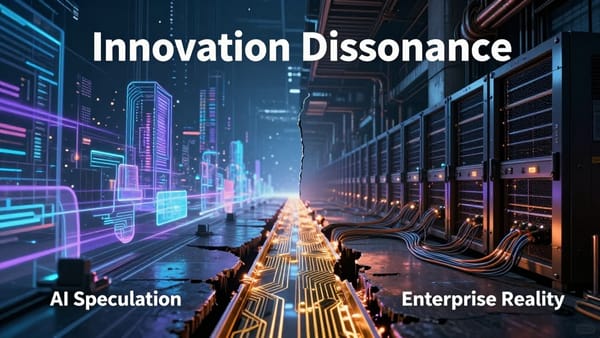
As we transition into 2026, the global technology landscape is undergoing a profound transformation—not defined by the speculative fervor of previous years, but by a rigorous, disciplined focus on utility, systemic regulation, and the stabilization of Large Language Models (LLMs). We have officially moved beyond the "experimental" phase of generative AI, where the novelty of a chatbot sufficed to drive market valuations. Today, the industry seeks to integrate these tools into the very "plumbing" of modern infrastructure. This shift necessitates a broader, more nuanced perspective on how technology interacts with the human element. Indeed, a recent report by AInvest highlights how anthropology and interdisciplinary research are now driving tech investment trends to ensure technology aligns with ingrained human behavior rather than working against it. The goal for 2026 is seamlessness: the disappearance of technology into the background of efficient daily life. This analysis explores the maturation of software niches, the increasing friction between innovation and national sovereignty, the industrialization of AI, and the evolving nature of the global workforce.
The Evolution of Software Utility and Specialized Niche Management
The ubiquity of Software-as-a-Service (SaaS) has matured from broad, horizontal platforms into highly specialized vertical niches. In the early 2020s, the market was saturated with "generalist" tools that attempted to be everything to everyone. However, by 2026, we see a distinct move toward vertical-specific software designed to solve industry-specific pain points with surgical precision. This is particularly evident in the financial management sector, where dominant players are refining their offerings to meet the granular regulatory requirements of specific regions. For instance, as noted by PR Newswire, Sage has been recognized by Consumer365 as a leading accounting solution for UK small businesses, illustrating a critical demand for localized financial compliance and operational efficiency. The success of such platforms lies not in "disruption" for its own sake, but in their ability to automate the mundane while ensuring total adherence to local tax laws—a feat generalist platforms often struggle to achieve.
This trend toward hyper-specialization extends deeply into community and logistical management, proving that no sector is too small for digital transformation. The youth sports sector, long reliant on spreadsheets and fragmented email chains, is now leveraging sophisticated technology to handle complex scheduling, player registration, and parent communication. This development, explored by WOD Guru in their analysis of youth sports club management software, demonstrates how software is bridging the gap between volunteer-led organizations and professional-grade logistics. By centralizing data, these platforms reduce the administrative burden on community leaders, allowing for a higher quality of service in local ecosystems.
Furthermore, even traditional industries like transportation—once dominated by monolithic giants—are witnessing a recalibration of power through specialized software. OpenPR recently reported on the introduction of commission-free dispatch software by Taxi Web Design. This move is significant because it challenges the high-margin models of global ride-hailing platforms, gifting local operators the digital tools required to compete on a level playing field. It represents a broader shift toward "sovereign" local businesses regaining control over their margins through more equitable software models. As we look at the trajectory for the remainder of 2026, the theme is clear: software is no longer a luxury; it is the essential infrastructure that allows local and specialized entities to function with the efficiency of global conglomerates. The focus has moved from "what can this software do?" to "how perfectly does this software fit our specific workflow?"
Macro Trends: Regulation, Sovereignty, and National Security
Innovation is increasingly colliding with national policy and geopolitical stability, creating a landscape where technical capability is often checked by legislative mandate. Governments are no longer passive observers of tech growth; they have become active participants in shaping its trajectory to protect national interests. The Department for Science, Innovation and Technology in the UK exemplifies this shift, focusing on how sovereign policy can foster a competitive yet safe digital economy. The era of "move fast and break things" has been replaced by "move strategically and comply." This regulatory scrutiny is perhaps most visible in the drone and aviation sectors, where the boundary between hobbyist innovation and national security threat has blurred. Interesting Engineering reports on China’s significant move to treat drones as aircraft—a regulatory pivot that forces drone operators to adhere to the same stringent standards as commercial pilots. This harmonization of airspace management is a necessary evolution as the density of autonomous vehicles increases, yet it also creates new barriers to entry for startups.
The fusion of technology and national security has also rekindled discussions regarding regional defense capabilities and the "dual-use" nature of modern research. A sobering report from Interesting Engineering discusses the technical potential for Japan to produce nuclear capabilities within a three-year window, highlighting the thin line between civilian technological prowess and military application in an era of heightened global tension. This illustrates that tech leadership is no longer just about economic dominance; it is about sovereign survival. In this high-stakes environment, the ability to control supply chains—from semiconductors to rare earth minerals—becomes a matter of national security, leading to a "de-globalization" of the tech sector as countries race to build domestic redundancies.
Despite these heavy geopolitical themes, the industry remains human and occasionally eccentric. The path to progress is rarely a straight line, and the "wacky" side of innovation often reveals unexpected consumer trends. As captured by TechRadar in their retrospective of the wackiest tech stories of 2025, the year was filled with reminders that human curiosity often outpaces practical application. Whether it was AI-powered pet translators or experimental wearable tech that failed to find a market, these stories serve as a necessary pressure valve in an otherwise high-tension industry. They remind us that while regulation and security are paramount, the "fun" of technology is what often drives early adoption. However, by 2026, the market is becoming less tolerant of gimmicks, demanding that even the most creative innovations prove their long-term viability within a regulated framework.
The AI Threshold: From ChatGPT to Industrial Applications
The tech industry has reached a crucial threshold regarding Artificial Intelligence: the transition from novelty to necessity. The honeymoon phase with generative AI has ended, replaced by a rigorous cost-benefit analysis of premium AI services. Both consumers and large-scale enterprises are now scrutinizing the actual Return on Investment (ROI) of monthly subscriptions. A detailed comparison by ZDNET evaluates whether ChatGPT Plus remains worth the investment in an environment where "free" tiers are becoming increasingly sophisticated. This reflects a broader market trend where the baseline capability of AI models has risen so high that "pro" tiers are forced to offer tangible, deep-value additions—such as specialized data analysis, advanced privacy 2.0, or seamless API integration—to justify their price tags. We are seeing the "commoditization" of basic intelligence, which is driving innovation toward specialized reasoning and expert-coded agents.
In the professional world, this value-driven approach is fundamental to the design and engineering sectors. Professionals are no longer looking for AI to "create" for them, but to assist in managing the overwhelming complexity of modern projects. The Architectural Record's roundup of the best software and technology products of 2025 showcases tools that streamline complex workflows through Building Information Modeling (BIM) and environmental simulation. These tools represent the "industrialization" of AI—moving away from generating images toward generating structural integrity reports and energy efficiency models. This shift from "creative" AI to "corrective" and "predictive" AI is where the true economic value lies as we move deeper into 2026.
In the medical field, the stakes of AI integration are at their highest. According to OpenPR, the U.S. Software as a Medical Device (SaMD) market is experiencing significant growth as algorithms move into critical diagnostic and therapeutic roles. The FDA and other global bodies are formalizing the protocols for how software provides medical advice, ensuring that "black box" algorithms are replaced by explainable AI. This high-precision application of software is mirrored in our physical infrastructure, particularly in the energy sector. Interesting Engineering highlights the US GridEdge analyzer’s ability to process higher measurements, a critical advancement for managing the increasingly complex modern power grid. As we integrate more renewable energy sources, the grid becomes more volatile; only through high-speed, AI-driven analysis can we maintain the stability required for a modern economy. This is the "hidden" AI—the algorithms that keep the lights on and the hospitals running—which will ultimately have a greater impact than any consumer-facing chatbot.
Predicting the 2026 Landscape: Workplace and Workforce
Looking ahead toward the end of 2026 and into 2027, the nature of work remains the central pillar of technological shift. The initial fear that AI would replace the workforce has evolved into a more complex reality: technology is replacing the *management* of the workforce. Organizations are doubling down on advanced "Human Resources Management Software" (HRMS) to handle a more distributed, fragmented, and algorithmically managed workforce. As discussed by Small Business Trends, the current emphasis is on using data to foster better employee experiences and retention in an exceptionally tight labor market. The tools of 2026 are not just tracking hours; they are analyzing sentiment, predicting burnout, and recommending personalized professional development paths. The "human" in HR is being supported by data-driven insights to ensure that talent is not just acquired, but nurtured.
The "future of work" is also becoming increasingly physical. Industry leaders are already casting their gaze toward the late-2020s, forecasting a deeper convergence of AI and robotics. According to a report by the Australian Financial Review, tech leaders believe that 2026 will be the year when general-purpose humanoid robots begin their first meaningful pilot programs in logistics and manufacturing hubs. This long-term outlook suggests that the digital breakthroughs of the early 2020s are finally "growing a body." The transition from software-only solutions to hardware-integrated intelligence will redefine productivity metrics across the globe. This is not merely an incremental change; it is a fundamental shift in how we conceive of labor and capital.
Furthermore, the Straits Times provides a comprehensive outlook for 2026, suggesting that the "top stories" of the previous year—specifically regarding data privacy and AI ethics—will serve as the foundation for a more resilient, AI-native global economy. We are moving toward a state of "digital maturity" where companies are no longer "trying out" AI but are built *upon* AI. This requires a workforce that is not only tech-literate but also ethically literate, capable of navigating the complex moral landscape that comes with automated decision-making. The workforce of 2026 is one that prioritizes adaptability over specific technical skills, as the tools themselves evolve faster than any traditional curriculum can keep pace with.
Conclusion: A Return to Pragmatism
The overarching theme of 2026 is one of pragmatic refinement. The period of wild speculation and "vaporware" has largely passed, leaving behind a market that demands proof of concept, regulatory compliance, and fiscal sustainability. The initial explosion of generative AI has settled into a period of industrialization, where the quality of data, the precision of software, and the ethics of implementation have taken center stage. We are no longer amazed that an AI can write a poem; we are now concerned with whether an AI can accurately manage a city’s power grid, diagnose a rare disease, or help a small business in the UK manage its VAT returns with zero errors. The success stories of 2026 are those of quiet efficiency rather than loud disruption.
Whether it is through localized accounting tools like Sage, advanced medical software (SaMD), or national regulatory frameworks for autonomous drones, the focus is now on ensuring that technology is a reliable, predictable, and manageable component of global society. As we look forward, the most successful companies will not necessarily be those with the most "innovative" or flashy ideas, but those that can best integrate complex, intelligent systems into the existing, messy fabric of human life. The digital frontier is no longer a wild west; it is being settled, surveyed, and built upon with a sense of permanence. For the Tech Observer, the story is no longer about the next "big thing," but about the thousands of small ways in which the big things of yesterday are finally starting to work for us today.