Postcards from the Edge: Navigating Global Shifts in Travel, Culture, and the New European Reality

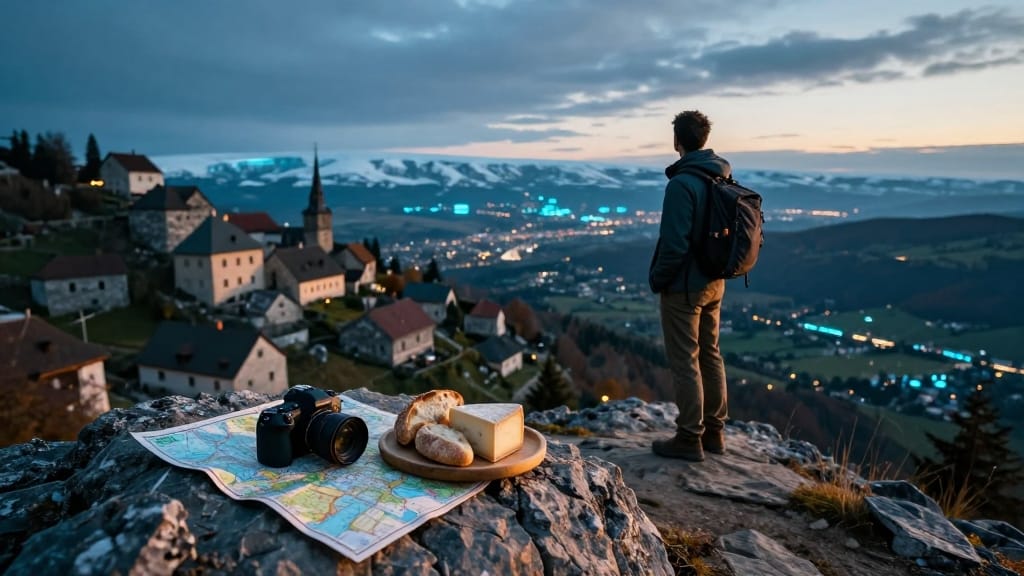
Hey everyone, Anya here. If you’re like me, your "To-Visit" list is probably a chaotic, beautiful mess of hidden mountain trails, neon-lit gaming cafes, and coordinates for the perfect sunset shot. But let’s be real—traveling in 2026 feels like trying to play a high-stakes strategy game on "Expert" mode. As a 19-year-old from Poland, I’ve grown up seeing the map of Europe change not just in history books, but right outside my window. Between the shifting geopolitics in our backyard and the way we’re literalizing "farm-to-table" eating, being a conscious traveler today requires more than just a wide-angle lens and a valid passport. We’re living through a massive vibe shift, one where the "aesthetic" of a place matters less than its stability and soul.
From the literal ice-cold tensions brewing over Greenland to the strangely inverted food pyramids currently confusing our kitchens, there is a lot to process. I’m seeing my friends choose hiking boots over luxury hotels and local forest retreats over crowded Mediterranean beaches. For those of us who grew up with the internet but live for the outdoors, the world feels smaller yet more fractured than ever. Whether you’re a photographer trying to claw your way out of a creative slump or a hiker looking for the next safe peak to conquer, we need to talk about where our world is headed. It’s about more than just miles traveled; it’s about understanding the "why" behind the chaos. So, grab a coffee (or a pierogi, no judgment), and let’s dive into the state of the world in 2026.
Geopolitical Tremors: The New Map of Risk and Resilience
Living in Poland, I’ve always been hyper-aware of how borders aren’t just ink on a map—they’re living, breathing things that define our safety and our dreams. Right now, the atmosphere in Europe is incredibly tense, and the usual "East vs. West" narrative has expanded to include a chilling "North" dimension. According to a recent report by Defense News, NATO’s Europe commander is sounding the alarm over growing Russian and Chinese threats in the Arctic regions. This isn't just something out of a Tom Clancy novel or a round of "Warzone"; it’s real-life power dynamics affecting where we can actually go without ending up in a restricted zone. The Arctic used to be the ultimate frontier for photographers, but now it's becoming a theater of military posturing.
The situation has intensified to a level that feels almost surreal. As Reuters reports, a European Commissioner recently warned that any potential U.S. military takeover of Greenland—a topic that some politicians seem weirdly obsessed with lately—could effectively signal the end of NATO as we know it. For someone like me, who strongly believes in a united, pro-EU future and stands firmly in solidarity with Ukraine, this kind of talk is terrifying. It threatens the very stability that allows us to travel freely across the continent. When Denmark and Greenland are forced into urgent diplomatic huddles, you know the vibe is off. As noted by Bloomberg, talks with the U.S. are scheduled to address these escalating regional tensions, but the damage to the "peaceful North" image is already done.
This geopolitical mess is reshaping the European landscape in ways that go beyond defense budgets. The Guardian recently provided a scathing analysis of how rhetoric regarding Greenland and Ukraine is creating a new culture of fear. It’s hard to plan a carefree backpacking trip through the Baltics or Scandinavia when the news cycle is dominated by talk of "spheres of influence." It makes me feel protective of our European sovereignty—we aren't just a playground for superpowers. Navigating this new world means constantly checking travel advisories. It’s not just Europe, either; the globe is feeling itchy. According to Travel + Leisure, the U.S. has recently increased travel advisories for Grenada, while The Daily Caller highlights a stern State Department warning regarding Venezuela due to militant unrest. Even the "polite" countries are worried—The Times of India reports that Canada has issued Level 4 "avoid all travel" advisories for several high-risk nations. As reported by BBC Travel, the current state of U.S. politics is fundamentally altering international movement. For us in Poland, this means being more vigilant and perhaps appreciating our own backyard a little more while keeping an eye on the horizon.
Beyond the "Iced Latte" Aesthetic: Lifestyle and Nutritional Shifts
When I’m not hauling my camera gear up a mountain or losing hours to a new RPG, I’m usually in the kitchen trying to figure out how to stay healthy without eating like a sad robot. But even the "basics" of healthy living are being flipped on their heads—literally. There’s a massive, soul-searching debate happening right now about the "inverted" food pyramid. For decades, we were told to load up on carbs at the bottom and treat fats like the villain in a horror movie. But according to Gulf News, this new nutritional model is gaining traction, suggesting that we should actually prioritize proteins and fats over processed grains. This isn't just a minor tweak for gym bros; CBS 8 reports that these recommendations are fundamentally changing what we consider "base" foods.
As KCRA points out, the timeline for these new guidelines is moving incredibly fast, and it’s creating a culture war in the health community. It’s hilarious but also frustrating—one day bread is the foundation of life, the next day it’s practically a war crime. Some experts are rightfully skeptical, though. As reported by CT Insider, professionals from Yale and UConn are weighing in on whether these shifts are actually backed by long-term science or just the latest trend. In Poland, we love our bread and pierogi, so this hits hard. There’s even a political layer to what’s on our plates—The New Republic analyzes how meat consumption and the new pyramid are becoming points of cultural contention, almost like a badge of political identify.
This shift matters because it changes how we experience culture through food. When I travel, the first thing I do is visit a local market to see what people actually eat. If these global guidelines shift toward more localized, protein-dense, and less processed diets, it could actually revive traditional farming and local food systems. Think about the impact on travel: instead of "Instagrammable" pink lattes, we might see a resurgence in traditional European charcuterie or regional dairy. It's about getting back to the roots—literally. But this "food-as-politics" vibe is exhausting. I just want to eat something that tastes good and gives me enough energy to snowboard for six hours. These changes remind us that even our most personal lifestyle choices—like what we eat for breakfast—are being influenced by global research, policy shifts, and, let’s be honest, a good amount of lobbying. It’s a weird time to be a foodie, but a great time to start asking where your food actually comes from.
Digital Nomads and the Creative Lens: Tech as a Double-Edged Sword
As a 19-year-old, I don't remember a world without a smartphone, but lately, the "digital nomad" dream feels like it’s being rewritten by a team of lawyers and AI engineers. For someone who loves photography and film, the tech world is currently a total battlefield. According to CNN, there is an escalating fight between the U.S. and the EU over tech regulation. As a European, I’m all for privacy, but this "regulatory war" could change everything from how we use social media to how our data is protected while we’re roaming through different countries. It’s about who controls the "digital infrastructure" of our lives, and the stakes couldn't be higher for those of us who live and work online.
Then there’s the AI elephant in the room. It’s everywhere. As a photographer, it’s both terrifying and kind of cool. As reported by openPR, AI is now capable of turning still photos into high-quality video. This is a game-changer for content creators, but it also triggers a massive existential crisis about authenticity. If I can take a photo of a mountain in the Tatras and have AI generate a sweeping drone shot that I never actually flew, does the art still matter? This digital noise is one reason why many of us are falling into creative droughts. Sometimes looking at a screen feels more like a chore than a tool. DPReview offers some solid advice on using specific, tangible photo projects to find your way back to inspiration—stuff like shooting only on film or limiting yourself to one lens for a month.
If you're feeling stuck, I highly recommend checking out the DPReview January 2026 photo challenge. It’s a way to reconnect with the craft rather than just the "likes." We need to remember why we started shooting in the first place—to capture a moment of truth, not a pixel-perfect lie. In a world of deepfakes and geopolitical tension, a real, raw photo of a stray dog or a weathered face in a village means more than a thousand AI-generated vistas. And honestly, when it all gets too much, I just scroll through important and wholesome animal pics on Bored Panda. It’s the ultimate digital pallet cleanser. We need these wholesome moments to remind ourselves that the world isn’t just a series of "threats" and "regulations"—it’s also full of cute capybaras and derpy cats.
The Future of Adventure: Slow Travel and the Polish Soul
So, where do we go from here? If the world is a chaotic meme, our response should be to slow down and get intentional. The "over-tourism" era—where everyone queued for three hours just to get the same photo at a cliff edge in Bali—is hopefully dying out. The trend for 2026 is moving toward "Slow Travel." According to CNBC, this year is all about "Reading Trips," farm stays, and finding hidden gems. It’s about quality over quantity. People are realizing that spending a week in one small village is more rewarding than hitting five capital cities in seven days and only seeing them through a viewfinder.
Even in the UK, the way people interact with their local landscapes is shifting toward community-based stories of resilience. As BBC News recently highlighted, local stories of connection are proving that travel isn't just about the miles you put on your boots, but the people you meet along the way. As a Pole, I’m obsessed with people discovering the "hidden" side of my country. Everyone knows Kraków and Warsaw (which are great, don't get me wrong), but have you ever been to the Bieszczady Mountains? It’s where you go when you want to disappear into the woods and forget that "geopolitics" is a word. We don't always need five-star luxury; a wooden mountain hut with a fireplace and some homemade *żurek* beats a sterile hotel any day.
This shift toward domestic and regional exploration is a logical response to the instability we see in the headlines. It’s safer, more sustainable, and way more rewarding for the soul. Plus, from a photography perspective, these "non-touristy" places offer a unique aesthetic that hasn't been photographed to death. The future of adventure isn't about how far you can fly; it’s about how deeply you can look at what’s already around you. It’s about being a participant in the landscape rather than just a consumer of it. This is why I love hiking so much—it’s the ultimate way to stay grounded when the rest of the world feels like it’s spinning out of control. Just me, my gear, and the trail. No lag, no filters, just reality.
Conclusion: Stay Adventurous, Stay Informed
So, here we are at the start of 2026, and the world is—to put it mildly—kind of a mess. It’s a chaotic mix of "inverted" diet pyramids, Arctic power struggles, and AI that can make my photos dance. But if there’s one thing being Polish has taught me, it’s that we are resilient. We know how to navigate change because change has always been part of our story. Travel in this era isn't just a luxury or a hobby; it’s a form of active engagement with the world. It’s how we bridge the gaps that politics tries to widen. By choosing to travel thoughtfully and staying informed about the realities of the places we visit, we become more than just tourists—we become witnesses.
The future of travel will be more localized, more tech-integrated, and hopefully, far more empathetic. Whether you’re leaning into the AI revolution or running away to a farm in the mountains to read books, the goal is the same: to find meaning in the chaos. So, grab your camera, check those travel advisories one last time, and don't let the creative drought or the scary headlines keep you at home. There is a whole world out there worth seeing, worth protecting, and worth photographing. Stay curious, stay loud about the things that matter—like a free Ukraine and a united Europe—and keep chasing those small, wholesome moments. Life in 2026 is a weird movie, but the cinematography is still breathtaking if you know where to look. Peace!