Political Developments: Europe, US Support Ukraine Amid Troubled Relations

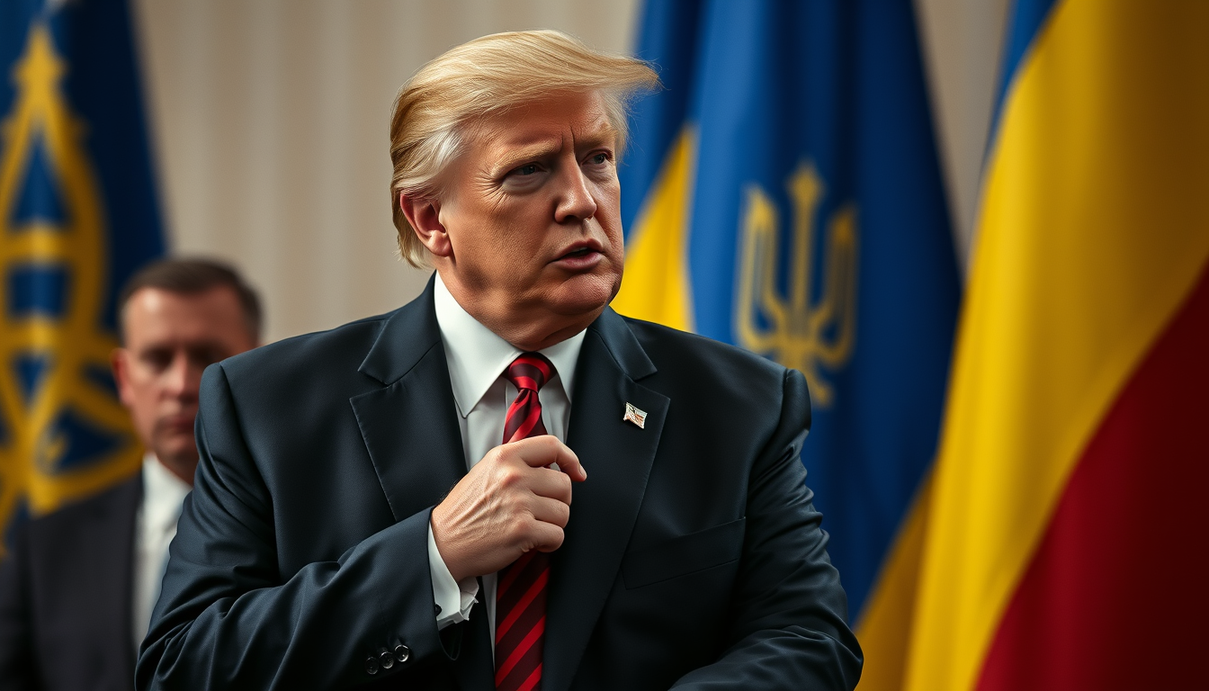
Published on March 01, 2025
In the ongoing geopolitical landscape, the relationships between European nations, the United States, and Ukraine are undergoing significant scrutiny, particularly following a tumultuous meeting between Ukrainian President Volodymyr Zelenskyy and U.S. President Donald Trump. According to NPR, European leaders have reaffirmed their commitment to Ukraine [NPR]. Meanwhile, The New York Times has highlighted the potential risks associated with the U.S.-Ukraine mineral deal [The New York Times]. Simultaneously, there is increasing public interest in the extent of U.S. financial support for Ukraine, with claims by President Trump about U.S. spending compared to European contributions being scrutinized [BBC]. This article aims to provide a balanced overview of these developments, synthesizing insights from multiple sources to offer a comprehensive perspective on the current state of U.S. and European involvement in Ukraine.
Political Landscape
The political landscape related to Ukraine has seen significant developments recently, particularly in light of key meetings and statements from international leaders. According to NPR, European leaders have reaffirmed their support for Ukraine following a contentious meeting between Ukrainian President Volodymyr Zelenskyy and U.S. President Donald Trump. Despite the stormy nature of their conversation, European leaders remain committed to their assistance to Ukraine.
The nature and scale of the U.S. support for Ukraine have also been the subject of recent debate, as illustrated by a report from BBC Verify. President Trump has been making claims about the amount of financial aid provided by the U.S. compared to European countries. However, the extent of these claims has been the focus of various fact-checks, raising questions about the accuracy of the figures cited by the administration.
Another critical issue in this political landscape is the U.S.-Ukraine mineral deal, which faces potential risks as highlighted by The New York Times. The deal, which includes the provision of minerals from Ukraine to the United States, is now in jeopardy, adding another layer of complexity to the geopolitical relationship between the two countries. The potential termination of this deal could have significant implications for both economies and the strategic alliance.
These events underscore the complex interplay between the U.S. and Europe in their support of Ukraine. While European leaders maintain their backing, the dynamics of U.S. involvement are subject to internal and external pressures. The situation remains volatile, with each development having the potential to shift the balance of power and influence in the region.
Political
Recent developments in U.S. and European support for Ukraine have brought to light the complexities of international diplomacy and the delicate balance between national interests and humanitarian aid. Following a contentious meeting between Ukrainian President Volodymyr Zelenskyy and U.S. President Donald Trump, European leaders have reaffirmed their commitment to Ukraine's sovereignty and defense. This move underscores the ongoing support Europe has provided despite differing views between Trump and Zelenskyy. According to NPR, European leaders reiterated their support after the stormy White House meeting, highlighting the divergent viewpoints among major Western nations.
The nature and extent of U.S. support for Ukraine have become a focal point in the broader discussion, with President Trump making various claims regarding the financial contributions of his administration compared to European counterparts. Trump has attempted to position the U.S. as a front-runner in aid to Ukraine, though this claim is met with skepticism by European allies and independent fact-checkers. According to BBC Verify, Trump's assertions do not align with the figures reported by the U.S. government and other agencies, complicating the interpretation of U.S. aid to Ukraine.
Adding another layer of complexity to the geopolitical landscape, the U.S.-Ukraine mineral deal, which could have bolstered Ukraine's economy and strengthened its relationship with the U.S., faces potential cancellation due to concerns over corruption and due diligence. The deal, which was negotiated during Trump's presidency, has been criticized by some quarters as a risky investment that could undermine transparency and accountability. According to The New York Times, the deal is now in peril, and its future remains uncertain. This uncertainty highlights the challenges faced by geopolitical alliances in fostering sustainable and ethical partnerships.
Ukraine
In the ongoing geopolitical landscape, Ukraine has been a focal point of international attention, particularly with the recent meeting between Ukrainian President Volodymyr Zelenskyy and U.S. President Donald Trump amidst mounting tensions. European leaders have reaffirmed their support for Ukraine, underscoring a united front in the face of the complexities of the country's relationship with the United States and other global players. According to NPR, following Zelenskyy's stormy meeting with Trump, European allies have once again pledged their commitment to Ukraine. This reinforcement of support comes against the backdrop of varying foreign policy approaches to the region.
The narrative surrounding Ukrainian support also involves financial contributions from nations like the United States and European countries. BBC Verify correspondent Nick Eardley explored the magnitude of U.S. aid to Ukraine, comparing it to European contributions. President Trump has made several assertions about the financial backing of Ukraine, but these claims have been scrutinized. The disparity in support remains a subject of discussion, influencing Ukraine's stance and international relations.
Another layer of complexity in the U.S.-Ukraine dynamic is the mineral deal that has recently come into question. As reported by The New York Times, this deal has been put at risk, potentially affecting Ukraine's economic prospects. The uncertainty surrounding the mineral deal reflects broader issues in U.S.-Ukraine relations, including security and geopolitical interests.
Conclusion
In the wake of President Donald Trump and President Volodymyr Zelenskyy's contentious meeting, European leaders have reaffirmed their commitment to supporting Ukraine (NPR). This unwavering support contrasts with the more variable commitments from the United States, as Trump has made conflicting claims about US aid to Ukraine (BBC).
The perception of US involvement is crucial, particularly regarding aid disbursements. While Trump and his administration have provided significant financial support, the total amount has become a point of contention, with various sources offering different figures and timelines (BBC). This discrepancy highlights the importance of transparency in aid reporting and efforts to bolster the US-Ukraine relationship.
Beyond financial support, the U.S.-Ukraine Mineral Deal is another area where Trump's administration has faced scrutiny. The deal, which aimed to strengthen trade ties between the two countries, is now in peril, raising concerns about broader economic and security cooperation (NYTimes). The future of this agreement is uncertain but is likely to be influenced by the evolving dynamics in US-Ukraine relations and the broader international landscape.
Following Zelenskyy's contentious meeting with President Trump, European leaders have reaffirmed their commitment to supporting Ukraine, signaling a unified stance despite tensions between the US and Ukraine. This support is particularly significant in the context of Trump's claims about the amount of aid the US has provided, as evidenced by the BBC Verify investigation, which highlights the discrepancies in support claims made by the Trump administration.
The stability of the U.S.-Ukraine mineral deal also hangs in the balance, with reports indicating the deal may be jeopardized. This development underscores the broader challenges in the geopolitical landscape, where support for Ukraine has become a contentious issue, pitting the United States against its European allies and potentially complicating ongoing negotiations and aid commitments.
These events collectively highlight the complex interplay of international relations and the impact of leadership on global support mechanisms. As Trump and European leaders continue to negotiate and assert their positions, the fate of Ukraine and its ongoing struggles remain at the center of a tug-of-war between major geopolitical actors.
Looking ahead, the future of U.S. and European support for Ukraine will likely depend on diplomatic strategies and negotiations, with significant implications for both regional stability and global geopolitical dynamics.