Navigating the Political Storm: Trump's Shadow, Ukraine Ceasefire, and Global Economic Anxieties

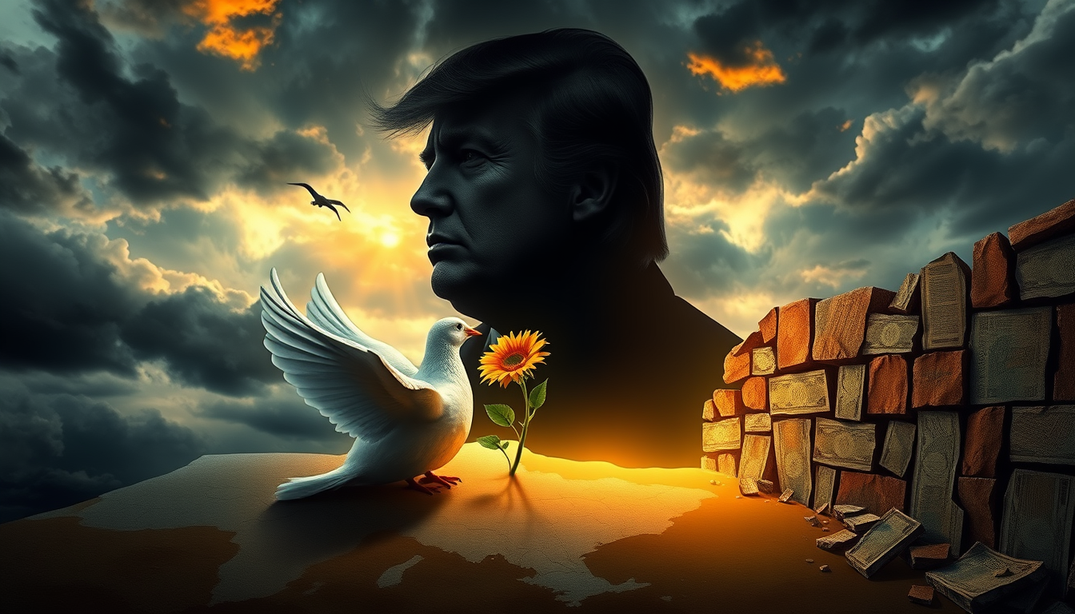
The year 2025 finds the world teetering on the edge of multiple crises, a confluence of political earthquakes and economic aftershocks that demand immediate and critical examination. The potential resurgence of Donald Trump on the American political stage looms large, casting a long shadow of uncertainty over global markets and international relations. Will his return herald a new era of protectionism and trade wars, or will a second term see a more tempered approach? Simultaneously, the fragile ceasefire in Ukraine offers a sliver of hope amidst a brutal and protracted conflict, yet its durability remains questionable given Russia's track record and the shifting geopolitical landscape. And let's not forget the insidious rise of economic nationalism, threatening to unravel decades of globalization and interconnectedness. These are not isolated incidents; they are interwoven threads in a complex tapestry of global challenges, each influencing and exacerbating the others. This article will not shy away from the tough questions, delving into the heart of these critical issues, dissecting their potential impacts, and daring to forecast the future implications. Buckle up, because the ride is going to be bumpy. We'll examine not just what is happening, but *why* it's happening, *who* benefits (and who suffers), and *how* we might navigate this increasingly treacherous terrain. This isn't just reporting; it's a call to understand, analyze, and prepare for what lies ahead. The stakes, as they say, couldn't be higher.
Trump's Return to the Oval Office: Economic Tremors and Trade War Echoes
Now that Donald Trump has returned to the presidency for a second term, economists and investors are once again on high alert. As CNN reports, concerns about stock market volatility and the risk of a recession are mounting under his renewed leadership. Why the anxiety? It stems from Trump's well-documented penchant for protectionist policies—particularly tariffs. During his first term, those tariffs sparked trade disputes with key economic partners like China and the European Union, disrupting supply chains and driving up consumer costs. Remember the aluminum and steel tariffs of 2018? Those weren’t just headlines; they affected industries reliant on those materials, causing job losses and economic turbulence. With Trump now back in the White House, the question is whether the global economy can withstand another round of such measures.
The unpredictability of Trump’s policies remains the most unsettling factor. As The New York Times points out, even the hint of new tariffs can rattle investors, complicating any attempt at long-term economic planning. How can businesses confidently strategize investments or expansions when policy changes could come at any moment? This persistent uncertainty fosters caution, leading to lower investment and slower economic growth. Additionally, a renewed embrace of protectionism may undermine the World Trade Organization (WTO), an institution that—despite its flaws—has fostered global trade and stability for decades. Will Trump heed the warnings of economic experts this time, or will he double down on the policies that defined his first term, regardless of the consequences? That question could determine the trajectory of both the U.S. and global economies.
Specific sectors are bracing themselves, too. Agriculture, for instance, suffered during Trump’s initial tenure due to retaliatory tariffs from China, leaving many farmers—some of whom supported Trump—caught in the crossfire. Will his administration learn from past missteps, or will history repeat itself? As the second Trump presidency takes shape, these uncertainties loom large, and the world is watching with bated breath, hoping for stability in a time when even a single policy shift can have far-reaching consequences.
Ukraine Ceasefire: A Glimmer of Hope, Shrouded in Doubt
In the midst of global turmoil, a fragile beacon of hope flickers from Eastern Europe: Ukraine has tentatively agreed to a US-led ceasefire plan, contingent on Russia's acceptance. CNBC rightly emphasizes the precarious nature of this agreement. But let's be clear: a ceasefire is not peace. It's merely a pause in the fighting, a chance for both sides to regroup and rearm. The crucial question is whether Russia will genuinely reciprocate, or whether this is simply a tactical maneuver to buy time and consolidate its gains. Given Russia's history of broken agreements and its unwavering commitment to its strategic objectives in Ukraine, skepticism is warranted. Remember the Minsk agreements? They were supposed to bring peace to the Donbas region, but they ultimately failed to prevent the escalation of the conflict. What assurances do we have that this ceasefire will be any different?
As CBS News and CNN report, Saudi Arabia is playing a key role in facilitating these talks, a development that underscores the shifting sands of international diplomacy. But why Saudi Arabia? The answer likely lies in its close ties with both the US and Russia, as well as its desire to assert itself as a regional power broker. But can these talks truly pave the way for a lasting peace, or will they merely delay the inevitable resumption of hostilities? And what about the underlying issues that fueled the conflict in the first place, such as Russia's security concerns and Ukraine's aspirations to join NATO? These issues must be addressed if any peace agreement is to have a chance of success. Furthermore, as The New York Times astutely observes, the potential return of Donald Trump to the White House adds another layer of uncertainty to the equation. What would a Trump-brokered peace deal look like? Would it prioritize Ukraine's sovereignty and territorial integrity, or would it sacrifice Ukrainian interests in pursuit of a quick resolution? And how would European allies react to such a deal? These are questions that demand serious consideration. The future of Ukraine, and indeed the stability of Europe, hangs in the balance.
The Insidious Rise of Economic Nationalism: A Retreat from Globalization?
BlackRock CEO Larry Fink's stark warning about the perils of economic nationalism should serve as a wake-up call. As reported by Yahoo Finance, Fink argues that a retreat from globalization could have catastrophic consequences for economic growth and international cooperation. But what exactly is economic nationalism, and why is it so dangerous? At its core, economic nationalism is a policy approach that prioritizes domestic interests over international cooperation, often through protectionist measures like tariffs and subsidies. While it may seem appealing in the short term, it can ultimately lead to a fragmentation of the global economy, reduced trade, and slower growth. Are we witnessing a resurgence of this dangerous ideology? The signs are certainly there, from Trump's "America First" policies to Brexit in the UK and the rise of populist movements in Europe. But what are the underlying drivers of this trend?
One key factor is the growing inequality within many countries, which has fueled resentment towards globalization and the perceived winners and losers it creates. Another factor is the rise of geopolitical competition, particularly between the US and China, which has led to a renewed emphasis on national security and self-reliance. Whatever the reasons, the consequences of economic nationalism could be severe. It could undermine the multilateral trading system, lead to trade wars, and ultimately reduce global prosperity. Moreover, it could exacerbate existing geopolitical tensions and make it more difficult to address shared challenges like climate change and pandemics. This trend could undo decades of progress towards a more interconnected and prosperous world, leading to a more fragmented and unstable global order. Consider, for example, the impact on developing countries, which have benefited greatly from globalization and access to international markets. Economic nationalism could deprive them of these opportunities, hindering their development and perpetuating poverty. The world needs more cooperation, not less, if it is to overcome the challenges it faces. Economic nationalism is a dangerous path that leads to nowhere good.
Europe at a Crossroads: Political Upheaval and Policy Shifts
The European political landscape is anything but stable, marked by unexpected twists and turns that defy easy categorization. Jens Stoltenberg's surprising return to Norwegian politics, as reported by Reuters, has sent shockwaves through the country's political establishment, throwing the upcoming elections into complete disarray. But why would a seasoned international diplomat, the former Secretary-General of NATO, choose to return to the comparatively mundane world of domestic politics? Perhaps he sees an opportunity to steer Norway through the turbulent waters of global uncertainty, leveraging his experience and connections to promote stability and prosperity. Or perhaps he is simply motivated by a sense of duty to his country. Whatever the reason, his return is a game-changer, potentially reshaping the political landscape and influencing Norway's relationship with the rest of Europe. This could signal a broader realignment of political forces in the region, as other countries grapple with similar challenges and seek new leadership.
Meanwhile, across the North Sea in the UK, Angela Rayner is spearheading ambitious planning reforms, as detailed in The Guardian. These reforms aim to tackle pressing issues such as chronic housing shortages and inadequate infrastructure, which have plagued the UK for decades. But can these reforms truly address the deep-seated challenges facing the UK, or will they be bogged down in bureaucratic red tape and political infighting? And can they navigate the complex web of competing interests, from developers and landowners to environmental groups and local communities? The success of these reforms will be crucial for the UK's future, determining whether it can build a more sustainable and equitable society. Adding another layer of complexity, The Guardian also reports on the emergence of a breakaway right-wing party led by ousted Reform MP Rupert Lowe. This development underscores the growing fragmentation of the political spectrum and the rise of populist movements, mirroring trends seen in other parts of Europe and the world. How will this new party impact the existing political order? Will it further polarize the electorate, or will it offer a new voice for disaffected voters? The answers to these questions will shape the future of British politics for years to come. Europe is clearly a continent in flux, grappling with a multitude of challenges and seeking new directions.
Shutdown Showdowns and Cybersecurity Nightmares
The recurring specter of government shutdowns continues to haunt the United States, a symptom of deep political dysfunction and ideological polarization. As NBC News reports, Congress is perpetually racing against the clock to avert these self-inflicted crises. The article from AP News echoes this disheartening reality. But what does this constant brinkmanship say about the state of American politics? It suggests a fundamental breakdown in the ability of the two major parties to compromise and govern effectively. The consequences of these repeated disruptions are far-reaching, impacting everything from national security to public services. Government shutdowns disrupt vital services, delay payments to contractors, and undermine public trust in government. Moreover, they create uncertainty for businesses and consumers, potentially slowing economic growth. Is this really the best that American democracy can offer?
Elon Musk's perspective on government shutdowns, as highlighted by Wired, adds an interesting dimension to the debate. Musk's libertarian leanings suggest a desire for minimal government intervention, a vision that resonates with many Americans who are frustrated with the size and scope of government. But is this a realistic or desirable vision, especially in an era of complex challenges like climate change and cybersecurity threats? Can the private sector truly address these challenges without government leadership and regulation? The debate over the role of government in society is as old as the republic itself, but it takes on new urgency in the 21st century. On the cybersecurity front, a UK government report calls for stronger open-source supply chain security practices, as noted by SecurityWeek. This underscores the growing importance of cybersecurity in an increasingly interconnected world. Open-source software is used in countless applications, from critical infrastructure to everyday consumer products. But it is also vulnerable to cyberattacks, as demonstrated by recent high-profile breaches. How can governments and businesses effectively protect themselves from these threats? Stronger security practices, increased investment in cybersecurity, and greater international cooperation are all essential. The digital world is a battlefield, and we must be prepared to defend ourselves.
AI Ascendancy: Transforming Governance, Raising Ethical Questions
Amidst the pervasive political and economic uncertainties, one sector is experiencing explosive growth: artificial intelligence. ExecutiveBiz highlights the leading AI government contractors of 2025, a clear indication of the public sector's increasing reliance on AI technologies. But how exactly is AI transforming government operations, and what are the potential benefits and risks? AI has the potential to revolutionize a wide range of government functions, from improving efficiency and reducing costs to enhancing public services and strengthening national security. For example, AI can be used to automate routine tasks, analyze large datasets, and predict future trends. It can also be used to improve healthcare, education, and transportation. However, the use of AI in government also raises significant ethical concerns. AI algorithms can be biased, leading to discriminatory outcomes. They can also be used to collect and analyze vast amounts of personal data, raising privacy concerns. And they can be vulnerable to cyberattacks, potentially compromising sensitive information. AI's potential to enhance efficiency and improve public services is undeniable, but we must also address the risks associated with bias, privacy, and accountability. We need clear ethical guidelines and regulations to ensure that AI is used responsibly and for the benefit of all.
Conclusion: Charting a Course Through the Storm
The year 2025 presents a daunting array of interconnected challenges, demanding astute navigation and decisive action. From the looming specter of economic instability under a potential second Trump administration to the fragile ceasefire in Ukraine and the insidious rise of economic nationalism, the future remains shrouded in uncertainty. Addressing these complex issues requires not only strong leadership but also unwavering international cooperation and a steadfast commitment to evidence-based policymaking. The constant threat of government shutdowns, the accelerating integration of AI into government operations, and the ongoing political realignments in Europe add further layers of complexity to an already turbulent global landscape. The question is not whether we face challenges, but how we choose to confront them. Will we succumb to the siren song of isolationism and protectionism, or will we embrace the power of collaboration and multilateralism? Will we allow fear and division to dictate our actions, or will we be guided by reason and compassion? The choices we make in the coming years will determine the fate of not only our own nations but also the future of the global community. It's a time of unprecedented change and even greater uncertainty, but also a time of immense opportunity. Let us rise to the occasion with courage, wisdom, and a unwavering commitment to building a better world for all. The world is changing, and we must change with it, adapting to the new realities and embracing the opportunities that lie ahead. The future is not predetermined; it is ours to shape.