Navigating Political and Economic Crosscurrents: Trump, Ukraine, and Global Instability in 2025

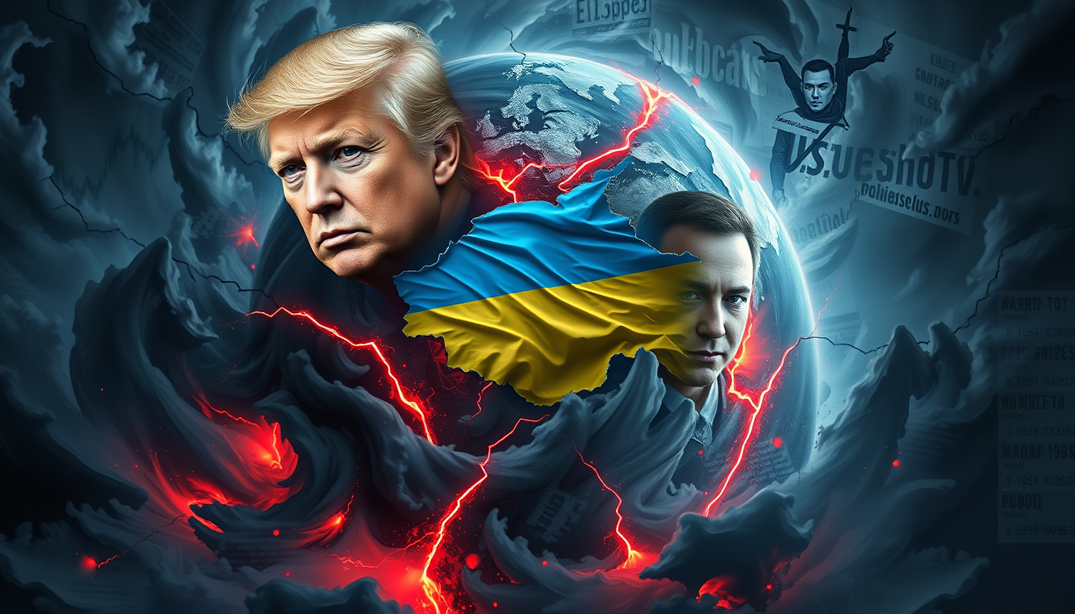
The year 2025 has dawned, not with the crisp certainty of a new beginning, but with the murky haze of ongoing crises and emergent uncertainties. Domestically, the United States continues its dance on the precipice of government shutdowns, a recurring spectacle of partisan gridlock that threatens economic stability and public trust. Internationally, the brutal conflict in Ukraine grinds on, reshaping geopolitical alliances and testing the resolve of the West. Looming large over it all are the figures of Donald Trump, whose influence persists like a phantom limb in the body politic, and Elon Musk, whose forays into politics raise thorny questions about the power of tech titans in a democratic society. Understanding these interwoven threads is not merely an academic exercise; it is crucial for navigating the treacherous waters of the present and anticipating the storms that may lie ahead. This article delves into these critical areas, analyzing the key trends, their impacts, and potential future implications, examining how these forces shape policy, international relations, and the global economy. The question isn't whether these forces are at play – that much is evident. The real question is: are we witnessing a fundamental shift towards a new era of sustained political and economic volatility, or are these merely temporary disruptions in the established order, bumps on the road to an inevitable return to normalcy? And perhaps more importantly, is "normalcy" even desirable, or was it merely a gilded cage built on unsustainable foundations?
The Specter of Government Shutdowns and Domestic Political Wrangling
The U.S. government, seemingly perpetually, teeters on the brink of shutdown as Congress grapples with the Sisyphean task of passing funding bills. The Hill reports on Senate Democrats' role in these funding debates, often framed as obstructionist by their Republican counterparts. Meanwhile, CNN provides an overview of the government funding bill and the ongoing spending debates, highlighting the stark ideological divides that prevent meaningful compromise. CBS News also covers the potential government shutdown and the Senate Democrats' position, often emphasizing their concerns about social safety nets and environmental protections. The House's approval of a stopgap funding bill days before a potential shutdown is detailed by Politico, a temporary reprieve that only delays the inevitable reckoning. These recurring crises aren't just political theater; they highlight deep partisan divisions and a fundamental struggle to find common ground on fiscal policy. But is it really about fiscal policy, or is it about something deeper – a clash of values, a struggle for power, a fundamental disagreement about the role of government in society? How long can the US government continue to operate under this constant threat of shutdowns, lurching from one short-term fix to another? What impact does this perpetual state of uncertainty have on the economy, on investor confidence, and on public trust in democratic institutions?
According to Associated Press, Donald Trump's influence continues to loom large, even outside of formal office, potentially impacting budget negotiations and political dynamics. His pronouncements, often delivered via social media or at rallies, can sway public opinion and influence the behavior of Republican lawmakers. This raises the question: to what extent should a former president, particularly one with a track record of challenging democratic norms, continue to exert such influence over the political process? The constant threat of government shutdowns creates not just economic instability but also erodes public trust in government's ability to function effectively. The long-term implications include difficulty in long-term planning for government agencies, increased costs due to the inefficiency of stop-gap measures, and a potential drag on economic growth as businesses hesitate to invest in an uncertain environment. Consider, for example, the impact on infrastructure projects: how can states and municipalities plan for long-term investments when federal funding is constantly at risk? Is this political brinkmanship a sustainable approach to governance, or will it eventually lead to a more profound crisis, a complete breakdown of the system? Some argue that these crises are a necessary evil, a way to force difficult conversations about spending priorities and the size of government. Others fear that they are slowly but surely undermining the foundations of American democracy.
Furthermore, the increasing reliance on continuing resolutions (CRs) to avoid shutdowns has a detrimental effect on government efficiency. Agencies are forced to operate under existing funding levels, which may not reflect current needs or priorities. This can lead to delays in implementing new programs, reduced funding for critical services, and a general sense of stagnation. The Congressional Budget Office (CBO) has repeatedly warned about the negative consequences of CRs, noting that they "create uncertainty and disrupt agency operations." The question then becomes: are our elected officials truly serving the best interests of their constituents when they engage in these political games, or are they simply prioritizing partisan advantage over the well-being of the nation? The answer, it seems, is increasingly clear. The dysfunction in Washington is not an accident; it's a feature of the current political landscape.
Elon Musk's Influence: Politics, Business, and Public Perception
Elon Musk's influence extends far beyond the realm of technology, increasingly intertwining with politics and public opinion, creating a complex and often contradictory narrative. A Tesla investor survey, as reported by CNBC, reveals that a significant majority – a staggering 85% – believe Musk's increasingly vocal and often controversial political stances are negatively impacting the company's brand and stock price. This raises fundamental questions about the responsibilities of corporate leaders, particularly those with outsized public profiles, to separate their personal political views from their business interests. The Atlantic examines Musk's complex and often contradictory relationship with science and his carefully cultivated public persona, questioning whether his pronouncements are driven by genuine scientific inquiry or by a desire to maintain his image as a visionary disruptor. CNN explores the potential connections between Trump, Musk, Tesla, and their impact on the stock market, suggesting that Musk's alignment with Trump's political ideology could create both opportunities and risks for his business ventures. Furthermore, Yahoo News reports on Musk's purported desire for government influence, raising concerns about the potential for him to use his wealth and power to shape policy in ways that benefit his own companies. This confluence of factors raises critical questions about the role of powerful individuals in shaping public discourse and policy. How should society balance the innovative contributions of figures like Musk with legitimate concerns about their political influence and potential conflicts of interest? Is it possible to separate the man from the myth, the entrepreneur from the political commentator?
The intersection of business, politics, and personal branding is becoming increasingly blurred, particularly in the age of social media. Musk's outspoken political views, whether intentionally provocative or simply a reflection of his genuine beliefs, are undoubtedly impacting his business ventures. The boycott of Tesla by some consumers who disagree with his political views is a tangible example of this phenomenon. This trend raises concerns about the potential for corporate leaders to wield undue influence in political debates and the consequences for their companies. What are the ethical considerations for business leaders who engage in political activism, and how can companies mitigate the risks associated with their leaders' political views? Should companies be held accountable for the political statements of their CEOs, or should individuals be allowed to express their views freely, regardless of their professional affiliations? These are complex questions with no easy answers.
Moreover, Musk's acquisition of Twitter (now X) has further complicated the issue of his political influence. His stated goal of promoting "free speech absolutism" has been criticized by some as a justification for allowing the spread of misinformation and hate speech on the platform. The platform's content moderation policies have been significantly weakened under his ownership, leading to concerns about the potential for the platform to be used to manipulate public opinion and incite violence. Is Musk truly a champion of free speech, or is he simply using the platform to amplify his own political views and silence his critics? The answer, as with most things involving Musk, is likely somewhere in between. He presents a paradox, a figure who embodies both the best and worst aspects of the modern tech industry.
International Relations in Flux: Ukraine, Iran, and Beyond
The global landscape in 2025 remains fraught with geopolitical tensions, a complex web of interconnected conflicts and competing interests. The ongoing conflict in Ukraine, now well into its second year, continues to strain international relations, testing the unity of the Western alliance and exposing the limitations of international institutions. The war has not only caused immense human suffering but has also had a profound impact on the global economy, disrupting supply chains, driving up energy prices, and exacerbating food insecurity. The Romanian government is facing a crisis that challenges its democratic institutions, as detailed by DW, highlighting the fragility of democratic governance in Eastern Europe and the potential for instability to spread beyond Ukraine's borders. Open Canada questions whether international relations can survive the current upheaval, suggesting that the existing international order is under unprecedented strain and may be on the verge of collapse. Azerbaijan's active role in international relations is highlighted by Azerbaycan 24, demonstrating the growing assertiveness of smaller nations in a multipolar world. The potential for a "maximum pressure 2.0" strategy from Trump against Iran and how Iran might survive is analyzed by E-International Relations, raising the specter of renewed conflict in the Middle East and the potential for a nuclear arms race. These diverse situations underscore the fragility of the current international order and the urgent need for careful diplomacy and strategic thinking. How can the international community effectively address these complex challenges and prevent further escalation of conflicts, particularly in a world where traditional alliances are weakening and new power centers are emerging?
The conflict in Ukraine has exposed the limitations of existing international institutions, such as the United Nations, and the challenges of maintaining a united front against aggression. The potential for renewed tensions with Iran adds another layer of complexity to the global landscape, further destabilizing the Middle East and increasing the risk of a wider conflict. These events highlight the importance of strong alliances, effective diplomacy, and a willingness to adapt to a rapidly changing world order. What new strategies and approaches are needed to navigate these turbulent times and promote stability and security? Should the international community focus on strengthening existing institutions, or should it explore new forms of cooperation and governance? The answer, it seems, lies in a combination of both. The world needs both strong international institutions and flexible alliances to address the challenges of the 21st century.
Furthermore, the rise of China as a global superpower is reshaping the international landscape, challenging the dominance of the United States and creating new opportunities and risks for other nations. China's growing economic and military power has led to increased tensions with the United States and its allies, particularly in the South China Sea and the Indo-Pacific region. The question is not whether China will continue to rise, but how the international community will manage its rise and prevent it from leading to conflict. A new Cold War between the United States and China is not inevitable, but it is a real possibility if both sides fail to manage their differences and find common ground on issues such as trade, climate change, and human rights.
Trump's Enduring Influence on Policy and Trade
Donald Trump's influence on policy and trade remains a significant and undeniable factor in 2025, even outside of the presidency. His pronouncements, delivered through rallies, social media, and media appearances, continue to shape the Republican Party's agenda and influence public opinion. Live updates from CNN, Associated Press, and The New York Times chronicle his continued involvement in political discourse and policy debates, demonstrating his enduring power to command attention and influence events. The potential for new tariffs on steel and aluminum, as reported by The New York Times, serves as a stark reminder of the enduring impact of his trade policies, which continue to reverberate through the global economy. This raises fundamental questions about the long-term effects of protectionist measures and their impact on global trade relationships. Will Trump's "America First" policies continue to shape the economic landscape, or will there be a shift towards more multilateral approaches to trade and investment? The answer depends, in large part, on the outcome of future elections and the willingness of other countries to resist Trump's protectionist agenda.
Trump's trade policies have created both winners and losers, and the long-term consequences are still unfolding. The imposition of tariffs can protect domestic industries in the short term but can also lead to retaliatory measures from other countries and higher prices for consumers. The Peterson Institute for International Economics (PIIE) has published numerous studies on the economic effects of Trump's trade policies, concluding that they have generally harmed the U.S. economy and undermined global trade. The future of trade policy will depend on the political climate and the willingness of countries to cooperate on trade agreements. What is the optimal balance between protecting domestic industries and promoting free trade? Economists generally agree that free trade is beneficial in the long run, but there is also a recognition that some industries may need temporary protection to adjust to global competition.
Moreover, Trump's influence extends beyond trade policy to other areas, such as immigration, energy, and environmental regulation. His policies in these areas have been widely criticized by Democrats and international organizations, who argue that they are harmful to the environment, undermine human rights, and damage America's reputation in the world. The question is not whether Trump's policies were effective, but whether they were consistent with American values and principles. The answer, for many, is a resounding no. His legacy will be debated for years to come, but one thing is certain: he has fundamentally changed the American political landscape.
Other Societal Strains: Education and Protests
Beyond the high-profile political and economic issues that dominate the headlines, other societal strains are also becoming increasingly evident in 2025. Students at the University of Windsor are protesting staffing shortages, as reported by Yahoo News Canada, highlighting the growing challenges facing the education sector, particularly in terms of funding and resources. These protests are not isolated incidents; they reflect a broader trend of student activism and dissatisfaction with the rising cost of education and the declining quality of services. On a lighter note, Yahoo News UK reports on University Challenge contestants being stumped by a question on the BBC, a seemingly trivial event that nonetheless highlights the pressures and expectations placed on students in a highly competitive academic environment. These seemingly unrelated events reflect broader societal concerns about access to education, quality of education, and the pressures faced by students and institutions. How can societies address these underlying issues and ensure that education systems are meeting the needs of students and the workforce in the 21st century? Is the current model of higher education sustainable, or does it need to be fundamentally reformed?
The student protests at the University of Windsor are indicative of a broader trend of dissatisfaction with the rising cost of education and the lack of resources available to students. Many students are graduating with crippling debt, struggling to find jobs in their fields of study, and questioning the value of their degrees. These protests highlight the need for increased investment in education and for policies that address the challenges faced by students and institutions. What are the long-term implications of underfunding education, and how can societies ensure that all students have access to a quality education, regardless of their socioeconomic background? The answer, it seems, lies in a combination of increased public funding, innovative financing models, and a greater focus on vocational training and skills development.
Furthermore, the increasing prevalence of mental health issues among students is a growing concern. The pressures of academic life, combined with the uncertainties of the future, are taking a toll on students' well-being. Universities and colleges need to provide more comprehensive mental health services and create a supportive environment where students feel comfortable seeking help. The long-term consequences of neglecting students' mental health could be devastating, leading to increased rates of suicide, substance abuse, and other social problems. The time to act is now, before the problem becomes even more severe.
The Shifting Sands of Information and Public Discourse
The media landscape in 2025 continues to evolve at a dizzying pace, with traditional news outlets struggling to compete with social media and other online platforms for audience attention and advertising revenue. The rise of alternative media sources, often with a clear political agenda, has further fragmented the information landscape and made it more difficult for citizens to discern fact from fiction. BBC News provides analysis on the changing media landscape and its impact on public discourse, highlighting the challenges of maintaining journalistic standards in a highly competitive and polarized environment. The spread of misinformation and disinformation remains a significant challenge, making it increasingly difficult for citizens to make informed decisions about important issues. How can societies combat the spread of false information and promote media literacy in an age where anyone can publish anything online? The answer, it seems, lies in a multi-pronged approach that includes fact-checking, media education, and regulation of social media platforms.
The rise of social media has democratized access to information but has also created new challenges in terms of verifying information and preventing the spread of harmful content. The algorithms that govern social media platforms often prioritize engagement over accuracy, leading to the amplification of sensational and misleading content. Media literacy is becoming increasingly important in helping citizens navigate the complex information landscape and distinguish between credible and unreliable sources. What role should governments, educational institutions, and media organizations play in promoting media literacy and combating the spread of misinformation? Should social media platforms be held liable for the content that is posted on their sites, or should they be treated as neutral platforms that are not responsible for the actions of their users? These are complex legal and ethical questions with no easy answers.
Moreover, the increasing use of artificial intelligence (AI) to generate and disseminate information poses a new threat to the integrity of public discourse. AI-powered bots can be used to create fake news articles, generate realistic deepfakes, and manipulate public opinion on a massive scale. The development of effective countermeasures to combat AI-generated misinformation is a critical priority for governments, tech companies, and civil society organizations. The future of democracy may depend on our ability to protect the information environment from manipulation and distortion.
Conclusion: Navigating Uncertainty in a Complex World
The year 2025 presents a complex and profoundly uncertain landscape, characterized by deep political divisions, persistent economic challenges, and escalating geopolitical tensions. From the recurring threat of government shutdowns in the United States to the ongoing, devastating conflict in Ukraine and the enduring, often disruptive, influence of figures like Donald Trump and Elon Musk, these interwoven threads demand not just careful analysis but also strategic and adaptive responses. The need for effective diplomacy, sound and equitable economic policies, and an unwavering commitment to truth and accuracy in public discourse has never been greater. As we move forward into this uncertain future, it is essential to remain vigilant against the forces of division and misinformation, adaptable to rapidly changing circumstances, and steadfastly committed to building a more stable, just, and prosperous future for all. The challenges are immense, the stakes are high, and the path forward is far from clear. But one thing is certain: the choices we make today will shape the world of tomorrow. Will humanity rise to these challenges, embracing cooperation and innovation to overcome the obstacles that lie ahead? Or will we succumb to the forces of division and instability, allowing the world to descend into chaos and conflict? The answer, ultimately, lies with us.