Mapping the 2026 Tech Landscape: From Generative AI Maturity to Nuclear-Powered Digital Infrastructure

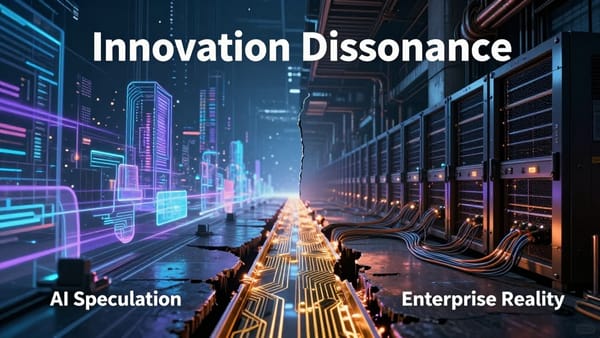
The technological landscape of 2026 is no longer defined by the speculative fervor that characterized the early 2020s. Instead, we have entered an era of industrial-scale implementation, where the primary challenge has shifted from "what can AI do?" to "how can we physically sustain it?" As the initial novelty of generative models settles into a pragmatic architectural phase, the global economy is grappling with the arduous physical and infrastructural prerequisites of a digital-first existence. This transition is marked by a notable pivot toward specialized energy solutions, such as small modular reactors (SMRs) and molten salt technology, alongside sophisticated chemical filtration systems designed to mitigate the heavy environmental footprint of the very data centers that power our modern world. Simultaneously, while the consumer experience moves toward seamless AI-driven personalization, legacy software maintenance remains a critical, albeit less glamorous, priority for maintaining systemic stability and global security.
This report provides an objective analysis of the convergence of these trends, examining how enterprises are leveraging robotics and advanced connectivity to meet the demands of an AI-ready economy. From the micro-level of personal computing optimization to the macro-level of power generation for massive hyperscale data centers, the current trajectory suggests a period of intense refinement rather than radical reinvention. We will explore how these developments impact everything from the strategic maneuvers of early-career entrepreneurs to the fundamental infrastructure supporting our digital lives. By analyzing the intersection of hardware capacity, software reliability, and environmental stewardship, we can better understand the precarious balance required to maintain our technological momentum in 2026.
The Physical Backbone: Nuclear Innovation and the Connectivity Crisis
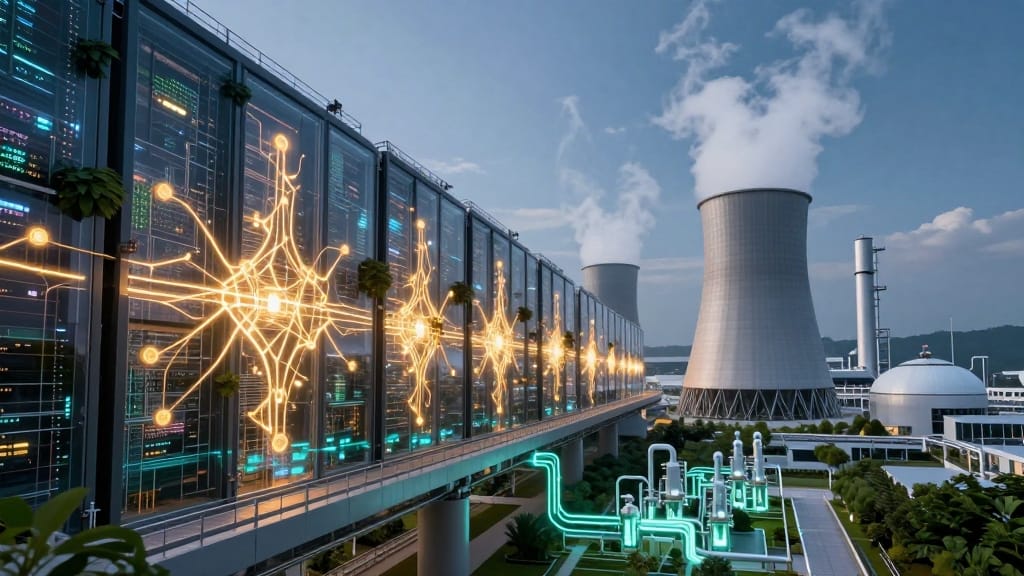
As digital transformation accelerates beyond the capabilities of traditional power grids, the primary constraint on technological progress has shifted from code efficiency to the availability of stable, high-density energy. Data centers supporting the training and inference of multi-trillion parameter AI models require a level of baseload power that renewable sources like wind and solar cannot consistently provide without massive battery storage breakthroughs that have yet to materialize at scale. This has led to a major resurgence in nuclear innovation. According to Seeking Alpha, Terrestrial Energy is currenty positioning its molten salt reactor (IMSR) technology, specifically through Project TETRA, to address this bottleneck. By providing a heat and power source that is both carbon-free and compact, these reactors represent a departure from the "gigawatt-scale" light water reactors of the past, offering a more modular approach tailored to the specific needs of tech campuses.
The logic behind this shift is purely economic: the cost of downtime for an AI training cluster is prohibitively high. For tech giants, the integration of nuclear power is not just a sustainability goal but a risk-management strategy. This trend reflects a broader evolution where tech-adjacent sectors—traditionally considered "old industry"—are becoming essential components of the digital supply chain. We are seeing a blurring of lines between the utility company and the tech firm. In 2026, the competitive advantage of a cloud provider may depend as much on its energy procurement strategy as its proprietary algorithms. The move toward molten salt reactors is particularly significant because they operate at atmospheric pressure, reducing the complexity of safety systems and potentially streamlining the regulatory hurdles that have historically sidelined nuclear projects.
Furthermore, infrastructure is undergoing a parallel evolution at the network layer. It is insufficient to have localized compute power if the data cannot be moved efficiently across the globe. As reported by Yahoo Finance, STL (Sterlite Technologies Limited) recently reported a 26% year-over-year revenue growth in its Q3 FY'26 results. This growth is a direct consequence of the global demand for AI-ready digital infrastructure. The deployment of advanced fiber optics and connectivity solutions is essential to support the "four big technology bets" identified by ZDNET, which include AI, robotics, and edge computing. Without this physical throughput, the latency required for real-time robotic automation in manufacturing or autonomous logistics would remain unattainable. The current expansion in optical fiber networks suggests that we are building the "nervous system" required to match the growing "brain" represented by centralized AI clusters.
Sustainable Innovation: Environmental Accountability in the AI Age
The expansion of the tech sector has brought unintended environmental consequences, specifically regarding the hazardous chemicals used in the manufacturing of high-performance hardware. As semiconductor fabrication and battery production increase, so does the release of Per- and Polyfluoroalkyl Substances (PFAS). However, 2026 has seen a significant breakthrough in environmental remediation. As reported by The Guardian, researchers have developed a new filtration technology capable of removing and destroying these "forever chemicals" at a rate 100 times faster than previous industrial methods. This is a critical development for the technology industry, which has faced mounting legal and regulatory pressure to clean up its supply chain.
The implications of this breakthrough extend beyond simple compliance. For tech companies, adopting these advanced filtration systems is a prerequisite for "social license to operate" in regions with strict environmental protections. The ability to destroy PFAS at the source, rather than merely capturing and storing it, allows for more intensive industrial activity without the associated long-term liability. This matters to stakeholders because as the global tech footprint grows, the cost of environmental mitigation will become a larger line item on corporate balance sheets. This specialized filtration technology provides a path forward where industrial growth is not synonymous with environmental degradation. We are seeing a shift from "greenwashing" to genuine engineering solutions that address the physical residues of our digital world.
From an investment perspective, the outlook for the technology sector remains robust, provided that companies can navigate these new environmental and regulatory landscapes. According to Morningstar UK, secular tailwinds continue to favor established leaders like Microsoft and NXP. These organizations are viewed as safer bets because they control the fundamental components of the tech ecosystem—from the chips (NXP) to the productivity platforms (Microsoft) that businesses rely on. These companies also have the capital reserves necessary to invest in the sustainability infrastructure mentioned above. The market is increasingly rewarding companies that can demonstrate "long-termism"—the ability to build systems that are not only technologically superior but also environmentally and operationally resilient over decades, not just fiscal quarters.
The Evolving Consumer Experience: Personalization Over Productization
On the consumer side of the 2026 tech landscape, Artificial Intelligence has transitioned from a standalone, often gimmicky tool to an invisible background utility that enhances existing services. The goal is no longer to "show off" the AI, but to use it to reduce friction in the user experience. A primary example of this "utilitarian AI" is found in the music streaming industry. ZDNET reports that Spotify’s Prompted Playlists feature, which allows users to generate custom music sets via natural language cues, has transitioned from beta to a mainstream success. This reflects a broader shift toward conversational interfaces across the entire consumer software sector. Users no longer want to navigate complex menus; they want to express intent and have the software execute the task.
This movement toward intuitive interfaces is also reshaping the creative and professional landscape. ZDNET’s evaluation of 2026 web design software highlights a new generation of tools that prioritize speed and automated content management. For small business owners and independent creators, the barrier to entry for a professional digital presence has been drastically lowered. However, this ease of use brings its own set of challenges, specifically concerning the quality and uniqueness of the output. When everyone has access to high-end automated design tools, the value of creative craftsmanship shifts toward the human element of brand identity and strategy. The utility of the tool is high, but the "uniqueness" of the result requires human intervention.
This duality is particularly evident among the new wave of "AI-ready" entrepreneurs. As noted by the BBC, younger business owners have a significant advantage by integrating generative AI into their workflows from day one—managing everything from legal drafting to marketing copy with minimal overhead. Yet, they still face the traditional, immutable hurdles of market saturation and the need for capital. Furthermore, while AI is excellent at pattern matching and task automation, it frequently fails in scenarios requiring nuanced judgment. For instance, ZDNET warns that while weather apps are increasingly accurate, they often lack the localized nuance of human meteorologists during extreme weather events. In critical situations where safety and property are at risk, the "automated" solution is still treated as secondary to expert human analysis. This suggests that in 2026, the most successful consumer applications will be those that strike a balance between AI-driven convenience and human-supervised reliability.
System Maintenance: The Lingering Burden of Technical Debt
Despite the prevailing narrative of rapid innovation, the reality of 2026 is that maintaining existing digital ecosystems remains a primary concern for IT operations. The "old" systems frequently collide with "new" ambitions, creating massive friction. Even the giants of the industry are vulnerable to these complexities. A recent Reuters report detailed a significant Microsoft 365 outage that disrupted thousands of users globally. These incidents serve as a sobering reminder that as we consolidate our productivity tools into a few centralized cloud platforms, we create single points of failure with the potential to paralyze global commerce. The more we rely on these "everything apps," the more catastrophic their failure becomes.
This fragility has spurred a renewed interest in local system health and optimization. As software becomes more resource-intensive, often due to embedded AI background processes, the hardware of yesteryear is struggling to keep up. ZDNET recently tested Microsoft's PC Manager, a utility that provides a "Deep Uninstall" feature to purge leftover registry entries and temporary files. The popularity of such tools indicates that even as we move toward the cloud, the performance of the local endpoint remains vital. Users are finding that "AI-enhanced" operating systems require more rigorous maintenance to stay functional, highlighting a growing tension between software features and hardware longevity.
Simultaneously, the definition of "critical infrastructure" has expanded to include the devices in our living rooms. According to BGR, frequent software updates for smart TVs have become essential not just for features, but for security. In 2026, a smart TV is effectively a networked computer with a massive screen; it is subject to the same vulnerabilities as a laptop or smartphone. The convergence of entertainment and computing means that the surface area for cyberattacks has never been larger. This has created a burgeoning market for specialized privacy and networking tools. For example, Linuxiac highlights the launch of Pangolin 1.15, a tunneled reverse proxy that has expanded to mobile apps. This tool allows users and developers to create secure connections to their home or office servers without exposing them to the open internet. This focus on "micro-security" reflects a growing segment of the population that is increasingly skeptical of centralized security promises and is taking individual steps to protect their digital perimeter.
The Logic of Leisure: Cognitive Puzzles in a Highly Automated World
One of the more curious trends of 2026 is the enduring—and even growing—popularity of simple, logic-based puzzles amidst a sea of high-fidelity entertainment and AI-generated content. As analyzed by Forbes, games like the New York Times' Wordle and the newly released numerical logic game Pips have become daily rituals for millions. This phenomenon suggests that as our external lives become increasingly managed by algorithms, there is a distinct psychological value in self-contained, finite, and purely human cognitive challenges. These games provide a "digital palette cleanser" in an era of information overload.
From a product design perspective, the success of Wordle and Pips offers a lesson in "minimalist engagement." While most tech platforms are designed to maximize time-on-site through infinite feeds and notifications, these puzzles are designed to be played once a day and then put away. This counter-trend toward intentional, limited interaction is something that developers are beginning to emulate in other sectors. We are seeing a slow-motion pushback against "the attention economy," where users are intentionally seeking out services that respect their time rather than competing for it. This shift may eventually force a redesign of how social media and news platforms operate, moving away from algorithmic addiction and toward curated, finite experiences.
The cultural impact of these simple games also underscores a broader digital literacy trend. In 2026, the ability to solve complex problems—even small ones—is valued as a form of mental fitness. For the technology observer, the popularity of these puzzles is not a triviality; it is a data point indicating that despite the rise of AI that can "think" for us, the desire for personal intellectual agency remains undiminished. It serves as a reminder that technology is most successful when it serves human needs, including the need for a sense of accomplishment and the joy of solving a difficult problem independently. This human-centric approach will likely define the next wave of successful software development as we move toward the late 2020s.
Conclusion: The Balance of Complexity and Simplicity
As we navigate the middle of this decade, the technology sector is defined by a paradoxical dual reality: the staggering complexity of the infrastructure required to power our world and the deceptive simplicity of the interfaces through which we access it. Whether it is the deployment of molten salt reactors to provide the gigawatts of energy needed for the next generation of Large Language Models, or the development of 100x faster chemical filtration to mitigate industrial waste, the underlying theme of 2026 is one of physical responsibility. We have moved past the era of "move fast and break things" into a period where the things we could break—our power grids, our environment, and our societal trust—are too vital to risk.
The forward-looking implication is clear: the winners of this era will not necessarily be the ones who build the most advanced AI models in a vacuum. Instead, dominance will belong to those who can master the physical, environmental, and maintenance costs associated with those models. From the stability of the fiber-optic "nervous system" to the security of the smallest smart device in a consumer's home, the tech story of 2026 is essentially a story of stewardship. We are learning to manage the vast power we have built, ensuring that our digital ambitions remain supported by a resilient and sustainable physical foundation. The focus has moved from the cloud back down to the earth, where the real work of the future is being done.