Leveling Up in 2026: Why Gaming Culture is Trading 'Skill' for Subscriptions and Super-Consoles

If you thought the gaming landscape couldn’t get any more chaotic, welcome to 2026, where the "platform wars" are being replaced by "ecosystem anxieties." We’re currently seeing a massive shift in how we play, how developers punish us for being good, and how big tech is trying to keep us tethered to our screens via V.I.P. treatment and ad-supported tiers. Between the record-breaking 55.1 billion viewing minutes clocked on streaming services recently and Bungie finally putting a pin on the calendar for its next big hit, the industry is moving at a breakneck pace. This isn't just about sitting on your couch and pressing buttons anymore; it's about navigating a complex web of cloud infrastructure, predatory monetization strategies, and a hardware landscape that’s more fragmented than a noob’s first attempt at a Soulslike boss. We’re in an era where the hardware under your desk matters less than the credit card in your wallet, and honestly? It’s kind of a vibe, but also totally terrifying. This article dives deep into the hardware hacks, the controversial "catch-up" mechanics, and the subscription services that are turning our hobby into a high-stakes lifestyle. GG, everyone—here is everything you need to know about the current state of play in a year that feels like we're playing reality on Ultra settings with a serious lag spike incoming.
The Death of the Console War and the Rise of the 'Franken-Console'
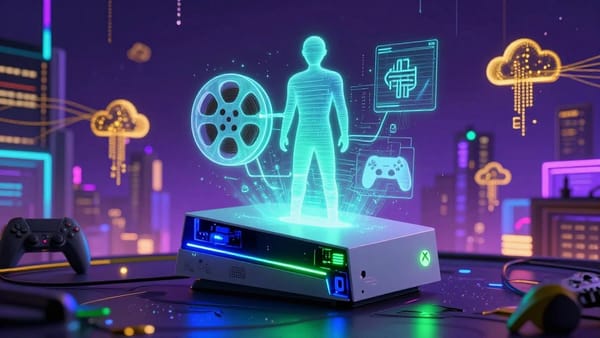
For decades, the "which console is better" debate has fueled toxic Twitter threads, endless Reddit flame wars, and playground arguments that ended friendships. But let’s be real: in 2026, the traditional "console war" is officially in its flop era. The hardware wall is finally starting to crumble—not because Sony or Microsoft suddenly grew a heart and wanted to share their toys, but because the community is tired of the BS and is forcing the issue through sheer engineering brilliance. As reported by IBTimes UK, a Chinese YouTuber known as 小宁子 XNZ has created a literal "one console to rule them all," a 3-in-1 beast that houses the internals of a PS5, Xbox, and the upcoming Switch 2. It’s the ultimate "Franken-console," a middle finger to exclusivity that every power gamer has dreamed of since the days of the SNES versus Genesis.
While IBTimes warns that these DIY rigs ditch optical drives and are a nightmare to repair (good luck getting a warranty on that, lol), it signals a massive shift in gamer desire: we don't want three plastic boxes cluttering our setup; we want one library and zero friction. This DIY revolution highlights a core truth about 2026: the hardware is becoming a burden. When a creator has to literally dismantle three expensive machines to create the "perfect" setup, it shows that the industry's obsession with proprietary hardware is out of touch with the modern, multi-platform gamer. We live in a world of cross-progression and cross-play; why should our physical hardware still be stuck in 2005?
This push for unity is also why Digital Trends notes that Bungie is prioritizing cross-platform support for its revival of Marathon. Bungie knows that an extraction shooter in 2026 is dead on arrival if you can't squad up with your friends regardless of what they’re playing on. Despite criticism during playtests about cluttered UIs and lackluster gunplay, Bungie is taking the extra time to polish these systems. They realize that in the modern ecosystem, the game itself is the platform. If you can play on your PC at home and pick up where you left off on an ad-supported handheld at the airport, the "console war" becomes irrelevant. We are moving toward a future where "exclusive" is a dirty word, and "accessible" is the only metric that matters for a game's longevity. The hardware giants are scared, and they should be; when the community starts building their own solutions to bypass ecosystem locks, the old model of "buying into a family" is officially GG.
The Psychology of Spending: V.I.P. Whales and Ad-Supported Noobs
Gaming isn't just a hobby anymore; it’s a tiered economy that would make a Wall Street broker sweat. We’ve moved past the simple $60-for-a-game model and entered a world of "V.I.P. Squeezing" and ad-subsidized play. On one end of the spectrum, you have the "whales"—the players who spend the GDP of a small country on skins and boosts. These aren't just regular players anymore; they are corporate assets. According to The New York Times, companies like Zynga are running secretive V.I.P. programs where high-spending players get personal account managers. Think about that for a second: you spend so much on virtual hats that a real-life human being is assigned to keep you happy and, more importantly, keep you spending. It’s a creepy, high-stakes retention strategy that treats gaming like a high-roller lounge in Vegas.
But what about the rest of us? While the whales get the red carpet, Microsoft is busy trying to capture the "budget-conscious" (or just plain broke) market. Rumors covered by GSMArena.com suggest a free, ad-supported tier for Xbox Cloud Gaming is on the way. Imagine having to watch a 30-second ad for a caffeine drink just to respawn in Halo. It sounds like a total nightmare, but for millions of gamers in emerging markets, this is the "handshake" that lets them enter the ecosystem without a $500 console. This tier might even be bundled with mobile updates like OxygenOS 16 for users on the 13s, further blurring the line between your phone's OS and your gaming library. It’s the ultimate "free-to-play" evolution: if you aren't paying for the product, you *are* the product.
This "tiered" reality is creating a massive divide in the community. While AllKeyShop.com highlights day-one gems like MIO: Memories In Orbit hitting Game Pass—which feels like a win for the little guy—the "revolving door" nature of these services is the catch. As VidaExtra reports, the second half of January sees seven major titles leaving Xbox Game Pass. It’s a FOMO-driven economy. You don't "own" your library; you're just renting time in a digital garden that the platform holder can prune whenever they want. This shift from ownership to access means your gaming experience is now a monthly subscription line item, right next to your Netflix and Spotify. If you stop paying, your digital life disappears. Is it convenient? Sus. Is it the future? Totally.
The Skill Gap: Why Games Are Punishing the Pros
Is being too good at a game actually a bad thing now? In the era of "everyone's a winner," developers are increasingly leaning into mechanics that intentionally nerf high-level play to "protect" the casual player base. It’s the "participation trophy" of gaming, and it’s driving the competitive community absolutely mental. As discussed by WhatCulture, many games now include "blue shell" style mechanics or RNG (Random Number Generation) elements that guarantee a skilled leader loses their advantage just to keep the match "exciting." This isn't just bad balancing; it’s a fundamental shift in game design philosophy where the "experience" of the average player is prioritized over the integrity of competition. If you spend 1,000 hours mastering a movement system just for the game to slow you down because your K/D ratio is "too high," what’s even the point of grinding?
This trend is sparking a toxic "uninformed expertise" culture. According to The Washington Post, "ball and gun" gamers—casual fans of mainstream shooters and sports titles—often dominate conversations with a confidence they don't actually possess. These vocal minorities end up influencing dev teams who are desperate to keep their player numbers up, leading to "nerfs" and "buffs" that make no sense to the people who actually understand the game's meta. It’s a weird paradox: gaming has never been more popular, but the "hardcore" gamer has never felt more alienated by the very games they helped build. We're seeing a pushback against "Skill-Based Matchmaking" (SBMM) that feels more like "Skill-Based Punishment."
Despite this trend toward making things easier, there’s a massive nostalgia-fueled craving for the days when games were unapologetically difficult and required specialized knowledge. Take Steel Battalion, for example. With its legendary 17-pound, 40-button controller, it was recently hailed by IGN as an "Xbox immortal" in its ranking of the top 100 Xbox games. This ranking, a collab between IGN and Outside Xbox, reminds us that gamers still respect "industrial-grade" experiences that don't care about your feelings. There’s a certain respect for a game that demands you learn how to flip three switches just to start your mech's engine. While modern games try to hold our hands with waypoint markers and auto-targeting, the legends of the past prove that we actually value the struggle. The 2026 gaming landscape is a tug-of-war between "accessibility" and "mastery," and right now, the blue shells are winning.
Streaming Synergy: From Lady Dimitrescu to Stranger Things
The line between "playing" and "watching" is thinner than the margin for error in a speedrunner’s "No-Hit" run. In 2026, the industry has realized that people spend just as much time—if not more—watching other people play games as they do playing them themselves. This "watch-play" synergy is the new gold mine. Nielsen data reported by The Wrap shows that Christmas Day 2025 shattered records with 55.1 billion viewing minutes. This wasn't just people watching Hallmark movies; it was fueled by the crossover appeal of major NFL games on Netflix and the cultural juggernaut of Stranger Things. When a show like Stranger Things drops, it doesn't just dominate TV; it dominates Roblox, Fortnite, and every other social gaming space. The content is the platform, and the platform is wherever you happen to be looking.
Sony is a master at this crossover game, which is why they are currently pushing Resident Evil Village on PlayStation Plus. As Inverse points out, the charismatic Lady Dimitrescu isn't just a boss; she’s a meme-culture icon that bridges the gap between horror fans and casual scrollers who just want to see what all the "giant vampire lady" hype is about. By putting these "meme-able" games on subscription services, Sony ensures that their IP stays at the center of the cultural conversation. They aren't selling a game; they’re selling a moment. This synergy is also why we’re seeing more "lifestyle" gaming content—it's not about the mechanics; it's about the vibes. Whether it’s optimized mobile gaming in the UK as suggested by IBTimes UK or high-fidelity streaming on a PC, the goal is total immersion through every available screen.
Even the OGs are getting in on the "lifestyle" trend. The Paley Museum is currently hosting a massive Pac-Man exhibit, proving that "basic concepts" still hold weight in a world of complex VR and hyper-realistic graphics. It’s a reminder that before we had V.I.P. account managers and ad-supported cloud tiers, we had a yellow circle in a maze. And honestly? Sometimes that’s all you need. Between the high-octane Overcooked-style chaos found in various clones (shoutout to SVG for documenting those) and the massive streaming numbers on Netflix, it’s clear that gaming has moved from a subculture into the literal air we breathe. If you aren't playing a game, you're watching it; if you aren't watching it, you're buying the merch; if you aren't buying the merch, you're seeing a museum exhibit about it. There is no escape, and honestly? We don't want one.
Conclusion: The Future of Your Screen Time
As we look toward the rest of 2026, it’s clear that our relationship with gaming has changed forever. We’ve traded the simplicity of "owning a console" for the complexity of "managing an ecosystem." The fragmentation of media is our new reality, and the "platform" is now whatever screen is closest to your face. Your TV guide—whether you're checking TVLine.com for the series finale of The Rookie or looking for streaming gems like "Roofman" on The New York Times' weekly list—is now just as likely to include a 24-hour Twitch stream or a high-stakes esports tournament as it is a BBC "masterpiece" like the one currently being hailed on AOL. The walls are down, the genres are blending, and the "gamer" label is starting to mean everyone.
The final takeaway? The industry is moving toward a future where "where you play" matters infinitely less than "how much you pay." It’s a brave new world for the V.I.P. whale and a confusing one for the F2P noob watching ads just to get a taste of the action. But through all the corporate greed, the "Franken-consoles," and the blue-shell mechanics, the core of gaming remains the same: it’s about that perfect moment of immersion, whether it’s in a retro maze or a hyper-realistic extraction shooter. The games are watching us just as much as we're watching them, tracking our stats, our spending, and our attention spans. So, keep your eye on the meta, watch out for the ad-tier bait-and-switch, and never let a blue shell ruin your vibe. GG, stay woke, and keep your controllers charged (even if they're attached to a 17-pound behemoth). See you on the leaderboard—or in the ad break.