Innovation and Instability: Trends Defining the 2026 Landscape

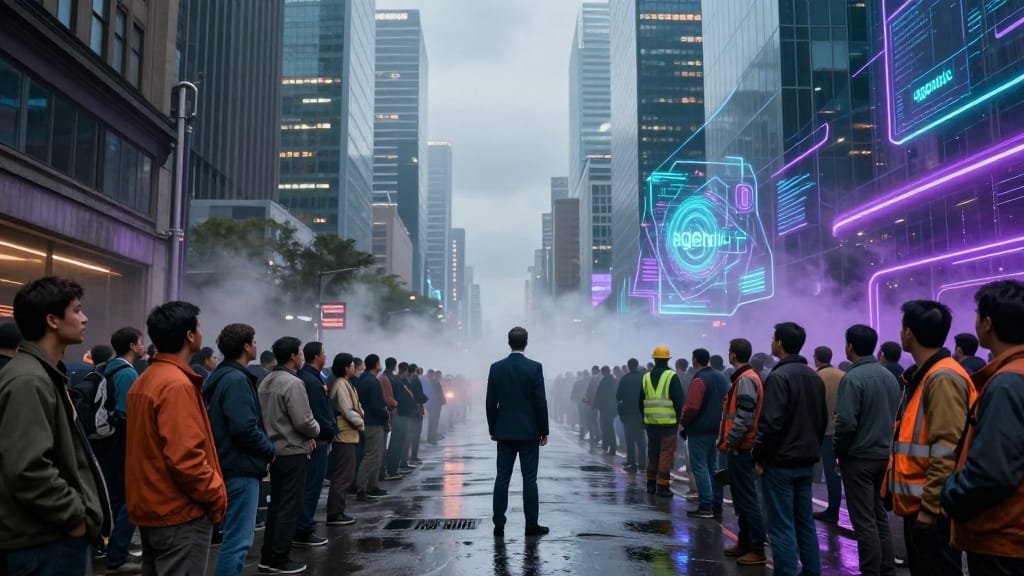
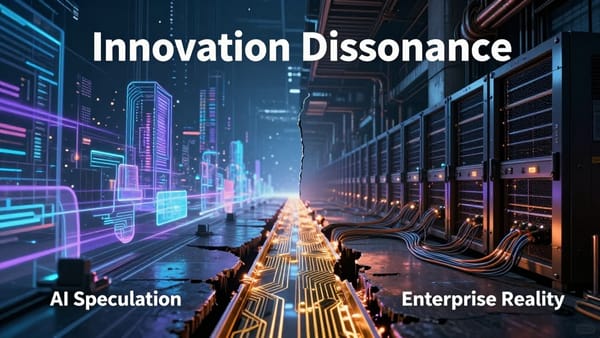
The dawn of 2026 has arrived with a stark duality, balancing revolutionary technological breakthroughs against a backdrop of local economic shifts and public unrest. From the showroom floors of Las Vegas to the streets of Westwood and Cape Coral, the current landscape is defined by "agentic" artificial intelligence, a hardening of immigration enforcement, and a reshuffling of the American political and retail sectors. This synthesis of advancement and anxiety suggests a year of transition where legacy systems—be they in the workplace, the legislature, or the local storefront—are being aggressively challenged by new models of efficiency and governance. As the global community navigates the complexities of a post-digital transformation era, the friction between automated efficiency and human-centric stability has become the primary driver of social and economic policy. This article examines the core pillars of this transformation, analyzing how emerging technologies, shifting retail paradigms, and volatile public safety concerns are converging to create a year that is as unpredictable as it is innovative. We are witnessing a fundamental recalibration of the social contract, where the speed of silicon is often at odds with the deliberative pace of democratic and communal life.
What we know: Verified Facts
- Technological Leap: Intel has officially debuted its 18A process node, powering the Panther Lake architecture, while Anthropic has released advanced "agentic" capabilities for its Claude AI model.
- Workforce Impact: Software is transitioning from generative suggestions to executing autonomous workflows, aimed at reducing "middle management" administrative tasks.
- Retail Volatility: Long-standing local businesses, such as Nash Bros. in Texas, are closing due to shifting consumer habits, while a burglary spree in Catonsville, Maryland, has targeted multiple small businesses.
- Political Shifts: Mary Peltola has officially entered the Alaska Senate race, a move seen as a centerpiece of the Democratic strategy to reclaim the chamber.
- Public Unrest: Notable incidents of violence and protest have occurred in Westwood, CA, involving a vehicle driving into a crowd, and in Cape Coral, FL, regarding immigration and foreign policy.
- Corporate Governance: New Windows 11 administrative policies allow for the total removal of AI Copilot at the enterprise level, signaling a pushback against forced AI integration.
What we don’t know yet: Key Uncertainties
- Long-term Displacement: The exact extent to which agentic AI will replace entry-level white-collar roles versus merely augmenting them remains a subject of intense economic debate.
- Retail Recovery: It is unclear if the $2.1 million in West Virginia development grants will be sufficient to offset the broader decline in brick-and-mortar retail in rural corridors.
- Safety Prophylactics: Law enforcement strategies for mitigating "vehicle-ramming" incidents at protests are under review, but no national standard has yet been adopted following the Westwood incident.
- Hardware Availability: While Intel's 18A process is promising, the global supply chain's ability to meet the projected demand for AI-dedicated hardware in 2026 is still unproven.
The Intelligence Revolution: Beyond Basic Automation
As the tech industry moves deeper into 2026, the focus has shifted from generative chatbots that merely summarize information to "agentic" software capable of executing complex, multi-step workflows. According to Axios, Anthropic’s Claude is moving further into the "cubicle," signaling a race among AI companies to sell software that doesn't just suggest text, but simplifies the core of information work by interacting with APIs, managing calendars, and filing reports without human oversight. This evolution is mirrored in the prestigious MIT Technology Review's 10 Breakthrough Technologies of 2026, which highlights the innovations currently reshaping the global economy, specifically focusing on the shift from LLMs (Large Language Models) to LAMs (Large Action Models).
The implications of this shift are profound for the labor market. While previous iterations of AI threatened creative and clerical roles, agentic AI targets the coordination layer of business. This means the hardware must keep pace with these software demands to prevent latency in decision-making. At the recent CES 2026, the hardware-software symbiosis was on full display. As reported by The Outerhaven, Intel's Panther Lake—built on the 18A process—is designed to deliver high-performance video encoding and everyday efficiency, potentially eliminating the need for multi-laptop setups by integrating NPU (Neural Processing Unit) power directly into every day-to-day task. This enables local AI processing, which addresses privacy concerns but places immense pressure on corporate IT budgets to refresh old hardware faster than the traditional five-year cycle.
However, this rapid integration of AI has met significant resistance in the corporate IT sector, where stability is often valued over novelty. Petri reports that a new Windows 11 policy now allows administrators to automatically remove Microsoft Copilot via Group Policy or Intune. This development highlights a growing tension between Silicon Valley-led AI adoption and the desire for local administrative control. Many organizations are finding that "forced AI" creates security vulnerabilities and distracts employees, leading to a "Right to Remove" movement within the enterprise software space. This pushback suggests that while the technology is ready, the organizational culture of many legacy firms is not yet prepared for an agentic workforce.
Why this matters: The transition to agentic AI represents a shift from "tools" to "teammates." For stakeholders, this means a total re-evaluation of liability. If an AI agent incorrectly executes a contract or manages an inventory order, the legal framework for accountability remains murky. For the market, this drives a massive surge in edge-computing demand, as businesses prefer to run these powerful agents locally rather than on shared cloud servers where data could be compromised. The future implications involve a "hollowing out" of middle management, where the primary role of a human manager shifts from coordination to ethical oversight and strategic auditing of AI-driven outcomes.
Retail and Real Estate: A Tale of Two Economies
While the tech sector focuses on the virtual cubicle, the physical retail landscape is undergoing a painful transformation characterized by a widening gap between luxury-focused development and the decline of traditional small-town "Main Street" commerce. In New Braunfels, Texas, the beloved Nash Bros. Stores is closing its doors after 14 years, marking what many locals see as the end of a long-standing downtown era. This closure is emblematic of a broader trend where family-owned apparel and hardware stores are unable to compete with the logistical efficiency of automated e-commerce hubs and the rising costs of commercial real estate.
This struggle is exacerbated in suburban regions where a perceived rise in crime is discouraging foot traffic. In Catonsville, Maryland, businesses along Frederick Road are reeling from a targeted burglary spree that has shaken community confidence. According to WBALTV and further details from WMAR 2 News, several small businesses were targeted in overnight break-ins, leaving neighbors to document the damage on social media and demand increased police presence. The psychological impact of these crimes often outweighs the direct financial loss, as owners face rising insurance premiums and a sense of vulnerability that discourages new investment in these older commercial corridors.
Conversely, high-end and infrastructure-heavy sectors are seeing growth, showcasing a "K-shaped" economic recovery. In Washington D.C., The Georgetowner notes the arrival of Ateliers Jacob, a 3,300-square-foot showroom specializing in custom kitchen cabinetry and high-end design. This suggests that while mid-market retail is shrinking, the luxury segment—driven by home renovation and high-net-worth migration—remains robust. Public-sector investment is also attempting to bridge the gap; Governor Patrick Morrisey recently announced $2.1 million in grants for 23 West Virginia counties. As reported by Yahoo News, these funds are earmarked for developing "business-ready" sites. The goal is to move beyond the retail-dependent model by attracting future industrial players in the green energy and logistics sectors.
Impact on stakeholders: For residents in places like Catonsville, the "retail desert" effect is a real risk as burglaries drive away the services they rely on. For policymakers, the challenge is to move away from "band-aid" grants and into systemic safety and economic revitalization. What we see next will likely be a consolidation of retail into "lifestyle centers"—curated, highly secure mixed-use environments—while traditional street-front retail continues to struggle with the dual threats of digital competition and physical security concerns. The expansion of high-end firms like Ateliers Jacob indicates that capital is flowing toward specialized, experience-based services that cannot be easily replicated by AI or e-commerce.
Public Safety and Global Tensions at the Doorstep
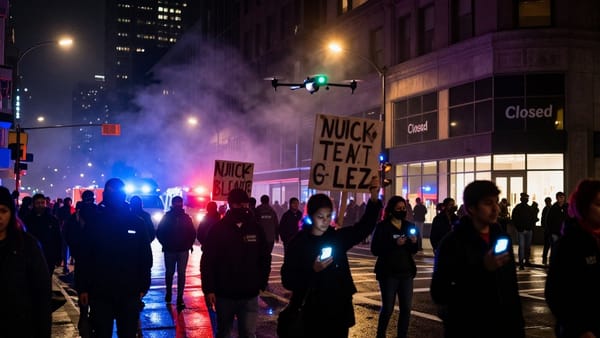
The intersection of foreign policy and public safety has become increasingly volatile as international conflicts find immediate expression in domestic civic spaces. In Westwood, California, an anti-Iranian regime rally turned chaotic when a U-Haul drove into a crowd near the federal building, an incident that has sent shockwaves through the local community. ABC7 Los Angeles reports that the incident caused immediate panic and resulted in medical evaluations, highlighting how geopolitical conflicts are frequently spilling into American streets with violent outcomes. This "localization" of global strife places an immense burden on city police departments who must now manage protests that are often sparked by events occurring thousands of miles away.
Similarly, in Cape Coral, Florida, protesters have gathered to voice opposition against immigration enforcement and U.S. foreign policy, according to WINK News. These demonstrations reflect a deep-seated anxiety over a perceived hardening of domestic security measures. These protests coincide with a visible shift in tactics by federal agencies. According to Vox, the nature of Immigration and Customs Enforcement (ICE) operations in American cities has become "very distinct" in its current execution, moving toward more frequent and visible enforcement actions that have sparked backlash from civil rights advocates. This environment creates a challenging friction for local leaders who must balance the fundamental right to free speech with the imperative to maintain public order and prevent "lone actor" incidents like the one seen in Westwood.
The tactical nature of these incidents—specifically the use of vehicles as weapons—has led to calls for improved urban design, such as more ubiquitous bollards and temporary barriers during permitted events. However, the root cause is a social cohesion issue. When global policy feels inaccessible to the average citizen, the protest line becomes the only perceived outlet for agency. This highlights a growing "safety gap" where the rapid-fire nature of social-media-driven mobilization outpaces the ability of local law enforcement to de-escalate or secure public spaces. The incident in Westwood is currently under investigation by the LAPD, and the findings will likely influence how protest permits are issued for the remainder of 2026.
Why it matters: For the public, these incidents reduce the "perceived safety" of civic participation, which can lead to a chilling effect on political discourse. For markets, the instability in major cities can lead to increased security costs for businesses and a potential decline in tourism and local commerce. The future implication is a move toward "fortress cities," where public events are increasingly siloed behind heavy security cordons, potentially altering the character of American public life. The focus on immigration enforcement, specifically, suggests that 2026 will be a year of heightened legal and social battles over the definitions of residency and community security.
Strategic Moves: Political Recruitment and Institutional Continuity
Amidst this social and economic volatility, the political and sports worlds are solidifying their leadership for the years ahead, seeking stability in a time of rapid change. Democrats have made a strategic, high-stakes play for the Senate by successfully recruiting former Congresswoman Mary Peltola. As reported by The New York Times, Peltola’s run for the Senate in Alaska is viewed as a critical step for the party as it navigates a difficult map to retake the chamber. Peltola, known for her "pro-fish, pro-family, pro-choice" platform and her unique ability to appeal to rural and indigenous voters, represents a move away from hyper-partisan branding toward localized, identity-driven politics. This recruitment is a recognition that in 2026, winning statewide contests requires candidates who can bridge the gap between national party priorities and local economic realities.
The recruitment of Peltola also underscores the changing nature of political campaigning in 2026. Campaigns are increasingly utilizing the very AI tools discussed in earlier sections for micro-targeting and sentiment analysis. However, the rely on a high-profile, "proven" candidate like Peltola suggests that human charisma and "brand trust" are still the most valuable assets in a political economy saturated by digital noise. The Alaska race is expected to be one of the most expensive in the nation's history, as both parties view it as a bellwether for the national mood regarding the current administration's handling of energy and indigenous rights.
In the world of professional sports, stability is being prioritized over radical restructuring. The Green Bay Packers, a franchise known for its long-term planning, is working to ensure that its coaching staff remains intact despite the pressures of a high-turnover league. Head coach Matt LaFleur, despite having only a year left on his contract, has expressed a clear desire to remain with the team. According to The Athletic, LaFleur is currently meeting with Packers President Ed Policy to discuss his future beyond 2026. This signals a commitment to continuity in an environment where many teams are opting for frequent resets. For the Packers, the goal is to align the coaching staff with a young roster that is just entering its prime, reflecting a corporate philosophy of "growth through stability" that contrasts sharply with the "disruptive" ethos of the tech sector.
What's next: The political fallout of the Peltola recruitment will be felt in the coming months as fundraising numbers are released. In sports, the LaFleur-Policy negotiations will likely set the market rate for coaches in the 2026-2027 cycle. These moves represent a broader trend of "doubling down" on established talent to weather a year defined by systemic uncertainty. Whether it is in the halls of the Senate or the frozen tundra of Lambeau Field, 2026 is becoming a year where established leaders are forced to re-justify their positions in the face of new, often automated, challenges.
Forward Outlook: The 2026 Trajectory
As we look toward the remainder of the year, the "weird gadgets" and significant news from ZDNET's CES 2026 recap suggest a world that is moving faster than its regulatory or social frameworks can manage. Whether it is Chinese appliance giant Dreame Technology pivoting to hypercar concepts like the Nebula Next 01 (Gear Patrol) or the deployment of agentic AI in the workplace, the trend is toward radical re-invention. This re-invention is not without its costs, as evidenced by the business closures and public safety incidents that have marred the start of the year. The primary challenge for 2026 will be the "Integration Gap"—the space between what technology can do and what society is prepared to accept.
The coming months will likely see a deeper divide between high-tech hubs and local economies struggling with crime and closures. Furthermore, as the election cycle nears, the recruitment of top-tier candidates like Mary Peltola suggests that political parties are bracing for a high-turnout, high-stakes year where the core issues will be economic security and personal safety. For businesses and policy makers alike, the mandate for 2026 is clear: adapt to the speed of technological innovation while managing the growing friction in social and domestic policy. This year will be defined by how well we manage the transition from "the way things were" to an automated, high-stakes future that demands both technical proficiency and a renewed commitment to community stability. As we move into the second quarter of 2026, the success of these emerging models—from Intel's silicon to Peltola's candidacy—will provide the roadmap for the decade to come.
Ultimately, 2026 is a year of "The Great Re-alignment." While the headlines focus on the friction—the protests, the store closings, the political maneuvering—the undercurrent is a search for a new equilibrium. We are moving away from the chaotic experimentation of the early 2020s into a more structured, though no less intense, period of implementation. The future of 2026 belongs to those who can master the "agentic" nature of modern life—using new tools to solve old problems while maintaining the human connections that crime and technology threaten to dissolve. It is a year that demands precision, resilience, and a clear-eyed understanding that in a world of high-speed innovation, the most valuable currency remains trust.