Hardware Resilience and the AI Horizon: Analyzing the Systems Powering Tomorrow’s Intelligence


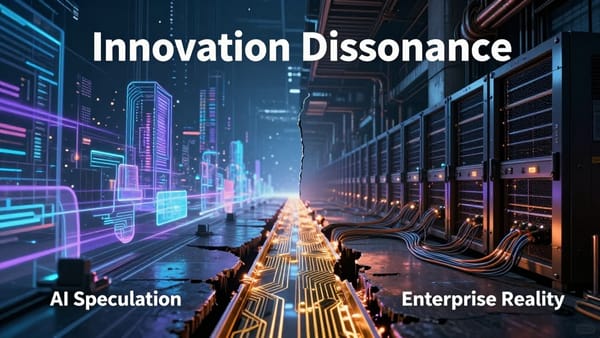
The global technology sector is currently navigating a complex duality: the immediate, grueling logistical requirements of high-performance hardware and the existential long-term questions posed by the rapid evolution of artificial intelligence. While hardware manufacturers like Micron and Seagate are reporting robust financial results fueled by data-heavy workloads, the software and AI industries are wrestling with a "civilization-level" debate regarding the ethical and safety-oriented speed of development. Integration is no longer just a high-level software abstraction; it is increasingly a concern of physical infrastructure—the high-bandwidth memory, the mass-capacity storage, and the advanced semiconductors—that permits these sophisticated neural networks to function at an enterprise scale. We are moving past the era of experimental chatbots and into an era of structural dependency.
This article provides an analytical review of the convergence between silicon-level innovation, the evolving landscape of specialized software development, and the regulatory frameworks attempting to keep pace with these shifts. From the release of utility-focused open-source tools to the dire warnings of "superhuman" AI by 2027, the industry is entering a period where the boundary between theoretical capability and practical deployment is blurring. We will examine the financial drivers behind this movement, the emerging "vibe-coding" trends that threaten to disrupt traditional computer science education, and the critical security measures being implemented at both the state and enterprise levels. In doing so, we seek to understand not just the "what" of technology growth, but the "why" behind the physical and digital architecture of the next decade.
The Hardware Backbone: Memory and Storage in the AI Era
The surge in generative AI applications has fundamentally altered the financial and operational trajectory of semiconductor and storage companies. As reported by Yahoo Finance, Micron Technology is preparing to present its latest developments at the Wolfe Research Auto, Auto Tech and Semiconductor Conference. This participation underscores a critical realization in the industry: AI is not restricted to the data center. The demand for intelligence at the "edge"—specifically in autonomous vehicles and sophisticated IoT devices—requires a new class of memory that handles extreme throughput with minimal latency. We are no longer discussing simple storage; we are discussing the lifeblood of real-time decision-making systems.
This shift is not merely a cyclical uptick typical of the semiconductor "boom and bust" cycles of previous decades; it is a structural transformation in how data is processed. According to Insider Monkey, AI-driven demand is a primary support for Micron's margin expansion. The complexity of modern Large Language Models (LLMs) requires increasingly dense and efficient High Bandwidth Memory (HBM3E). Unlike standard DRAM used in consumer PCs, HBM3E is a vertically stacked architecture that allows for significantly faster data transfer between the memory and the GPU. As AI models grow from billions to trillions of parameters, the bottleneck is rarely the processor's clock speed, but rather the speed at which data can be fed into the processor. Micron’s ability to scale this production is what maintains its competitive edge in a market where supply often lags behind the insatiable demand from hyperscalers like Microsoft and AWS.
Simultaneously, the physical storage of the monumental datasets used to train these models remains a significant bottleneck and a capital expenditure challenge for many enterprises. Seagate Technology recently reported its fiscal second quarter 2026 results, highlighting its role as a leading innovator in mass-capacity data storage. As AI models move beyond text and begin to ingest larger datasets—including 4K video, high-resolution medical imagery, and multi-modal sensory data—the demand for high-capacity hard drives remains resilient. Seagate’s focus on Heat-Assisted Magnetic Recording (HAMR) technology allows for higher areal density, effectively packing more bytes into the same physical footprint. This hardware foundation provides the necessary "physicality" to an AI revolution that the public often perceives as abstract cloud-based algorithms. Without the spinning disks and silicon wafers produced by these incumbents, the "intelligence" of the next generation would have nowhere to reside.
The implications for stakeholders are clear: as the complexity of AI increases, the value shifts toward the companies that control the physical constraints of computing. For investors, this means monitoring "bit shipments" and "inventory levels" with the same intensity previously reserved for software margins. For engineers, it means designing software that is "hardware-aware," optimizing code to reduce the energy and memory footprint of every inference call. The era of wasteful, unoptimized software development is ending because the physical resources required to sustain it are becoming increasingly scarce and expensive.
The Software Evolution: From Open Source to "Vibe-Coding"
While the hardware provides the raw power, the software development cycle is undergoing a radical democratization. One of the most disruptive trends emerging in late 2024 and early 2025 is the rise of "vibe-coding," a colloquial term for high-level, AI-assisted development where the user focuses on intent and "feel" rather than syntax and logic. According to ZDNET, Moonshot's new Kimi k2.5 model allows users to "vibe-code" from a single video upload, converting visual information and natural language prompts into functional, executable code. This represents a paradigm shift where the "low-code/no-code" movement meets computer vision, allowing a founder or a non-technical manager to record a video of a screen and instruct the AI to "make it work like this, but with more blue."
This shift suggests a future where the barrier to entry for software creation is effectively dismantled. However, as any seasoned architect will note, the practical utility of "vibe-coded" solutions for complex, high-availability enterprise systems remains an open question. There is a fundamental difference between a functional prototype and a secure, scalable application. As AI generates more of our code, we may see a "technical debt crisis" where systems are built using logic that no human fully understands, making it nearly impossible to debug when edge cases inevitably cause a crash. The role of the developer is thus shifting from a "writer of code" to a "reviewer of logic," requiring a deeper focus on systems architecture and security auditing than on learning the nuances of a specific programming language like Python or C++.
Beyond these experimental frontiers, the core software ecosystem continues to refine itself through iterative updates and a relentless commitment to performance. For instance, the release of Goverlay 1.7.3 and the major improvements in the Transmission 4.1 BitTorrent Client demonstrate that performance optimization remains a high priority for the Linux and open-source communities. These tools may seem granular in the face of billion-dollar AI models, but they represent the foundational plumbing of the internet. Transmission 4.1, for example, brings a move towards C++ efficiency that reduces resource consumption, a necessary step as our workstations are increasingly taxed by background AI processes. Even legacy hardware is seeing unexpected lifespans; as Yahoo Tech reports, Apple recently released software updates for devices running iOS 12. This extended support for "obsolete" hardware reflects a growing consumer demand for longevity and sustainability in an era where new devices are often prohibitively expensive.
This software evolution creates a dual-track market. On one track, we have highly automated, AI-driven development that favors speed and accessibility. On the other, we have a "hardened" core of performance-critical software maintained by the open-source community. The challenge for the next generation of technologists will be navigating the bridge between these two worlds: ensuring that the "vibes" of the interface are backed by the "rigor" of the underlying architecture. As we integrate AI more deeply into our development pipelines, the ability to verify and validate code will become a far more valuable skill than the ability to write it from scratch.
Strategic Constraints and Existential Warnings
The rapid proliferation of technology has outpaced the development of legal and ethical frameworks, leading to a new era of state-level regulation and executive caution. In Texas, the government is taking an increasingly hard line on cybersecurity as a pillar of public safety. According to The Black Chronicle, Governor Greg Abbott has expanded the list of prohibited technologies for state employees. This is not just a localized policy shift; it is a manifestation of a broader geopolitical trend where software and hardware are viewed as potential vectors for foreign interference. By restricting certain apps and hardware manufacturers, the state aims to protect critical infrastructure from data breaches that could compromise the privacy of millions of citizens. This highlights the growing friction between the "borderless" promise of the internet and the localized reality of national security.
Perhaps more alarming than legislative restrictions are the catastrophic warnings coming from the very individuals building the future. According to Forbes, Anthropic CEO Dario Amodei has warned that "superhuman" AI—systems that outperform humans in almost every economically valuable task—could arrive as early as 2027. Amodei’s concerns are not limited to the standard talking points of job displacement or deepfakes. He cites "civilization-level" risks, pointing to the potential for AI models to assist in the creation of biological weapons or to be used by authoritarian regimes to implement total surveillance states. When the head of a multi-billion-dollar AI firm suggests that the technology could pose an existential threat within three years, it is no longer possible to dismiss these concerns as science fiction. Such warnings suggest that the window for establishing global safety guardrails is closing significantly faster than policy makers are prepared for.
This atmosphere of tension is compounded by societal events that demand a response from tech leadership. Technology does not exist in a vacuum; it is shaped by and, in turn, shapes the political landscape. As noted by The Atlantic, there has been a notable silence from many of Silicon Valley’s top CEOs following a recent shooting in Minneapolis, leading to what some call a "reckoning" for the tech right. The intersection of political ideology and corporate responsibility is becoming harder to navigate as algorithms become the primary arbiters of public discourse. When tech leaders remain silent on social issues, it is often interpreted as a political stance in itself, further polarizing a workforce that is already divided on the ethical applications of their own inventions.
The strategic constraint for the industry is no longer just a lack of chips or talent; it is a lack of trust. If the public and the government perceive AI as a "superhuman" threat or a tool for foreign espionage, the resulting regulatory backlash could be severe. We are likely to see more "sovereign AI" projects, where nations build their own closed-loop systems to avoid reliance on foreign technology. This balkanization of the tech stack could lead to a fragmented global economy, where the "splinternet" becomes a physical reality in the hardware and software we use every day. The challenge for companies like Anthropic, Google, and OpenAI is to prove that their models can be both "superhuman" and "human-aligned" before the regulatory hammer falls.
Practical AI and Industry Trends in the Consumer Market
For the average user, the focus remains less on existential bio-risks and more on the practical cost-to-value ratios of the tools they use daily. The "gold rush" phase of AI subscriptions is reaching a point of saturation, and consumers are becoming increasingly discerning. ZDNET recently conducted an analysis of whether ChatGPT Plus remains worth its $20 monthly fee compared to the increasingly capable Free and Pro tiers. As OpenAI and its competitors push more features—such as the o1-preview model and advanced voice modes—into the lower tiers to maintain market share, the "prosumer" is questioning the necessity of a recurring monthly expense. This is a classic example of commoditization in the software world: what was a premium "miracle" feature eighteen months ago is now a standard expectation.
In specialized professional fields, the "practical" application of data is driving significant efficiency gains that are often overlooked by mainstream media. According to Nature Biotechnology, China is seeing a significant rethinking of early-stage clinical development through the lens of translational medicine. By using AI and big data to de-risk clinical programs, researchers are able to identify failing drug candidates earlier in the process, saving billions of dollars and years of wasted effort. This data-first approach is echoed in broader software development trends reported by Coruzant, which emphasize how enterprise systems are being reshaped to handle the immense data demands of modern client services. In these contexts, AI is not a "chatbot"; it is a sophisticated statistical engine integrated into the very fabric of scientific and corporate discovery.
Even in everyday moments, the "always-on" nature of the tech industry is becoming more visible. The Hindustan Times recently featured a tech worker fixing software bugs on a laptop while on a bike journey to Dhanushkodi, illustrating the dissolution of the "work-life" boundary. While some see this as a triumph of mobile connectivity, others see it as a cautionary tale of the pressures inherent in the modern developer's life. The expectation of 24/7 uptime for global services means that the human elements of the tech ecosystem are often stretched as thin as the hardware they maintain. For those seeking a brief mental break from these complexities, simple digital puzzles like the NYT Pips continue to provide accessible, low-stakes cognitive engagement, serving as a reminder that despite the rise of superhuman machines, high-quality human-centric design still holds a unique place in the digital economy.
The overarching trend in the consumer and professional markets is a shift toward "invisible AI." We are moving away from the novelty of interacting with a separate AI entity and toward a world where AI is simply an embedded feature of every tool, from the clinical researcher's workbench to the cyclist's tablet. This integration reduces the friction of adoption but also makes the technology harder to monitor. As AI becomes a utility like electricity—ubiquitous, essential, and largely ignored until it fails—the responsibility for its safety and reliability shifts more heavily onto the architects and providers. The industry must now balance the pressure to add "AI features" to every product with the need to maintain the basic functionality and security that users depend on.
Conclusion: The Convergence of Silo and Silicon
The technology industry is currently defined by a stark contrast between high-speed growth and high-stakes caution. We find ourselves in an era where the hardware giants—Micron and Seagate—are successfully scaling to meet the immediate, ravenous data hunger of the AI revolution, providing the physical foundation upon which all modern intelligence is built. Simultaneously, the software landscape is becoming more intuitive and accessible through "vibe-coding" and vision-based models, suggesting a future where the ability to innovate is limited only by one's imagination rather than one's technical vocabulary. However, this growth is not occurring in a vacuum, and the systems we are building are reaching a level of complexity that challenges our ability to govern them.
As Anthropic’s Dario Amodei warns, the projected arrival of superhuman AI by 2027 suggests that the industry may soon face challenges that transcend mere engineering hurdles. Whether through state-level prohibitions in Texas or the quiet re-evaluation of AI’s societal impact in the wake of political unrest, the focus is shifting from "what can we build" to "how can we safely manage what we have already built." The coming years will be defined by this central tension: the relentless, market-driven drive for innovation vs. the necessary, human-driven imposition of control. For those of us observing this transition, it is clear that the resilience of our hardware and the brilliance of our software will matter little if we cannot ensure that the resulting intelligence remains a tool for human progress rather than a catalyst for systemic risk. The horizon of 2027 is closer than it appears, and the architecture we choose to build today will determine the stability of the civilization that relies upon it tomorrow.