Global Volatility and Domestic Security: Navigating the 2026 Economic and Public Safety Landscape


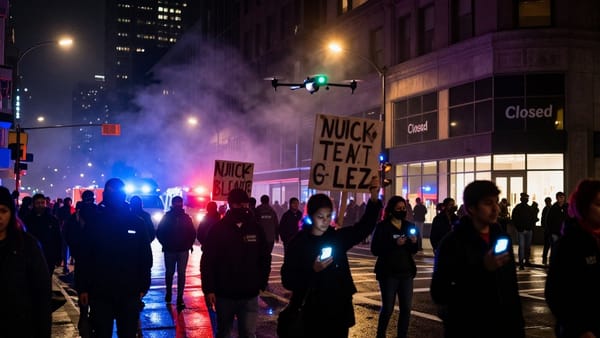
The dawn of 2026 has arrived not with the quiet optimism of a new year, but with a complex, interlocking tapestry of geopolitical unrest, shifting market sentiments, and a sharpened focus on domestic security protocols. We are witnessing a historical pivot point where the "permacrisis"—a state of constant, overlapping disruptions—has transitioned from a theoretical concept into a daily reality for policymakers and citizens alike. As global power dynamics fluctuate in the wake of energy transitions and urban centers grapple with the dual challenges of rising sophistication in crime and evolving technological surveillance, the intersection of international stability and local governance has reached a critical juncture. From the smoke-filled horizons of Caracas to the high-frequency trading floors of Wall Street, the international community is facing a pivotal movement in policy, economic resilience, and the very definition of public safety. This year is not merely a continuation of previous trends; it is a year of reckoning where the resilience of democratic institutions and market structures will be tested against the backdrop of an increasingly fragmented world order. The following analysis examines the specific friction points that are defining the opening weeks of 2026 and what they portend for the months ahead.
Geopolitical Tensions and the Global Energy Crisis: The Venezuela Factor
Stability in South America has shifted from a peripheral concern to a primary focus for global observers as Venezuela enters a period of profound and potentially violent uncertainty. Early January 2026 reports have sent shockwaves through the diplomatic community as explosions have been heard in Caracas, signaling a potential escalation in domestic unrest that many fear could lead to a systemic collapse or a hard-line military consolidation. This instability is particularly impactful given the nation's paradoxical role in the global energy market. Despite holding the title of the world's largest oil holder with an estimated 303 billion barrels of proven reserves, Venezuela continues to struggle with catastrophic infrastructure decay and deepening political isolation, according to Business Today.
The strategic significance of Venezuela cannot be overstated. In an era where energy security is synonymous with national security, the inability of the Caracas regime to effectively monetize its sub-surface wealth has created a vacuum. For global markets, this means a perpetual "risk premium" on crude oil prices. As current explosions suggest a fracturing of the internal security apparatus, the risk of a total cessation of exports looms large. Analysis suggests that without significant foreign investment—currently stymied by sanctions and a lack of rule of law—Venezuela’s potential to stabilize global oil prices remains unfulfilled. This leaves the broader market highly susceptible to sudden supply shocks, especially as OPEC+ members monitor the situation with increasing apprehension. The paradox of the "resource curse" is on full display here; having the world’s largest reserves provides no protection against economic collapse when governance fails.
Furthermore, the humanitarian implications of this volatility are beginning to spill over borders, impacting the regional stability of Colombia, Brazil, and beyond. This geopolitical friction has inadvertently sparked a broader international fascination with geography and the mechanics of global borders. This is evidenced by the unexpected viral success of daily educational tools like Globle, which has turned geopolitical literacy into a mainstream pastime. While a game may seem trivial, it reflects a public hunger to understand the world’s shifting lines and the precarious nature of sovereignty in 2026. What we see in Caracas is the localized manifestation of a global struggle for control over dwindling or mismanaged resources, a theme that will dominate foreign policy tables throughout the year.
Wall Street's Precarious Start: Navigating the "Low-Return" Era
As the fiscal year 2026 commences, investors are traversing a landscape defined by "cautious hesitation" rather than the unbridled growth of the early 2020s. Markets have opened the year with a noticeable lack of direction; as noted by CNBC's live market coverage, the initial trading days are showing a disparate mix of sector-specific gains—largely in defense and energy—while broader indices remain stagnated. This sentiment of uncertainty is echoed by Yahoo Finance, which reported that the Nasdaq and S&P 500 have wavered as Wall Street struggles to find a narrative to drive the next bull run.
The core of the issue lies in the transition to a high-interest-rate equilibrium that has finally begun to bite into corporate margins. Analysts are warning of a structural "low-return environment" where the passive indexing strategies of the last decade may no longer suffice. According to the New York Times DealBook, market predictions for 2026 emphasize that the coming months will be a "stock picker’s market," where corporate earnings resilience and debt-to-equity ratios are scrutinized more heavily than at any time since 2008. The era of cheap money is firmly in the rearview mirror, and the market is currently in the "price discovery" phase of this new reality.
Central bank policy remains the primary engine of this volatility. Bloomberg insights suggest that the direction of global markets will be heavily influenced by how effectively the Federal Reserve can navigate the "soft landing"—taming inflation without triggering a structural recession. However, as labor data remains surprisingly tight and consumer spending begins to cool, the margin for error is razor-thin. Before the opening bell each day, institutional investors are increasingly looking at micro-macro drivers. As highlighted in CNBC’s "5 Things to Know", the focus remains on inflation benchmarks and the potential for a "policy pivot." The risk for 2026 is not just a market correction, but a period of prolonged stagflation if energy prices (impacted by the aforementioned Venezuelan crisis) continue to rise while economic output slows. Defensive positioning is no longer just a strategy for the risk-averse; it is becoming the default for the institutional mainstream.
Public Safety and Domestic Intelligence: The High-Stakes Shield
On the domestic front, the dawn of 2026 has brought both significant breakthroughs in counter-terrorism and new legislative challenges that threaten to redefine the relationship between the state and the citizen. In a major security victory, the FBI foiled a planned terrorist attack in North Carolina intended for New Year’s Eve, according to NBC News. Officials indicate that the plot involved sophisticated coordination and was intended to target mass public gatherings. This successful operation reinforces the necessity of proactive intelligence gathering, but it also underscores the evolving nature of domestic threats which are increasingly decentralized and tech-reliant.
However, the methods used to secure the public are coming under unprecedented legislative scrutiny. In Colorado, a pivotal legal battle is playing out that could set a national precedent for digital privacy. A new Colorado bill would require a warrant for law enforcement to search the "Flock" license plate reader database in certain investigations, as reported by Denver7. This represents a significant pushback against the "dragnet" style of surveillance that has become common in the last five years. Proponents of the bill argue that the Fourth Amendment must be protected even in an age of automated data collection, while law enforcement officials warn that such restrictions could hamper their ability to track suspects in real-time during critical "golden hour" windows following a crime.
Conversely, some urban centers are proving that safety can be improved through boots-on-the-ground community initiatives. Baltimore, a city long synonymous with high crime rates, is seeing the fruits of long-term labor. Reports show that Baltimore is marking historic lows in homicide rates, crediting community-driven initiatives and violence interrupter programs for this success, according to Hoodline. Similarly, Memphis city leaders are working to sustain public safety gains made over the previous year, as reported by WREG. These successes are often bolstered by technological enhancements that are less intrusive than mass surveillance; for example, in North Carolina, the Charlotte-Mecklenburg police have praised the advantages of their aviation units in tactical operations, providing an "eye in the sky" that supports patrol officers without the privacy concerns associated with persistent facial recognition or automated license plate databases. The "Baltimore Model" versus the "Surveillance State" is becoming the central debate of urban policy in 2026.
The Ethics of Justice: Reformation vs. Accountability
As the legal system evolves, 2026 is seeing a revitalized debate over the management and rehabilitation of violent offenders. High-profile tragedies continue to test the limits of public patience with the justice system. The murder of Spencer and Monique Tepe in Ohio, as reported by CNN, has served as a grim reminder of the high stakes involved in violent crime prevention and the unpredictable nature of recidivism. These incidents provide the fuel for "tough on crime" advocates who argue that the pendulum of reform has swung too far toward leniency.
Perhaps even more controversial are the administrative decisions regarding post-conviction oversight and restorative justice. In the Pacific Northwest, a specific case has ignited a national firestorm. According to the Daily Mail, a convicted murderer’s presence on an Oregon safety board has drawn significant criticism from law enforcement circles and victims' rights groups. This administrative choice was intended to bring "lived experience" to the reform process, but it has instead raised profound questions about the appropriate boundaries of restorative justice and whether certain crimes should permanently disqualify individuals from public governance roles.
The analysis of these trends suggests that in 2026, the debate over criminal justice will shift from binary "tough" or "soft" rhetoric toward a more nuanced, albeit polarized, discussion on the ethics of rehabilitation. For stakeholders in the legal system, the challenge is twofold: they must satisfy the public's demand for safety and accountability while addressing the systemic issues that lead to incarceration. We are seeing a new focus on "precision justice"—using data to identify high-risk offenders while simultaneously supporting community initiatives that prevent the next generation of crime. This tension between the "lived experience" of the reformed and the "lived experience" of the victims will likely lead to significant legislative revisions of parole and oversight boards across the United States in the coming year.
What We Know: A Summary of 2026 Realities
- Venezuelan Instability: Explosions in Caracas signify a deepening crisis in the world’s largest oil-reserve nation, threatening global energy supply chains and regional stability. This is documented by CBS News and Business Today.
- Market Hesitation: Wall Street has entered 2026 with high volatility and mixed indices. Analysts warn of a "low-return environment" where sector selection is paramount (CNBC, Yahoo Finance).
- Foiled Terror Plot: The FBI successfully prevented a major domestic terror attack in North Carolina planned for New Year’s Eve, highlighting the persistent threat level for large public gatherings (NBC News).
- Crime Rate Divergence: While some cities like Baltimore (Hoodline) are seeing record lows in violent crime, high-profile murders in Ohio (CNN) continue to drive public anxiety and policy debate.
- Surveillance Legislation: Colorado is leading a legislative push to require warrants for license plate database searches, marking a new era of digital privacy advocacy (Denver7).
What We Don't Know Yet
- The Caracas Outcome: It remains unclear if the recent explosions signal a military coup, a popular uprising, or a tactical move by the existing regime to consolidate power. The full extent of infrastructure damage and its impact on oil exports is still being assessed.
- Federal Reserve Strategy: There is significant uncertainty regarding whether the Federal Reserve will pivot to interest rate cuts in Q2 2026 or maintain current levels to ensure inflation remains below the 2% target.
- Surveillance Policy Blowback: We do not yet know how the restriction of tools like Flock in Colorado will affect "clearance rates" for crimes. If crime rises following these privacy measures, a political backlash is almost certain.
- Market Bottom: Investors are still searching for a definitive floor in the tech sector, which continues to be plagued by valuation concerns in a high-rate environment.
Why It Matters
The convergence of energy crises, market instability, and domestic security threats creates a high-pressure environment that touches every level of society. For the average consumer, the instability in Caracas is not just a headline; it is a direct driver of future fuel prices and transportation costs. For the retiree, the "wavering indices" of Wall Street determine the sustainability of their lifetime savings in an inflationary period. The decisions made in the boardrooms of New York and the legislative halls of Denver are not isolated; they are part of a global feedback loop.
As reported by Bloomberg, the decisions made in the first quarter of 2026 will likely set the trajectory for the entire global economy for the remainder of the decade. Public safety is also at a crossroads; the success of community policing in Baltimore versus the administrative controversies in Oregon will determine which criminal justice philosophies gain traction in the years to come. Ultimately, this matters because it represents a shift in how we manage risk—moving away from broad-brush approaches and toward a highly localized, data-driven, and ethically complex system of governance.
Conclusion: Forward-Looking Insights
As we move further into 2026, the primary challenge for global leaders will be navigating the "permacrisis" without succumbing to policy paralysis. The coming year will be defined by those who can bridge the gap between necessary technological advancement—such as the aviation units used in North Carolina and AI-driven market analysis—and human-centric policy that protects civil liberties and fosters community resilience. We are entering an era of "managed volatility," where the goal is no longer to eliminate all risk, but to build systems robust enough to survive the inevitable shocks.
Expect the coming months to be dominated by a tug-of-war between the state’s need for security and the public’s demand for privacy. In the markets, look for a flight to quality and a renewed appreciation for tangible assets as geopolitical tensions keep the energy sector in a state of high alert. The "soft landing" remains the goal, but the runway is narrowing. Success in 2026 will require a rare combination of tactical flexibility and strategic patience. As these stories continue to unfold, the "Breaking Wire" team will remain focused on the data points that matter, providing clarity in an increasingly clouded global landscape. The trajectory of 2026 is still being written, but the pen is currently in the hands of the markets, the courts, and the streets.