Global Volatility and Crisis Management: Analyzing Economic Shifts, Extreme Weather, and Public Safety

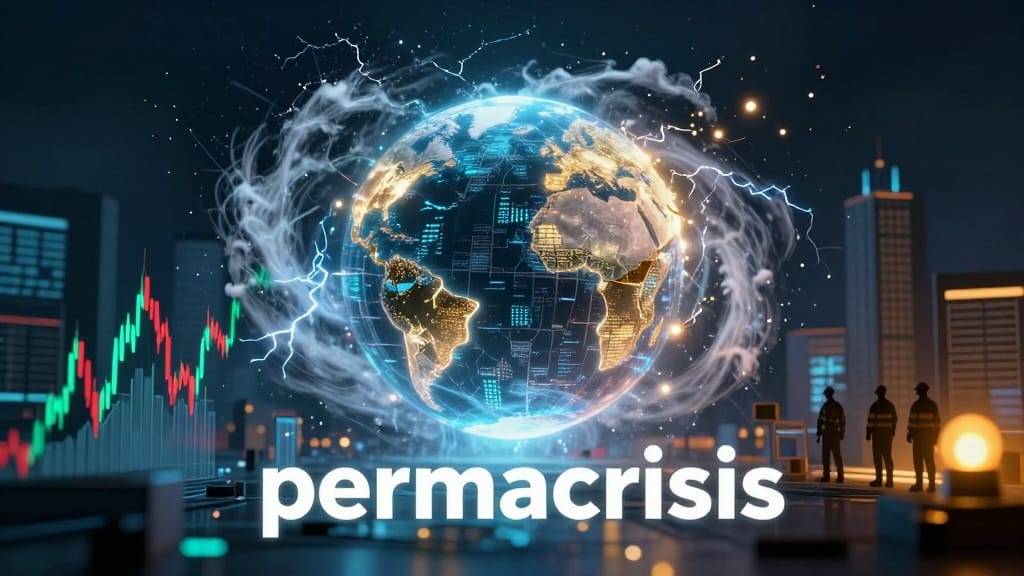
As the year draws to a close, a confluence of geopolitical economic shifts, severe weather patterns, and institutional leadership crises has reshaped the global landscape. From the volatility of emerging markets to life-threatening winter storms and structural failures in public safety, the final weeks of 2025 are demanding a rigorous reassessment of risk management. The intersection of these forces suggests a world in a state of "permacrisis," where the resolution of one emergency frequently overlaps with the emergence of another. This report analyzes the critical events currently impacting global stability, financial forecasting, and community resilience. We examine how markets are reacting to unprecedented digital sentiment tools, how institutions are responding to internal security failures, and how the physical environment is forcing a radical rethink of emergency response protocols. In an era where "business as usual" is no longer a viable strategy, stakeholders across the public and private sectors must synthesize these diverse data points to build a framework for survival and growth in 2026. The following analysis breaks down the pillars of this current instability and the strategic pivots required to navigate them.
Global Economic Outlook: Emerging Markets and the Rise of Prediction Platforms
The financial world is entering a period of significant recalibration as 2025 concludes. Investors are increasingly looking beyond traditional Western equities—which have faced headwinds from high interest rates and regulatory fatigue—to determine if the recent momentum in developing economies is sustainable. While volatility remains a persistent concern, the question of whether Emerging Markets can continue their outperformance into 2026 has become a focal point for institutional strategy, as reported by CNBC. This trend is heavily influenced by currency fluctuations, particularly the strength of the dollar, and local policy shifts that are driving capital toward high-growth regions in Southeast Asia and parts of Latin America. Analysts suggest that the decoupling of global supply chains has inadvertently benefited middle-income nations that have positioned themselves as alternative manufacturing hubs.
Simultaneously, the methodology behind market forecasting is undergoing a fundamental digital transformation. The integration of "prediction markets" into mainstream finance and sports is altering how data is interpreted and how risk is priced. As explained by The Athletic, these platforms allow participants to trade on the outcome of future events, creating a real-time aggregate of public and institutional sentiment that often reacts faster than traditional polling or expert analysis. This shift suggests a broader move toward "crowdsourced" accuracy. In a world characterized by "fake news" and algorithmic bias, the financial incentive to be "right" on a prediction market provides a unique layer of data integrity that traditional sentiment surveys lack.
However, this reliance on digital sentiment has its limits. As Reuters notes in its recent global markets wrap-up, traditional indicators and geopolitical tensions in Asia continue to exert heavy pressure on daily trading volumes. The "physicality" of economics—shipping lanes, raw material costs, and energy security—remains the ultimate arbiter of market health. For instance, while a prediction market might accurately forecast an election outcome, it cannot prevent a semiconductor shortage or a blockade in the South China Sea. Investors are thus caught in a hybrid reality: they must master the high-speed data of prediction platforms while maintaining a grounded understanding of the "old world" logistics that still govern the movement of goods and capital. The outperformance of emerging markets in 2026 will likely depend on their ability to bridge this gap, utilizing digital transparency to attract foreign direct investment while hardening their physical infrastructure against global shocks.
Furthermore, the democratization of financial information through these platforms is creating a new class of "retail-institutional" hybrids. These are individual traders who, armed with the same real-time sentiment data as major hedge funds, can move markets in ways previously unseen. This adds a layer of "behavioral volatility" to the economic landscape. If 2025 was the year prediction markets went mainstream, 2026 will be the year regulators and central banks must decide how to incorporate this "wisdom of the crowd" into formal policy-making. The challenge for the coming year is ensuring that these platforms provide clarity rather than merely amplifying the noise of a panicked market.
Infrastructure and Public Safety: Critical Failures and Administrative Upheaval
The physical security of communities is currently facing a dual challenge: aging infrastructure and a profound crisis of confidence in institutional leadership. The reliability of the "safety net" is being questioned as high-profile failures expose gaps in oversight. In Pennsylvania, the vulnerability of the elderly population was cast into sharp relief as a massive fire erupted at a nursing home, according to ABC News. This incident is not an isolated tragedy; it is symptomatic of a broader decay in long-term care infrastructure. Facilities across the country are grappling with the "triple threat" of aging buildings, severe underfunding, and a chronic shortage of qualified nursing staff. When fire codes are not strictly enforced—or when the infrastructure is too old to be easily retrofitted—the results are catastrophic. This event has already sparked calls for a federal audit of assisted living safety standards, moving the conversation from "unfortunate accident" to "systemic negligence."
Parallel to these physical failures is a crisis of administrative accountability. Higher education institutions, often viewed as the bastions of societal stability, are finding themselves under the microscope. At Brown University, a major leadership shift occurred following escalating concerns over campus security protocols and the handling of internal safety audits. According to the Rhode Island Current, the university’s police chief was placed on leave pending a comprehensive campus safety review. This was not a standalone personnel matter but part of a wider administrative shake-up. Further reporting from WJAR (Turn to 10) confirmed that the Vice President for Public Safety was also placed on administrative leave, signaling a top-to-bottom lack of confidence in the existing security hierarchy.
To stabilize operations and restore trust among the student body and faculty, the university has turned to veteran external leadership. GoLocalProv reports that former Providence Police Chief Hugh Clements has been tapped to assist during this transition. This "emergency borrowing" of municipal leadership for an academic setting highlights a growing trend: the professionalization of campus safety. Universities are no longer treated as isolated enclaves; they are now managed with the same rigor as small cities. The "Brown model" of placing entire leadership teams on leave to perform a "root cause analysis" of safety failures may become the new standard for institutions facing public scrutiny. It marks a shift from reactive PR management to proactive structural auditing.
The implications of these failures extend beyond the immediate locations. They suggest that the "checks and balances" intended to protect the most vulnerable—whether they are the elderly in care homes or students on a campus—are fraying. For policymakers, the lesson of late 2025 is that transparency is the only currency that matters. When a nursing home fire or a campus safety crisis occurs, the public demand is no longer just for a "fix," but for a total reassessment of who is in charge and why the failure was allowed to happen. The coming year will likely see an increase in "safety-focused" legislation that mandates real-time reporting of safety hazards and more stringent background and performance reviews for those in leadership positions within public safety sectors.
Environmental Pressures: Severe Weather and Search Operations
Natural disasters and harsh seasonal conditions are currently testing the limits of emergency response teams and municipal budgets across the United States. The climate reality of late 2025 is one of extremes, where "once-in-a-century" events are occurring with alarming regularity. Southern California, a region often associated with drought and wildfires, is currently dealing with the immediate impact of a deadly winter storm that has brought torrential rain, mudslides, and hazardous freezing conditions to the region, as documented by the Los Angeles Times. This storm highlights the increasing frequency of extreme weather events in areas previously unaccustomed to such intensity. The shift from "fire season" to "flood season" necessitates a radical reallocation of disaster preparedness resources.
The human cost of these conditions is often devastating and deeply personal. In California, the conclusion of a lengthy search operation has served as a somber reminder of the stakes involved in environmental instability. As reported by NBC News, the body of Melodee Buzzard was discovered following an extensive two-month search effort. This case underscores the critical role of community-coordinated search operations and the heightened risks vulnerable individuals—particularly children and the elderly—face during periods of inclement weather. The discovery also ends a chapter of intense community anxiety, but opens a new one regarding how search and rescue (SAR) protocols must evolve. When localized weather events become more severe, the "window of survival" for missing persons shrinks, putting immense pressure on SAR teams to utilize drones, thermal imaging, and AI-driven predictive modeling to locate individuals faster.
The economic impact of these storms is equally significant. When major metropolitan areas like Southern California are parlayzed by rain and snow, supply chains are disrupted, and labor productivity plummets. This creates a "weather-driven inflation" where the cost of goods rises due to transport delays and damaged inventory. Municipalities are beginning to realize that "infrastructure resilience" is not just about building stronger bridges; it’s about creating redundancy in emergency communications and ensuring that power grids can handle the sudden surges in demand during deep freezes or heatwaves. The "deadly winter storm" is no longer just a weather report; it is a macroeconomic variable that must be factored into municipal bonds and insurance premiums.
Moving forward, the integration of meteorological data with public safety efforts will be the "front line" of crisis management. We are seeing a shift toward "predictive policing" not just for crime, but for environmental hazards. By analyzing which neighborhoods are most at risk for flooding or which populations are most isolated during a storm, emergency services can pre-deploy assets. However, as the search for Melodee Buzzard showed, technology cannot replace the "boots on the ground" effort of community volunteers. The future of environmental resilience lies in a "high-tech, high-touch" approach: using advanced satellite data to predict the storm, while fostering tight-knit community networks to ensure no one is left behind when the power goes out.
Institutional Resilience: The Future of Risk Mitigation
As we examine the cross-section of economic, safety, and environmental crises, a clear theme emerges: the inadequacy of siloed management. In the past, a financial analyst didn't need to worry about nursing home fire codes, and a university provost didn't need to track emerging market volatility. That era is over. The modern crisis manager must be a polymath, capable of understanding how a disruption in one sector cascades into another. The leadership changes at Brown University, for instance, are not just about "campus safety"—they are about protecting the university's "brand equity" and financial stability in an increasingly competitive academic market. A safety failure is a financial failure; a weather catastrophe is a logistical failure.
We are seeing the rise of the "Chief Resilience Officer" (CRO) in both corporate and municipal settings. This role is designed to look horizontally across an organization to identify "single points of failure." Whether it's a reliance on a single overseas supplier for critical components (as seen in the emerging markets analysis) or a failure to update fire suppression systems in a state-run facility, the CRO’s job is to prevent the "predictable surprise." The events of December 2025 have shown that most crises were, in fact, predictable. The warning signs for the nursing home fire were likely present in previous inspection reports; the vulnerabilities in campus safety were likely flagged in internal memos before the leadership was replaced. The shift in 2026 will be from "identifying" risks to "acting" on them with institutional courage.
Furthermore, the role of transparency has been elevated by the digital age. With prediction markets and social media providing a 24/7 audit of institutional performance, organizations can no longer hide behind "no comment" or delayed press releases. The speed of information—and misinformation—means that an institution's response to a crisis is often more important than the crisis itself. Brown University’s decision to place leaders on leave *before* a full-blown scandal could erupt is an example of "preemptive transparency." It signaled to the public that the institution was taking the issue seriously, thereby preserving a measure of trust. This "trust-based management" will be the cornerstone of institutional survival in the coming years.
Finally, we must consider the role of the individual in this resilient future. As search operations for missing persons and community responses to winter storms have shown, the state cannot do everything. "Resilience" starts at the local level—with neighbors checking on the elderly during a storm and community groups assisting in search efforts. The most successful societies in 2026 will be those that combine robust, high-level institutional oversight with a highly engaged and informed citizenry. The "volatility" of our current moment is a permanent feature of the 21st century; our task is not to eliminate it, but to build the structures—legal, digital, and social—that allow us to absorb the shocks without breaking.
Conclusion: The Path Toward 2026
The intersection of economic speculation, institutional restructuring, and environmental crisis defines the current global moment. As emerging markets attempt to sustain their growth into 2026, they must do so against a backdrop of logistical and safety challenges that threaten to disrupt local economies. The global "pivot to the East" remains a prevailing narrative, but it is one fraught with the same risks of infrastructure failure and administrative opacity that we see in the West. The administrative shifts at major institutions like Brown University signal a broader societal demand for accountability and transparency in public safety. No leader, regardless of their tenure or title, is immune to the requirement of ensuring the physical security of those under their care. This is a non-negotiable tenet of modern governance.
Moving forward, the integration of real-time data from prediction markets and heightened investments in resilient infrastructure will be essential for navigating the complexities of an increasingly volatile world. We are moving into an era of "radical pragmatism," where the success of a policy or a business strategy is measured by its ability to withstand the extreme. Policymakers and business leaders must prioritize long-term stability over short-term gains to weather the storms—both literal and metaphorical—that lie ahead. The discovery of Melodee Buzzard and the fires in Pennsylvania serve as tragic reminders that the cost of failure is not just financial, but human. As we look toward 2026, the goal is clear: to build a world that is not only more prosperous and technologically advanced, but fundamentally safer and more responsive to the needs of its most vulnerable citizens. The lessons of this month’s volatility must be the foundation of next year’s resilience. Only by acknowledging our current vulnerabilities can we hope to engineer a more stable and predictable future for all.