Global Transition Analysis: Economic Shifts, Emerging Tech, and Policy Realignment for 2026


The dawn of 2026 represents more than a chronological milestone; it marks a systemic pivot point where the experimental fervor of the early 2020s meets the sobering necessity of long-term structural integration. As the international community navigates this new year, the convergence of shifting geopolitical alliances, rapid technological scaling, and evolving economic models has created a high-stakes landscape for policymakers and business leaders. From the administrative corridors of New York City to the volatile markets of East Asia, the start of the year is characterized by a "rebalancing" of power and priority. This transition period is defined by the crystallization of AI from a novelty tool into a foundational utility, and the movement of global trade from fragile globalism toward resilient regionalism. This comprehensive report analyzes the critical pillars of this transformation, synthesizing global reports to provide a strategic roadmap for the months ahead. We are witnessing the end of the "wild west" era of digital expansion and the beginning of an era defined by regulation, longevity, and the pursuit of domestic stability in an increasingly interconnected yet fractured world.
Lead: A Global Pivot Point and the Rebirth of Urban Policy
The transition into 2026 is defined by a systemic shift from experimental technology to integrated infrastructure and a fundamental reassessment of global trade and diplomacy. As reported by The New York Times, New York City has inaugurated a new administration under Zohran Mamdani, signaling a potential shift in urban policy at a time when major global cities are grappling with affordability, social equity, and the lingering effects of the post-pandemic commercial real estate crisis. The Mamdani administration enters a climate where "business as usual" is no longer a viable platform. For New York, this represents a test case for progressive urban management in a global financial hub. If the city can successfully balance transit equity and housing reform without alienating the capital that flows through Wall Street, it may provide a blueprint for other metropolitan centers like London, Tokyo, and Paris.
This localized shift in New York mirrors a broader global trend: the return of "the state" as a primary economic actor. After decades of hands-off market liberalization, governments in 2026 are increasingly interventionist. Whether it is through massive industrial subsidies, the tightening of digital borders, or aggressive anti-fraud measures, the hands of the regulator are more visible than ever. This is not merely a political choice but a response to the volatility of the mid-2020s. The global community is now prioritizing "de-risking" over "cost-cutting." In this environment, the ability of a city or a nation to provide social stability is becoming a competitive advantage. Investors are looking past simple GDP growth numbers, focusing instead on the resilience of a region’s infrastructure and the predictability of its legal and social frameworks. As we analyze the year ahead, the success of New York's new leadership will be a bellwether for whether major Western cities can reinvent themselves as equitable hubs for the modern workforce.
What We Know: Verified Global Developments
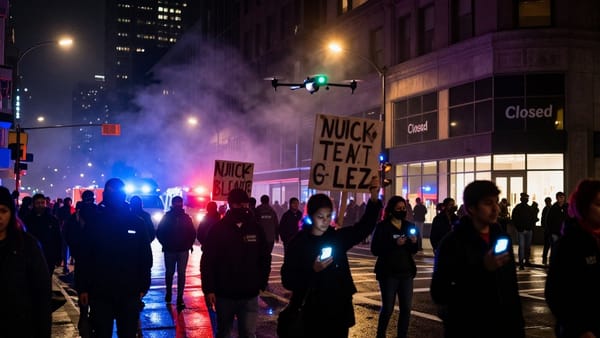
- Iran’s Digital Iron Curtain: Iran is facing significant domestic pressure as the government implements a nationwide internet shutdown to quell rising protests, as reported by The New York Times. This move indicates a heightening of internal tensions and a continued reliance on digital isolation as a tool of statecraft.
- Industrial Fraud in India: In India, law enforcement has uncovered a staggering industrial fraud involving a ₹6,200 crore swindle executed through a network of 60 shell firms, as detailed by The Times of India. The scale of the investigation highlights ongoing challenges in corporate governance within rapidly expanding emerging markets.
- Polymarket Regulatory Hurdles: The prediction market platform Polymarket is facing continued delays in its highly anticipated U.S. launch, maintaining a waitlist for domestic users, according to Sportico. This delay underscores the friction between innovative decentralized finance models and established U.S. regulatory bodies.
- Japan’s Wage Push: Major business lobbies in Japan are urging the government to prioritize wage growth and structural reform to maintain economic momentum, as reported by Yahoo Finance. This marks a significant shift in Japanese corporate philosophy, moving away from historic austerity toward a consumption-led growth model.
- Public Safety in Texas: Concerns remain high in Texas following the discovery and identification of Camila Mendoza Olmos, according to the San Antonio Express-News. The case has sparked renewed debates over regional safety protocols and community protection.
The Evolution of Technology: From Tools to Ecosystems
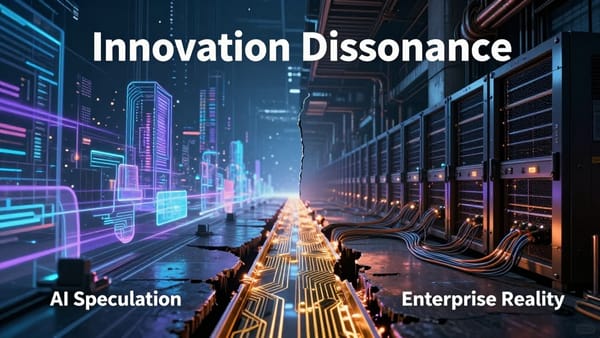
The tech narrative of 2026 has moved beyond the "wow factor" of generative AI toward the "how factor" of systemic integration. According to Times Techies, the industry is undergoing a "next leap" where digital tools are maturing into cohesive, autonomous systems. We are moving away from siloed applications—where a user might use one AI for writing and another for coding—toward unified digital "agents" that manage entire workflows. This transition is echoed in a Year-End Review by Tech Times, which highlights how the innovations of 2025 have effectively commoditized high-level computing power, setting the stage for deep-tech integration in healthcare, logistics, and energy management.
As consumers look forward, Tech Times notes several emerging trends that will define the 2026 landscape, most notably the expansion of the "Internet of Behaviors" (IoB). This concept goes beyond the Internet of Things (IoT) by using data to drive behavioral change, ranging from health incentives in insurance to safety protocols in autonomous driving. However, as connectivity reaches an all-time high, the risks of digital overreach have never been more acute. Experts at Wired suggest that 2026 must be the year of the "tech cleanup," where individuals and corporations alike audit their digital footprints to mitigate the risks of sovereign-level cyberattacks and sophisticated AI-driven social engineering. The history of innovation—tracked through iconic gadgets at events like CES by CNET—illustrates that every period of connectivity-led growth is inevitably followed by a period of security-led retrenchment. In 2026, the industry is firmly in that retrenchment phase, focusing on encryption, data sovereignty, and ethical guardrails.
Why this matters: The shift from "tools" to "systems" means that any failure in the digital chain now has exponential consequences. In 2023, a software bug might have crashed an app; in 2026, a flaw in an integrated AI system could halt a city’s power grid or disrupt a nation’s food supply chain. Furthermore, the "regionalization" of tech hubs—moving away from the Silicon Valley monopoly toward localized centers in Bangalore, Tel Aviv, and Berlin—is creating a more diverse but fragmented technological world. For global stakeholders, the challenge is no longer about adopting the latest technology, but about ensuring that the systems they adopt are interoperable, secure, and compliant with a patchwork of international regulations.
Economic Resilience and the Divergence of Market Sentiment
Global markets in 2026 are characterized by a stark divergence between traditional industries and the new-age digital economy. In South Asia, business engagement remains heavily concentrated in the banking and infrastructure sectors, as developing nations seek to build the physical foundation for the next decade of growth. As noted by The Daily Star, the most-read stories of the past year reflect a population deeply concerned with fiscal stability and the hardening of traditional financial institutions. This "back to basics" approach in emerging markets provides a counterbalance to the speculative volatility seen in Western tech sectors. Interestingly, even localized economic activities like the Shillong Teer lottery in Meghalaya continue to hold significant community interest, as reported by Zee News, highlighting that micro-economies and community-based gaming remain resilient even as global markets fluctuate.
Simultaneously, the consumer economy is being redefined by a preoccupation with "longevity." This is no longer just a buzzword in Silicon Valley; it has become a central driver of the global beauty and wellness market. Analysis from The Business of Fashion indicates that the premium wellness market is now a central driver of retail growth, moving from niche luxury to a staple of the global consumer economy. Consumers are shifting their spending from "fast beauty" to "bio-hacking" and preventive health, forcing traditional brands to pivot their business models. This shift occurs as nations like Canada navigate deep political contradictions between populist rhetoric and traditional economic management. As explored by The Globe and Mail, the tension between figures like Mark Carney and Pierre Poilievre reflects a broader global debate: Should the government act as a stabilizer through technocratic management, or should it lean into the disruption of populist reform? This ideological battle will dictate tax policies, trade agreements, and labor laws across the G7 in 2026.
How it impacts stakeholders: For multinational corporations, these economic shifts require a dual-track strategy. Companies must leverage the "longevity" trend in Western markets—where aging, affluent populations are willing to pay a premium for health—while simultaneously investing in the heavy infrastructure and banking systems of the Global South. The ₹6,200 crore fraud case in India mentioned earlier serves as a warning for investors: while the growth potential in these regions is immense, the regulatory oversight has not always kept pace. The future implications are clear: 2026 will be the year of the "due diligence" expert. Transparency will become the most valuable currency in the global market, as investors flee toward jurisdictions and companies that can prove their ethical and operational integrity.
Geopolitics: The "Middle Way" and the Cost of Instability
In the realm of foreign policy, 2026 is seeing a growing movement toward a "Middle Way" in American diplomacy and global strategy. According to Foreign Affairs, this strategy seeks to balance domestic interests with international obligations without over-extending military or economic resources. It is a pragmatic "Realpolitik" that accepts a multipolar world where the United States is a primary, but not the sole, power. This approach is increasingly necessary as localized disruptions create immediate ripples through global energy and security markets. The situation in Iran is a prime example; as the government implements internet shutdowns to suppress protests, according to The New York Times, the resulting instability impacts everything from regional oil prices to the security of digital corridors in the Middle East.
This pragmatic diplomacy is also a response to the "weaponization of everything." In 2026, trade, data, and even weather patterns are considered theaters of conflict. The discovery of massive shell-firm networks in India, as reported by The Times of India, is not just a domestic criminal matter; it is a national security concern in a world where illicit financial flows can fund regional destabilization. As a result, 2026 will likely see a surge in "minilateralism"—small groups of countries (like the Quad or the AUKUS pact) working on specific security and economic issues rather than relying on large, sluggish international organizations like the UN or WTO. These smaller alliances allow nations to move faster, but they risk creating a "fractured world" where standards and laws differ wildly from one bloc to another.
The Middle Way strategy reflects a broader realization: neither total isolationism nor total interventionism is sustainable in a hyper-connected 2026. For businesses, this means navigating a complex web of "friend-shoring"—moving supply chains to allied nations—while still trying to maintain access to the massive consumer markets of rival powers. The future of global peace and market stability now depends on "de-confliction" through economic interdependence. If the "Middle Way" fails, the alternative is a world of rigid blocs and heightened risk of direct confrontation. Policymakers are currently walking a tightrope, trying to protect domestic manufacturing through tariffs and subsidies without triggering a 1930s-style trade war that would decimate the global tech and retail sectors.
What We Don’t Know Yet: Areas of Uncertainty
- Iranian Resolution: The specific timeline for the restoration of internet services in Iran and the extent of the protest casualties remains unverified. How this internal pressure affects Iran’s nuclear posturing or its regional proxy activities is a critical unknown for 2026.
- Economic Contagion: It is unclear how the shell firm investigation in India will impact international trade partners linked to the implicated firms. There is a potential for "regulatory contagion" if other nations begin auditing their own industrial entities with similar fervor.
- U.S. Market Dynamics: The potential for a "cooling off" or "heating up" of the China-U.S. trade dynamic under the new 2026 policy frameworks is yet to be fully determined. While the "Middle Way" suggests a stabilization, sudden domestic political shifts could lead to a renewed tariff escalation.
- Decentralized Finance’s Future: With Polymarket facing delays, as reported by Sportico, the fate of prediction markets and many crypto-adjacent technologies hangs on pending court rulings and SEC/CFTC decisions expected mid-year.
Why It Matters: The Stakes of a Managed Transition
The stability of the global economy now rests on the successful integration of AI systems into labor markets and the ability of governments to address rising domestic discontent. As the "next leap" of technology moves from lab to life, the risk of social displacement increases. Failure to regulate emerging financial platforms like Polymarket or to address industrial-scale fraud could lead to a loss of investor confidence in regulated markets. This is particularly dangerous in an era where trust is already at an all-time low. If the public perceives that the "new economy" is just a haven for shell-firm swindlers and unregulated gambling, the political backlash could be severe, leading to even more radical populist movements across the West.
Furthermore, the push for higher wages in Japan and urban reform in New York represents a global trend of "bottom-up" economics. This shift could redefine profit margins for multi-national corporations that have relied on cheap labor and low urban taxes for decades. In 2026, "wellness" is not just about expensive supplements; it’s about the health of the social fabric. Companies that ignore the "longevity" of their workforce—both physically and economically—will find themselves facing a talent shortage and regulatory penalties. The "S" in ESG (Environmental, Social, and Governance) is finally coming to the forefront as the most critical pillar for corporate survival. We are moving toward a "Stakeholder Capitalism 2.0," where a company’s license to operate is tied directly to its contribution to local stability and national security.
What’s Next: Upcoming Decisions and Deadlines
In the coming weeks, market analysts will be watching the Consumer Electronics Show (CES) for indications of how the "next leap" in systems-based technology will be commercialized. The shift from "gadgets" to "ecosystems" will be the primary theme. Simultaneously, the diplomatic community will keep a close eye on the Iranian domestic situation and the first legislative moves of the Zohran Mamdani administration in New York City. Mid-January will bring the first batch of 2026 earnings reports, which will provide the first hard data on whether the "longevity" and "wellness" trends are translating into sustainable profit growth for the retail and pharmaceutical sectors.
For businesses, the focus will remain on technological security and adapting to a world where "wellness" and "resilience" are no longer just buzzwords, but economic imperatives. The year 2026 promises to be one of profound consolidation. The "wild west" era of rapid AI experimentation and unbridled globalism is closing, replaced by a more regulated, system-oriented world where policy must move as fast as the technology it governs. Those who thrive will be the ones who can bridge the gap between the digital future and the physical demands of a tired, but hopeful, global population. The transition is underway; the results will depend on our collective ability to prioritize stability over speculation.
The conclusion of this transition phase will likely come toward the end of Q4 2026, when the various regulatory frameworks currently in development—ranging from the EU’s AI Act implementations to the U.S. "Middle Way" trade policies—are fully operational. At that point, the "New Normal" will no longer be a theoretical concept but a daily reality for billions of people. The focus will then shift from survived to thrived, as the winners of this realignment begin to exert their influence on the subsequent decade. For now, the watchword remains "vigilance." In a world of systemic integration, there is no such thing as a localized problem.