Global Tech Consolidation and Policy Shifts: Nvidia’s Strategic Acquisition and Evolving Geopolitical Tensions

The final weeks of 2025 have ushered in a period of intense transformation across the global technology, finance, and policy sectors. From landmark acquisitions in the artificial intelligence (AI) space to hardening geopolitical stances between major world powers, the landscape for investors and policymakers is shifting with unprecedented velocity. As reported by BBC News, these developments reflect a world grappling with the dual pressures of rapid-fire innovation and the necessity for increasing regulatory oversight. We are currently witnessing a "great recalibration" where the raw power of silicon meets the hard wall of sovereign interests. The decisions made in boardrooms in Santa Clara and legislative halls in New Delhi or Abu Dhabi during this period are not merely incremental; they are foundational for the economic architecture of the late 2020s. This transition necessitates a move away from the "move fast and break things" era toward one of "strategic resilience," where hardware dominance, cybersecurity, and climate-adaptive infrastructure are the three pillars of national and corporate stability.
This "Breaking Wire" deep dive analyzes the convergence of hardware dominance, digital security vulnerabilities, and the legislative changes set to take effect in the new year. By synthesizing data from industry leaders and government reports, we examine why these trends matter for the global economy and public safety. What we see is a world where the distinction between "tech news" and "geopolitical news" has effectively vanished. Every transistor produced and every policy enacted carries the weight of international competition. As we break down the specifics of Nvidia’s maneuvers and the burgeoning regulatory frameworks across Asia and the Middle East, a clear picture emerges: the race for speed is being replaced by a race for integrated control. Control over the supply chain, control over data integrity, and control over the very energy sources that power the digital revolution.
Nvidia and the AI Inference Revolution: Beyond Training
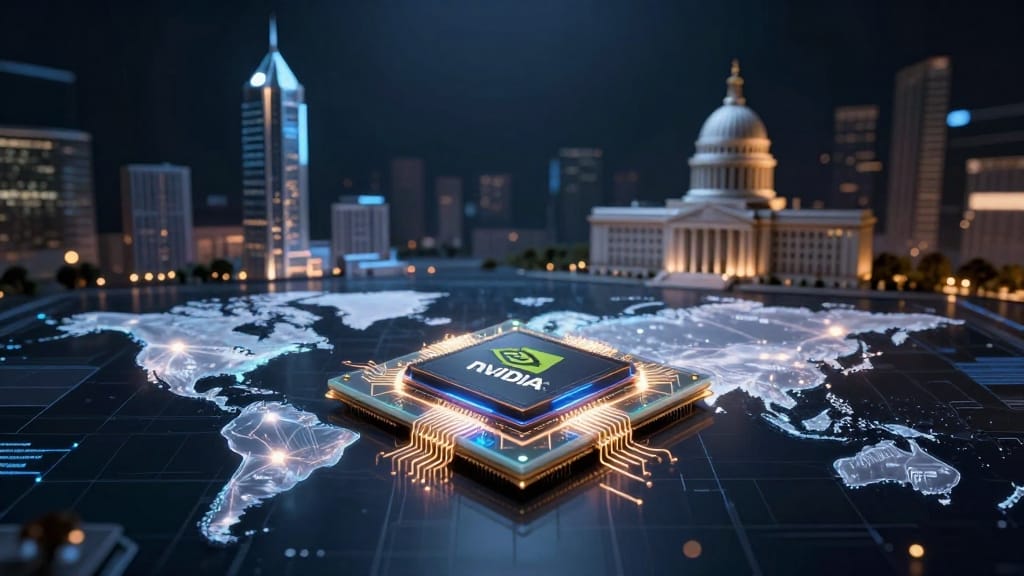
In a move that could redefine the hierarchy of semiconductor manufacturing, industry leader Nvidia has moved to acquire or license key assets from the AI chip startup Groq. According to reports from Reuters, Nvidia is pursuing a deal valued at approximately $20 billion. This acquisition is not merely a play for market share but a strategic pivot toward "inference" performance—the phase where AI models execute tasks rather than just training on data. For years, Nvidia has dominated the training phase with its H100 and Blackbridge architectures, but the market is shifting. We are moving from a world that builds AI to a world that uses AI, and the hardware requirements for these two phases are fundamentally different.
The New York Times highlights that Groq’s specialized Language Processing Units (LPUs) offer significantly higher speeds for large language models compared to traditional GPUs. While a GPU is a "jack-of-all-trades" processor, an LPU is a master of linear streaming, which is essential for the real-time responsiveness required by autonomous vehicles, customer service agents, and live translation tools. As AI moves from research labs to consumer-facing applications, speed and latency become the primary competitive advantages. If an AI takes three seconds to respond, it is a novelty; if it responds in milliseconds, it is an integrated utility. By integrating this technology, Nvidia aims to cement its dominance against emerging rivals like Cerebras and SambaNova. Further details provided by Seeking Alpha indicate that Groq executives are expected to join Nvidia, ensuring that the intellectual property and engineering expertise transition smoothly into the chip giant's ecosystem.
For stakeholders, this matters because it signals the end of the "GPU-only" era. Developers must now optimize for inference speed rather than just raw flop counts. This deal also suggests that Nvidia is moving toward a vertically integrated stack, where they control the custom silicon for every stage of the AI lifecycle. For investors, the $20 billion price tag is a clear signal that the "inference wars" are the new frontline. We should expect a ripple effect where cloud providers like AWS and Google Cloud further accelerate their own internal chip development (Inference and Tranium) to avoid total dependency on a single vendor. The future implication is a bifurcated market: general-purpose computing for the masses and hyper-specialized inference hardware for the AI-driven enterprise. This move by Nvidia effectively attempts to monopolize both, but it also invites heightened antitrust scrutiny as the company's influence over the "brains" of the 21st century grows to a near-total hegemony.
The Geopolitical Chessboard: Sanctions and Energy Tensions
While tech firms consolidate, the geopolitical environment remains volatile, proving that software and hardware do not exist in a vacuum. China has escalated its response to international arms sales, specifically targeting American defense contractors. As detailed by CNBC TV18, Beijing has hit U.S. defense firms with sanctions over arms sales to Taiwan. This is not just a diplomatic spat; it is a surgical strike on the global supply chain. Many of these defense contractors rely on Chinese processed rare earth elements and mid-tier electronic components. By implementing these sanctions, China is signaling that technological cooperation is contingent on political alignment, creating a "zero-trust" environment for global manufacturers.
Further west, the intersection of energy and digital assets is creating new diplomatic friction. Recent discussions involving Russian leadership have touched upon the critical infrastructure of the Zaporizhzhia nuclear plant and the burgeoning sector of cryptocurrency mining. According to Crypto Briefing, these talks suggest that energy-intensive digital industries are increasingly becoming bargaining chips in international security negotiations. The logic is simple: in an era of sanctions, decentralized finance (DeFi) and crypto-mining offer a potential "shadow economy" for sanctioned nations, provided they have the cheap electricity to power the rigs. Using a nuclear power plant as a theoretical backdrop for mining discussions adds a layer of "atomic diplomacy" to the digital age, where energy sovereignty and financial sovereignty are inextricably linked.
This trend of localized tech self-reliance is mirrored in emerging tech hubs like Stuttgart. While major powers clash over nuclear plants, local innovators like Patrick Planing are rethinking how urban infrastructure can adapt to these technological shifts. As reported by Interesting Engineering, the focus is shifting toward "smart cities" that can operate independently of fragile global grids. The impact on stakeholders is clear: multinational corporations can no longer assume a flat, borderless world. They must build "geopolitical redundancy" into their operations. This means diversifying supply chains away from single-point-of-failure regions and investing in localized energy solutions. Looking forward, the "splinternet"—a world where different regions operate on different tech stacks and different legal frameworks—is moving from a theory to a daily reality for global trade.
Policy Reforms and the Digital Surge in Emerging Markets
Governments are responding to the rapid pace of change with more stringent reporting requirements and digital transformations, particularly in Asia and the Middle East. This is not just about bureaucracy; it is about the "digitization of trust." In India, the Centre has demanded that IAS officers file property details on time or face disciplinary action, according to The Economic Times. This move is part of a massive push for transparency as India positions itself as the world’s back-office and a burgeoning manufacturing hub. By enforcing digital accountability at the highest levels of civil service, the Indian government is attempting to modernize its administrative engine to keep pace with its high-growth tech sector.
The insurance and automotive sectors are prime examples of this evolution toward a "code-as-law" society. As reported by New Kerala, policy reforms are driving massive adoption of digital insurance platforms, moving away from paper-heavy processes that have bottlenecked the industry for decades. This shift is supported by new tools for compliance, as National Herald India explains how digital policy tracking helps drivers maintain coverage and legal standing automatically. For the consumer, this means lower costs and higher reliability; for the state, it means a real-time database of national risk. Meanwhile, the UAE is preparing for its own set of major updates. Gulf News identifies seven new rules and changes coming into effect on January 1, 2026, affecting everything from residency to business operations. These changes are designed to attract "digital nomads" and high-tech investment, creating a regulatory ecosystem that is as agile as the startups it hopes to host.
Why does this granular policy work matter? Because it creates a standardized operating environment for global capital. When India or the UAE updates their digital rules, it forces every multinational company operating there to update their software and compliance protocols. This is the "Brussels Effect" localized in the East. The future implication is a shift in power where the rules of the digital economy are increasingly written in Mumbai and Dubai, rather than just Silicon Valley or London. For stakeholders, especially in fintech and logistics, these 2026 mandates require immediate technical debt reduction. Those who fail to integrate with these new digital-first government interfaces will find themselves locked out of some of the world's fastest-growing markets.
Market Resilience and Public Safety Under Physical Stress
Despite technological advancements, traditional economic wisdom and climate realities remain the ultimate arbiters of success. Even as AI valuations soar, the world’s most successful investors are preaching caution. Investment legend Warren Buffett continues to advocate for value-based long-term strategies, with Investopedia detailing his latest insights on identifying "good investments" in an era of volatility. Buffett’s core message—invest in what you understand and look for "moats"—is especially relevant as the AI bubble faces its first real-world stress test. Small businesses are also navigating this landscape by choosing between robust financial tools; a comparison by CBS News highlights the intensive competition between Quicken and FreshBooks for the digital bookkeeping market. This underscores a critical fact: even in a high-tech world, the "boring" basics of accounting and cash flow management determine survival.
However, the most sophisticated software in the world cannot stop a flood. Physical infrastructure remains the "hard ceiling" of economic growth, and it is currently under fire from a changing climate. Southern California recently faced severe disruptions as torrential rains drenched the region, with more storms anticipated, as reported by PBS NewsHour. These climate events provide a stark counterpoint to the digital surge. You can have the fastest AI chips in the world, but if your data centers are flooded or your logistics routes are underwater, the digital economy freezes. The necessity for resilient public safety policies is emphasized in The Business Journal, which covers local economic impacts of such weather disruptions, including the massive losses incurred by small businesses when the power grid fails or supply lines are severed.
The impact here is a massive shift in how "risk" is calculated in the 2026 market. We are seeing a convergence of "climate risk" and "tech risk." Insurance companies, as mentioned earlier, are using new digital tools to price this risk in real-time. For policymakers, the lesson is that infrastructure investment must be two-pronged: we must build the 5G towers and the fiber optic cables, but we must also build the sea walls and the resilient power grids. The future implications of this are a "flight to safety," where capital gravitates toward regions that can prove both digital mastery and physical resilience. Vulnerable coastal tech hubs that fail to adapt will see a "brain drain" and a capital exodus to more stable inland "cloud corridors."
The Security Gap: Emerging Threats in the 2026 Landscape
As we look toward the 2025-2026 transition, cybersecurity remains the "Achilles' heel" of the digital economy. The more interconnected we become, the more entry points we create for malicious actors. Polymarket, a major prediction market that rose to prominence during the recent election cycles, recently linked user account breaches to a third-party login flaw, according to Coinpaper. This incident serves as a stark reminder that even the most advanced blockchain-adjacent platforms are susceptible to traditional web vulnerabilities. You can have a perfect, immutable ledger, but if the "front door" (the login screen) is left unlocked, the entire system is compromised.
This "Security Gap" is becoming the primary focus for R&D departments globally. Looking ahead, the Science and Technology Daily has released its top news for 2025, highlighting that the convergence of AI, cybersecurity, and green energy will be the defining themes of the coming decade. We are entering the era of "AI-enabled defense," where security software autonomously hunts for threats. However, the downside is "AI-enabled offense," where hackers use the same Nvidia-powered chips described earlier to launch sophisticated, personalized phishing campaigns at scale. The "What we don't know" in this sector is whether the defensive side can ever truly outpace the offensive side when the tools are essentially the same.
For stakeholders, the directive is clear: cybersecurity can no longer be an afterthought or a "cost center" to be minimized. It must be treated as a core product feature. The future likely holds a move toward "Zero Trust Architecture" as a globally mandated standard for any business handling consumer data. For policymakers, the next step is international cooperation on cyber-norms. Without a "Geneva Convention for Cyberspace," the escalating attacks on entities like Polymarket or critical infrastructure like the Zaporizhzhia plant could lead to unintended kinetic conflicts. The next 12 months will be a race to build "digital moats" that are as deep and wide as the physical ones envisioned by traditional investors like Buffett.
Conclusion: The Path to 2026
The integration of AI hardware, the tightening of global trade policies, and the digitalization of government services indicate a world that is becoming more efficient but also more complex. Nvidia’s acquisition of Groq's influence represents more than just a corporate merger; it is a bet on a future where real-time AI is ubiquitous, embedded in every device and decision-making process. Simultaneously, the regulatory updates in the UAE and India suggest that "digital-first" is no longer a choice or a slogan; it is the fundamental mandate for modern governance. As we cross the threshold into 2026, the era of isolated tech breakthroughs is over. We have entered the era of the "Tech-Policy Nexus," where a chip design change in California can trigger a regulatory shift in Dubai and a supply chain crisis in the Taiwan Strait.
As industries adapt to these changes, the focus must remain on security and resilience—both in the digital code that powers our markets and the physical infrastructure that protects our communities from a changing climate. The winners of the coming year will not necessarily be the ones with the most advanced technology, but those who can best integrate that technology into a stable, secure, and legally compliant framework. The "digital surge" is here, but its success depends on the "human guardrails" we put in place now. Whether it is through the disciplined value-investing of the older generation or the hyper-fast inference chips of the next, the goal remains the same: building a future that is as robust as it is innovative. The path to 2026 is paved with silicon, but it is guided by policy.